AlgoBlaze Trading Platform Alternatives 2026 Guide
Compare AlgoBlaze alternatives for 2026: regulated brokers, costs, platforms (MT4/MT5/cTrader), asset access, and safety steps for switching.

Compare AlgoBlaze alternatives for 2026: regulated brokers, costs, platforms (MT4/MT5/cTrader), asset access, and safety steps for switching.
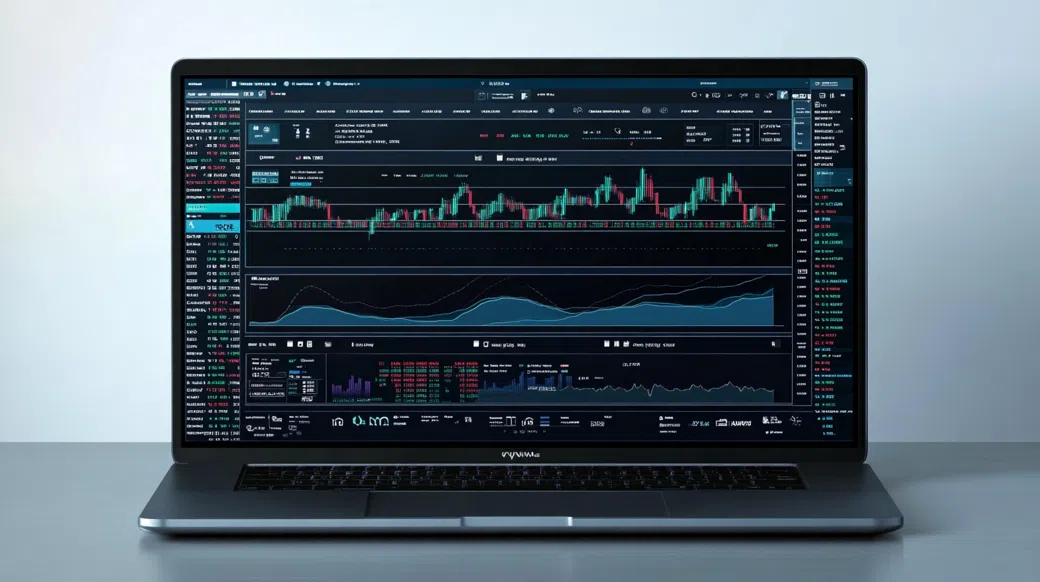
Spreads, execution, and withdrawals—those are the three lines on the P&L that decide whether a platform is “fine” or a recurring headache. In the offshore CFD segment, AlgoBlaze is usually positioned as a streamlined, app-first place to trade forex and CFDs with punchy leverage. That mix can attract newer traders who want quick onboarding and a simple WebTrader experience, plus exposure to major FX pairs, indices, a handful of commodities, and crypto CFDs. The catch is that the same profile often comes with trade-offs: thinner investor protections, fewer platform integrations for systematic strategies, and a cost structure that looks acceptable on a small account but gets expensive once you start sizing up.
For US/EU-focused traders in 2026, the real question isn’t whether you can place a EUR/USD order—it’s whether your broker sits under a serious regulator, runs proper KYC/AML, segregates client funds, and can demonstrate predictable execution when markets gap. That’s the lens for evaluating AlgoBlaze alternatives. This guide breaks down what AlgoBlaze likely offers, why traders move on, and which regulated options typically cover the gaps (from DMA equities to tighter FX pricing and stronger client protections). Expect less marketing, more mechanics.
Disclaimer: This article is for informational purposes only and does not constitute investment advice. CFDs and other leveraged products can move fast against you, and losses can exceed expectations if risk controls are weak.
On its face, AlgoBlaze looks like a CFD-first broker built around a proprietary WebTrader and mobile app, aimed at retail traders who want fast market access without learning a complex workstation. In this category, it’s common to see offshore registration—here we treat AlgoBlaze as operating under a Seychelles FSA-style framework rather than a top-tier onshore regime. That matters because the rules around negative balance protection, complaint handling, and investor compensation tend to be less robust than under FCA, ASIC, CySEC, or NFA oversight. In practice, competitors to AlgoBlaze often win not by flashier marketing, but by tighter controls around custody, reporting, and execution quality.
Functionality on a proprietary WebTrader is usually “basic-to-mid” rather than institutional: you get workable charts, common indicators, and quick order tickets, but fewer advanced order types and less depth on analytics. Expect market and limit orders, stop-loss/take-profit controls, and a dashboard that tracks margin level and open P&L. Charting is typically adequate for discretionary trading—drawing tools and template presets exist—but it’s not designed for heavy automation the way MT4/MT5 or cTrader ecosystems are. Mobile parity is often decent (watchlists, alerts, position management), while power features—multi-chart layouts, custom scripts, API access—tend to be thinner.
Costs are where offshore CFD setups quietly tax the active trader. A common “standard” pricing profile is EUR/USD around 2.0 pips, with other majors scaling wider during volatile hours. Some brokers in this tier advertise a Raw/ECN-style option; the typical structure would be near 0.0–0.4 pips plus about $6 round-turn commission, but availability and true execution quality can vary. Add the less-visible items: swap/overnight financing (especially punitive on crypto CFDs), possible withdrawal handling fees depending on payment rails, and occasional inactivity charges. If you’re benchmarking alternatives to the AlgoBlaze trading platform, you want the full trading bill—not just the spread on a quiet Tuesday.
Cost is usually the first crack, not the last. A 2.0-pip EUR/USD spread sounds survivable until you run it through a month of trading: 50 standard lots is roughly $1,000 in spread cost on EUR/USD alone (each pip ≈ $10 per lot). That’s before slippage, swaps, or wider spreads during news. Add offshore-style leverage (often near 1:500) and the margin call risk rises faster than most traders model. For many accounts, the search for AlgoBlaze alternatives starts when the math stops working.
I treat broker selection like a risk-budget exercise: the platform is a tool, but the regulator is the framework that decides what happens when something goes wrong. You’re not only buying spreads—you’re buying enforceable rules on client money, disclosures, and operational standards. The best “regulated options vs AlgoBlaze” will look boring on the surface and strong where it counts: custody, pricing transparency, and execution under stress.
Start with the regulator register, not the homepage banner: FCA (UK), ASIC (Australia), CySEC (EU), and NFA/CFTC (US) each publish searchable databases. Under FCA, eligible clients may fall under the FSCS framework (up to £85,000); under CySEC, the ICF can cover up to €20,000 in specific cases. Look for segregated client funds language, and whether negative balance protection applies to your entity. This is the fastest filter for brokers similar to AlgoBlaze that actually improve your downside protection.
Match the product set to your strategy. FX and index CFDs cover macro-style trading; commodities help hedge inflation/energy themes. If you need real stocks and ETFs—cash equities, not CFDs—prioritize multi-asset brokers with exchange access. Options and futures matter for defined-risk structures and hedging. Crypto is its own split: CFDs give price exposure, while spot ownership is a different custody and regulatory story. The best AlgoBlaze alternatives 2026 aren’t “more markets”; they’re the right markets in the right wrapper.
Compare round-turn trading cost: spread + commission, then layer in swaps and non-trading fees. A raw account at a good FX specialist might show 0.1–0.3 pips plus a commission; a standard account might be 0.9–1.2 pips with no commission. Those differences are not cosmetic—on high turnover, they decide whether your edge survives. Also check how the broker handles variable spreads during illiquid sessions and what margin policies trigger a margin call or stop-out.
Platform choice is really a tooling ecosystem choice. MT4/MT5 and cTrader support automation, custom indicators, and standardized order handling; proprietary apps can be clean but closed. Execution model matters: market maker setups can be fine for small, infrequent tickets, while STP/ECN/DMA structures are often preferred for transparency and depth. Watch for language on slippage, order rejection, and whether the broker publishes execution statistics. For traders stepping away from AlgoBlaze, this is where “feel” becomes measurable.
Good support is operational alpha. You want clear ticket escalation, documented hours, and response times that don’t collapse during volatility. US/EU traders should confirm entity-specific onboarding rules, KYC/AML document requirements, and whether local language support exists if you trade cross-border. Education is secondary, but platform onboarding, margin tutorials, and product disclosures reduce avoidable losses. Finally, test mobile parity—if you manage risk on a phone, the app can’t be an afterthought.
AlgoBlaze’s core value proposition is usually FX and CFD access with high leverage—commonly advertised around 1:500—and a manageable list of instruments (think a few dozen FX pairs, plus indices and commodities). The issue isn’t “can you trade EUR/USD”; it’s what it costs and how it executes. A typical ~2.0-pip EUR/USD spread is workable for swing trades, but it’s a tax on scalping and systematic turnover. In contrast, FX/CFD specialists like Pepperstone or IC Markets often offer raw-style pricing (tight spreads plus commission) and broader platform support (MT4/MT5/cTrader), which matters if you care about consistent fills, VPS hosting, and strategy portability. If your edge is measured in fractions of a pip, competitors to AlgoBlaze with clearer execution policies usually earn their keep quickly.
This is where many platforms like AlgoBlaze show their limits. Offshore CFD brokers frequently provide equities only as CFDs (if at all), which means you’re trading a derivative: no shareholder rights, potential overnight financing, and pricing that depends on the broker’s CFD terms rather than direct exchange membership. For US/EU traders who want real stocks and ETFs—especially for long-horizon allocation—Interactive Brokers (IBKR) is the obvious heavy-duty choice with broad exchange access and professional-grade tooling. Saxo Bank is another multi-asset route, often positioned for investors who want listed markets plus a clean platform stack. If your “trading” is partially portfolio building, moving from a CFD-only equity setup to real DMA access is a structural upgrade, not a feature tweak.
Crypto exposure at brokers like this is typically via crypto CFDs—price exposure without on-chain ownership, and often with wider spreads and swap/financing effects that can surprise traders holding positions overnight. That’s not inherently wrong, but you must treat it as leveraged derivatives trading with counterparty risk, not as custody of digital assets. In regulated CFD environments, IG and Plus500 are common names for crypto CFD access where permitted, with clearer disclosures and entity-specific restrictions. For traders who mainly want spot ownership and self-custody, a brokerage account may not be the right tool at all—different rules, different risks. For the purpose of AlgoBlaze alternatives, the key is understanding whether you want CFD beta or actual crypto custody, then choosing the venue accordingly.
Regulation: SEC/FINRA (US), FCA (UK), IIROC (Canada)
Markets: Stocks, ETFs, options, futures, bonds, FX, funds
Fees: FX spreads generally competitive; commissions vary by product/venue; built for transparent pricing rather than “all-in” CFD markups
Platform: Trader Workstation (TWS), IBKR Desktop, web platform, mobile, API
Best For: Multi-asset traders needing real market access (DMA)
Regulation: FCA (UK), ASIC (Australia), CySEC (EU), DFSA (UAE)
Markets: FX and CFDs (indices, commodities, some crypto CFDs where permitted)
Fees: Raw-style accounts often near 0.0–0.3 pips + commission; standard-style pricing typically around ~1.0+ pip equivalent
Platform: MT4, MT5, cTrader, TradingView (in supported regions)
Best For: Cost-sensitive FX traders running automation
Regulation: FCA (UK), MAS (Singapore), DFSA (UAE)
Markets: Stocks, ETFs, bonds, FX, options, futures, CFDs
Fees: Pricing varies by tier and product; generally structured, with commissions on listed assets and spreads on FX/CFDs
Platform: SaxoTraderGO, SaxoTraderPRO
Best For: Investors who want listed products plus FX in one account
Regulation: CFTC/NFA (US), FCA (UK), ASIC (Australia), IIROC (Canada)
Markets: Primarily FX; CFDs offered depending on jurisdiction
Fees: Typically spread-based pricing; major FX pairs often around ~1.0+ pip equivalent on standard pricing (varies by region and market conditions)
Platform: OANDA web/mobile, MT4 (in supported regions), APIs
Best For: US-eligible FX traders prioritizing strong oversight
Regulation: FCA (UK), ASIC (Australia), BaFin (Germany)
Markets: CFDs across FX, indices, commodities, treasuries; equities CFDs in many regions
Fees: Often competitive spread-based pricing (frequently ~0.7–1.2 pips on EUR/USD equivalent, depending on account/region); non-trading fees depend on jurisdiction
Platform: Next Generation platform, mobile app, MT4 (where available)
Best For: Active CFD traders who value research and tools
Regulation: FCA (UK), CySEC (EU), ASIC (Australia)
Markets: Stocks and ETFs (real asset access in many regions), CFDs (including FX/indices/commodities), crypto exposure depending on entity
Fees: Typically spread-based for CFDs; stock investing fees depend on region and product structure; costs vary meaningfully by instrument
Platform: Proprietary web platform and mobile app
Best For: Beginners who want social trading and simple portfolio views
| Platform | Regulation | Main Markets | Typical Costs | Best For |
|---|---|---|---|---|
| Interactive Brokers (IBKR) | SEC/FINRA, FCA, IIROC | Stocks/ETFs, options, futures, bonds, FX | Product-based commissions; competitive FX pricing; transparent routing/tooling focus | Multi-asset traders needing real market access (DMA) |
| Pepperstone | FCA, ASIC, CySEC, DFSA | FX + CFDs (indices/commodities; some crypto CFDs) | Raw ~0.0–0.3 pips + commission; Standard ~1.0+ pip equivalent | Cost-sensitive FX traders running automation |
| Saxo Bank | FCA, MAS, DFSA | Listed assets + FX + CFDs | Tiered pricing; commissions on listed; spreads on FX/CFDs | Investors who want listed products plus FX in one account |
| OANDA | CFTC/NFA, FCA, ASIC, IIROC | FX-first; CFDs vary by region | Mostly spread-based; majors often ~1.0+ pip equivalent (varies) | US-eligible FX traders prioritizing strong oversight |
| CMC Markets | FCA, ASIC, BaFin | CFDs across FX/indices/commodities | Often ~0.7–1.2 pips EUR/USD equivalent (conditions apply) | Active CFD traders who value research and tools |
| eToro | FCA, CySEC, ASIC | Stocks/ETFs + CFDs; crypto exposure varies | CFDs are spread-based; stock/ETF fees depend on region/product | Beginners who want social trading and simple portfolio views |
Switching brokers is logistics plus risk control: you want zero “dead time” where you’re forced to hold positions without the tools or margin you planned for. Do it like a small project—sequence matters, and documentation matters. If your current setup involves high leverage and CFDs, keep exposure light during the transition; a platform hiccup or withdrawal delay can turn into an unplanned margin event.
If you’re benchmarking platforms and want to cross-check onboarding, product list, and current trading conditions in your region, reviewing the broker directly can help you validate details before committing capital. Compare leverage rules, fee schedules, and platform tools side-by-side with regulated substitutes for AlgoBlaze.
Visit AlgoBlazeThe best option depends on what you’re replacing: for real stocks/ETFs and broad global access, Interactive Brokers is hard to beat; for FX pricing and MT4/MT5/cTrader tooling, Pepperstone is a strong candidate. If you trade from the US and want strict oversight, OANDA is often on the shortlist for FX. Treat “best AlgoBlaze alternatives 2026” as a fit-to-strategy decision, not a popularity contest.
AlgoBlaze appears consistent with an offshore/unregulated CFD framework (commonly seen under jurisdictions like Seychelles), which generally provides fewer investor protections than FCA/ASIC/CySEC/NFA regimes. That doesn’t automatically mean fraud, but it does mean less robust compensation structures and weaker enforcement channels if a dispute arises. For many traders comparing AlgoBlaze trading platform alternatives 2026, the safety upgrade comes from regulated entities with segregated client funds and clearer complaint pathways.
With brokers in this category, FX and CFDs are typically the core offering; stocks/ETFs are often CFDs rather than real shares, and listed futures are frequently not part of the product set. Crypto exposure is commonly offered as crypto CFDs (price exposure, not on-chain ownership), which changes the fee and risk profile through spreads and overnight financing. If you want listed futures or real stocks/ETFs, multi-asset venues like IBKR or Saxo usually fit better than platforms like AlgoBlaze.
Before moving, verify the new broker’s exact legal entity on the regulator register, then map your needs: instruments, platform stack (MT4/MT5/cTrader vs proprietary), and total trading cost (spread + commission + swap). Next, confirm funding/withdrawal rails and whether negative balance protection applies to your account. Finally, run a small live test for execution and slippage—especially if your strategy is short-term and sensitive to fills.
About the Author: Carlos Mendes is a former equity desk analyst from São Paulo who now covers emerging-market brokerages and Latin American fintech through a numbers-first lens. He focuses on trading mechanics—cost of execution, market access, and risk controls—because those decide outcomes long before narratives do.