Αξιονέα Alternatives 2026: Best Trading Platforms
Compare regulated Αξιονέα alternatives for 2026—fees, platforms, markets, and safety checks—so you can choose a reliable broker in the US/EU.

Compare regulated Αξιονέα alternatives for 2026—fees, platforms, markets, and safety checks—so you can choose a reliable broker in the US/EU.
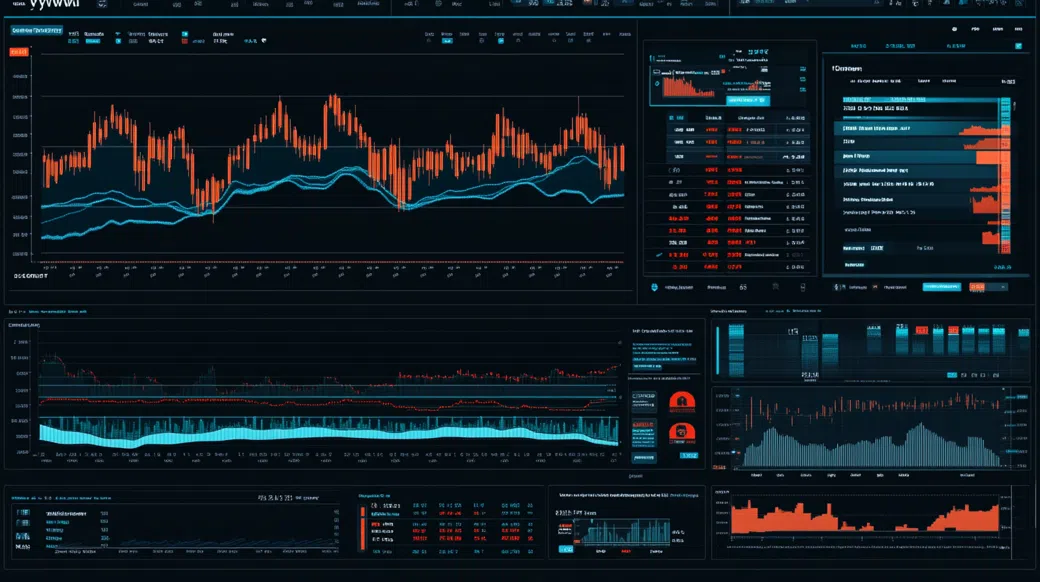
From an equity desk point of view, the fastest way to spot trouble is to follow the plumbing: regulation, execution, and withdrawal friction. That’s why traders search for Αξιονέα alternatives—to upgrade from a basic, retail-style setup into a broker with clearer oversight, more robust platforms, and transparent costs. For this 2026 guide, I treat Αξιονέα as a baseline profile where public, verifiable disclosures are limited: typically a CFD/FX offering, a proprietary web trader, and terms that can change faster than spreads. If you trade from the US/EU, the priority is not “more leverage”; it’s cleaner legal protections, better reporting, and a platform you can actually audit (orders, fills, slippage, fees). The goal below is to show regulated options vs Αξιονέα that are widely used, jurisdiction-aware, and operationally resilient.
Disclaimer: This article is for informational purposes only and does not constitute investment advice. Trading leveraged products carries a high level of risk.
Based on typical retail brokerage patterns when detailed, verifiable documentation is limited, Αξιονέα can be framed as a CFD-style venue focused on speculative trading rather than long-term investing. Under the Auto‑Simulation baseline, it resembles an unregulated or offshore (high risk) broker offering Forex and CFDs via a proprietary web trader (basic). That matters because your real edge is not a watchlist—it’s enforceable rules: who supervises the firm, where your money sits, how disputes are handled, and whether negative balance protection and margin rules are mandated. Traders comparing platforms like Αξιονέα usually do so after realizing that “feature lists” don’t compensate for weak governance.
A basic proprietary web trader typically includes order entry (market/limit/stop), a small set of indicators, and standard charting timeframes. Where these platforms often fall short is workflow: limited depth-of-market views, fewer order types, weaker trade analytics, and less transparency on execution quality (requotes vs market execution, slippage stats, and fill policies). Mobile access is often browser-based or a light app wrapper rather than a full-featured native terminal. For active traders, the missing layer is the audit trail: exportable statements, order-by-order timestamps, and consistent fee line items—tools you get more reliably with regulated brokers similar to Αξιονέα but running MT4/MT5, cTrader, or established proprietary platforms.
With limited confirmed disclosures, use the industry baseline as a comparison anchor: floating spreads from ~2.0 pips on major FX pairs, plus financing/rollover for overnight CFD positions and potential non-trading fees (inactivity, withdrawals, currency conversion). Account tiers—if offered—often bundle “benefits” (support or education) rather than delivering measurable execution improvements. When evaluating competitors to Αξιονέα, insist on a fee schedule you can reconcile line-by-line against platform statements.
In my experience covering emerging-market brokerages and fintech rails, switching decisions are rarely emotional—they’re triggered by operational frictions. Traders start searching for Αξιονέα alternatives when the cost of uncertainty exceeds the cost of moving: you want predictable execution, verifiable regulation, and withdrawals that behave like a process, not a negotiation.
Forget marketing. A good shortlist of top substitutes for Αξιονέα starts with jurisdiction fit (US vs EU/UK), then moves to product set, total costs, and platform tooling. If you can’t verify it in a regulator’s register or in a broker’s legal docs, treat it as a claim—not a fact.
For EU/UK clients, prioritize brokers supervised by authorities such as the FCA (UK), CySEC (Cyprus/EU), BaFin (Germany), or ASIC (Australia) with clear entity mapping and client-money rules. For US clients, spot FX/CFDs are heavily restricted; many “CFD brokers” don’t onboard US residents. In practice, your regulated alternatives to Αξιονέα may be US securities brokers (SEC/FINRA) for stocks/ETFs/options and CFTC/NFA-regulated venues for listed futures/forex where permitted. Check: (1) legal entity and address, (2) regulator register entry, (3) complaint process, (4) negative balance protection where relevant, and (5) segregation/compensation scheme disclosures.
Match the broker to your strategy. If your edge is macro + technicals, FX and indices CFDs might be enough—but you still want robust risk controls. If you build portfolios, you need real equities/ETFs with corporate action handling and tax documents. If you hedge with listed derivatives, you want exchange-traded futures/options rather than OTC CFDs. Brokers similar to Αξιονέα can look comparable on the surface (same symbols) while delivering very different instrument quality (CFDs vs underlying) and legal protections.
Compare all-in costs: spreads + commissions + swaps/financing + conversion + deposit/withdrawal fees. If the baseline assumption for Αξιονέα is ~2.0 pips floating on majors, then serious competitors should show either tighter spreads, transparent commission pricing, or better execution that reduces hidden slippage. Read the “order execution policy” and reconcile one month of statements: numbers speak louder than narratives.
Look for stability and auditability: MT4/MT5, cTrader, TradingView integrations, or mature proprietary platforms with detailed fills. Execution quality shows up in: stop handling during volatility, partial fills (for multi-asset brokers), and whether the broker publishes execution statistics. For platforms like Αξιονέα, the common weakness is shallow reporting—so prioritize exports (CSV), API access if you need automation, and clear margin methodology.
Support is a risk control. Test response times, escalation paths, and funding rails (bank wires, cards, local methods). Education is nice; operational competence is non-negotiable. A reliable competitor to Αξιονέα should make withdrawals boring, statements consistent, and terms predictable.
Using the baseline profile (Forex/CFDs, proprietary web trader, floating spreads from ~2.0 pips), the value proposition is usually simplicity: quick access, leveraged exposure, and a single interface. The trade-off is structural. OTC CFDs add counterparty risk (you trade against the broker’s liquidity setup), and your effective costs are not just spreads—they’re also financing, execution during volatility, and how stops are honored. That’s where Αξιονέα alternatives can be materially better: regulated entities must follow stricter marketing rules, risk disclosures, and in many jurisdictions provide negative balance protection for retail clients. Also, established platforms (MT5/cTrader) allow deeper analytics: trade logs, strategy testing, and plugin ecosystems that reduce the “black box” feel.
What I would measure when comparing brokers similar to Αξιονέα in FX/CFDs: average spread during London/NY overlap, swap rates on your most-held pairs, execution model clarity (STP/ECN language backed by policy docs), and the fraction of trades experiencing negative slippage during high-impact events. If a broker cannot provide consistent reporting, that’s a signal—because you can’t manage what you can’t measure.
Many CFD-first platforms offer “stocks” as share CFDs, not real share dealing. If that’s the case, you may not get full shareholder rights, and costs can include wider spreads and financing for leveraged long holds. If you want long-term exposure, dividend handling, and clean tax documentation, you’re usually better served by regulated multi-asset brokers. This is one of the clearest areas where alternatives to the Αξιονέα trading platform stand out: real stocks/ETFs with transparent commissions (or commission-free models in some regions) and proper custody frameworks. For US investors specifically, a US-regulated securities broker is typically the correct tool for equities/ETFs.
Crypto access on retail broker platforms is often either (1) crypto CFDs or (2) a limited set of spot coins via a partner entity, with important differences in ownership and transferability. Under the conservative baseline, assume crypto—if present—is likely CFD-based and may be restricted by jurisdiction. If you need on-chain transfers, staking, or broad token access, you’ll likely separate venues: a regulated broker for traditional assets and a compliant crypto exchange for spot. Here, the “best Αξιονέα alternatives 2026” are not necessarily the ones listing the most tokens; they’re the ones clearly stating whether you own the asset, how custody works, and what protections apply if something breaks.
Regulation: IG operates regulated entities in major jurisdictions (commonly including the UK FCA and other tier-1 regulators; exact entity depends on your country).
Markets: Strong multi-asset offering, including FX/indices/commodities CFDs and, in some regions, share dealing.
Fees: Typically competitive pricing for active CFD/FX traders; costs vary by instrument and account type (spread-based and/or commission components depending on product).
Platform: Mature proprietary platform; MT4 support in many regions; strong research and risk tools.
Best For: EU/UK traders who want a heavily regulated venue and broad CFD coverage—one of the most robust Αξιονέα alternatives for risk-aware clients.
Regulation: Regulated banking/brokerage framework in Europe (entity and protections depend on residency).
Markets: Deep multi-asset access (stocks, ETFs, bonds, options, futures, FX, and CFDs in supported jurisdictions).
Fees: Transparent commission schedules for exchange-traded products; FX/CFD pricing varies by tier and volume.
Platform: SaxoTraderGO/PRO with institutional-style tooling, reporting, and portfolio analytics.
Best For: Traders and investors graduating from platforms like Αξιονέα who want real multi-asset access and strong reporting.
Regulation: Operates through regulated entities in the US (SEC/FINRA) and Europe/UK (varies by client location and entity).
Markets: Broadest mainstream coverage: global stocks/ETFs, options, futures, bonds, FX, and more (product availability depends on region and permissions).
Fees: Generally low, transparent commissions and financing; professional-grade margin and reporting (fees depend on market and routing).
Platform: Trader Workstation (TWS), web/mobile, APIs; advanced order types and analytics.
Best For: Serious multi-asset traders and investors seeking regulated options vs Αξιονέα with maximum market access and auditability.
Regulation: Regulated in top jurisdictions (often including FCA in the UK; exact entity depends on location).
Markets: Strong CFD suite across FX, indices, commodities, rates, and shares (CFDs), plus investing options in some regions.
Fees: Competitive spreads on major FX pairs; pricing model varies by region and product (spread and/or commission options).
Platform: Feature-rich proprietary platform with strong charting, pattern tools, and research; MT4 in many regions.
Best For: Active CFD traders who want a more mature platform than the baseline alternatives to the Αξιονέα trading platform.
Regulation: Regulated operations in multiple jurisdictions; notably offers a US-regulated forex pathway for eligible US clients (rules differ by region).
Markets: FX-focused (and CFDs in certain non-US jurisdictions), designed for currency trading and hedging workflows.
Fees: Pricing typically spread-based with optional commission structures in some regions; costs vary by account and location.
Platform: OANDA web/mobile plus MT4 integration in many regions; strong historical data reputation.
Best For: FX-first traders looking for brokers similar to Αξιονέα but with clearer regulatory posture (especially relevant for US FX constraints).
Regulation: Operates under Swiss/EU regulatory frameworks depending on entity; generally positioned as a high-trust venue.
Markets: Multi-asset: stocks/ETFs, funds, bonds, FX, CFDs (jurisdiction dependent), and some crypto services in certain regions.
Fees: Commission schedules for securities and spreads for FX/CFDs; tends to be transparent, with total costs depending on product and venue.
Platform: Proprietary platforms plus integrations (availability depends on region); strong banking-style reporting.
Best For: Traders who prioritize custody perception and documentation—top substitutes for Αξιονέα where trust and statements matter.
| Platform | Regulation | Main Markets | Typical Costs | Best For |
|---|---|---|---|---|
| IG | Tier-1 regulated entities (e.g., FCA; varies by region) | FX/CFDs; shares in some regions | Instrument-dependent spreads/commissions; generally competitive for active trading | EU/UK traders wanting broad CFDs and strong oversight |
| Saxo | Regulated European brokerage/banking framework (entity varies) | Stocks/ETFs, options, futures, FX, CFDs | Transparent securities commissions; tiered FX/CFD pricing | Multi-asset portfolios and advanced platform users |
| Interactive Brokers | US SEC/FINRA + EU/UK regulated entities (by residency) | Global stocks/ETFs, options, futures, FX, bonds | Low, transparent commissions; margin/financing varies by product | Professionals and serious investors needing maximum access |
| CMC Markets | Tier-1 regulated (often FCA; region dependent) | CFDs across FX/indices/commodities/shares | Competitive spreads; some commission-based models by region | Active CFD traders focused on tools and charting |
| OANDA | Multi-jurisdiction regulated; US-regulated forex pathway for eligible clients | FX (plus CFDs in some non-US regions) | Mostly spread-based; optional pricing structures in some regions | FX-first traders, including US clients needing compliant access |
| Swissquote | Swiss/EU regulated entities (depends on client location) | Multi-asset; some crypto services (region dependent) | Securities commissions + FX/CFD spreads; product dependent | Documentation-heavy users prioritizing perceived safety |
Switching is a process, not a click. Treat it like operational risk management—especially when moving from brokers similar to Αξιονέα into a regulated account structure.
There isn’t a single “best” pick globally because US and EU rules differ, but a practical ranking starts with your product needs. For multi-asset investing (real stocks/ETFs, options, futures), Interactive Brokers is often the strongest benchmark. For EU/UK CFD trading with strong oversight, IG and CMC Markets are frequently shortlisted among the best Αξιονέα alternatives 2026. The correct choice is the broker whose regulated entity matches your residency and whose costs and execution you can verify with statements.
Safety is primarily a regulation-and-entity question. If you cannot verify licensing and investor-protection details through official registers and legal documentation, treat Αξιονέα as higher risk under the baseline assumption (unregulated or offshore). That’s the core reason many traders prefer Αξιονέα alternatives where client-money handling, disclosures, and dispute resolution are clearly defined.
Under the conservative baseline used in this article, Αξιονέα is primarily positioned around Forex and CFDs, which may include share CFDs rather than real stock ownership. Listed futures access is typically not a core feature of CFD-first web traders, and crypto—if offered—may be via CFDs and can be jurisdiction-restricted. If you need real stocks/ETFs or listed futures, top substitutes for Αξιονέα like Interactive Brokers or Saxo are usually a better structural fit.
Check (1) the exact regulated entity and your eligibility (US vs EU constraints), (2) how client funds are held and what protections apply, (3) total costs including swaps/financing and withdrawal/currency fees, (4) platform auditability (statements, order logs, API/export), and (5) a small deposit-and-withdrawal test. Doing this turns “competitors to Αξιονέα” into a measurable comparison instead of a marketing contest.
Final verdict: if you’re evaluating Αξιονέα alternatives for 2026, optimize for verifiable regulation and operational reliability first, then platform features. Using the baseline assumptions, Αξιονέα looks like limited functionality compared to top-tier brokers—fine for browsing charts, not ideal for serious risk management. The strongest replacements are the ones that make fees, fills, and withdrawals predictable.