Boldequitor Trading Platform Alternatives 2026
Compare Boldequitor alternatives for 2026 across regulation, costs, platforms, and markets. A safety-first guide for US/EU traders choosing reliable brokers.

Compare Boldequitor alternatives for 2026 across regulation, costs, platforms, and markets. A safety-first guide for US/EU traders choosing reliable brokers.
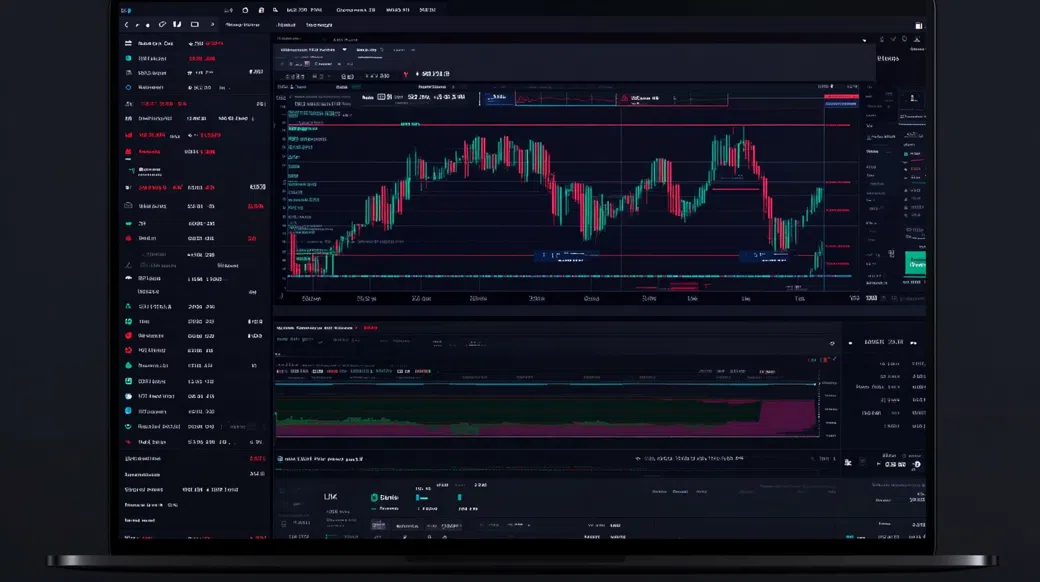
Leverage is seductive because it makes small accounts feel institutional. The math is less romantic: a few pips of spread, a bit of slippage, and an over-sized position can turn “active trading” into a steady bleed. That’s the lens I use when readers ask about Boldequitor and where it sits in the global broker landscape.
From what’s typically observable with offshore CFD-first providers, Boldequitor appears to operate under a Seychelles-style offshore framework (Seychelles FSA), offering mainly forex and CFDs, commonly including crypto CFDs. The platform setup is usually a proprietary WebTrader with a companion iOS/Android app—fine for basic execution, less convincing for systematic workflows or deeper analytics. Expect a minimum deposit around $250, headline leverage up to 1:500, and EUR/USD spreads that often start near 2.0 pips on a standard-style account. Those numbers aren’t “good” or “bad” in isolation; they’re simply the inputs you must price into your strategy.
This guide to Boldequitor alternatives focuses on regulated, widely used venues that US/EU traders can verify on public registers. I’m prioritizing practical questions: Do you want real stocks/ETFs or just CFDs? Do you need MT4/MT5/cTrader for automation? And what does your all-in cost look like per round-turn when you trade size?
Disclaimer: This article is for informational purposes only and does not constitute investment advice. CFDs and other leveraged products carry a high risk of loss and may not be suitable for all investors.
On structure, Boldequitor sits in the offshore, CFD-first corner of the industry: a brokerage model geared toward leveraged trading on forex and popular CFD underlyings (indices, commodities, and often crypto CFDs). For many retail traders, that means quick onboarding, a relatively low barrier to entry (commonly around a $250 minimum deposit), and access to leverage up to 1:500. The trade-off is that oversight and investor-protection features may not match what you get under FCA, ASIC, CySEC, or NFA regimes—especially around segregation practices, dispute resolution, and compensation frameworks.
The typical stack here is a proprietary WebTrader paired with mobile apps. You usually get the essentials: one-click trading, basic timeframes, a standard set of indicators, and drawing tools that cover the common use cases (trend lines, Fibonacci, support/resistance markup). Where platforms like Boldequitor can feel thin is workflow depth—multi-chart layouts, advanced order controls, and robust journaling/export features are often limited compared to MT4/MT5/cTrader ecosystems. Execution “feel” matters too: if the platform doesn’t surface order routing detail or slippage reporting clearly, it’s harder to diagnose whether your strategy is losing to the market—or to microstructure and fees.
For costs, the common pattern is a spread-led model on a Standard-style account, with EUR/USD frequently around 2.0 pips as a typical starting point. Some brokers in this segment advertise a Raw/ECN-like tier: think 0.0–0.4 pips plus a commission roughly in the $5–$8 round-turn range, but the real test is consistency during volatile sessions. Add swap/overnight financing (material for multi-day holds), plus potential withdrawal or inactivity charges depending on policy. When evaluating competitors to Boldequitor, I prefer translating everything into “dollars per round-trip” for your average trade size—because that’s what hits your P&L.
A switch rarely happens because of one headline feature; it happens when frictions stack up. With offshore, high-leverage CFD venues, the first stress point is usually operational: funding, withdrawals, or support response time when something breaks at the worst moment. The second stress point is economic: spreads, swaps, and slippage that look small per trade but become large over a month. That’s why Boldequitor alternatives should be judged like any other trading input—measured, tested, and verified.
I treat broker selection like position sizing: you’re allocating risk, not picking a logo. Start by defining what you must have (markets and platform stack), then eliminate anything you can’t independently verify on regulator registers. Only after that do you compare spreads, commissions, and financing—because a tight quote is meaningless if governance is weak.
For US/EU-focused traders, the short list of regulators that actually changes the risk profile includes the FCA (UK), ASIC (Australia), CySEC (Cyprus/EU), and NFA/CFTC (US). Under FCA rules, eligible clients can fall under the FSCS (up to £85,000), while CySEC firms may be covered by the ICF (up to €20,000). Look for segregated client funds language, but don’t stop there—verify the entity name and license number on the regulator’s public register, not on a marketing page.
Be brutally specific about what you’re trading. If you want to own stocks/ETFs (with shareholder rights and typical corporate action handling), you’re usually looking at a multi-asset broker, not a CFD-only venue. If your focus is FX and index CFDs, then depth of instruments and contract specs matter more: majors/minors availability, index session hours, and whether commodities are priced in a way that matches your risk model. The best substitutes for Boldequitor depend on whether you’re building a portfolio or running short-horizon trades.
Spreads are the visible part of the bill; commissions, swap/overnight fees, and inactivity charges are the quiet part. Compare on an all-in, round-turn basis: for example, a 0.2–0.4 pip raw spread plus commission can be cheaper than a “commission-free” 1.5–2.0 pip spread once you trade meaningful volume. Also price in swaps if you hold through rollover—many retail strategies accidentally become “carry strategies” because they ignore financing.
Platform choice is not aesthetic; it changes what strategies are even possible. MT4/MT5 and cTrader open the door to automation, custom indicators, and VPS deployment; proprietary platforms can be smooth but narrower. Execution model matters: market maker vs STP/ECN/DMA affects how orders are internalized and how slippage can show up in fast markets. If you’re moving away from Boldequitor, test execution with small size during high-volatility windows, not only during calm Asia sessions.
Good support isn’t “friendly chat”—it’s fast, documented answers when money is stuck or a margin call looks wrong. Check support hours against your trading schedule, confirm language coverage, and see whether the broker publishes clear product disclosures (margin policy, negative balance protection, and fee schedule). Education is optional; operational clarity is not. Mobile parity matters too: you don’t want a platform where risk controls are desktop-only when markets gap on a weekend.
On FX/CFDs, the usual Boldequitor-style proposition is simple: many retail-friendly instruments (roughly 30–50 FX pairs, 8–15 indices, 5–10 commodities, and a menu of crypto CFDs), plus leverage up to 1:500. The pressure point is cost and execution transparency. A typical EUR/USD spread around 2.0 pips can be workable for swing trading, but it’s punitive for high-frequency entries where expectancy is measured in single-digit pips. Regulated FX specialists like Pepperstone and OANDA tend to offer clearer disclosures, more established platform ecosystems (MT4/MT5/cTrader or strong proprietary tools), and a regulatory framework that’s easier to verify. In practice, the “better” choice is the one that keeps your realized spread + slippage stable when volatility spikes—because that’s when most retail accounts blow up.
If your plan includes building exposure to US/EU equities, the key question is whether you’re buying the underlying asset or just trading a stock CFD. Many offshore CFD platforms either don’t offer real stock/ETF dealing, or they offer equity exposure mainly through CFDs—meaning no shareholder rights, different tax documentation, and typically higher financing costs for holding long-term. Here, multi-asset venues like Interactive Brokers (IBKR) and Saxo Bank are the practical upgrades: they’re built for real stocks/ETFs, options, and futures in a single account with a more institutional custody model. For portfolio traders, that structural difference beats any marketing promise about leverage.
Crypto is where definitions matter. On many CFD-first brokers, “crypto trading” means crypto CFDs: you’re trading price movement with leverage, not holding coins on-chain, not moving assets to a wallet, and not participating in staking or network utility. That can be fine for short-term hedging, but it’s a different product with different risks (financing, weekend gaps, and platform-specific pricing). If crypto CFDs are your goal, regulated CFD houses like IG (where available) can provide a clearer compliance envelope and risk disclosures. If you actually want spot ownership, you’ll likely need a separate regulated crypto venue—outside the scope of most classic FX/CFD broker accounts.
Regulation: SEC/FINRA (US), FCA (UK), IIROC (Canada)
Markets: Stocks, ETFs, options, futures, bonds, FX
Fees: FX spreads are typically competitive (varies by venue/size); commissions apply on many products; overall cost best evaluated per instrument and routing
Platform: Trader Workstation (TWS), IBKR Desktop, web and mobile
Best For: Real multi-asset portfolio builders (US/EU equities focus)
Regulation: FCA (UK), ASIC (Australia), CySEC (EU), DFSA (Dubai)
Markets: FX and CFDs (indices, commodities; product mix varies by entity)
Fees: Standard accounts often around ~1.0+ pip equivalent; Raw-style pricing can be ~0.0–0.3 pips plus commission (all-in depends on size and session)
Platform: MT4, MT5, cTrader
Best For: Systematic FX traders using EAs/VPS
Regulation: FCA (UK), MAS (Singapore), DFSA (Dubai)
Markets: Stocks, ETFs, options, futures, FX, CFDs
Fees: Pricing varies by tier; FX spreads are generally competitive for larger accounts; custody/market access is the core value proposition
Platform: SaxoTraderGO, SaxoTraderPRO
Best For: Cross-asset traders who want strong research and tools
Regulation: CFTC/NFA (US), FCA (UK), ASIC (Australia), IIROC (Canada)
Markets: FX (and CFDs in some jurisdictions)
Fees: Typically spread-based pricing; majors often around ~0.6–1.2 pips depending on market conditions and account setup
Platform: OANDA web/mobile, MT4 (availability varies)
Best For: US-eligible FX traders prioritizing oversight
Regulation: FCA (UK), ASIC (Australia), MAS (Singapore)
Markets: CFDs (indices, FX, commodities; crypto CFDs where permitted), spread betting (UK/IE)
Fees: Largely spread-based; costs vary by market and volatility; financing applies to overnight CFD holds
Platform: IG web platform, mobile apps (MT4 available in some regions)
Best For: Active index-CFD traders needing broad market coverage
Regulation: FCA (UK), CySEC (EU), FSC Bulgaria
Markets: Stocks and ETFs (investing), CFDs (where available)
Fees: Investing accounts often emphasize low explicit commissions; CFD pricing is spread-based and varies by market
Platform: Proprietary web and mobile platform
Best For: Simpler stock/ETF access for UK/EU retail users
| Platform | Regulation | Main Markets | Typical Costs | Best For |
|---|---|---|---|---|
| Interactive Brokers (IBKR) | SEC/FINRA, FCA, IIROC | Real stocks/ETFs, options, futures, bonds, FX | Product-dependent; generally sharp FX and transparent commissions | Real multi-asset portfolio builders (US/EU equities focus) |
| Pepperstone | FCA, ASIC, CySEC, DFSA | FX + CFDs | Raw ~0.0–0.3 pips + commission; Standard ~1.0+ pip equivalent | Systematic FX traders using EAs/VPS |
| Saxo Bank | FCA, MAS, DFSA | Stocks/ETFs, options/futures, FX, CFDs | Tiered pricing; competitive for larger accounts; tool-rich platforms | Cross-asset traders who want strong research and tools |
| OANDA | CFTC/NFA, FCA, ASIC, IIROC | FX (CFDs in some regions) | Mostly spread-based; majors often ~0.6–1.2 pips in normal conditions | US-eligible FX traders prioritizing oversight |
| IG | FCA, ASIC, MAS | CFDs across major asset classes | Spread-led; financing for holds; costs vary by volatility and market | Active index-CFD traders needing broad market coverage |
| Trading 212 | FCA, CySEC, FSC Bulgaria | Stocks/ETFs + CFDs (where available) | Investing: low explicit commissions; CFDs: spread-based pricing | Simpler stock/ETF access for UK/EU retail users |
Switching brokers is operational risk disguised as admin work. Treat it like a controlled migration: verify the destination, reduce exposure before you move money, and keep clean records. If you’re trading leveraged CFDs, avoid overlapping margin across two accounts during the transition—double leverage is still leverage, just with more ways to fail.
If you’re still evaluating the current offer, review the onboarding flow, platform tools, and your region’s eligibility before funding. Then benchmark it against regulated options on spreads, swaps, and execution—measured in your strategy’s actual trade size, not marketing headlines.
Visit BoldequitorThe best alternative depends on whether you need real investing access or just leveraged FX/CFDs. For real stocks/ETFs and broad market access, Interactive Brokers (IBKR) and Saxo Bank are strong Boldequitor alternatives; for FX execution and automation, Pepperstone is often a better fit. If you trade from the US, OANDA is a practical option due to CFTC/NFA oversight.
Boldequitor appears to sit in an offshore framework (commonly presented under Seychelles FSA-style oversight), which is not the same protection level as FCA, ASIC, CySEC, or NFA regimes. That doesn’t automatically make it “unsafe,” but it usually means fewer formal investor-protection mechanisms such as compensation schemes like FSCS or ICF. For risk-sensitive traders, regulated options vs Boldequitor are easier to verify and typically offer clearer governance.
With many platforms like Boldequitor, stocks and ETFs are often offered as CFDs (or not as true ownership products), and exchange-traded futures are typically not the core offering. Crypto exposure is commonly via crypto CFDs—price exposure without on-chain ownership or wallet withdrawals. If you need real stocks/ETFs or futures, brokers similar to Boldequitor won’t match what IBKR or Saxo provides.
Before switching, verify the new broker’s license on the regulator’s public register and confirm which legal entity will hold your account. Next, compare all-in trading costs (spread + commission + swap) and confirm platform requirements (MT4/MT5/cTrader vs proprietary) for your strategy. Finally, plan withdrawals carefully: open and verify the new account first, then move funds using consistent payment methods to reduce AML delays.
About the Author: Carlos Mendes is a former equity desk analyst from São Paulo who covers emerging market brokerages and Latin American fintech. He approaches trading platforms the same way he approached earnings models: focus on disclosed terms, measurable costs, and the risk controls that hold up under stress.