Bronce Fondavío Trading Platform Alternatives 2026
Compare Bronce Fondavío alternatives for 2026: regulated brokers, costs, platforms (MT4/MT5/cTrader), markets, and safety checks for US/EU traders.

Compare Bronce Fondavío alternatives for 2026: regulated brokers, costs, platforms (MT4/MT5/cTrader), markets, and safety checks for US/EU traders.
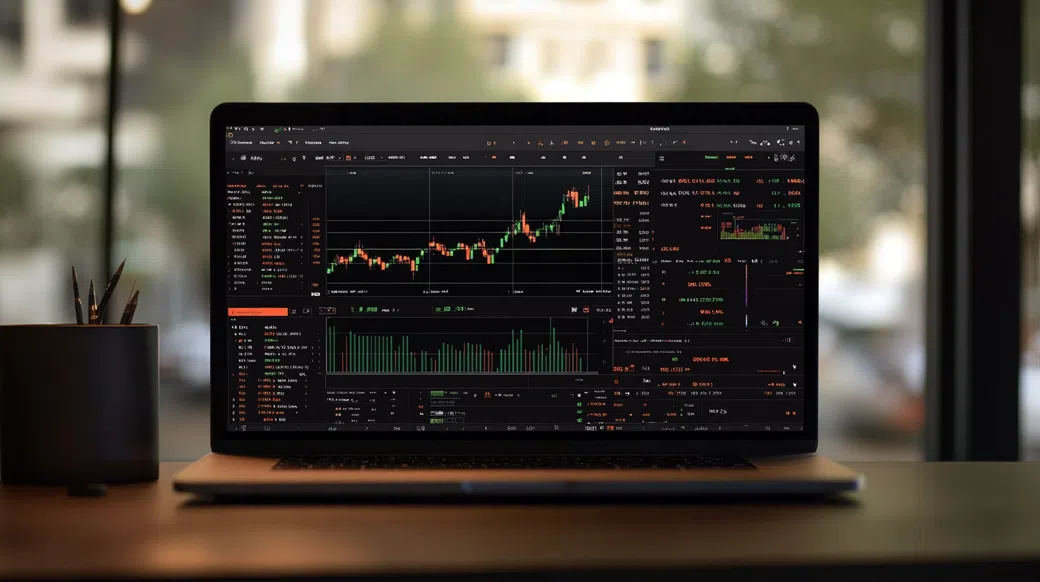
Spreads and execution are where accounts live or die. If you’re evaluating Bronce Fondavío, you’re likely looking at a CFD-first setup: forex pairs, index and commodity CFDs, and usually a menu of crypto CFDs—wrapped in a proprietary WebTrader plus a mobile app. That package can be “good enough” for short-term directional trades. It can also be frustrating once you start measuring your real cost-per-trade (spread + commission + slippage + swaps) and once you care about what sits behind the broker: regulator oversight, client-money segregation, and enforceable dispute mechanisms.
For US/EU traders in particular, the gap between offshore-style offerings and tier‑1 regulated brokers is not philosophical—it’s operational. You’ll see it in leverage limits, negative balance protection, KYC/AML checks, and how withdrawals are handled. The aim of this guide is simple: map out Bronce Fondavío alternatives that reduce operational risk while matching your strategy (manual trading, algo, hedging, or multi-asset investing). I’ll keep the narrative light and the numbers heavy. If the goal is longevity, “headline leverage” is rarely the edge; controllable execution and transparent costs are.
Disclaimer: This article is for informational purposes only and does not constitute investment advice. CFDs and other leveraged products carry a high risk of loss and may not be suitable for all investors.
Across offshore CFD providers, the pattern is consistent: a single account gives access to leveraged FX and CFDs, with the broker typically acting as a market maker for retail flow. Bronce Fondavío fits that mold based on what is commonly observed in this segment, operating under an offshore framework (often associated with the Seychelles FSA) and targeting traders who want quick access, high leverage, and a simplified product shelf. The typical minimum deposit sits around $250, and maximum leverage can run up to 1:500—numbers that look attractive until you translate them into margin-call probability during fast markets.
The usual stack here is a proprietary WebTrader with basic-to-mid charting, a standard order ticket, and an account dashboard that emphasizes margin, P/L, and open positions. Expect common order types (market, limit, stop), plus watchlists and alert-style functions. Indicator depth is typically serviceable rather than institutional—enough for moving averages, RSI, MACD, and a handful of overlays, but not the ecosystem you’d expect from MT4/MT5 or cTrader. Mobile parity is often decent for monitoring and execution, though heavy chart work and multi-window workflows tend to be better on desktop platforms like those used by many platforms like Bronce Fondavío.
On costs, offshore CFD brokers usually monetize via spread markups, plus swaps/overnight financing on held positions. A typical EUR/USD spread “from around” 2.0 pips on a standard-style account is common in this bracket, with higher costs showing up during illiquid hours. Some brokers advertise raw/ECN-style tiers; if offered, the economics are usually tight spreads (often near 0.0–0.4 pips) plus a commission in the neighborhood of $5–$8 round-turn. Also watch the non-trading line items: withdrawal fees, inactivity charges after a quiet period, and the swap schedule—which can quietly dominate P&L for swing traders.
Cost is the first alarm bell I see on desks: a “2.0 pip” EUR/USD baseline can be survivable for position trading, but it punishes high-frequency entries. That’s where Bronce Fondavío alternatives start to make sense—especially if your monthly volume is large enough that a fraction of a pip becomes real money. The second trigger is structure: execution model, regulator oversight, and whether negative balance protection is contractually enforced. Add withdrawal friction and limited multi-asset access, and the case for competitors to Bronce Fondavío gets less emotional and more mathematical.
Think of this as fit-to-strategy, not a beauty contest. The right substitute depends on what you trade (FX vs equities), how you trade (manual vs algo), and the maximum operational risk you’re willing to tolerate. Bronce Fondavío alternatives should be screened with the same discipline you’d apply to a balance sheet: verify oversight, model true costs, and test execution before you scale.
Start with the regulator and verify it yourself: FCA (UK), ASIC (Australia), CySEC (Cyprus), or NFA/CFTC (US). Those frameworks typically require segregated client funds and have clearer rules around disclosures and complaints. Compensation also matters in the EU/UK context: FSCS coverage can go up to £85,000 for eligible UK clients under FCA-regulated firms, while CySEC’s ICF can cover up to €20,000 in certain cases. Offshore setups rarely offer an equivalent safety net.
Map instruments to objectives. FX and index CFDs are fine for tactical trading, but they won’t replace real ownership of stocks/ETFs if your horizon is months or years. If you want options, futures, bonds, and global equities with DMA-like access, you’ll typically end up with a multi-asset broker. If you only need leveraged CFDs and you size risk tightly, an FX/CFD specialist can be efficient—provided regulation and execution are credible.
Ignore “max leverage” and price the round-turn. A scalper doing 200 round-turn lots/month will feel every 0.2 pip difference; the math can overwhelm any promotional perk. Break fees into four buckets: spread, commission, swap/overnight, and administrative fees (inactivity, withdrawals). If you’re comparing alternatives to the Bronce Fondavío trading platform, insist on seeing the schedule for swaps and financing—especially on indices and crypto CFDs, where holding costs can bite.
Platform is workflow. MT4/MT5 remain relevant for indicator libraries and EA ecosystems; cTrader is popular with traders who want cleaner order handling and depth-of-market style tooling. Proprietary platforms can be stable, but they can also lock you into a single interface and limited automation. Execution model matters: market maker vs STP/ECN/DMA affects how orders are internalized, and it influences your slippage distribution during volatile prints.
Support quality shows up when something breaks: a margin call dispute, a withdrawal delay, or a platform outage. Check hours that match your trading session, language coverage, and whether responses are written by people who understand margin, swaps, and order types. Education is secondary for pros, but platform documentation is not—especially if you’re migrating indicators, APIs, or risk controls across devices.
Bronce Fondavío’s core value proposition is usually FX and CFDs: roughly 30–50 forex pairs, 8–15 indices, and a small set of commodities. The leverage ceiling (often up to 1:500) looks powerful, but it compresses the distance between “normal volatility” and liquidation. On pricing, a typical ~2.0 pip EUR/USD standard spread is workable for low-frequency trading, yet it’s expensive for high-turnover systems. Regulated FX/CFD specialists like Pepperstone and OANDA generally offer clearer pricing ladders (standard vs raw/commission), more mature platform ecosystems (MT4/MT5/cTrader or proprietary + MT4), and stronger expectations around negative balance protection in eligible regions. The practical difference is not a slogan—it’s how your fills behave during a data release and how predictable your true cost-per-round-turn remains.
If you’re trying to build long-run exposure, stock CFDs are a different instrument than real shares. With CFDs you typically don’t get shareholder rights, and financing costs can make “buy-and-hold” mathematically unattractive. Many offshore CFD platforms either don’t offer cash equities/ETFs or keep them CFD-only. That’s where brokers similar to Bronce Fondavío stop being comparable: Interactive Brokers (IBKR) is built around access to real global exchanges (stocks, ETFs, options, futures, bonds), and Saxo Bank also targets multi-asset investors who want a consolidated portfolio view rather than a CFD ticket. For EU/UK readers who want both investing and tactical hedging, those multi-asset stacks can reduce platform sprawl and simplify tax reporting compared with running CFDs as a proxy for everything.
Crypto on CFD platforms is typically synthetic exposure—price tracking via a derivative, not on-chain ownership. That can be fine if your objective is short-term speculation with defined risk and you accept financing/overnight mechanics. It’s not the same as holding coins in a wallet, and it won’t let you transfer assets on-chain. In regulated CFD environments, IG and Plus500 (region-dependent) are commonly used for crypto CFDs, with clearer retail risk disclosures and leverage restrictions aligned to local rules. If your plan is to trade crypto alongside FX and indices, the best Bronce Fondavío alternatives 2026 are the ones that show transparent margin requirements, publish trading hours/halts clearly, and have a track record of stable execution during spikes.
Regulation: SEC/FINRA (US), FCA (UK), IIROC (Canada) via group entities
Markets: Stocks, ETFs, options, futures, bonds, FX
Fees: FX spreads vary by venue/liquidity; equities priced via commission schedules (low per-share on many markets)
Platform: Trader Workstation (TWS), IBKR Desktop/Web, mobile app, APIs
Best For: Global multi-asset investors who want real market access
Regulation: FCA (UK), ASIC (Australia), CySEC (Cyprus), DFSA (Dubai)
Markets: FX and CFDs (indices, commodities, some crypto CFDs depending on region)
Fees: Standard spreads commonly from ~1.0 pip; Raw-style pricing often ~0.0–0.3 pips + commission (varies by platform/account)
Platform: MT4, MT5, cTrader, TradingView integration (region-dependent)
Best For: System traders focused on low spreads and platform choice
Regulation: FCA (UK), MAS (Singapore), DFSA (Dubai) via group entities
Markets: Stocks, ETFs, bonds, FX, options, futures, CFDs
Fees: Tiered pricing by product; FX spreads typically start around ~0.6–1.0 pips depending on tier and market conditions
Platform: SaxoTraderGO, SaxoTraderPRO
Best For: Portfolio-style traders mixing investing with tactical hedges
Regulation: CFTC/NFA (US), FCA (UK), ASIC (Australia), IIROC (Canada) via group entities
Markets: FX (and CFDs in some jurisdictions)
Fees: Typically spread-based pricing; major-pair spreads often from ~0.6–1.2 pips depending on market conditions and region
Platform: OANDA web/mobile, MT4 (availability varies), APIs
Best For: FX-first traders who value regulatory footprint and transparency
Regulation: FCA (UK), ASIC (Australia), BaFin (Germany) via group entities
Markets: CFDs (FX, indices, commodities, shares as CFDs)
Fees: Competitive spread-based CFD pricing; EUR/USD often quoted from ~0.7–1.0 pips in liquid hours (varies by account/region)
Platform: Next Generation platform, mobile app
Best For: Active discretionary CFD traders who want strong charting
Regulation: FCA (UK), CySEC (Cyprus), ASIC (Australia), MAS (Singapore)
Markets: CFDs (FX, indices, commodities, shares as CFDs, crypto CFDs where permitted)
Fees: Primarily spread-based; costs vary by instrument and volatility, with overnight funding on held CFD positions
Platform: Plus500 WebTrader, iOS/Android apps
Best For: Simplicity-focused traders who prefer an all-in-one WebTrader
| Platform | Regulation | Main Markets | Typical Costs | Best For |
|---|---|---|---|---|
| Interactive Brokers (IBKR) | SEC/FINRA, FCA, IIROC (group) | Real stocks/ETFs, options, futures, bonds, FX | Commission schedules by product; FX spreads variable by liquidity | Global multi-asset investors who want real market access |
| Pepperstone | FCA, ASIC, CySEC, DFSA | FX + CFDs | From ~1.0 pip (Standard) or ~0.0–0.3 pips + commission (Raw-style) | System traders focused on low spreads and platform choice |
| Saxo Bank | FCA, MAS, DFSA (group) | Stocks/ETFs, FX, options, futures, CFDs | Tiered; FX often ~0.6–1.0 pips depending on client tier/conditions | Portfolio-style traders mixing investing with tactical hedges |
| OANDA | CFTC/NFA, FCA, ASIC, IIROC (group) | FX (CFDs in some regions) | Typically spread-only; majors often ~0.6–1.2 pips in normal conditions | FX-first traders who value regulatory footprint and transparency |
| CMC Markets | FCA, ASIC, BaFin (group) | CFDs across FX/indices/commodities/share CFDs | Spread-based; EUR/USD often ~0.7–1.0 pips in liquid sessions | Active discretionary CFD traders who want strong charting |
| Plus500 | FCA, CySEC, ASIC, MAS | CFDs (FX, indices, commodities, share CFDs, crypto CFDs where allowed) | Spread-based + overnight funding; varies widely by volatility | Simplicity-focused traders who prefer an all-in-one WebTrader |
Migration is not just “open a new login.” Treat it like operational risk control: you want continuity of access, clean records, and no surprise margin exposure during the switch. If you’re coming from an offshore-style CFD setup, the biggest practical dangers are leaving positions open into a withdrawal, misunderstanding swap schedules, or failing KYC and getting stuck mid-transfer. Start methodically, and keep position sizing small until the new execution environment proves itself.
If you’re still considering it, compare the platform stack and fee schedule line-by-line against the regulated options above, then check whether your country is eligible and what leverage rules apply. For most traders, the decision improves once you quantify spreads, swaps, and execution rather than relying on marketing claims.
Visit Bronce FondavíoThe best choice depends on whether you need real multi-asset access or just FX/CFDs. For global stocks/ETFs and derivatives, Interactive Brokers (IBKR) is hard to beat on market breadth; for FX/CFD execution and platform choice, Pepperstone is a strong candidate in many regions. If your workflow is discretionary CFD trading with advanced charting, CMC Markets is a credible substitute. In other words: pick the broker that matches your instrument set and your cost-per-round-turn target.
Bronce Fondavío appears closer to an offshore/unregulated framework (commonly associated with jurisdictions like Seychelles) than to FCA/ASIC/CySEC-style supervision. That doesn’t automatically mean you can’t trade, but it does mean fewer enforceable protections compared with tier‑1 regulated firms—especially around dispute resolution, client-money rules, and compensation schemes like FSCS or ICF. If safety is a priority, favor regulated options vs Bronce Fondavío and verify the exact legal entity on the regulator’s register.
With brokers in this category, you’re typically looking at FX and CFDs, with crypto usually offered as crypto CFDs rather than coin ownership. Real exchange-traded stocks/ETFs and listed futures are often not offered, or are presented only as CFDs—meaning financing costs and no shareholder rights. If you want listed futures or real equities, IBKR or Saxo are closer fits; for crypto CFDs within a regulated CFD wrapper, IG (where available) is a common route.
Confirm the new broker’s regulator and legal entity, then model your expected costs using round-turn pricing (spread + commission) plus swaps. Before you withdraw from Bronce Fondavío, export statements and close positions so you’re not forced into a liquidation during the cash transfer. Finally, run a small live test to observe slippage, execution speed, and platform stability before deploying full size.
About the Author: Carlos Mendes is a former equity desk analyst from São Paulo who covers emerging-market brokerages and Latin American fintech. He focuses on the measurable inputs that shape trading outcomes—execution quality, fee drag, and the legal structure that governs client money.