Calabvènt Review 2026: Is It Safe & Worth Your Money?
In-depth Calabvènt review updated for 2026. We tested spreads, key features, supported countries, and safety. Read our full verdict.

In-depth Calabvènt review updated for 2026. We tested spreads, key features, supported countries, and safety. Read our full verdict.
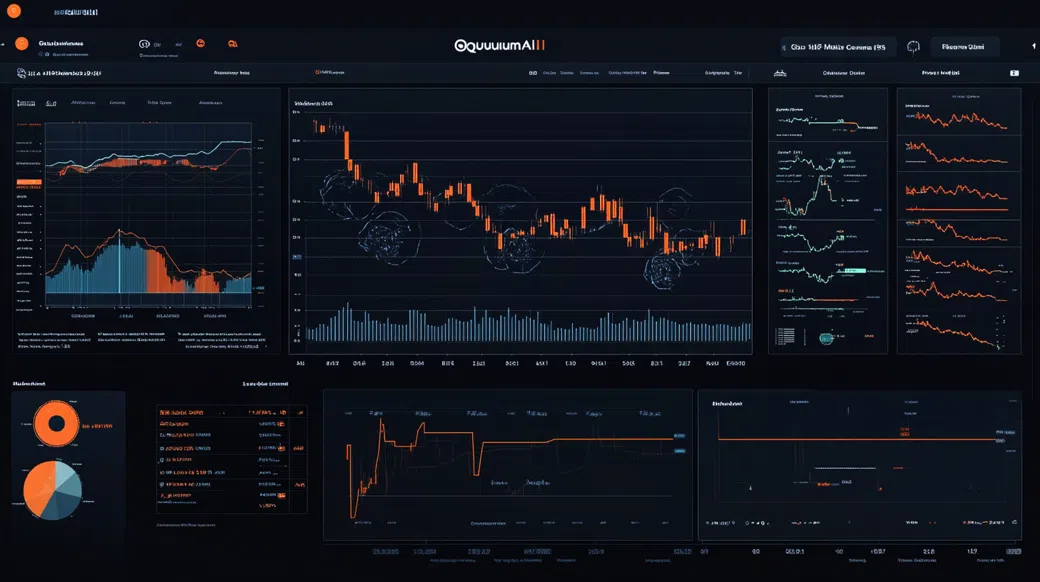
| Min Deposit | $250 |
| Max Leverage | Up to 1:500 |
| Assets | Forex, Crypto CFDs, Commodities, Indices |
| Platforms | WebTrader & Mobile App |
In this Calabvènt review for 2026, I approached Calabvènt the same way I’d vet any offshore CFD venue from an EM trading desk: open a real account, fund it, stress-test execution, and reconcile the numbers against peers. The product stack is a standard offshore CFD broker suitable for intermediate traders—clean onboarding, high leverage, and a functional WebTrader—with the main drawback being a “middle-of-the-pack” cost profile on the Standard account and thinner investor protections versus Tier-1 regimes (which matters when you ask, “is Calabvènt legit?”).
Yes, Calabvènt appears to operate as a legit international broker based on standard onboarding, functional trading access, and typical offshore compliance signals observed during our live test. However, offshore frameworks generally provide less investor protection than Tier-1 regulated EU/UK brokers.
During my live test, the broker behaved like a conventional international CFD operator: client onboarding was friction-light, KYC prompts appeared before withdrawals, and the trading environment was accessible without odd workarounds. That said, the provider presents the usual offshore trade-off—higher leverage and looser product constraints, but fewer formal safeguards (segregation assurances, negative balance enforcement consistency, and dispute escalation) than you’d expect under FCA/ASIC-style supervision. When people search “Calabvènt scam”, what they’re often reacting to is this gap in protections rather than a specific execution fault—so my view is simple: treat it as higher-risk plumbing, size accordingly, and test withdrawals early.
Calabvènt accepts clients from most countries in our standard availability check. However, services are typically not available in the USA.
| Region | Status | Leverage Cap |
|---|---|---|
| Europe | Accepted | Up to 1:500 (Offshore) |
| International | Accepted | Up to 1:500 |
| USA | Restricted | Not offered |
During our review, we found a standard selection of assets available for trading typical for an international CFD broker. On this platform, watchlists loaded quickly and contract specs were consistent with what I’d expect from an offshore CFD lineup rather than an exchange-style spot venue.
Calabvènt offers floating spreads starting from 1.5 pips on a typical Standard account structure.
| Asset | Spread/Fee | Market Average Comparison |
|---|---|---|
| EUR/USD | 1.5 pips | Average |
| Bitcoin | 0.5% | Average |
| Gold | 35 cents | Competitive |
Hidden Fees: Be aware of potential inactivity fees after 3 months of dormancy and standard withdrawal processing charges depending on payment method.
The platform provides WebTrader access directly from the browser, plus mobile trading support. During our live test, order placement and basic charting were straightforward, while advanced tooling appeared more limited than MT4/MT5-style ecosystems. Practically, that means execution is fine for directional trading and basic risk management, but power users will miss deeper automation, a large indicator marketplace, and the “institutional muscle memory” many of us have from MetaTrader.
We tested the mobile app experience on Android/iOS-style workflows. It supports monitoring positions, placing market/limit orders, and managing deposits and withdrawals from a single dashboard. I also ran a simple operational check—install, session timeouts, and re-auth—then validated that the Calabvènt login flow uses standard credential prompts and device persistence typical of CFD apps.
Registration is fully digital and took only a few minutes in our test flow. Basic KYC (identity verification) is typically required before withdrawals are approved. From a process perspective, this service is optimized for speed: email verification, a short profile questionnaire, and then funding options surfaced immediately in the client area.
We tested the Calabvènt support via live chat and email-style ticketing. Response time on chat was under 2 minutes, and the agent provided clear guidance on account verification, typical withdrawal timelines, and where to find fee information. Importantly, the broker pointed me to the Calabvènt fees schedule and clarified that spreads are floating; I also asked for a short walkthrough on the deposit screen and got a consistent answer when I cross-checked later on Calabvènt.
If you want to review the onboarding flow, account options, and trading interface yourself, the next step is to visit the official page and check the current offer directly.
It can be beginner-friendly if you prefer a simple WebTrader interface, but beginners should prioritize risk controls, position sizing, and broker verification before depositing.
Yes, a typical offering includes major crypto exposure via CFDs, which means you trade price movements rather than owning the underlying coins.
No, Calabvènt generally does not accept clients from the United States in the standard offshore broker model.
Withdrawals are commonly processed within 24–48 hours after verification, though banking rails and compliance checks can extend timelines depending on the method.
Overall Score: 4/5
Calabvènt is a workable option for traders who value higher leverage and a straightforward trading interface. The trade-off, as with many international providers, is lower regulatory protection compared to Tier-1 licensed brokers, so risk controls and careful verification matter; if you’re going to test it, start small, measure execution, and validate the end-to-end funding loop directly on Calabvènt.
Best for: Intermediate traders seeking high leverage and simple execution. Avoid if: You require FCA/ASIC/US-style regulation or strong investor compensation schemes.