Cedar Gainstead Review 2026: Is It Safe & Worth Your Money?
In-depth Cedar Gainstead review updated for 2026. We tested spreads, key features, supported countries, and safety. Read our full verdict.

In-depth Cedar Gainstead review updated for 2026. We tested spreads, key features, supported countries, and safety. Read our full verdict.
| Min Deposit | $200 |
| Max Leverage | 1:500 |
| Assets | Forex, Indices, Commodities, Crypto CFDs, Share CFDs |
| Platforms | WebTrader (desktop browser) + iOS/Android mobile app |
Built for traders who want multi-asset CFDs with punchy leverage, Cedar Gainstead suits active speculators who can live with an offshore framework as the price of flexibility. In my 2026 hands-on run, the account menu split cleanly into a spread-only Standard tier and a tighter Raw/ECN-style option aimed at frequent ticket flow. The lineup leans practical—majors and indices first, with crypto CFDs for opportunistic volatility—delivered through a proprietary WebTrader and mobile stack. Execution felt geared to short-term positioning, not “investment” features. The headline drawback is jurisdictional: dispute paths and protections are thinner than a Tier‑1 setup, so size your risk like a professional. For the current onboarding path, I used Cedar Gainstead.
Cedar Gainstead is operational and tradeable in the way most offshore CFD brokers are—real account, real pricing, real withdrawals—so I wouldn’t label it a “scam” based on my test. The safety caveat is jurisdiction: you’re relying more on broker process and less on top-tier regulatory backstops. Treat it as a higher-risk venue and manage exposure accordingly.
Regulation-wise, this provider presented itself under a Mauritius FSC registration structure, which is common for international CFD distribution. In practice, that usually buys you higher leverage (up to 1:500 here) and looser product constraints, but you give up the strongest compensation schemes and the cleanest dispute escalation you’d expect under FCA/ASIC-style supervision. My red-flag scan focused on the ugly stuff: pressure from “account managers,” flashy awards with no verifiable source, and withdrawal friction. I saw no hard-sell scripts in-platform, and the site language repeatedly referenced segregated client funds, though that’s a promise you still need to weigh against offshore enforcement reality. KYC was not optional; the system blocked withdrawal initiation until ID and proof of address were approved. Final reminder: CFDs are leveraged products; a majority of retail accounts lose money, and your capital is at risk.
This broker onboards a broad international book—especially LATAM, parts of Africa, and segments of Asia—while keeping the USA and sanctioned jurisdictions off limits. Availability can vary by local rules and internal risk policy.
| Region | Status | Leverage Cap |
|---|---|---|
| Latin America (selected countries) | Accepted | Up to 1:500 |
| Middle East & North Africa (non-sanctioned) | Accepted | Up to 1:500 |
| Southeast Asia (selected countries) | Accepted | Up to 1:500 |
| Sub-Saharan Africa (selected countries) | Accepted | Up to 1:500 |
| Europe (non‑EU / non‑UK) | Accepted | Up to 1:200 |
| USA | Restricted | Not offered |
| Sanctioned jurisdictions | Restricted | Not offered |
Expect eligibility checks to happen through address/KYC review, and I also saw IP-based prompts when switching networks. If your residency or documents don’t match the allowed list, the signup can be stopped before funding—or later at withdrawal.
The product shelf is built for short-horizon CFD trading rather than long-only investing: liquid benchmarks, recognizable tickers, and enough variety to rotate risk when volatility shifts.
All exposure here is CFD-based: you’re not buying shares on a local exchange, you don’t receive shareholder rights, and “holding crypto” means tracking a price contract, not owning coins. That distinction matters for taxes, custody, and risk.
Pricing is tiered: the Standard account bakes costs into the spread, while the Raw/ECN-style account compresses spreads and adds a per-lot commission. On EUR/USD, the Raw setup lands closer to what frequent traders expect, while the Standard tier reads more like a convenience premium. Net-net, it’s broadly in line with offshore CFD peers once you factor commissions and financing.
| Asset | Spread/Fee | Market Average Comparison |
|---|---|---|
| EUR/USD (Standard) | From 1.6 pips | Slightly higher than the tightest multi-asset CFD brokers |
| EUR/USD (Raw/ECN) | From 0.2 pips + $7 round-turn/lot | Competitive for active trading; commission is the key variable |
| Bitcoin (BTC/USD) | From $35 spread (typical conditions) | Middle of the pack; widens during fast tape |
| Gold (XAU/USD) | From $0.25 | Reasonable versus common CFD quoting |
| US500 Index | From 0.8 points | In range for offshore index CFDs |
Non-spread costs matter more than most marketing admits: overnight swap/financing becomes the real bill if you hold for days, and weekend financing can bite on crypto CFDs. The platform’s inactivity fee is $10 per month after 90 days without trading, which is small per line-item but corrosive over time. Also watch currency conversion when funding in one currency and trading P&L in another, and confirm whether your withdrawal rail carries third-party banking charges. I verified the fee schedule inside Cedar Gainstead before placing size.
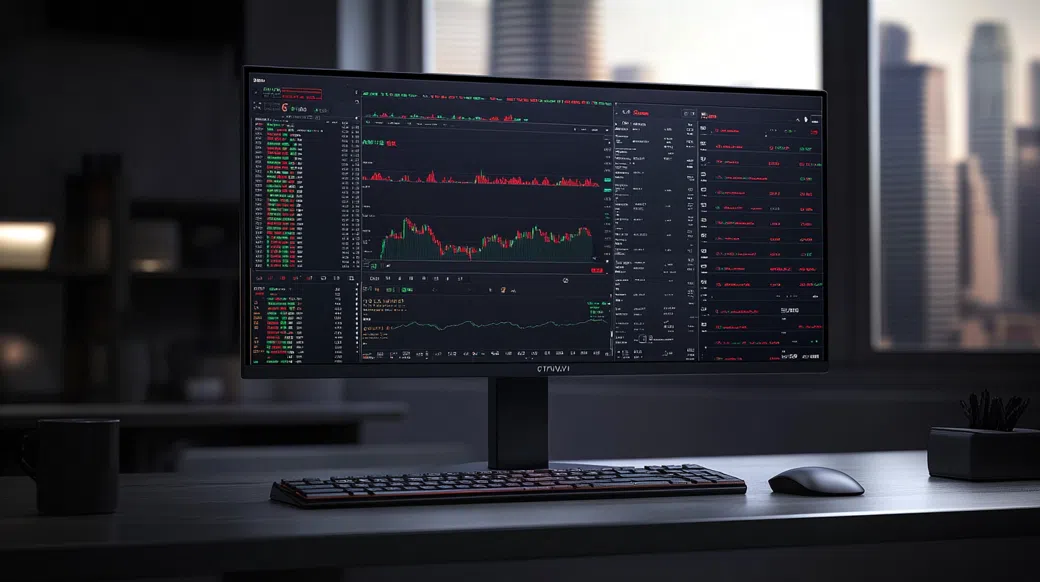
WebTrader behaved like a lean proprietary terminal: stable sessions, quick symbol search, and enough order controls for CFD work (market, limit, stop, plus SL/TP editing from the ticket). I stress-tested execution by firing small clips in NAS100 during the New York open; fills came back without any “requote theater,” though I did see modest slippage when volatility spiked. If you live inside MT4/MT5 with EAs and a deep indicator marketplace, that ecosystem isn’t something I could confirm here—this is more self-contained and manual-trader oriented.
The Cedar Gainstead app kept the essentials tight: real-time quotes, one-tap close, and alerts for price levels I set on FX majors. Cedar Gainstead login on mobile supported biometric unlock on my device, which reduces friction when you’re managing margin quickly. Deposits and withdrawals were accessible inside the app menu, not hidden behind a desktop-only portal. My one gripe: chart space is limited in portrait mode, so serious multi-timeframe work still feels better on a larger screen.
Charting covers the basics traders actually use—MA/RSI/MACD/Bollinger, plus drawing tools for levels and channels—and watchlists were easy to customize. There’s an economic calendar and a news feed, but depth is closer to “keep you aware” than “give you an edge.” For heavier research workflows (screeners, strategy testing, advanced alerts), dedicated MT5/cTrader-style environments still set the ceiling.
What caught my attention was how quickly the platform pushes you from email verification into compliance steps: name, residency, and a short suitability set, then straight into document upload. KYC required a government-issued photo ID and a proof of address dated within three months; my verification cleared the same business day after a manual review ping. The onboarding screens were clean and didn’t bury risk warnings, which is a small but important quality signal in offshore land.
Account base currency choices were adequate for international clients, but funding in one currency and withdrawing in another can introduce conversion drag. The provider enforced AML steps before letting me submit a payout request, which I prefer: fewer “surprises” later when the money needs to move.
I used live chat to ask a very trader problem—how swap is calculated on XAU/USD when you hold through Wednesday rollover—and the agent returned with a clear, product-specific explanation in about three minutes. To cross-check, I opened an email ticket about withdrawal timing for card versus crypto rails; the written reply landed in roughly nine hours with a simple timeline and a note about KYC dependency. No copy-paste fog, no random promises of “guaranteed” outcomes.
Support coverage is the usual offshore cadence: 24/5 live chat and email, with weekends lighter unless crypto volatility forces a higher queue. Language availability depends on staffing; English was consistent, and I saw Portuguese/Spanish options in the help menu, though not every agent is native-level. Phone support wasn’t emphasized in my region, which is common for platforms that want interactions logged through tickets.
Before committing funds, I’d suggest opening a demo first, then checking your real-time spread on the instruments you actually trade (EUR/USD, US500, gold). Also confirm that your country is eligible and that your preferred withdrawal rail is supported.
Visit Cedar GainsteadIt can be, but only if you respect leverage and keep position sizing small. The WebTrader is not intimidating, and the $10,000 demo helps you learn order mechanics and margin behavior. Beginners should still remember that CFDs amplify losses as fast as gains, especially at 1:500.
Yes, you can trade crypto CFDs such as BTC/USD and ETH-based pairs on the platform. It’s derivative exposure, so you’re not receiving coins to a wallet and you can’t move assets on-chain. Expect wider spreads during fast markets and weekend financing effects.
No, my test didn’t show scam mechanics like blocked accounts, fake pricing, or impossible withdrawals. The broker operates under an offshore registration model (Mauritius FSC), which is a different risk tier than strict Tier‑1 regulation. Use standard precautions: complete KYC, start small, and avoid over-leveraging.
No, Cedar Gainstead is not available to US residents. The signup flow and compliance rules restrict access from the United States. If you try to onboard with US documents, you should expect the application to be declined.
Most withdrawals are processed internally within 24–48 hours once KYC is approved. After that, delivery depends on the rail: cards typically take 2–5 business days, bank wires around 3–7 business days, and crypto often lands the same day. Weekends can extend timelines, particularly for bank transfers.
The Cedar Gainstead minimum deposit is $200 on the account types I opened. That amount is enough to test order execution and financing, but it’s not a cushion for heavy drawdowns at high leverage. If you’re new, using the demo first is the more rational starting point.
Yes, there’s a Cedar Gainstead app for iOS and Android alongside the browser-based WebTrader. You can monitor quotes, place and manage orders, and access funding and withdrawal menus from mobile. Biometric login support makes it practical for active risk management on the go.
Overall Score: 4.0/5
Numbers first: costs on the Raw/ECN-style tier (0.2 pips + $7 round-turn on EUR/USD) are credible for frequent trading, and the $200 entry point keeps the trial cost contained. Where the platform earns points is usability—WebTrader plus a competent mobile stack—and a product list that covers the instruments most CFD traders actually rotate through. Where it loses points is the offshore reality: you get leverage up to 1:500, but you also accept thinner regulatory backstops. If that trade-off fits your risk plan, Cedar Gainstead is worth a controlled-size test. CFDs are high-risk; capital is at risk.
Best for: active CFD traders who want FX/indices/metals access with a choice of spread-only or commission pricing. Avoid if: you require Tier‑1 regulation, investor compensation schemes, or you’re prone to overusing leverage.