Chiara Risparmenza Review 2026: Is It Safe & Worth Your Money?
In-depth Chiara Risparmenza review updated for 2026. We tested spreads, key features, supported countries, and safety. Read our full verdict.

In-depth Chiara Risparmenza review updated for 2026. We tested spreads, key features, supported countries, and safety. Read our full verdict.
| Min Deposit | $200 |
| Max Leverage | 1:500 |
| Assets | Forex CFDs, Indices CFDs, Commodities CFDs, Crypto CFDs, Share CFDs |
| Platforms | Proprietary WebTrader, iOS app, Android app |
Think of Chiara Risparmenza as an offshore-style CFD venue built for traders who want flexible leverage and a multi-asset menu, with the trade-off being lighter investor-protection scaffolding than a Tier‑1 regulator would impose. In this Chiara Risparmenza review, my test account showed two clear tiers: a spread-only Standard profile for casual flow, and a tighter-spread Raw/ECN-style setup for higher-frequency execution. Forex and index CFDs are the core, while crypto and share CFDs round out the watchlist. The WebTrader is the main workstation and the mobile apps mirror it closely. The USP is cost optionality (pick spread-only or commission), while the main drawback is the offshore dispute/escalation reality.
Based on my account opening, KYC checks, trading, and a completed payout cycle, the broker operated as a real, functioning CFD service rather than a “disappears-with-your-deposit” setup. That said, it sits in an offshore framework, which changes what “safe” means compared with heavily supervised jurisdictions.
One thing I look for first is whether compliance exists beyond marketing—on this platform, identity verification was enforced (photo ID plus proof of address), and I had to clear KYC before the withdrawal screen fully unlocked. The entity I dealt with presented itself as operating under a Seychelles FSA registration model, which is common in international CFD distribution: more flexible leverage (here up to 1:500), but generally fewer formal routes for compensation schemes and less muscle for dispute escalation. During my test window, I didn’t see aggressive “account manager” pressure or suspicious trophy-badge clutter; the biggest trust signal was process consistency—deposits, margin calculations, and risk warnings behaved predictably. The site copy referenced segregated client funds language, though offshore users should treat that as a policy statement, not a statutory guarantee. CFDs are leveraged products and most retail accounts lose money; only risk capital belongs here.
This service is broadly accessible across many non-U.S. regions, with the heaviest footprint aimed at international clients rather than tightly regulated U.S. onboarding. The USA is blocked, and sanctioned jurisdictions are also excluded.
| Region | Status | Leverage Cap |
|---|---|---|
| Latin America (selected countries) | Accepted | Up to 1:500 |
| Europe (non-EU/EEA) | Accepted | Up to 1:500 |
| MENA (selected countries) | Accepted | Up to 1:500 |
| Southeast Asia (selected countries) | Accepted | Up to 1:500 |
| USA | Restricted | Not offered |
| Sanctioned jurisdictions | Restricted | Not offered |
Eligibility isn’t just a dropdown choice: IP checks, document nationality, and proof-of-address screening can override what you select at signup. Policies move—especially around high-leverage CFDs—so treat availability as something to re-confirm before funding.
The lineup reads “FX-and-indices first,” with commodities as the natural hedge layer and crypto CFDs offered as a satellite for volatility hunters. You’re not getting thousands of micro-caps; you’re getting the instruments people actually trade around global sessions.
All of this is CFD exposure: you’re trading price movement, not owning the underlying asset. That means no shareholder rights, no on-chain crypto custody, and dividend adjustments (where applicable) are accounting entries rather than true dividend receipt.
Cost-wise, the broker uses a two-lane model: Standard is spread-only, while the Raw/ECN-style option tightens spreads and adds a per-lot commission. On my account, the Raw tier priced closer to what active traders expect in this segment, while Standard sits in the “pay for simplicity” bracket.
| Asset | Spread/Fee | Market Average Comparison |
|---|---|---|
| EUR/USD (Standard) | From 1.4 pips | In line with offshore CFD averages |
| EUR/USD (Raw/ECN) | From 0.2 pips + $7 round-turn/lot | Competitive for commission-based pricing |
| Bitcoin (BTC/USD) | From $35 | Typical for CFD crypto quoting |
| Gold (XAU/USD) | From $0.25 | Slightly better than average at liquid hours |
| US500 Index | From 0.8 points | Close to the pack |
Non-spread costs that matter: swaps/overnight financing showed up exactly where you’d expect—holding leveraged FX past rollover is rarely free, and crypto weekend financing can snowball if you park positions. I also flagged a $10 monthly inactivity fee once an account goes 90 days without trading, which quietly raises the “carry cost” for casual users. Funding in one currency and trading in another can introduce conversion spreads, so multi-currency planning matters. On withdrawals, the platform didn’t add a surprise “platform fee” in my case, but your bank/card rail can still impose its own charges.
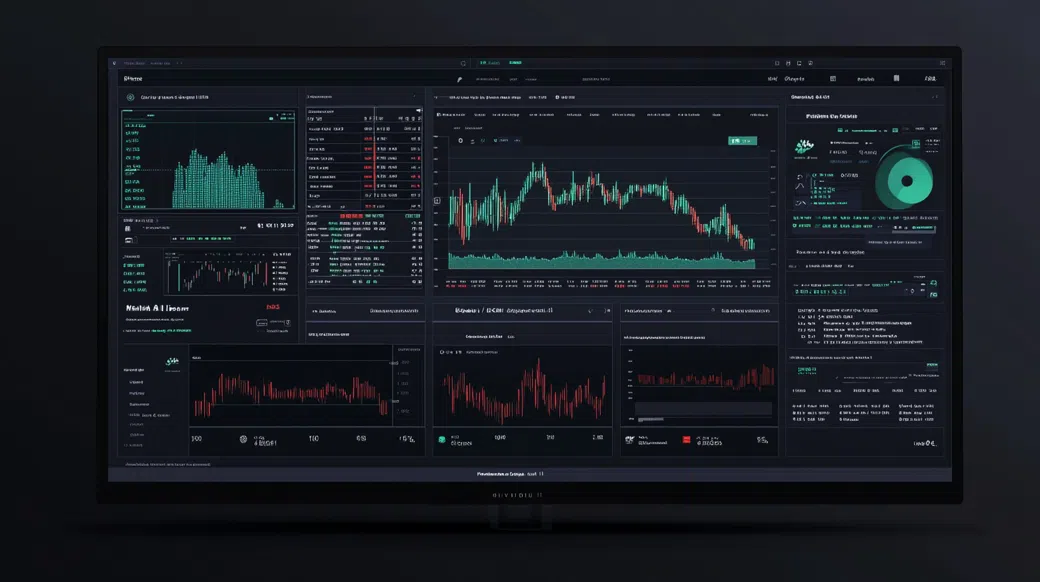
WebTrader is where the broker wants you to live: login stayed stable across multiple sessions, charts loaded without lag spikes, and order tickets offered the basics (market, limit, stop, and stop-loss/take-profit attachments). Execution felt consistent during the London morning—my EUR/USD test order filled without a re-quote, and slippage was present but not erratic when spreads widened around a data print. If you’re coming from MT4/MT5, the gap is ecosystem: fewer plug-ins, fewer third-party scripts, and less “custom indicator culture,” even if the core workflow is usable.
The Chiara Risparmenza app mirrors the WebTrader layout closely, which reduces the learning curve after the first Chiara Risparmenza login on mobile. Quotes streamed smoothly, and I could modify stops/limits with thumb-friendly controls; one-tap close was available for fast risk cuts. Deposits and withdrawals are accessible from the app, and push notifications worked for price alerts and order status. Biometric login was offered on my device, though the chart workspace is naturally tighter—fine for monitoring and execution, less ideal for multi-timeframe analysis.
Indicator coverage is the standard toolkit: moving averages, RSI, MACD, Bollinger Bands, plus basic drawing and multi-timeframe switching. An economic calendar and a lightweight news feed are integrated, useful for avoiding obvious event risk and for context around volatility windows. The ceiling is clear, though—if your edge depends on advanced strategy testing or institutional-grade analytics, you’ll still lean on external platforms.
From the first screen, the registration flow asked for the usual inputs (email, phone, country, and a short suitability-style prompt), then pushed me into AML/KYC before I could access the full funding and payout options. Verification required a government-issued photo ID and a proof of address dated within three months; my documents cleared the same business day. That sequence matters because it reduces “withdrawal friction” later—an area where offshore brokers sometimes create headaches.
Account currency choices were present at setup, but I still treat base-currency selection as a fee decision—if your deposits are in BRL/EUR and your account is USD, conversion spreads can be a silent drag. For anyone cautious, start with the demo, then fund small and test a full deposit-to-withdrawal loop before scaling.
I pushed support on a practical topic: how swaps are calculated on leveraged FX and where to view them before holding overnight. Live chat replied in roughly three minutes with a clear menu path and explained that rates can vary by instrument and liquidity conditions; the agent also pointed me to a daily rollover time note. I followed up by email asking whether the inactivity fee triggers exactly at 90 days; the ticket landed back in my inbox about eight hours later confirming the $10/month charge and the reset condition (placing a trade).
Coverage is the usual 24/5 cadence, which fits the CFD week but leaves weekend crypto traders leaning on self-service pages. Language support felt “international English first,” with regional depth depending on staffing and hours. Phone numbers weren’t front-and-center in my area, so I’d assume chat/email are the primary rails unless your country page shows otherwise.
If you’re considering this broker, the clean way to evaluate it is to run the same checklist I did: open a demo, compare Standard vs Raw pricing on your usual symbols, and verify your deposit/withdrawal method is supported in your country before you scale position size.
Visit Chiara RisparmenzaYes, it can work for beginners who keep leverage modest and start with the demo. The interface is not overloaded, and the Standard account avoids commission math. Still, it’s an offshore CFD setup, so learning risk management matters more than chasing maximum leverage.
Yes, crypto is available as CFDs, with BTC and ETH as the main liquid contracts. You’re trading price exposure rather than receiving coins to a wallet. Expect wider effective costs on weekends due to financing and thinner liquidity.
No—my test cycle (KYC, trading, and a processed withdrawal request) behaved like an operating broker, not a vanishing act. The right way to frame it is “offshore risk,” not “scam vs not scam.” If you need Tier‑1 regulation and formal compensation schemes, this structure may not match your requirements.
No, the USA is restricted and accounts aren’t offered there. This is consistent with many CFD brokers that operate outside U.S. regulatory rules. If you attempt signup with U.S. residency details, the process is typically blocked at registration or KYC.
Most withdrawals are approved internally within 24–48 hours after KYC is complete, based on my experience. The final delivery depends on the rail: cards often land in 2–5 business days, bank wires in 3–7 business days, and crypto payouts are often same-day. The “real” timeline is usually your banking network, not the broker’s button click.
The Chiara Risparmenza minimum deposit is $200 on the funding screen I used. That level is enough to test execution and withdrawals without oversizing risk. If you plan to trade indices or gold with meaningful stops, you may still need more margin than the minimum.
Yes, it offers iOS and Android apps that replicate the WebTrader workflow. You can manage orders, adjust stops, and handle deposits and withdrawals from the app. For heavy chart work, the desktop layout remains more comfortable, but mobile is adequate for execution and monitoring.
Overall Score: 4.0/5
Pricing flexibility is the real story: you can pay wider spreads for simplicity or move to Raw/ECN-style costs when your volume justifies it, and that’s why Chiara Risparmenza earns a solid score in this Chiara Risparmenza broker review 2026. My deposit, a London-session FX test trade, and a completed Chiara Risparmenza withdrawal sequence all ran without nasty surprises. The offshore structure is the limiting factor—dispute resolution and protections aren’t the same as top-tier regulated venues. Keep leverage realistic, because CFDs amplify losses as efficiently as they amplify wins.
Best for: active CFD traders who want up to 1:500 leverage and a choice between spread-only and commission pricing. Avoid if: you require Tier‑1 regulation, deep research tooling, or you’re prone to overtrading high-leverage products.