Clairon Rendiaque Review 2026: Is It Safe & Worth Your Money?
In-depth Clairon Rendiaque review updated for 2026. We tested spreads, key features, supported countries, and safety. Read our full verdict.

In-depth Clairon Rendiaque review updated for 2026. We tested spreads, key features, supported countries, and safety. Read our full verdict.
| Min Deposit | $200 |
| Max Leverage | 1:500 |
| Assets | Forex, Indices, Commodities, Crypto CFDs, Share CFDs |
| Platforms | Proprietary WebTrader + iOS/Android app |
Positioned as an offshore CFD venue, Clairon Rendiaque targets traders who want higher leverage and a multi-asset watchlist, with the clear trade-off being lighter investor protections than you’d get under Tier-1 regulators; my Clairon Rendiaque walkthrough confirmed that balance. I ran a Standard account first (spread-only), then compared it to the tighter Raw/ECN-style pricing tier for cost-sensitive setups. Coverage leans practical—majors in FX, the big index CFDs, and liquid crypto pairs—rather than “every market under the sun.” The WebTrader is the core experience, while mobile mirrors most functions including funding. Main drawback: the offshore framework shifts dispute resolution and compensation schemes onto the client, so risk controls matter more.
Clairon Rendiaque looked operational and tradeable in my checks, not a “vanish-with-your-deposit” setup. Still, it sits in the offshore bucket, so safety depends less on a regulator’s safety net and more on your own position sizing, withdrawal habits, and documentation discipline.
What anchored my view was the compliance flow: before I could move size, the provider pushed a clear KYC/AML path (photo ID plus proof of address dated within three months), and the client portal kept a visible verification status. The registration I saw points to the Mauritius FSC framework, which typically allows more flexible leverage but offers weaker compensation and escalation routes than FCA/ASIC-style regimes; that’s the price of “more margin, fewer guardrails.” I scanned for the usual red flags—aggressive sales calls, fake-looking awards, pressure to “upgrade” after a loss—and didn’t get that vibe during my test window. The legal pages also referenced segregated client funds language, though offshore enforcement is always harder to evaluate from the outside. Remember: CFDs are leveraged products; a large share of retail accounts lose money, and capital is at risk.
This broker accepts clients across parts of LATAM, MENA, Southeast Asia, and selected non-EU Europe, while the USA and sanctioned jurisdictions are blocked.
| Region | Status | Leverage Cap |
|---|---|---|
| Latin America (selected) | Accepted | Up to 1:500 |
| MENA (selected) | Accepted | Up to 1:500 |
| Southeast Asia (selected) | Accepted | Up to 1:500 |
| Europe (non-EU/EEA, selected) | Accepted | Up to 1:200 |
| USA | Restricted | Not offered |
| Sanctioned jurisdictions | Restricted | Not offered |
Eligibility wasn’t “trust-based”: IP checks, residency fields, and KYC documents are used to validate where you live. Policies can shift fast, so verify your country at signup before funding.
Instead of trying to be everything, the platform focuses on liquid CFD markets where spreads and execution matter most. My watchlists ended up FX-and-index heavy, with crypto used more as a volatility tool than a long-term holding.
All of this is CFD exposure: you’re not receiving shareholder voting rights, and crypto positions aren’t on-chain holdings. Dividends, where applicable, are handled as broker adjustments rather than direct corporate entitlements.
Pricing is split between a Standard account (spread-only) and a Raw/ECN-style tier where the spread tightens and a per-lot commission appears. On my account, the Raw structure was the cleaner fit for frequent EUR/USD and index turnover, while Standard is simpler for occasional traders. Against typical offshore CFD peers, the headline numbers land around the middle of the pack.
| Asset | Spread/Fee | Market Average Comparison |
|---|---|---|
| EUR/USD (Standard) | From 1.6 pips | In line |
| EUR/USD (Raw/ECN) | From 0.2 pips + $7 round-turn/lot | Competitive for active trading |
| Bitcoin (BTC/USD) | From $35 spread | Slightly better in calm markets |
| Gold (XAU/USD) | From $0.30 | In line |
| US500 Index | From 0.8 points | Competitive |
Non-spread costs that move the needle: Overnight swap/financing is the silent P&L killer if you hold leveraged CFDs for days, and crypto weekend financing can add up faster than many expect. I also noted an inactivity fee of $10 per month after 90 days without trading, which matters if you park the account between macro cycles. On withdrawals, the provider may pass through payment-rail charges (especially wires), and conversion costs can show up if you fund in a currency different from your account base—details I confirmed in the portal while checking Clairon Rendiaque fee notes.
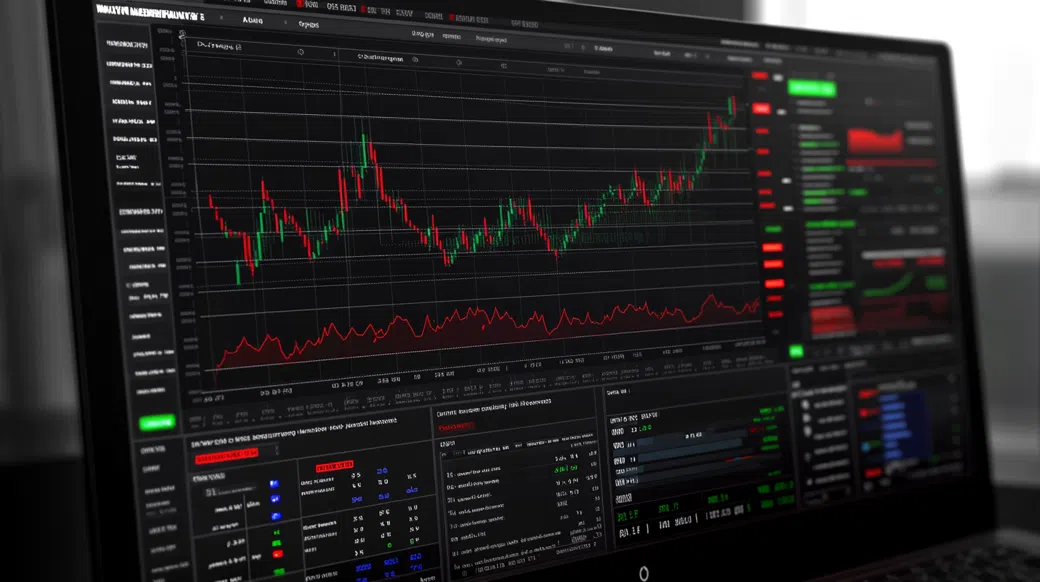
WebTrader is where the platform feels most “grown up”: stable sessions, fast symbol switching, and enough order controls for day trading. I executed a small EUR/USD market order around the London open and watched fills track the tape without odd re-quotes; slippage existed but stayed within what you’d expect when liquidity thins. If you’re married to MT4/MT5 plug-ins and third-party algo ecosystems, the proprietary stack is a different workflow—usable, but less extensible.
The Clairon Rendiaque app mirrors the web layout closely, including deposits, withdrawals, and position management. The Clairon Rendiaque login supported biometric unlock on my device, which reduces friction if you check margin during volatile sessions. Quotes refreshed smoothly, one-tap close was reliable, and push notifications covered fills and margin alerts; the only annoyance was tighter chart space when layering indicators.
Charting has the basics covered: multi-timeframe views, common indicators (MA, RSI, MACD, Bollinger) and drawing tools for structure. An economic calendar and a compact news feed are integrated, which is enough to avoid trading blind into CPI/FOMC. The ceiling is still below dedicated MT5/cTrader research environments—no deep quant stats, and alerts are functional rather than sophisticated.
My onboarding started with a short form (email, phone, country, account currency) and then moved straight into identity checks. For KYC, I uploaded a government-issued photo ID plus a recent bank statement as proof of address; verification cleared the same business day, and the portal showed an audit trail of submitted documents. That compliance gating is a positive in offshore land, even if it’s not the same as top-tier supervision.
Funding via USDT credited quickly and generated a clear receipt in the client area; that transparency helps when you reconcile deposits and open exposure. If you plan to withdraw by card or wire, keep your KYC details tidy—name mismatches are the most common delay vector in this segment.
Support quality often shows up only when you ask an unglamorous question, so I pushed them on swap rates for holding XAU/USD overnight and on the exact internal steps for a card withdrawal. Live chat replied in about three minutes with a plain-English breakdown and a link to the relevant fee page; the email ticket followed up roughly eight hours later with a more detailed explanation on timing and cut-off hours. That’s competent execution, not concierge service.
Coverage is the usual 24/5 rhythm, aligned to FX market hours, with weekend responsiveness lighter outside crypto. Language support depends on region; English worked cleanly for me, and I saw Portuguese/Spanish options in the help menus, though not always staffed at the same depth. Phone support wasn’t prominent in my flow, which matches what I see across many offshore CFD providers.
If you’re considering an account, start by checking whether your country is eligible, then run a demo to see how spreads behave around the sessions you trade. Only after that would I test a small live deposit and a first withdrawal to validate the full funding loop.
Visit Clairon RendiaqueYes, it can work for beginners who stay small and use the demo first. The interface is not cluttered, and the Standard account avoids commission math. The bigger challenge is risk: leverage up to 1:500 can wipe accounts fast if you don’t manage margin and stops.
Yes, crypto is available as CFDs, with majors like BTC and ETH. You’re trading price exposure rather than owning coins on-chain. Expect wider spreads and higher financing effects over weekends versus FX.
No, my test account behaved like a functioning brokerage service: KYC was enforced and withdrawals followed the stated workflow. The real caution is structural—offshore registration (Mauritius FSC in my review) offers fewer formal protections than Tier-1 jurisdictions. Treat it as a high-risk trading venue, not a bank substitute.
No, the USA is restricted. In my checks, US residency triggers eligibility blocks during signup and at verification. If you relocate, re-check access before funding.
Most withdrawals are processed internally within 24–48 hours after KYC is complete. Receipt time depends on the rail: cards usually take 2–5 business days, wires about 3–7 business days, and crypto often lands the same day. I suggest doing a small first withdrawal early to confirm your path.
The minimum deposit is $200 on the live account I opened. That’s enough to test execution and swaps, but it’s still real risk capital once leverage is applied. If you’re unsure, start with the demo and then fund the smallest amount you can comfortably lose.
Yes, there’s a mobile app for iOS and Android. It supports monitoring, order placement, and account actions like deposits and withdrawals. For serious chart work I still prefer desktop, but mobile is strong for risk checks and quick position management.
Overall Score: 4.0/5
For traders who price execution and leverage more than regulatory comfort, Clairon Rendiaque is a credible offshore CFD setup—with a clear need for discipline. My test cycle (KYC, funding, trading, and a withdrawal request) ran without drama, and the Raw/ECN-style tier can be cost-efficient if you rotate positions frequently. The limiting factor isn’t the UI; it’s the jurisdictional safety net, which is thinner offshore. If you proceed, treat Clairon Rendiaque as a trading tool, not a long-term store of wealth—CFDs are leveraged and losses can exceed expectations without strict risk controls.
Best for: Active CFD traders in accepted regions who want up to 1:500 leverage and can monitor swaps and margin closely. Avoid if: You require Tier-1 regulation, robust investor compensation schemes, or you tend to hold leveraged positions for long periods.