Cumbre Valtrion Trading Platform Alternatives 2026
A numbers-first guide to Cumbre Valtrion alternatives in 2026: regulated brokers, platforms, costs, asset access, and safety steps for US/EU traders.

A numbers-first guide to Cumbre Valtrion alternatives in 2026: regulated brokers, platforms, costs, asset access, and safety steps for US/EU traders.
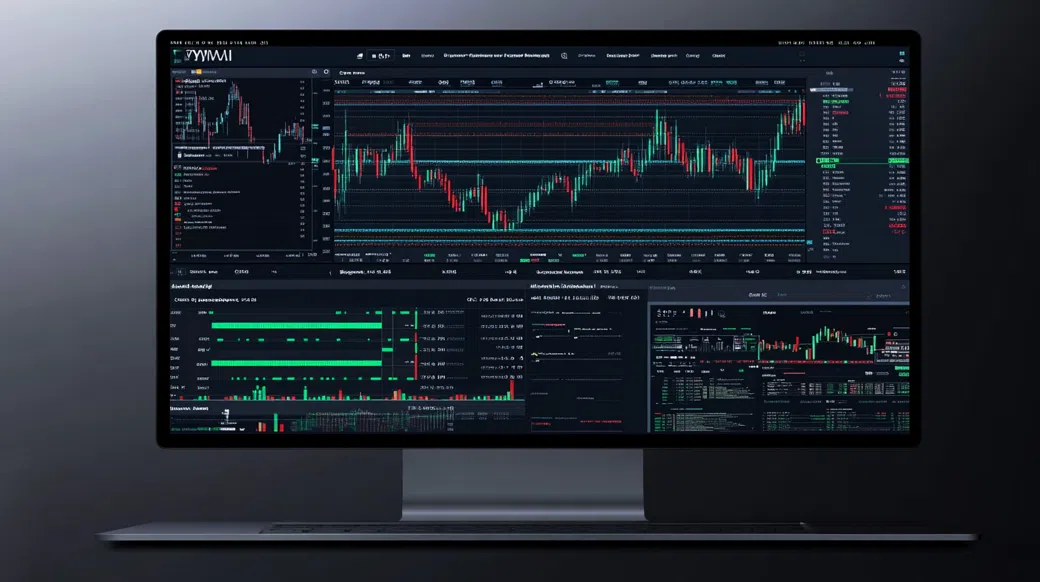
Leverage is seductive: it makes small moves look like big money. That’s also why broker quality matters more than the homepage design. In the offshore CFD segment, the usual package is familiar—Forex and index CFDs, a proprietary WebTrader, a mobile app, and a leverage ceiling that can run as high as 1:500. That’s broadly the lane where Cumbre Valtrion appears to sit, with a product mix that likely prioritizes FX/CFDs (and often crypto CFDs) over “owning” real stocks or ETFs.
From a desk-analyst perspective, the real question isn’t whether a platform looks modern. It’s whether the plumbing holds under stress: execution quality during fast markets, clarity on swaps/overnight financing, predictable withdrawals, and a regulatory framework that creates consequences when things go wrong. Many traders searching for Cumbre Valtrion alternatives are reacting to one of two things: friction (costs, tools, funding) or risk (offshore oversight, dispute resolution, transparency).
This 2026 guide is built for a US/EU-leaning audience that wants regulated choices, cleaner product labeling (CFD vs. spot vs. exchange-traded), and a way to compare platforms using the metric that actually hits P&L: total round-turn cost after spread, commissions, and slippage. I’ll keep the narrative light. Numbers do the heavy lifting.
Disclaimer: This article is for informational purposes only and does not constitute investment advice. CFDs and other leveraged products carry a high risk of loss, and you can lose more quickly than expected.
For traders who live mostly in FX and CFD land, Cumbre Valtrion reads like an offshore-style, CFD-first brokerage rather than a true multi-asset investment firm. The typical footprint here is: access to major/minor FX pairs (roughly 30–50), a handful of indices and commodities, and a menu of crypto CFDs (often 10–30 coins). Public-facing details can be thinner than what you’ll see at exchange-connected brokers, and the regulatory posture is usually offshore—commonly via the Seychelles FSA—rather than an FCA/NFA-style regime with dense disclosures and formal investor protections. In practice, that positioning tends to target short-horizon retail traders rather than long-term investors building equity portfolios.
The platform stack is typically a proprietary WebTrader with basic-to-mid charting, plus iOS/Android mobile access. Expect the essentials: standard indicators, drawing tools, and one-click trading, with the account area covering deposits, withdrawals, and position history. Order functionality is usually focused on market/limit/stop with simple stop-loss and take-profit controls; advanced routing features (DMA-style depth, exchange order books) are not the norm in this segment. Mobile parity is often “good enough” for monitoring and manual execution, while heavier workflows—multi-chart layouts, analytics, or systematic testing—tend to be limited versus platforms like MT4/MT5 or cTrader that many brokers similar to Cumbre Valtrion offer.
Cost disclosure in offshore CFD models frequently centers on the spread. A reasonable working assumption for EUR/USD on a standard-style account is around 2.0 pips typical spread. Some firms in this category also advertise a raw/ECN-style tier (not always available) that can show 0.0–0.4 pips plus a commission—commonly in the ballpark of $6 round-turn. Beyond spreads, the quiet P&L leak is often financing: swap/overnight fees on CFD positions can compound during multi-day holds. Funding and withdrawal fees can also show up depending on method, and inactivity charges sometimes apply on dormant accounts—details that should be verified line-by-line in the fee schedule before trading size.
There’s a moment when “it works” stops being enough. For many retail traders, the pivot toward Cumbre Valtrion alternatives happens when risk controls and operating frictions become measurable: a wider effective spread during volatile sessions, unclear swap math, or a support loop that doesn’t close. Offshore leverage (often up to 1:500) can amplify mistakes fast, and the safety net is thinner when the oversight sits outside top-tier regulators. If your strategy depends on repeatability—same fills, same rules, same dispute path—moving to regulated options vs Cumbre Valtrion becomes less about features and more about process integrity.
I treat broker selection like position sizing: define what can hurt you, then buy down that risk. For alternatives to the Cumbre Valtrion trading platform, start with the non-negotiables (regulation, product access, funding rails), then move to execution and cost. The “best” choice depends on what you trade and how often you trade it—scalpers feel every tenth of a pip; long-hold CFD traders feel swaps; equity investors care about custody and exchange access.
In the US/EU context, regulation isn’t marketing—it’s enforcement capacity. FCA oversight in the UK, ASIC in Australia, CySEC in the EU, and NFA/CFTC in the US each impose capital, reporting, and conduct standards. Some regimes also connect to compensation structures: the UK’s FSCS can cover eligible claims up to £85,000, and Cyprus’ ICF can cover up to €20,000 for eligible retail clients. Look for segregated client funds, negative balance protection where applicable, and a clean listing on the regulator’s public register.
Write your “need list” in instruments, not buzzwords. If you only trade FX and index CFDs, an FX/CFD specialist can be ideal. If you want US/EU stocks, ETFs, options, and futures on venues—not just CFDs—then you’re in multi-asset territory (IBKR, Saxo). Crypto is its own fork: crypto CFDs are price exposure; they are not on-chain ownership and don’t let you withdraw coins. Platforms like Cumbre Valtrion often skew CFD-heavy; alternatives should be chosen based on the assets you genuinely intend to hold and hedge.
Headline spreads are incomplete. What matters is the round-turn cost: spread + commissions + the slippage you actually experience on your trade size. A trader doing 200 standard lots/month will feel a 1.0-pip difference like a recurring tax; at $10/pip per lot on EUR/USD, that’s material. Also check swap/overnight rates, currency conversion charges (common when your base currency differs), inactivity fees, and withdrawal costs. The cheapest broker on paper can get expensive if execution quality deteriorates when liquidity thins.
Platform choice maps directly to strategy. MT4/MT5 and cTrader support automation, broader tool ecosystems, and more portable workflows. Proprietary platforms can be clean and fast, but you’re locked into one stack. Execution model matters too: market maker setups can be fine for many traders, yet STP/ECN/DMA-style routing is often preferred when you care about fill transparency and reducing conflict perceptions. During high volatility, slippage and requotes (or order rejections) are where “the same spread” becomes a different outcome.
Support quality shows up in edge cases: margin calls, funding delays, corporate actions, or platform incidents. Evaluate hours (24/5 vs extended), language coverage, and whether responses include verifiable references to policies rather than generic scripts. Education is a bonus, not a substitute for risk control, but good brokers publish clear margin rules, product disclosures, and platform tutorials. Mobile parity also matters in 2026—if you can’t manage risk from the phone, you’re one outage away from an ugly P&L swing.
FX and CFDs are the natural habitat here: think ~30–50 FX pairs, 8–15 indices, and 5–10 commodities, with leverage often marketed up to 1:500. The trade-off is that offshore-style pricing and execution can be harder to audit. If EUR/USD is effectively around 2.0 pips on a standard setup, the math is straightforward: active traders bleed more in spread than they realize, especially if slippage adds a few tenths during data releases. For tighter pricing and broader platform choices, FX/CFD specialists like Pepperstone and IC Markets typically offer raw-spread accounts with commissions, plus MT4/MT5/cTrader stacks that fit systematic and scalping workflows. For the risk-aware crowd, the regulated framework also changes the conversation around client fund segregation and dispute resolution.
If your plan includes building a long book—US mega-caps, EU ETFs, factor exposure—this is where many traders outgrow CFD-first providers. Stock CFDs can mirror price, but they don’t give shareholder rights, and costs can hide in financing and wider spreads. In contrast, Interactive Brokers is designed for exchange-traded access (stocks, ETFs, options, futures) with a professional-grade toolkit and deep market connectivity; it’s closer to “brokerage infrastructure” than a trading app. Saxo Bank plays a similar multi-asset role for clients who want a single account spanning equities, ETFs, bonds, options, futures, and FX, with research and portfolio tooling. That gap—CFD exposure versus real market access—is one of the most practical competitors to Cumbre Valtrion comparisons you can run in 2026.
In offshore CFD ecosystems, crypto is commonly offered as crypto CFDs—price speculation without on-chain custody. That means no coin withdrawals to a wallet, no staking, and no real spot ownership; it’s a leveraged derivative with spread and financing dynamics. For traders who accept that structure and just want regulated crypto-price exposure, IG and Plus500 are frequently used in jurisdictions where crypto CFDs are permitted, with clearer product disclosures and risk controls (availability varies by country and retail rules). If you’re evaluating top substitutes for Cumbre Valtrion for crypto, read the instrument description carefully: “crypto CFD” and “spot crypto” are different products with different risks, especially around weekend gaps, margin calls, and overnight/holding costs.
Regulation: SEC/FINRA (US), FCA (UK), IIROC (Canada)
Markets: Stocks, ETFs, options, futures, bonds, FX
Fees: FX spreads can be very tight on major pairs (often well under 1 pip in liquid hours); commissions vary by product/venue
Platform: Trader Workstation (TWS), IBKR mobile/web, API
Best For: Multi-asset investors who need exchange access
Regulation: FCA (UK), ASIC (Australia), CySEC (EU), DFSA (Dubai)
Markets: FX, CFDs (indices, commodities, some shares as CFDs)
Fees: Standard spreads commonly around ~1.0–1.2 pips on EUR/USD; Razor/Raw style often ~0.0–0.3 pips + commission
Platform: MT4, MT5, cTrader, TradingView integration (where available)
Best For: Systematic FX traders using MT4/MT5/cTrader
Regulation: FCA (UK), MAS (Singapore), DFSA (Dubai)
Markets: Stocks, ETFs, bonds, options, futures, FX, CFDs
Fees: Pricing depends on tier and product; FX spreads on majors are typically competitive (often below 1 pip), with commissions on many exchange-traded instruments
Platform: SaxoTraderGO, SaxoTraderPRO
Best For: Portfolio builders who still want active trading tools
Regulation: FCA (UK), ASIC (Australia), MAS (Singapore)
Markets: CFDs (FX, indices, commodities, shares as CFDs); spread betting in the UK (where eligible)
Fees: Typical FX spreads often around ~0.6–1.0 pips on EUR/USD (account and region dependent); financing applies on CFD holds
Platform: IG web platform, mobile apps; MT4 available in many regions
Best For: Active CFD traders who value a long operating track record
Regulation: ASIC (Australia), CySEC (EU), FSA (Seychelles) (group-level)
Markets: FX, CFDs (indices, commodities, crypto CFDs where permitted)
Fees: Raw accounts often ~0.0–0.3 pips on EUR/USD + commission (commonly ~$6–$7 round-turn); Standard typically ~0.8–1.2 pips
Platform: MT4, MT5, cTrader
Best For: High-frequency style traders focused on low spreads
Regulation: FCA (UK), CySEC (EU), ASIC (Australia), MAS (Singapore)
Markets: CFDs (FX, indices, commodities, shares as CFDs, crypto CFDs where permitted)
Fees: Spread-only model; EUR/USD often around ~0.6–1.2 pips depending on conditions; overnight fees apply on held CFD positions
Platform: Plus500 proprietary web/mobile platform
Best For: Beginners wanting a simple CFD app experience
| Platform | Regulation | Main Markets | Typical Costs | Best For |
|---|---|---|---|---|
| Interactive Brokers (IBKR) | SEC/FINRA, FCA, IIROC | Stocks/ETFs, options, futures, bonds, FX | FX often <1 pip in liquid hours; product-based commissions | Multi-asset investors who need exchange access |
| Pepperstone | FCA, ASIC, CySEC, DFSA | FX and CFDs | Std ~1.0–1.2 pips; Raw ~0.0–0.3 + commission | Systematic FX traders using MT4/MT5/cTrader |
| Saxo Bank | FCA, MAS, DFSA | Multi-asset (stocks/ETFs, options/futures, FX, CFDs) | FX often below 1 pip; commissions on many exchange products | Portfolio builders who still want active trading tools |
| IG | FCA, ASIC, MAS | CFDs across FX/indices/commodities/shares | FX often ~0.6–1.0 pips; financing on holds | Active CFD traders who value a long operating track record |
| IC Markets | ASIC, CySEC (plus FSA Seychelles group-level) | FX and CFDs (incl. crypto CFDs where allowed) | Raw ~0.0–0.3 + ~$6–$7 round-turn; Std ~0.8–1.2 pips | High-frequency style traders focused on low spreads |
| Plus500 | FCA, CySEC, ASIC, MAS | CFDs (broad list; region dependent) | Spread-only ~0.6–1.2 pips on EUR/USD; overnight fees | Beginners wanting a simple CFD app experience |
Switching brokers is operational risk, not just admin. Do it like you’d roll a futures position: control the timeline, keep records, and avoid being forced to act during volatility. Before you send more money anywhere, make sure the new venue is actually regulated where it says it is, and remember that leveraged CFDs can trigger margin calls quickly if your positions are left unmanaged during the transition.
If you’re still evaluating the platform, review the current onboarding flow, product list, and fee schedule in your region, then benchmark it against the regulated substitutes above. Pay special attention to spreads during your trading hours, swap rates for holds, and withdrawal procedures before committing meaningful capital.
Visit Cumbre ValtrionThe best option depends on what you trade: for real stocks/ETFs and derivatives on exchanges, Interactive Brokers (IBKR) is hard to beat; for FX/CFD execution and platform choice, Pepperstone or IC Markets are strong picks. If you want a regulated, simpler CFD-only experience, Plus500 or IG can fit. In practice, “best Cumbre Valtrion alternatives 2026” comes down to matching regulation + instruments + round-turn costs to your strategy.
Cumbre Valtrion appears to operate under an offshore regulatory framework (commonly seen with entities linked to the Seychelles FSA), which typically offers fewer investor protections than FCA/NFA-style oversight. That doesn’t automatically mean a platform can’t function, but it does change your risk profile around enforcement, dispute resolution, and transparency. If safety is the priority, prioritize regulated options vs Cumbre Valtrion and verify the broker’s legal entity on the regulator register.
With platforms like Cumbre Valtrion, the common pattern is Forex and CFDs as the core, with crypto often offered as crypto CFDs (price exposure, not coin ownership). Real stocks/ETFs and exchange-traded futures are frequently not offered, or are offered only as CFDs on shares. If you need exchange access, brokers similar to Cumbre Valtrion won’t close that gap—multi-asset venues such as IBKR or Saxo are designed for it.
Before switching, confirm regulation on the official register, read the client-money/segregation policy, and map your needed instruments (FX/CFDs vs real stocks/ETFs). Then run a small live test to measure spreads, slippage, and swap charges during your normal trading hours. Finally, plan withdrawals around AML rules (often same-method refunds) and export your full statements for records—small operational details are where migrations go wrong.
About the Author: Carlos Mendes is a former equity desk analyst from São Paulo who covers emerging-market brokerages and Latin American fintech through a trader’s lens. He focuses on cost-of-trade, execution quality, and regulatory structure—because in markets, the P&L cares about math, not slogans.