Douve Fondença Review 2026: Is It Safe & Worth Your Money?
In-depth Douve Fondença review updated for 2026. We tested spreads, key features, supported countries, and safety. Read our full verdict.

In-depth Douve Fondença review updated for 2026. We tested spreads, key features, supported countries, and safety. Read our full verdict.
| Min Deposit | $200 |
| Max Leverage | 1:500 |
| Assets | Forex, Indices, Commodities, Crypto CFDs, Share CFDs |
| Platforms | Proprietary WebTrader, iOS app, Android app |
Built for traders who want multi-asset CFDs with high leverage in a light-regulation setup, Douve Fondença suits active speculators more than long-horizon investors—and the headline trade-off is flexibility versus fewer formal protections. I saw two account tiers (spread-only and a tighter-spread option with commission), with pricing that can make sense once you’re sizing in lots, not micro-trades. The product list leans practical: majors in FX, the usual index suite, metals, and large-cap crypto CFDs. The stack is proprietary (WebTrader plus mobile), which keeps it clean but won’t satisfy MT4/MT5 ecosystem purists. For a quick look at the current onboarding and instruments, I used Douve Fondença as a benchmark.
Douve Fondença looked operational and trade-enabled in my checks, not a “vanishing broker” pattern—so I wouldn’t label it a scam based on what I could verify and execute. The caveat is structural: it runs under an offshore registration model, which typically means fewer investor-protection backstops than top-tier regulators.
On the paperwork side, the provider presented itself as registered via the Mauritius FSC route, which is a common choice for international CFD businesses that want global onboarding. Offshore status matters in the details: leverage can be higher (here up to 1:500), but compensation schemes and formal arbitration pathways tend to be thinner than what you’d get under FCA/ASIC-style regimes. During my test window, the red-flag scan was mostly quiet—no “pressure sales” phone barrage, no suspicious trophy-wall awards pushed at checkout, and withdrawals didn’t get blocked behind extra deposits. I did see basic safeguards: KYC prompts were enforced before withdrawal, and the legal pages referenced segregated client funds language (good sign, but you still rely on internal controls). Remember the product risk: CFDs are leveraged instruments; most retail accounts lose money, and capital is always at risk.
This broker is broadly open to international clients across parts of LATAM, Africa, MENA, and non-EU Europe, while the USA and sanctioned jurisdictions are off-limits. Availability is not uniform—leverage and product access can shift by residency.
| Region | Status | Leverage Cap |
|---|---|---|
| Latin America (selected countries) | Accepted | Up to 1:500 |
| Non-EU Europe | Accepted | Up to 1:500 |
| MENA (non-sanctioned) | Accepted | Up to 1:500 |
| Sub-Saharan Africa (selected) | Accepted | Up to 1:500 |
| USA | Restricted | Not offered |
| Sanctioned jurisdictions | Restricted | Not offered |
In practice, eligibility is enforced through IP checks plus residency verification during KYC, so “sign up first, ask later” can backfire. Country rules can also change with compliance policy, so confirm access before funding.
The lineup feels “macro-first”: FX and indices are the center of gravity, with commodities and crypto CFDs as add-ons for volatility hunters. If you’re coming from a São Paulo equity desk mindset, treat it as a tactical CFD book—not a custody platform.
All exposure here is CFD-based: you’re trading price movement, not owning shares, receiving shareholder rights, or holding on-chain crypto. Dividends and corporate actions, when applicable, are handled as broker adjustments rather than direct entitlements.
Costs are split by account type: Standard is spread-only, while the Raw/ECN-style tier compresses spreads and adds a per-lot commission. On my pricing checks, the all-in picture sits in the middle of the offshore CFD pack—competitive if you trade size, less impressive for tiny tickets.
| Asset | Spread/Fee | Market Average Comparison |
|---|---|---|
| EUR/USD (Standard) | From 1.4 pips | In line with typical offshore CFD spreads |
| EUR/USD (Raw/ECN) | From 0.2 pips + $7 round-turn/lot | Competitive for active FX traders |
| Bitcoin (BTC/USD) | From $45 | Roughly average; can widen on weekend moves |
| Gold (XAU/USD) | From $0.30 | Near market norms for retail CFD platforms |
| US500 Index | From 0.9 points | Generally comparable to segment peers |
Non-spread costs to watch:
Overnight swap/financing is where many P&Ls quietly leak—especially if you hold index CFDs or metals for days rather than hours. Dormant accounts can be charged an inactivity fee of $10/month after 90 days without trading, which matters if you treat the account like a backup wallet. Also factor conversion costs if you deposit in a non-USD base and trade USD-quoted instruments; that FX haircut is real. For crypto CFDs, weekend financing can make “set and forget” positions expensive fast.
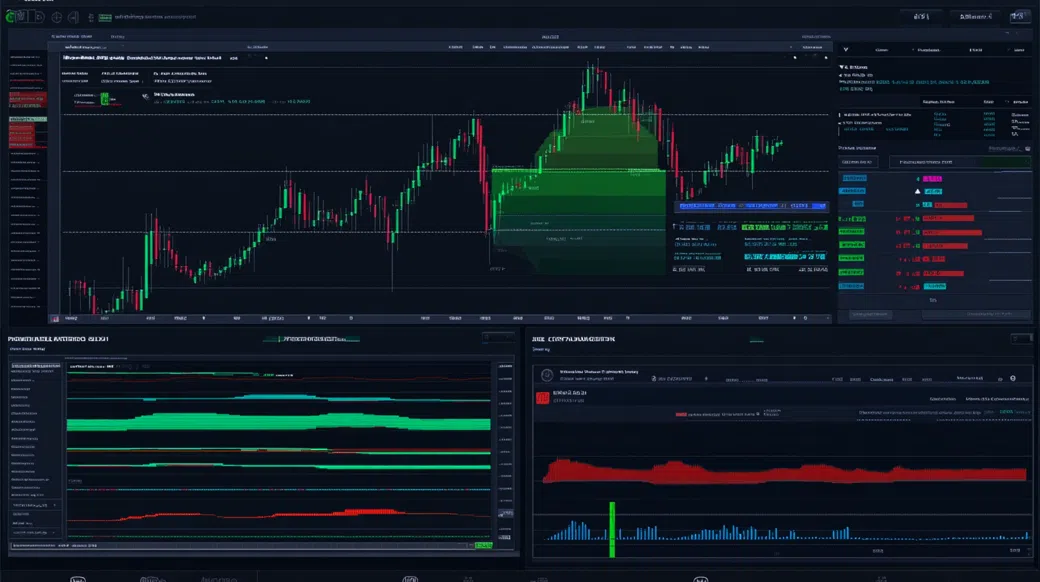
WebTrader is the main workstation, and it behaved like a modern browser platform: stable sessions, quick instrument search, and clean order tickets for market/limit/stop. Execution on my test orders during the NY-London overlap felt consistent—no obvious “price freeze” moments—though you don’t get the plug-in universe that comes with MT4/MT5. For traders who automate or run custom indicators, that’s the gap to think about, not the color of the UI.
The Douve Fondença app kept the same watchlist logic as desktop, with real-time quotes and one-tap position management that’s useful when volatility spikes. Douve Fondença login supported biometric unlock on my device, and deposits/withdrawals were reachable without hunting through menus. Order types covered the essentials (market/limit/stop), and push notifications for price alerts were reliable. The trade-off: chart space is tight, so deep multi-indicator setups are better left to a larger screen.
Charting includes the expected indicator shelf—MA, RSI, MACD, Bollinger—and basic drawing tools for levels and trendlines. The platform also embeds an economic calendar and a news feed that’s fine for timing risk events. What you don’t get is institutional-grade research or the strategy-tester culture of MT5/cTrader; think “functional toolkit,” not “quant lab.”
From the first screen, the signup flow asked for the usual identity and contact fields, then routed me into a KYC checklist before I requested a payout. Verification required a government-issued photo ID plus proof of address (bank statement or utility bill dated within 3 months). My documents cleared the same business day, and account status flipped to verified without extra back-and-forth. That cadence is what you want if you’re planning to test withdrawals early.
One practical note: base currency choices were oriented to USD funding, so if your bankroll is BRL/EUR, expect conversion somewhere in the chain. I also prefer brokers that force KYC at onboarding (not at first withdrawal), and here it was effectively required before the payout step—close enough, but worth planning for.
I tested live chat with a specific question on swap rates for holding US500 overnight and whether weekend financing applies to crypto CFDs. The chat agent replied in about 3 minutes and pointed me to the contract specs page, then clarified how the platform posts daily financing adjustments. I followed up by email asking about the withdrawal queue after verification; the ticket response landed roughly 9 hours later with a clear timeline and method-by-method expectations.
Coverage is what you’d expect from an offshore CFD desk: live chat runs 24/5, with weekends quieter unless you’re trading crypto. Language breadth depends on staffing (English was consistent in my case), and phone support wasn’t prominently offered in my region. Relative to peers, it’s functional—less hand-holding, more “here’s the policy link.”
If you’re considering this provider, start by checking spreads on your main instruments and confirming your country eligibility before depositing. A demo run helps you map the WebTrader workflow and understand margin behavior under leverage. When you’re ready, use the official page below.
Visit Douve FondençaYes, it can work for beginners if they stick to small position sizes and use the $10,000 demo first. The interface is not intimidating, but the 1:500 leverage ceiling can amplify mistakes quickly. New traders should focus on risk controls (stop-loss, margin awareness) before chasing tight spreads.
Yes, crypto is available as CFDs, with majors like BTC/USD and ETH/USD on the menu. You’re trading price exposure rather than receiving coins to a wallet. Keep an eye on weekend financing and wider spreads during fast markets.
No, based on my account activity it functioned like a real broker: I could deposit, place trades, and request a withdrawal after KYC. The bigger question is jurisdiction—its offshore setup means fewer formal protections than Tier-1 regulators. If you’re searching “Douve Fondença scam,” separate platform usability from regulatory strength.
No, Douve Fondença is not offered to U.S. residents. The platform restricts onboarding from the USA due to local regulatory requirements. If you try to register, eligibility checks can block access during KYC.
Most withdrawals are processed internally within 24–48 hours after your account is verified. After that, receipt time depends on the rail: cards typically take 2–5 business days, bank wires 3–7 business days, and crypto can arrive the same day. In my case, the timeline aligned with the stated queue once KYC was approved.
The Douve Fondença minimum deposit is $200. That entry point is common for offshore CFD brokers targeting retail traders. If you’re testing execution, consider starting near the minimum and scaling only after a clean withdrawal cycle.
Yes, Douve Fondença has a mobile app on iOS and Android. It supports trading, deposits/withdrawals, alerts, and biometric login depending on device. For detailed chart work, the desktop WebTrader still feels more comfortable.
Overall Score: 3.9/5
Pricing and execution are the parts that matter on a trading desk, and Douve Fondença delivered a coherent package for CFD speculators who value leverage and multi-asset access. The Raw/ECN-style tier can lower friction for frequent FX traders, while the WebTrader/app pairing keeps the workflow consistent across screens. Where I stay conservative is the jurisdictional layer: offshore oversight changes the rules of the game if a dispute ever escalates. Treat it as a risk-managed venue, not a savings account, and remember: CFDs are leveraged and losses can exceed expectations. For a final check of terms before committing, revisit Douve Fondença.
Best for: active CFD traders who monitor margin, trade indices/FX, and want a proprietary platform. Avoid if: you require Tier-1 regulation, deep research, or MT4/MT5-dependent workflows.