Elqui Rendanza Trading Platform Alternatives 2026
A numbers-first guide to Elqui Rendanza alternatives in 2026: regulated brokers, costs, platforms, execution quality, and a safer migration checklist.

A numbers-first guide to Elqui Rendanza alternatives in 2026: regulated brokers, costs, platforms, execution quality, and a safer migration checklist.
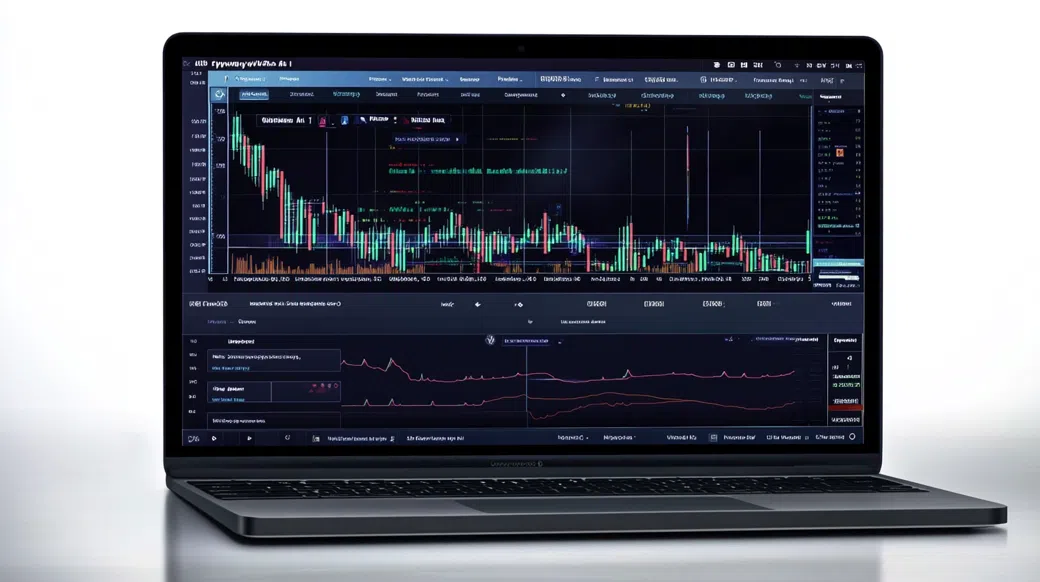
Leverage can feel like a shortcut—right until it becomes a trap. That’s the lens I use when readers ask for “Elqui Rendanza trading platform alternatives 2026”: not which logo looks slickest, but which venue can hold up under stress (fast markets, margin calls, withdrawal tests). In the offshore CFD world, the basics tend to look similar: a proprietary WebTrader, a mobile app, forex pairs, index and commodity CFDs, plus a menu of crypto CFDs. Elqui Rendanza fits that profile, typically advertising high leverage (often around 1:500), a mid-range account entry point (commonly about a $250 minimum deposit), and EUR/USD spreads that frequently land near 2.0 pips on a standard-style account.
Those numbers matter because they translate directly into friction. A 2.0-pip spread is not a marketing detail—it’s a recurring cost that compounds, especially for short-horizon strategies. The other pressure point is governance: offshore registration (commonly associated with jurisdictions such as the Seychelles FSA) usually offers a different investor-protection toolkit than FCA, ASIC, CySEC, or NFA oversight. If you’re weighing Elqui Rendanza against regulated options, you’re really comparing execution and costs on one side, and enforceable client protections (segregated funds, complaint pathways, compensation frameworks) on the other.
Below, I break down Elqui Rendanza alternatives with a trader’s checklist—platform stack, execution model, cost-of-trade, and what you can actually own (real equities vs CFDs). The goal isn’t hype. It’s reducing avoidable risk while keeping your strategy viable.
Disclaimer: This article is for informational purposes only and does not constitute investment advice. CFDs and other leveraged products carry a high risk of loss and may not be suitable for all investors.
From what’s typically observable in this segment, Elqui Rendanza operates as a CFD-first brokerage: traders speculate on price moves rather than taking delivery of assets. The product shelf generally centers on forex and CFDs (indices, commodities, and often crypto CFDs), with the kind of leverage retail clients should treat like live ammunition—commonly marketed around 1:500. The business structure in offshore frameworks (often linked to places like the Seychelles FSA) tends to align with market-maker style execution, although the real-world impact shows up less in the label and more in fills, slippage, and how disputes are handled. For US residents, access is usually restricted, and other high-risk or sanctioned jurisdictions are often blocked as well.
The platform stack is usually a proprietary WebTrader with a matching iOS/Android app—functional enough for basic discretionary trading, less ideal for systematic workflows. Charting commonly covers the essentials (multiple timeframes, a standard indicator set, drawing tools), but power users may miss deeper customization, robust backtesting, or the ecosystem you get with MT4/MT5/cTrader. Order tickets typically support market and pending orders; advanced order logic can be thinner than at larger venues. Mobile parity is the big selling point—watchlists, basic charts, and position management—while account dashboards focus on margin, P&L, and funding controls.
On pricing, offshore CFD providers often lean on a simple spread-based model. A reasonable expectation for EUR/USD on a standard-style account is around 2.0 pips, with wider spreads during volatile sessions. Some brokers in this category advertise “raw” or “ECN-style” tiers—often 0.0–0.4 pips plus a commission roughly $5–$8 per round-turn—but treat those labels as a hypothesis until you see a verified fee schedule. Swaps/overnight financing can be a meaningful drag for multi-day holds, and non-trading fees (inactivity or certain withdrawal rails) show up more often with competitors to Elqui Rendanza than with institutional-style multi-asset brokers.
Cost and control are the two triggers I hear most. A trader can tolerate a lot—until they realize the spread is eating the edge, or execution quality changes when markets move. Elqui Rendanza alternatives become especially relevant when your strategy needs predictable fills, transparent dispute resolution, and a regulatory perimeter that’s enforceable in the US/EU context. High leverage (say 1:500) amplifies small pricing and slippage differences into real P&L; that’s not theory, it’s arithmetic. And when withdrawals or KYC workflows feel opaque, the risk is no longer just market risk—it becomes counterparty risk.
Selection is less about “best broker” and more about fit-to-strategy within your risk budget. I like to think in layers: (1) legal safeguards, (2) product access, (3) cost-of-trade, then (4) platform and execution. Only after those pass do I care about bells and whistles. This framing works well for traders comparing alternatives to the Elqui Rendanza trading platform because it forces you to quantify what you’re paying and what you’re protected by.
Start with the regulator’s public register—FCA (UK), ASIC (Australia), CySEC (EU), or NFA/CFTC (US). FCA-authorized firms may fall under FSCS coverage (up to £85,000 in eligible cases), and Cyprus firms can be linked to the ICF framework (up to €20,000, eligibility-dependent). Look for segregated client funds language and negative balance protection where applicable. Offshore structures (often associated with the Seychelles FSA) can be workable for some traders, but the enforcement and compensation toolkit is typically different versus tier-1 regimes.
Write down what you actually need to trade. If your plan includes real stocks/ETFs, you’re looking for a multi-asset broker with exchange access (DMA), not “shares as CFDs.” Options and futures are a separate tier again—great for hedging and defined-risk structures, but not common on CFD-only platforms. FX and index CFDs can be fine for tactical traders, yet portfolio builders in the US/EU often prefer venues that support cash equities and bonds alongside derivatives.
Ignore the headline spread and compute round-turn cost: spread + commission + expected slippage, then add swaps if you hold overnight. A 2.0-pip EUR/USD spread (a typical figure for platforms like Elqui Rendanza) is a big toll for active traders. Raw accounts can look cheaper, but commissions and execution quality decide the real number. Also scan the fee schedule for inactivity charges and withdrawal costs—those are “silent” costs that don’t show in the trade ticket.
Platform choice is a strategy decision. MT4/MT5 and cTrader matter if you rely on EAs, custom indicators, or fast order workflows; proprietary platforms can be fine for manual trading but may limit portability. Execution model matters too: market maker vs STP/ECN/DMA affects how your orders are routed and how slippage shows up in fast tape. Before funding seriously, test with small size during news or liquid overlaps to see if your fills degrade when it matters.
Support is not a “nice-to-have” once money is moving. Check support hours in your timezone, language coverage, and whether you can reach a human when payments or margin issues hit. Education libraries are secondary, but clear documentation on KYC/AML, margin rules, and swap calculations is a strong signal of operational maturity. Mobile apps should mirror core risk controls—position sizing, margin view, and easy access to account statements.
Forex and CFDs are where Elqui Rendanza is likely positioned: roughly 30–50 FX pairs, a handful of commodities, and around 8–15 indices is a common offshore menu. The trade-off is usually cost and execution transparency. If EUR/USD is typically near 2.0 pips on a standard-style account, a regulated FX specialist can materially change the math for active traders. Pepperstone and IC Markets, for example, are widely used for MT4/MT5/cTrader stacks and “raw” style pricing (often tight spreads with a commission). In practice, what you’re buying is not just a lower spread—it’s a platform ecosystem, clearer reporting, and (often) better-defined execution policies. Remember the risk: higher leverage (often marketed around 1:500 offshore) makes small pricing differences and slippage hit harder.
Equities are where many traders discover the limits of CFD-first platforms. If you’re offered “stocks,” they’re frequently CFDs—no shareholder rights, no voting, and typically financing costs for holding. For US/EU investors who want actual ownership, brokers similar to Elqui Rendanza won’t solve the problem; you need a different category. Interactive Brokers (IBKR) is the cleanest example: broad exchange access, real stocks/ETFs, options, futures, and global market connectivity geared toward serious execution. Saxo Bank is another strong multi-asset venue with a deep product set and a platform built for cross-asset portfolios. For investors shifting from CFDs to real assets, this is not a cosmetic upgrade—it changes how your positions behave (dividends, corporate actions, and borrowing costs).
Crypto exposure on offshore brokers is commonly delivered via crypto CFDs: you’re tracking price, not moving coins on-chain, and you’re taking broker counterparty risk alongside market risk. That can be acceptable for short-term hedging or tactical trades, but it’s a different proposition than owning spot crypto in a wallet. If you want regulated derivative-style access, IG and Plus500 both offer crypto CFDs in eligible jurisdictions (availability depends on local rules), with clearer risk disclosures and regulated oversight in their main operating entities. The key comparison point isn’t the coin list (often 10–30 tokens in this segment); it’s how margin, weekend pricing, and gap risk are handled—and whether negative balance protection and transparent financing charges are in place.
Regulation: SEC/FINRA (US), FCA (UK), IIROC (Canada)
Markets: Stocks, ETFs, options, futures, bonds, FX, funds
Fees: Varies by market; FX spreads can be competitive on larger sizes; commissions depend on venue and pricing tier
Platform: Trader Workstation (TWS), IBKR Desktop, Web, mobile, API
Best For: Global multi-asset execution and real equity access
Regulation: FCA (UK), ASIC (Australia), CySEC (EU), DFSA (Dubai)
Markets: FX and CFDs (indices, commodities, some crypto CFDs where permitted)
Fees: Standard spreads often around ~1.0 pip on EUR/USD; Raw-style pricing often from ~0.0–0.3 pips + commission (varies by platform/account)
Platform: MT4, MT5, cTrader, TradingView integration (region/account dependent)
Best For: MT4/MT5/cTrader traders optimizing spread + execution
Regulation: FCA (UK), MAS (Singapore), DFSA (Dubai)
Markets: Stocks, ETFs, bonds, FX, options, futures, CFDs
Fees: Transparent commissions on exchange-traded products; FX spreads and pricing tiers vary by account level and region
Platform: SaxoTraderGO, SaxoTraderPRO
Best For: Portfolio builders mixing equities with derivatives
Regulation: FCA (UK), ASIC (Australia), MAS (Singapore)
Markets: CFDs (indices, FX, commodities, shares), spread betting (UK/IE), crypto CFDs (where allowed)
Fees: Spreads vary by instrument; FX spreads often competitive for liquid pairs; financing applies on overnight CFD holds
Platform: IG web platform, mobile app, MT4 (region dependent)
Best For: Broad CFD market coverage with strong risk controls
Regulation: ASIC (Australia), CySEC (EU), FSA Seychelles (group-level)
Markets: FX and CFDs (indices, commodities, some crypto CFDs where permitted)
Fees: Raw-style spreads often from ~0.0–0.3 pips on EUR/USD + commission; standard accounts typically wider (varies by entity/platform)
Platform: MT4, MT5, cTrader
Best For: Scalpers and algorithmic traders who need low-latency setups
Regulation: FCA (UK), CySEC (EU)
Markets: Stocks and ETFs (investing), CFDs (region dependent)
Fees: Investing accounts often emphasize low explicit commissions; CFD costs are primarily spread/financing and vary by instrument
Platform: Proprietary web and mobile platform
Best For: Simpler stock-and-ETF access for UK/EU retail
| Platform | Regulation | Main Markets | Typical Costs | Best For |
|---|---|---|---|---|
| Interactive Brokers (IBKR) | SEC/FINRA, FCA, IIROC | Real stocks/ETFs, options, futures, bonds, FX | Market/venue-based commissions; FX pricing competitive on size | Global multi-asset execution and real equity access |
| Pepperstone | FCA, ASIC, CySEC, DFSA | FX + CFDs | EUR/USD ~1.0 pip (Standard) or ~0.0–0.3 + commission (Raw-style) | MT4/MT5/cTrader traders optimizing spread + execution |
| Saxo Bank | FCA, MAS, DFSA | Stocks/ETFs, options, futures, FX, CFDs | Commissions on exchanges; FX spreads vary by tier/region | Portfolio builders mixing equities with derivatives |
| IG | FCA, ASIC, MAS | CFDs across major asset classes; spread betting (UK/IE) | Variable spreads; overnight financing on CFD holds | Broad CFD market coverage with strong risk controls |
| IC Markets | ASIC, CySEC, FSA Seychelles (group-level) | FX + CFDs | EUR/USD often ~0.0–0.3 + commission (Raw-style); wider on Standard | Scalpers and algorithmic traders who need low-latency setups |
| Trading 212 | FCA, CySEC | Stocks/ETFs (investing) + CFDs (region dependent) | Low explicit commissions on investing; CFD spread/financing varies | Simpler stock-and-ETF access for UK/EU retail |
Switching brokers is operational risk management: you’re moving cash, changing margin rules, and introducing a new execution environment. Treat the process like a staged rollout, not a single “all-in” transfer. One more point traders ignore: leverage and CFDs magnify small mistakes—wrong account currency, wrong product type, or a surprise swap rate can turn into a real drawdown faster than you think.
If you’re still evaluating the current offering, verify today’s product list, fees, and regional eligibility directly on the platform, then compare those numbers against regulated substitutes. The most useful comparison is practical: spreads on your instruments, financing on your holding period, and whether the platform stack matches your workflow.
Visit Elqui RendanzaThe best alternative depends on whether you need real multi-asset access or mainly FX/CFDs. For real stocks/ETFs plus options and futures, Interactive Brokers (IBKR) is usually the most complete step up; for FX/CFD trading with MT4/MT5/cTrader, Pepperstone or IC Markets are common picks. Traders who prioritize broad CFD coverage under a major regulator often shortlist IG. In other words: match the venue to the instrument, not the marketing.
Elqui Rendanza appears to operate under an offshore framework (commonly associated with jurisdictions such as the Seychelles FSA), which generally provides a different level of investor protection than FCA/ASIC/CySEC/NFA-regulated firms. That doesn’t automatically mean a platform cannot function, but it does change your counterparty risk and the tools available if something goes wrong. For a safety-first comparison, weigh segregated funds policies, negative balance protection, and how disputes are escalated. If you’re unsure, compare Elqui Rendanza alternatives where the legal entity is clearly listed on a tier-1 regulator’s register.
With offshore CFD-first brokers, “stocks” are often offered as CFDs rather than real shares, and exchange-traded futures are frequently not part of the core lineup. Crypto exposure is commonly via crypto CFDs (price tracking without on-chain ownership). If you want real stocks/ETFs and futures, a multi-asset venue like IBKR or Saxo is typically more suitable. For regulated crypto CFDs, brokers such as IG or Plus500 may offer them where local rules permit.
Before switching, confirm the new broker’s regulator and legal entity on the official register, then compare your real round-turn costs (spread + commission + expected slippage + swaps). Next, verify platform compatibility (MT4/MT5/cTrader vs proprietary) and margin/negative balance rules, because leverage changes your risk profile quickly. Finally, document your full trade and funding history and plan the cash movement step-by-step from Elqui Rendanza to the new account so you’re never forced to trade while under withdrawal pressure.
About the Author: Carlos Mendes is a former equity desk analyst from São Paulo who covers emerging-market brokerages and Latin American fintech with a trader’s focus on execution, fees, and risk controls. He writes like he traded: measure first, speculate later.