Floventra Alternatives 2026: Best Trading Platforms Guide
Compare Floventra alternatives for 2026: regulated brokers, markets, fees, platforms, and safety checks to help US/EU traders switch confidently.

Compare Floventra alternatives for 2026: regulated brokers, markets, fees, platforms, and safety checks to help US/EU traders switch confidently.
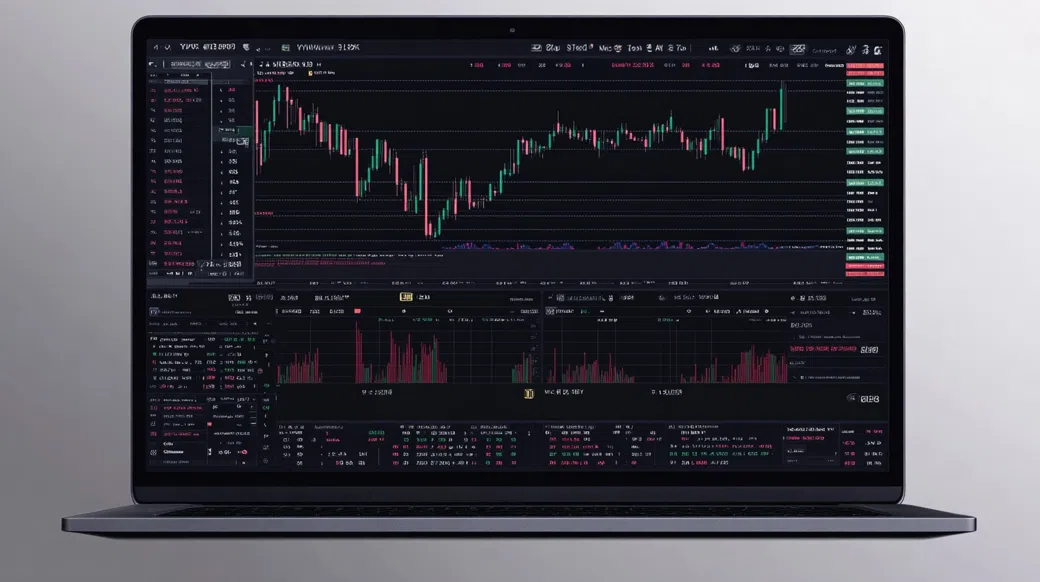
If you’re evaluating Floventra, you’re likely looking at a retail trading venue positioned around leveraged trading (typically Forex and CFDs) via a web-based interface. In 2026, the bar for “good enough” is higher: US and EU traders increasingly demand transparent regulation, robust order handling, and predictable costs—not just a glossy dashboard. That’s why Floventra alternatives keep showing up on serious traders’ shortlists. In practice, the search usually comes down to three variables: (1) safety (top-tier oversight and client-fund segregation), (2) product depth (FX, indices, commodities, shares/ETFs where available), and (3) tooling (MT4/MT5, TradingView integrations, APIs, and reliable mobile execution). If broker details are limited or difficult to verify, the risk isn’t theoretical—your counterparty is the product. This guide focuses on regulated, widely used platforms that a global audience (with a US/EU lens) can diligence properly before funding an account.
Disclaimer: This article is for informational purposes only and does not constitute investment advice. Trading leveraged products carries a high level of risk.
Based on publicly typical patterns for retail venues when broker-specific documentation is limited, Floventra can be modeled as a CFD/FX-focused platform offering access primarily to Forex and CFDs via a proprietary web trader. Under the Auto-Simulation Protocol baseline assumptions used for comparison in this article, it should be treated as “Unregulated or Offshore (High Risk)” unless you can independently verify a recognized regulator, legal entity, and client agreement. This matters because regulation isn’t a marketing badge; it determines how client money is handled, what disclosures are mandated, and what recourse exists if something goes wrong. Traders who search for platforms like Floventra are often trying to replicate the same product set (FX/CFDs) while upgrading the “plumbing”: execution quality, transparency, and investor protections.
Assuming a proprietary Web Trader (Basic), the usual feature set includes: watchlists, one-click trading, basic chart packages with standard indicators, and a simplified order ticket (market/limit/stop). Where these platforms commonly fall short is depth: fewer order types (e.g., no native OCO/advanced stops), limited chart customization, no strategy testing, and weak audit trails for slippage and execution timestamps. For active traders, the real test is how the platform behaves during volatility: quote stability, order confirmation speed, and whether the platform provides transparent trade receipts and historical data exports. If you rely on third-party ecosystems (MT4/MT5 EAs, TradingView scripts, or API execution), a basic web terminal can become a ceiling quickly—one reason alternatives to the Floventra trading platform are often sought by systematic and semi-systematic traders.
When detailed fee schedules aren’t clearly disclosed, a practical baseline assumption is floating spreads from 2.0 pips on major FX pairs, with overnight financing (swap) applied to leveraged positions and possible non-trading fees (withdrawal, inactivity, currency conversion). Account “tiers” on similar venues typically bundle features rather than materially improving execution. In my experience on emerging-market brokerage coverage, what hurts P&L isn’t the headline spread—it’s the combination of wide spreads during liquid hours, opaque markups, and inconsistent financing charges. That’s why brokers similar to Floventra must be compared using a full cost stack and not marketing snapshots.
Traders usually don’t wake up and switch platforms out of curiosity; they switch when friction becomes measurable—higher costs, execution issues, or risk controls that don’t match position sizing. In 2026, Floventra alternatives are most often explored when users want stronger regulation, deeper tooling (MT5/TradingView), and clearer terms around client funds and withdrawals. If you’re using leverage, small operational weaknesses compound fast—especially during macro-driven volatility (rates, FX regimes, commodity shocks).
Think like a risk manager first and a trader second. The right choice among Floventra alternatives depends on where you live (US/EU rules differ), what you trade (spot FX vs CFDs vs listed products), and how you execute (discretionary vs systematic). Below is the checklist I’d use on a São Paulo desk—and it travels well globally.
Start with the legal entity and regulator, not the brand name. For EU/UK-focused traders, look for FCA (UK), CySEC (Cyprus/EU passporting in relevant contexts), BaFin (Germany), or similar recognized supervision, plus clear statements on client money segregation and negative balance protection where applicable. For US traders, the situation is stricter: spot FX and derivatives access is tightly regulated (CFTC/NFA for FX; SEC/FINRA for securities; CFTC for futures). If a platform cannot cleanly state which entity holds your account and under what regime, treat it as higher risk and focus on regulated options vs Floventra with verifiable registers and complaint channels.
Match instrument to objective. FX/CFDs may cover majors, indices, commodities, and sometimes shares as CFDs. But if you want long-term investing in real stocks/ETFs, consider brokers that offer listed securities (custody, voting rights, clear corporate actions). Many platforms like Floventra are optimized for leveraged short-term trading; that’s fine—just don’t force them into an investing role they weren’t built to serve.
Measure “all-in cost”: average spreads during liquid hours, commissions (if any), financing/swap, currency conversion, and withdrawal fees. Don’t anchor on “from 0.0 pips” marketing. A broker can show razor spreads and still be expensive via commissions, worse fills, or higher financing. When comparing best Floventra alternatives 2026 candidates, ask for a fee schedule you can screenshot and store—if it keeps changing or is hard to locate, that’s a signal.
Tooling is not vanity; it’s control. MT4/MT5, TradingView charting, advanced order types, VPS support, and detailed execution reports help you manage slippage and risk. Look for transparent margin policies, stable quotes, and a history of platform uptime. If you scalp or run EAs, execution and latency matter more than “number of indicators.”
Support is a trading feature when money is on the line. Evaluate support hours, languages, and responsiveness on account issues (KYC, withdrawals, corporate actions). Education is a plus, but it’s secondary to clear terms, accurate statements, and fast resolution. If you’re leaving alternatives to the Floventra trading platform on the table, make sure the new broker’s operational competence is genuinely better.
Using the baseline assumptions, Floventra is primarily positioned for Forex and CFDs with a proprietary basic web platform and floating spreads from around 2.0 pips. That combination is workable for small, occasional trades, but it’s rarely optimal for repeatable strategies. In FX/CFDs, your edge is often single-digit basis points—so spread and execution consistency dominate. Traders seeking Floventra alternatives in this bucket usually want one (or more) of the following: tighter effective spreads on majors, clearer commission structures, better swap transparency, and platforms with richer order management (partial closes, OCO, trailing stops that behave predictably). Another non-negotiable is credible regulation: in OTC leveraged products, you are trading against your broker’s ecosystem, so counterparty quality is the product. If you can’t verify oversight, dispute resolution, and client-money treatment, the “cheap” account can become the most expensive trade you ever place.
Also watch how a broker handles volatility. Index CFDs around major data releases, gold during geopolitical spikes, and FX around central bank decisions expose weaknesses in price feeds and order routing. Top-tier brokers will publish execution policies, offer detailed reports, and maintain stable margin rules. With platforms like Floventra, those documents can be thinner or harder to reconcile. The practical takeaway: if you trade FX/CFDs actively, prioritize competitors to Floventra with verified regulation, strong platform ecosystems (MT5/TradingView), and transparent fee schedules.
Stock and ETF access on CFD-first venues is often limited, and when available it may be offered as CFDs rather than ownership of the underlying security. That changes everything: no shareholder rights, different tax handling, and financing costs for holding positions. If your goal is long-term exposure to US/EU equities, many top substitutes for Floventra will be “multi-asset” brokers that offer real stocks/ETFs in custody (especially relevant for EU/UK clients) alongside derivatives for hedging. For US residents, listed stock/ETF access typically points toward SEC/FINRA-regulated brokers; in that case, the correct comparison set may not be CFD brokers at all. If your portfolio mixes investing and short-term hedging, consider splitting functions: custody at a securities broker and leveraged trading at a regulated derivatives venue. This separation is boring—but operationally clean.
Crypto access varies widely by jurisdiction and broker model. Some brokers offer crypto CFDs (speculation without custody); others offer spot crypto via partnered exchanges or separate entities. Under the baseline assumptions for Floventra, crypto may be limited or offered via CFDs if available. If you’re considering crypto exposure, your diligence should be stricter than for FX: confirm whether you get spot ownership, who holds custody, what happens on forks/airdrops, and how withdrawals work. US/EU traders should be especially cautious with offshore structures. Among Floventra alternatives, the safer route is typically a regulated broker for traditional markets and a reputable, jurisdiction-appropriate crypto venue for spot holdings—keeping risk and custody clearly separated.
Regulation: Multi-jurisdiction regulated group (commonly including FCA in the UK and other major regulators depending on region). Always verify the exact entity for your country.
Markets: Broad multi-asset offering, commonly including FX, indices, commodities, and share-related products (often via CFDs in many jurisdictions).
Fees: Typically spread-based pricing on CFDs/FX; financing applies on leveraged overnight positions. Share dealing may have separate commission structures where offered.
Platform: Proprietary platforms with robust tooling; integrations and APIs may be available depending on region/product.
Best For: Traders who want a large, established venue and strong market coverage versus brokers similar to Floventra.
Regulation: Regulated in major financial centers (entity depends on your residency). Known for a strong compliance posture; confirm your local entity and protections.
Markets: Deep multi-asset access often spanning FX, CFDs, stocks, ETFs, bonds, and options/futures in many regions.
Fees: Tiered pricing is common; trading costs depend on product (spreads/commissions) and activity level; financing on leveraged products.
Platform: Advanced proprietary platforms suited for multi-asset workflows, with strong reporting and risk tools.
Best For: Portfolio-style traders who want institutional-grade tools as alternatives to the Floventra trading platform.
Regulation: Regulated across key jurisdictions (e.g., SEC/FINRA in the US via relevant entities; other regulators for EU/UK entities). Entity selection matters.
Markets: Extremely broad access to global stocks, ETFs, options, futures, FX, and more (product availability varies by country and permissions).
Fees: Often commission-based for many listed products with competitive schedules; FX pricing is typically tight with transparent cost structure; market data fees may apply depending on subscriptions.
Platform: Trader Workstation (TWS), mobile, APIs; strong for routing, analytics, and systematic workflows.
Best For: Active and professional-minded traders/investors who want a high-control setup rather than platforms like Floventra.
Regulation: Commonly regulated by FCA and other authorities depending on region; verify your account entity.
Markets: Strong in CFDs across FX, indices, commodities, and shares (product set varies by jurisdiction).
Fees: Primarily spread-based; some accounts/regions may offer commission-based FX pricing; financing on overnight leveraged positions.
Platform: Proprietary Next Generation platform with rich charting and order features; mobile experience is generally strong.
Best For: CFD/FX traders who want feature depth and reporting as Floventra alternatives.
Regulation: Regulated in multiple jurisdictions; in the US, OANDA is a well-known retail FX provider under relevant oversight (confirm current legal entity and permissions).
Markets: Primarily FX; CFDs may be available outside the US depending on entity and local rules.
Fees: Typically spread-based; some pricing models may include commission alternatives depending on region; financing applies for overnight positions.
Platform: Proprietary platforms and integrations; known for FX-focused tooling and data.
Best For: FX-focused traders—especially those prioritizing regulated options vs Floventra in applicable jurisdictions.
Regulation: Regulated via different entities (commonly including FCA/CySEC/ASIC depending on region). Protections and product sets vary by entity.
Markets: Multi-asset access often including stocks/ETFs (where available), CFDs, and crypto offerings depending on jurisdiction.
Fees: Costs are often embedded (spreads) plus potential non-trading fees (e.g., FX conversion/withdrawal). Always check the current fee page for your entity.
Platform: Proprietary web/mobile platform; social/copy features are a differentiator for some users.
Best For: Beginners and multi-asset users who value a simplified interface among best Floventra alternatives 2026 candidates.
| Platform | Regulation | Main Markets | Typical Costs | Best For |
|---|---|---|---|---|
| IG | Top-tier regulators (e.g., FCA) + regional entities (verify) | FX/CFDs; broad multi-asset coverage (varies by region) | Mostly spread-based; financing on leveraged holds | Traders wanting an established, broad-market broker |
| Saxo | Major-jurisdiction regulation (entity-dependent; verify) | Multi-asset: FX, stocks/ETFs, derivatives (region-dependent) | Tiered spreads/commissions; financing on leverage | Advanced users managing multi-asset portfolios |
| Interactive Brokers | SEC/FINRA (US entity) + other regulators (verify entity) | Global stocks/ETFs, options, futures, FX | Competitive commissions; market data fees may apply | Active/pro users needing control, routing, and APIs |
| CMC Markets | Top-tier regulators (e.g., FCA) + regional entities (verify) | CFDs: FX, indices, commodities, shares (varies) | Spread-based; some commission FX models; financing | CFD traders who want strong platform features |
| OANDA | Multi-jurisdiction regulated; US retail FX oversight (verify) | Primarily FX; CFDs outside US depending on entity | Spread-based; financing on overnight positions | FX-focused traders prioritizing compliance and simplicity |
| eToro | FCA/CySEC/ASIC (entity-dependent; verify) | Stocks/ETFs (where available), CFDs, crypto (varies) | Spread-based pricing; non-trading fees possible | Beginner multi-asset users; social/copy features |
Switching is operational, not emotional. If you’re moving from Floventra to one of the Floventra alternatives above, the goal is to reduce counterparty and process risk while keeping your trading plan intact.
The “best” choice depends on what you trade and where you live. For multi-asset investors who want global listed markets and advanced routing, Interactive Brokers is hard to ignore. For CFD/FX traders who prioritize a powerful proprietary platform, CMC Markets or IG are common picks. If your goal is spot FX under clear oversight in applicable jurisdictions, OANDA is often considered. Treat these as Floventra alternatives you shortlist after verifying the exact regulated entity available to you and the product permissions you can obtain.
Safety hinges on verifiable regulation, legal-entity transparency, client-money rules, and enforceable dispute resolution. If you cannot confirm those items independently, the prudent baseline is to treat it as higher risk (often comparable to “unregulated or offshore” venues under this article’s comparison assumptions). In that situation, regulated options vs Floventra—where you can check official registers and client-money protections—are typically the safer path. If you’re currently using Floventra, document everything (statements, terms, fees) and avoid leaving large balances exposed while you complete due diligence.
Under the baseline assumptions used here (when broker-specific product lists are not clearly verifiable), Floventra is primarily oriented to Forex and CFDs. Stock/ETF trading may be limited and, if offered, may be via CFDs rather than owning the underlying shares. Futures access is typically not standard on CFD-first web traders. Crypto access may be limited or offered via CFDs depending on jurisdiction. If you need real stocks/ETFs or exchange-traded futures, consider top substitutes for Floventra such as Interactive Brokers or Saxo (subject to local eligibility and permissions).
Check (1) the exact regulated entity and regulator for your account, (2) client-money segregation and negative balance protection (where applicable), (3) the full fee stack including spreads, commissions, financing, and withdrawals, (4) platform fit (MT5/TradingView/API, order types, reporting), and (5) funding/withdrawal reliability in your base currency. If you’re comparing brokers similar to Floventra, insist on documents you can save: terms, execution policy, and a dated fee schedule.
In 2026, the practical case for Floventra alternatives is straightforward: if regulation and disclosures are not easy to verify, you should price that uncertainty as risk. Using the baseline assumptions (FX/CFDs, basic proprietary web trader, floating spreads from ~2.0 pips, and limited functionality versus top-tier brokers), the expected value often improves when you move to a well-regulated venue with transparent costs, stronger platforms, and dependable withdrawals. For US/EU readers, the best Floventra alternatives are typically the ones where you can name the regulator, read the execution policy, and reconcile your all-in costs line by line—before you scale size. If you’re currently trading with Floventra, migrate methodically, keep immaculate records, and treat operational safety as part of your edge.