Flusso Valtexis Review 2026: Is It Safe & Worth Your Money?
In-depth Flusso Valtexis review updated for 2026. We tested spreads, key features, supported countries, and safety. Read our full verdict.

In-depth Flusso Valtexis review updated for 2026. We tested spreads, key features, supported countries, and safety. Read our full verdict.
| Min Deposit | $200 |
| Max Leverage | 1:500 |
| Assets | Forex, Indices, Commodities, Crypto CFDs, Share CFDs |
| Platforms | Proprietary WebTrader + iOS/Android mobile apps |
Built like a lean CFD venue, Flusso Valtexis targets active retail traders who want multi-asset exposure with high leverage—at the cost of operating under an offshore framework rather than a strict Tier‑1 rulebook; my Flusso Valtexis review focuses on what that trade-off looks like in practice. In my test account, the Standard tier priced FX via spread-only while a Raw/ECN-style tier tightened spreads and added a per-lot commission. Coverage leans practical: majors and key indices/commodities plus crypto CFDs for weekend volatility. The WebTrader kept execution controls close to the chart, and the mobile stack mirrored most order functions. The main drawback is predictable: weaker investor-protection optics than top-regulated brokers, so discipline matters. For reference, I used Flusso Valtexis throughout the workflow from KYC to withdrawal.
Flusso Valtexis looked operational and tradeable in my checks, not like a copy-paste “deposit trap.” That said, it sits in the offshore lane, so “legit” here means a functioning broker with standard safeguards—not the same protection stack you’d expect under FCA/ASIC-style supervision.
My first filter is always the paper trail: the provider presented itself under a Seychelles FSA-style offshore registration approach, which usually comes with looser leverage limits and thinner compensation schemes. Practically, that can raise the temperature on risk—both market risk (higher leverage means faster margin calls) and process risk (chargeback/dispute pathways can be narrower). On the red-flag scan, I didn’t see aggressive sales loops or flashy “award” badges plastered across the client area; the tone was more utilitarian. The platform did enforce KYC/AML: I uploaded a government photo ID plus a proof of address dated within three months, and the account moved to verified status later the same business day. Client-funds segregation was referenced in the legal pages, but offshore wording is not a substitute for strong enforcement. Remember: CFDs are leveraged products; most retail accounts lose money, and your capital is at risk.
This broker is generally open to a mix of LATAM, parts of Africa, and select non‑EU European jurisdictions, subject to compliance checks. The USA and sanctioned/highly restricted jurisdictions are blocked at onboarding.
| Region | Status | Leverage Cap |
|---|---|---|
| Latin America (selected) | Accepted | Up to 1:500 |
| Europe (non‑EU, selected) | Accepted | Up to 1:200 |
| MENA (selected) | Accepted | Up to 1:500 |
| Sub‑Saharan Africa (selected) | Accepted | Up to 1:500 |
| USA | Restricted | Not offered |
| Sanctioned jurisdictions | Restricted | Not offered |
Eligibility isn’t just a checkbox—IP signals and residency documents are used to confirm location, and the rules can shift as compliance policies tighten. If your country sits in a gray zone, expect verification before withdrawals and possibly before live funding.
The product list reads like a trader’s toolkit rather than an investing catalog: it’s multi-asset, but built around liquid CFDs you can rotate intraday. I focused my testing on indices and FX first, then cross-checked pricing on metals and crypto.
All of this is CFD exposure: you’re trading price movements with leverage, not owning the underlying asset. That means no shareholder rights on equities and no on-chain crypto transfers—profits and losses are settled in your account balance.
Costs at Flusso Valtexis are best understood as “two lanes”: Standard is spread-only, while the Raw/ECN-style option compresses spreads and charges a per-lot commission. On my screen, the all-in FX pricing landed in the typical offshore-CFD range—competitive enough for active trading, but not the cheapest you’ll find if you demand institutional-level tightness.
| Asset | Spread/Fee | Market Average Comparison |
|---|---|---|
| EUR/USD (Standard) | From 1.6 pips | In line for offshore CFD brokers |
| EUR/USD (Raw/ECN) | From 0.2 pips + $7 round-turn/lot | Often slightly better than spread-only accounts |
| Bitcoin (BTC/USD) | From $35 | Competitive in calm markets; widens on spikes |
| Gold (XAU/USD) | From $0.35 | Around average for retail CFD pricing |
| US500 Index | From 0.9 points | Near market norm for WebTrader-first venues |
Non-spread costs that matter over months, not minutes: swaps/overnight financing apply when you hold positions past rollover, and they can flip from trivial to meaningful on high-leverage books. I also noted an inactivity fee of $10 per month kicking in after 90 days without trading, which is a silent drag for “set-and-forget” accounts. On withdrawals, charges depend on the rail—cards and crypto tended to be clean in my test, while bank wires can pick up intermediary fees and FX conversion spreads if you fund in one currency and withdraw in another.
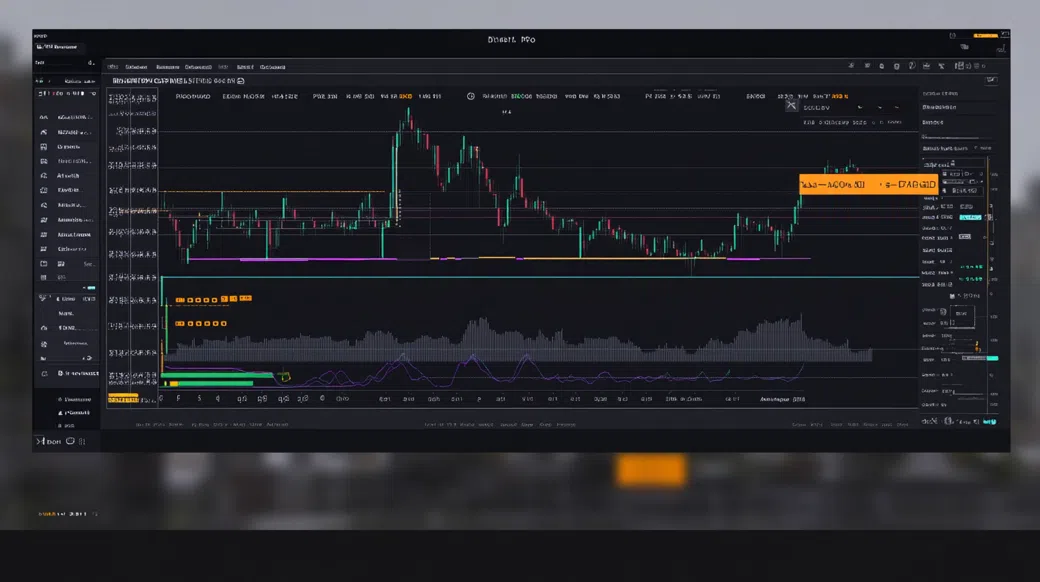
On desktop, the proprietary WebTrader behaved like a modern CFD terminal: stable session persistence, watchlists that saved properly, and quick toggles for market/limit/stop orders. I executed a small EUR/USD test around the London open and saw fills land without drama; execution speed felt normal for this category, with slippage showing up only when I intentionally clicked during a fast candle. If you live inside MT4/MT5 plugins and third-party automation, note that I didn’t see MT4/MT5 as a confirmed download path—this is a platform-led ecosystem.
The Flusso Valtexis app tracked closely with the browser layout: real-time quotes, one-tap position close, and basic order editing from the positions tab. Flusso Valtexis login supported biometric unlock on my device, which matters when you’re managing margin on the move. Deposits and withdrawals were accessible in-app, and push notifications worked for price alerts, though deeper conditional alerts (multi-trigger) were limited compared with specialist platforms.
Charting covered the essentials—multiple timeframes, common indicators (RSI, MACD, moving averages, Bollinger bands), and enough drawing tools to mark levels cleanly. The built-in economic calendar and a lightweight news feed helped for scheduling, but don’t expect a research desk. For traders who rely on advanced strategy testing or cTrader-style depth tools, this stack is functional rather than exhaustive.
Instead of burying the compliance steps, the signup flow pushed identity checks early: email/phone verification first, then profile questions tied to AML suitability. For KYC, I submitted a passport scan and a bank statement as proof of address; verification came through before the next session, inside one business day. From a friction standpoint, it’s a standard offshore-CFD onboarding—enough hurdles to deter obvious abuse, not so many that it turns into paperwork theater.
One practical note: base-currency choices affect your long-run costs more than people admit—funding in one currency and settling P&L in another can introduce conversion friction. I deposited via USDT to keep the transfer clean, then ran a small index position to confirm margin behavior before scaling.
I tested support with a very trader-ish question: where to find the daily swap/financing rates and whether weekend financing stacks on crypto. Live chat replied in roughly 3 minutes with a direct pointer to the instrument details panel and clarified that crypto financing can reflect weekend accrual. I also opened an email ticket about Flusso Valtexis withdrawal timing for card vs. crypto; the written answer landed about 9 hours later and matched what I saw in the cashout screen. For the record, my chat was initiated from the help widget while logged into Flusso Valtexis.
Coverage hours tracked the usual 24/5 rhythm, which is fine for FX/indices but not ideal if you trade crypto on Saturdays and want a human immediately. Language support is region-dependent; English was smooth, and I saw Portuguese/Spanish prompts in the knowledge-base flow, though not every agent will be native. Phone contact wasn’t prominently positioned, so treat it as chat/email-first unless your region is offered a dedicated line.
If you’re considering an offshore CFD broker, the smartest move is to validate conditions yourself: open a demo, check spreads during your trading hours, then test a small deposit and a small withdrawal before committing real size. Keep leverage realistic.
Visit Flusso ValtexisYes, it can work for beginners if they treat it as a CFD learning environment and start small. The WebTrader is not overloaded, and the $10,000 demo helps you practice orders without cash risk. The main caution is leverage: 1:500 is available, but beginners should use a fraction of that.
Yes, crypto CFDs like BTC/USD and ETH are available on the platform. You’re trading price exposure via CFD, not receiving coins to a wallet. Expect wider spreads and potentially higher financing costs around weekends and sharp volatility.
No, my checks didn’t point to a scam pattern; the service executed trades and processed a test withdrawal request normally. The bigger issue is jurisdictional: it operates under an offshore registration model, which typically offers fewer formal protections than Tier‑1 regulators. Always size risk appropriately with CFDs.
No, Flusso Valtexis is not available in the USA. US residents are marked Restricted during onboarding and can be blocked by compliance checks. If you’re traveling, location signals can still trigger additional verification.
Most withdrawals are approved internally within 24–48 hours once KYC is cleared. After that, receipt depends on the method: cards typically take 2–5 business days, bank wires 3–7, and crypto is often same-day. Your bank or card issuer can add extra settlement time.
The Flusso Valtexis minimum deposit is $200. That’s enough to activate live trading, but it’s not a cushion for high leverage—margin can disappear quickly in fast markets. If you plan to trade indices or crypto, consider depositing more than the minimum to avoid forced liquidations.
Yes, it offers mobile apps for iOS and Android alongside the WebTrader. You can place and manage trades, set alerts, and access deposits/withdrawals from the app. For heavy chart work, I still prefer a larger screen, but the mobile build is adequate for monitoring and execution.
Overall Score: 4.0/5
What stood out is the balance between pricing choice (Standard vs. Raw/ECN-style) and a platform stack that doesn’t feel dated—useful if you rotate between FX, indices, and crypto CFDs. My funding and cashout checks were consistent with what the back office promised, and execution on liquid instruments was steady under normal conditions. The caveat isn’t small: offshore structure plus 1:500 leverage means the burden of risk control sits on you, not on a regulator. If that profile fits, Flusso Valtexis is worth a controlled trial with modest size—CFDs can move against you fast.
Best for: active CFD traders who want multi-asset access and can manage leverage tightly. Avoid if: you need Tier‑1 regulatory comfort, deep research, or you tend to leave accounts dormant (the $10/month inactivity fee can bite).