Flusso Valutezza Alternatives 2026: Best Trading Platforms
A 2026 guide to Flusso Valutezza alternatives, focused on regulated brokers, transparent fees, withdrawal reliability, and stronger platforms.

A 2026 guide to Flusso Valutezza alternatives, focused on regulated brokers, transparent fees, withdrawal reliability, and stronger platforms.
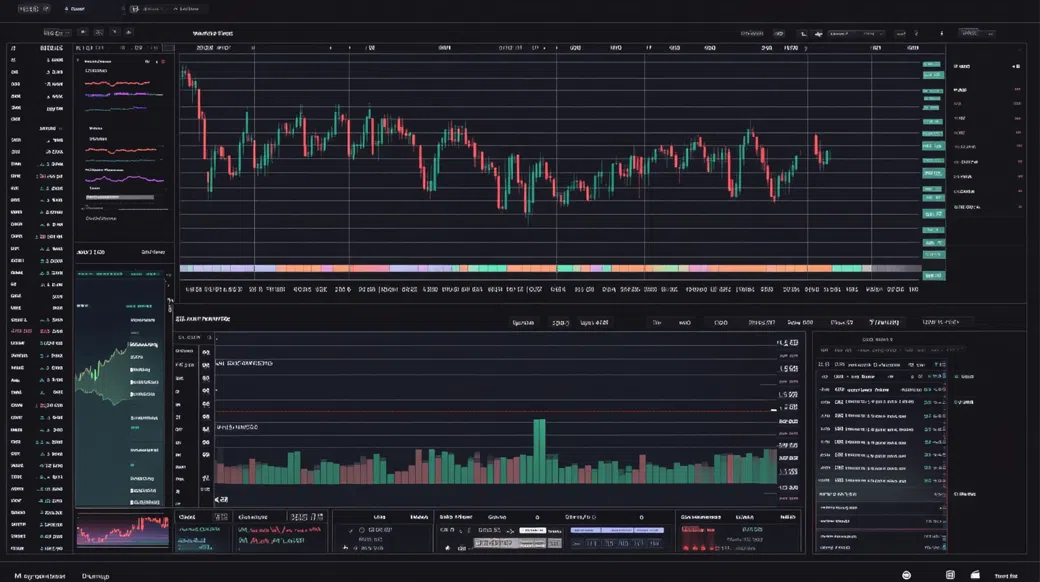
If you’ve landed on this guide, you’re likely comparing Flusso Valutezza with more established brokers. From a desk-analyst lens (São Paulo equity side, now watching LatAm fintech and EM brokerages), the pattern is consistent: traders don’t leave because of “stories,” they leave because of friction—execution quality, fee opacity, withdrawal delays, and weak oversight. In 2026, the bar is higher: serious retail traders in the US/EU expect clear regulation, robust platforms (MT4/MT5 or institutional-grade proprietary), and transparent pricing. When information is limited, the safest baseline is to assume a high-risk setup until proven otherwise. This article focuses on Flusso Valutezza alternatives that are regulated, widely used, and easier to diligence with public documentation.
Throughout this report, I’ll treat Flusso Valutezza as a CFD-style offering using industry-standard baselines where broker-specific facts are not verifiable: unregulated or offshore (high risk), Forex and CFDs, a proprietary web trader (basic), and floating spreads from ~2.0 pips. That framework helps you compare platforms like Flusso Valutezza against top-tier venues without relying on marketing claims.
Disclaimer: This article is for informational purposes only and does not constitute investment advice. Trading leveraged products carries a high level of risk.
Flusso Valutezza appears positioned as an online trading venue oriented around leveraged trading. When broker documentation, regulator references, and audited disclosures are not clearly verifiable in public sources, the responsible approach is to apply baseline assumptions for comparison: an unregulated or offshore entity (high risk), offering mainly Forex and CFDs, via a proprietary web-based trading interface. That doesn’t automatically mean “fraud,” but it does change your risk calculus—especially around fund custody, dispute resolution, and operational resilience.
Mechanically, platforms of this type usually operate as CFD intermediaries: you trade price exposure rather than owning the underlying asset. That setup can be efficient for short-term strategies, but it also concentrates risk in the broker’s execution model, order handling, and financing charges. This is why traders researching Flusso Valutezza alternatives often start with one question: “Who supervises the broker, and what happens if something goes wrong?” In US/EU contexts, that means checking recognized regulators, investor protection frameworks, and whether terms are consistent with local rules.
Using the industry-standard baseline, Flusso Valutezza would likely rely on a proprietary web trader (basic): browser-based access, a simplified order ticket, common order types (market/limit/stop), and standard charting packages. In this segment, the usual limitations are predictable: fewer third-party integrations, limited algorithmic trading support, lighter market depth/level II, and less transparent execution reporting compared with mature venues. If you need professional workflows—multi-monitor layouts, plug-ins, FIX/API access, or robust strategy testing—brokers similar to Flusso Valutezza are often a mismatch.
With incomplete verified disclosures, the prudent comparison anchor is “floating spreads from ~2.0 pips” on major FX pairs, plus potential overnight financing (swap), and non-trading fees (conversion, inactivity, and withdrawals). Many traders underestimate that the all-in cost of a CFD position is dominated by financing for holding periods beyond intraday. If your current experience on Flusso Valutezza includes unclear fee schedules, inconsistent fills, or frequent requotes/slippage, that’s a quantifiable reason to evaluate Flusso Valutezza alternatives with tighter published pricing and better execution tooling.
Most switches are triggered by measurable pain, not vibes. Traders begin scanning competitors to Flusso Valutezza when they can’t reconcile their P&L with expected transaction costs, when withdrawals feel operationally uncertain, or when platform constraints block strategy development. In practice, the decision threshold is simple: if the platform adds hidden basis points, it’s a tax on your edge.
Think of this as due diligence under uncertainty. If you’re comparing alternatives to the Flusso Valutezza trading platform, don’t start with “features.” Start with legal structure and incentives. A slick UI can’t compensate for weak oversight, poor custody practices, or sloppy disclosures.
For US/EU readers, prioritize brokers regulated by top-tier agencies (examples include FCA in the UK, ASIC in Australia, CySEC in the EU, CFTC/NFA in the US, IIROC/CIRO in Canada, MAS in Singapore, JFSA in Japan). Then verify the license number directly on the regulator’s register—don’t rely on screenshots. Look for policies on client money segregation, negative balance protection (common in EU/UK retail rules), and clear complaint escalation paths. This is the cleanest filter when comparing platforms like Flusso Valutezza to institutional-grade alternatives.
Match the broker to your strategy: FX/CFDs for short-term macro and relative value; stocks/ETFs for long-only or factor portfolios; futures for transparent centralized pricing; options for defined-risk structures. Many “CFD-first” venues won’t give you true exchange access. If you need real shares, DMA, or futures routing, screen out brokers that only offer synthetic exposure.
Use a total-cost checklist: average spread (not minimum), commissions per side, overnight financing (publish methodology), and “small print” fees (inactivity, withdrawals, conversion). If Flusso Valutezza is best approximated by floating spreads from ~2.0 pips, your benchmark is simple: can a candidate broker reliably reduce your all-in cost per round trip without compromising execution?
Execution is where marketing dies. Demand clarity on order handling (A-book/STP vs internalization), slippage policy, and whether the broker publishes execution statistics. Tools matter: MT4/MT5 ecosystem, TradingView integration, robust mobile apps, alerts, and risk controls. For active traders evaluating top substitutes for Flusso Valutezza, stable infrastructure and transparent execution are non-negotiable.
Test support like you test a broker: open a ticket, ask a precise question about fees or execution, and measure response time and specificity. Review deposit/withdrawal rails, local currency support, and how the broker handles corporate actions (if you trade equities). If your use case is cross-border (common for global traders), make sure terms are consistent across entities and jurisdictions.
Assuming the baseline model (Forex and CFDs via a proprietary web trader), Flusso Valutezza would compete primarily on accessibility: quick account opening, simple UX, and a broad set of CFD symbols. The trade-off is that CFD outcomes are heavily shaped by broker quality—pricing streams, execution rules, and financing. If spreads are effectively around the “floating from ~2.0 pips” range (baseline), it can be structurally expensive for high-frequency strategies, and financing can dominate P&L for swing trades. This is where Flusso Valutezza alternatives with published average spreads, commission-based accounts, and stronger execution transparency tend to outperform on a numbers basis.
For EU retail traders, also weigh product governance: leverage caps, risk warnings, and negative balance protection are standard expectations under many regimes. For US traders, spot FX/CFDs availability is jurisdiction-sensitive—so the “best” alternative may actually be futures or regulated securities products rather than a CFD venue.
Stock/ETF access is often a dividing line between “trading platform” and “investment brokerage.” Under the baseline assumption, Flusso Valutezza may have limited or no true share dealing, and any equity exposure could be via CFDs rather than custody of the underlying. That matters: CFDs don’t grant shareholder rights, and costs (spreads/financing) can be less favorable for longer holding periods.
If your objective is building a portfolio—real shares, fractional shares, dividends handling, tax reporting—then competitors to Flusso Valutezza that offer regulated securities accounts and clear custody arrangements are typically the better fit than a CFD-first setup.
Crypto is where operational and regulatory gaps get expensive fast. If Flusso Valutezza offers crypto exposure, it may be CFD-based (price exposure only) rather than spot ownership with on-chain withdrawals. That can be acceptable for tactical trading, but it adds counterparty risk and financing/spread costs, and it limits what you can do with the asset.
For traders who want spot crypto, proof-of-reserves style transparency, or on-chain transfers, you’ll likely need a different venue altogether. Even for CFD-style crypto trading, best Flusso Valutezza alternatives 2026 tend to be those that clearly disclose product structure, margin rules, and execution quality—because volatility punishes weak infrastructure.
Regulation: Multi-jurisdiction (commonly including FCA in the UK and other top-tier regulators depending on entity). Always verify the exact entity you onboard with.
Markets: Strong CFD offering across FX, indices, commodities, rates, and often share dealing in certain regions.
Fees: Typically spread-based for CFDs; financing applies for overnight. Expect tighter average pricing than “2.0 pips baseline” brokers on major instruments, but costs vary by product and account type.
Platform: Proprietary web/mobile platforms; integrations and tooling are generally deeper than basic web traders.
Best For: Active CFD traders who want a large product set and mature infrastructure as a regulated option vs Flusso Valutezza.
Regulation: Regulated across major jurisdictions (entity-dependent; commonly includes EU/UK frameworks). Confirm your local Saxo entity and protections.
Markets: Multi-asset: stocks, ETFs, bonds, options, futures, FX, and CFDs (availability varies by region).
Fees: Transparent tiered pricing is common; commissions for exchange-traded assets; spreads/financing for FX/CFDs. Usually positioned as premium relative to CFD-only shops.
Platform: SaxoTraderGO / SaxoTraderPRO with strong analytics and risk tools.
Best For: Traders/investors wanting one account for multi-asset exposure beyond platforms like Flusso Valutezza.
Regulation: Highly regulated across the US and globally (entity-dependent; commonly includes SEC/FINRA in the US and other major regulators elsewhere).
Markets: Broadest reach: global stocks/ETFs, options, futures, FX, bonds, funds; CFDs available in some jurisdictions.
Fees: Typically commission-based with tight financing benchmarks; pricing depends on market and tier. Often materially lower all-in for frequent traders versus wider-spread CFD baselines.
Platform: Trader Workstation (TWS), client portal, mobile; APIs for automation.
Best For: Execution-sensitive traders and multi-asset investors looking for top substitutes for Flusso Valutezza with institutional-grade routing.
Regulation: Commonly regulated by FCA and other tier-one/tier-two regulators (check entity).
Markets: FX and CFD breadth (indices, commodities, treasuries, shares via CFDs; in some regions, share investing products).
Fees: Spread-based pricing; some offerings include commission structures (e.g., FX Active in certain regions). Financing applies overnight.
Platform: Proprietary “Next Generation” platform; strong charting and scanning for retail.
Best For: Technical traders wanting rich charting—one of the stronger Flusso Valutezza alternatives on platform depth.
Regulation: Commonly regulated by ASIC and FCA (entity-dependent). Verify the onboarding entity for protections and leverage.
Markets: FX and CFDs across indices, commodities, and crypto CFDs in some regions.
Fees: Often offers both spread-only and commission-based accounts; typical positioning is lower spreads than “2.0 pips baseline,” but confirm averages and total costs.
Platform: MT4/MT5, cTrader (availability varies), plus integrations; suitable for automation and scalping (subject to rules).
Best For: Traders who want brokers similar to Flusso Valutezza in product set, but with stronger platform choice and recognized regulation.
Regulation: Regulated in the EU/UK framework via relevant local entities (confirm your jurisdiction).
Markets: CFDs across FX/indices/commodities and, in many regions, stocks/ETFs (including real shares) alongside CFDs.
Fees: Commonly spread-based for CFDs; equity investing fees depend on region, volume, and FX conversion. Financing applies to leveraged products.
Platform: xStation platform (web/desktop/mobile), generally stronger than basic proprietary web traders.
Best For: Traders who want a bridge between CFD trading and investing—practical alternatives to the Flusso Valutezza trading platform for mixed use cases.
| Platform | Regulation | Main Markets | Typical Costs | Best For |
|---|---|---|---|---|
| IG | Top-tier, multi-entity (e.g., FCA and others; entity-dependent) | FX & CFDs; share dealing in some regions | Mostly spread-based CFDs + overnight financing | Active CFD traders prioritizing mature infrastructure |
| Saxo | Regulated, multi-entity (EU/UK frameworks; entity-dependent) | Multi-asset: stocks/ETFs, options, futures, FX, CFDs | Tiered commissions for exchanges; spreads/financing for FX/CFDs | Multi-asset traders and investors wanting one platform |
| Interactive Brokers | Highly regulated (e.g., SEC/FINRA in US; global entities) | Global stocks/ETFs, options, futures, FX, bonds; some CFDs | Commission-based with competitive financing benchmarks | Execution-sensitive and advanced traders (APIs, routing) |
| CMC Markets | Top-tier (commonly FCA; entity-dependent) | FX & CFDs across major asset classes | Spreads; some regions offer commission-style FX pricing + financing | Chart-focused discretionary traders |
| Pepperstone | Top-tier (commonly ASIC/FCA; entity-dependent) | FX & CFDs (indices, commodities; crypto CFDs in some regions) | Spread-only or commission-based accounts; financing applies | MT4/MT5/cTrader users and algorithmic traders |
| XTB | EU/UK regulated (entity-dependent) | CFDs + stocks/ETFs in many regions | Spreads for CFDs; investing fees vary by region + FX conversion | Hybrid traders (CFDs + longer-term investing) |
Migrating is a risk event. Treat it like an operational project: reduce unknowns, verify cash movement, and keep a paper trail. If you’re moving from a high-risk setup to Flusso Valutezza alternatives, the objective is continuity of strategy with lower counterparty risk.
The “best” choice depends on your product needs and jurisdiction. For multi-asset access and execution depth, Interactive Brokers is often a top pick (especially for stocks/options/futures). For CFD-focused traders who want a mature proprietary platform, IG or CMC Markets are strong Flusso Valutezza alternatives. If you specifically want MT4/MT5-style workflows, Pepperstone is commonly shortlisted. Use regulation and total cost of trading as the deciding metrics—not promotions.
If you cannot independently verify credible regulation, audited disclosures, and clear client-money protections, the conservative assumption is “unregulated or offshore (high risk).” That doesn’t prove misconduct, but it increases counterparty and operational risk. If safety is your priority, focus on regulated options vs Flusso Valutezza and verify licensing directly with the regulator rather than relying on on-site claims.
Based on baseline assumptions used when public details are limited, Flusso Valutezza is best treated as primarily Forex and CFD trading. Stock/ETF access (if present) may be via CFDs rather than real shares, and futures access is typically less common on CFD-first web platforms. Crypto exposure, if offered, may also be CFD-based rather than spot ownership. If you need real stocks/ETFs or exchange-traded futures, consider Flusso Valutezza alternatives such as Interactive Brokers or Saxo.
Check (1) the regulated entity and license on the regulator’s register, (2) client money segregation and negative balance protection (where applicable), (3) the full fee stack (average spreads, commissions, overnight financing, conversion, withdrawals), (4) platform fit (MT4/MT5, TradingView, APIs, order types), and (5) operational reliability—especially withdrawals. If you’re currently using Flusso Valutezza, keep written records and migrate in small tranches to minimize operational risk.
If your goal is to reduce counterparty risk and improve execution predictability, the decision framework is straightforward: prefer regulated brokers with transparent pricing and platforms that match your strategy. Under conservative baseline assumptions, Flusso Valutezza looks like a limited-functionality CFD/web-trader proposition relative to top-tier brokers. The best Flusso Valutezza alternatives are the ones that can prove oversight, publish clear fee logic, and deliver consistent fills when volatility spikes—because that’s where “cheap” platforms get expensive.