GiustoWex Review 2026: Is It Safe & Worth Your Money?
In-depth GiustoWex review updated for 2026. We tested spreads, key features, supported countries, and safety. Read our full verdict.

In-depth GiustoWex review updated for 2026. We tested spreads, key features, supported countries, and safety. Read our full verdict.
| Min Deposit | $200 |
| Max Leverage | 1:500 |
| Assets | Forex, Indices, Commodities, Crypto CFDs, Share CFDs |
| Platforms | Proprietary WebTrader, iOS app, Android app |
Built as a multi-asset CFD venue with an offshore setup, GiustoWex fits traders who want higher leverage and fast market access, but can live without Tier-1 dispute channels. In my test account, the Standard tier priced like a classic spread-only book, while the Raw-style option tightened spreads and shifted cost into commission. The watchlist is broad enough for a “macro” routine (FX, indices, metals, crypto) and the WebTrader covers the basics without drowning you in menus; the mobile stack is where it feels most polished. The real compromise is the jurisdiction and what comes with it—fewer formal safeguards than a top-regulated broker. For a starting point, see GiustoWex.
GiustoWex looked operational rather than a “vanish overnight” setup: KYC was enforced and my withdrawal request moved through the stated steps. That said, it runs under an offshore registration model (Mauritius FSC), which changes the safety net versus FCA/ASIC-style environments.
What mattered most in my checks was process discipline. The provider flagged verification before it let me raise withdrawal limits, and the dashboard pushed AML prompts (ID + address) instead of burying them. The legal footprint points to Mauritius FSC—common for international CFD brokers that want flexible leverage, but it also means you shouldn’t expect a robust investor compensation scheme or a clean, local ombudsman route if you need arbitration. I also ran a “red-flag scan” for aggressive sales pressure and trophy-badge theatrics; the onboarding emails were promotional but not coercive, and I didn’t see fake award carousels screaming on every screen. The terms pages referenced segregated client funds language, which is a positive signal, though offshore wording is not the same as a Tier‑1 trust framework. Final reminder: CFDs are leveraged instruments; most retail accounts lose money, and margin calls happen fast when volatility hits.
This broker generally accepts clients across LATAM, parts of MENA, and several Asia-Pacific markets, with leverage terms varying by location. The USA and sanctioned jurisdictions are blocked.
| Region | Status | Leverage Cap |
|---|---|---|
| Latin America (selected countries) | Accepted | Up to 1:500 |
| MENA (non-sanctioned) | Accepted | Up to 1:500 |
| Southeast Asia (selected countries) | Accepted | Up to 1:500 |
| Europe (non-EU/EEA residents) | Accepted | Up to 1:200 |
| USA | Restricted | Not offered |
| Sanctioned jurisdictions | Restricted | Not offered |
Eligibility is checked through a mix of IP/location signals and KYC details, so the “yes/no” can flip if your documents don’t match your declared residence. Policies also change, especially when payment rails or local rules tighten.
From a trader’s seat, the lineup is built for short-horizon CFD positioning: liquid benchmarks first, then a thinner tail of single names and crypto. I found enough instruments to run both a rate-sensitive FX book and an index/metal hedge without juggling multiple accounts.
Everything here is CFD exposure: you’re trading price movement, not owning the underlying asset. That means no shareholder voting, no on-chain crypto withdrawal, and dividends are handled as broker adjustments rather than true equity ownership.
Costs hinge on which account you choose: Standard is spread-only, while the Raw/ECN-style tier compresses spread and adds a commission per lot. On my EUR/USD checks, the pricing landed broadly in line with offshore CFD peers—good enough for active trading, not the absolute cheapest on the planet.
| Asset | Spread/Fee | Market Average Comparison |
|---|---|---|
| EUR/USD (Standard) | From 1.4 pips | In line |
| EUR/USD (Raw/ECN) | From 0.2 pips + $7 round-turn/lot | Competitive |
| Bitcoin (BTC/USD) | From $28 spread | In line |
| Gold (XAU/USD) | From $0.25 | Competitive |
| US500 Index | From 0.8 points | In line |
Non-spread costs that move the P&L: Overnight swap/financing is the quiet tax—hold a leveraged CFD for a week and you’ll feel it, especially in FX crosses with rate differentials. Dormancy is not free either: after 90 days without activity, I saw an inactivity charge of $10 per month in the fee schedule. Withdrawals can also pick up method-based charges (card/provider fees) and FX conversion costs if you deposit in one currency and trade/withdraw in another. For crypto CFDs, weekend financing tends to be heavier than weekday carry, so swing traders should model it.
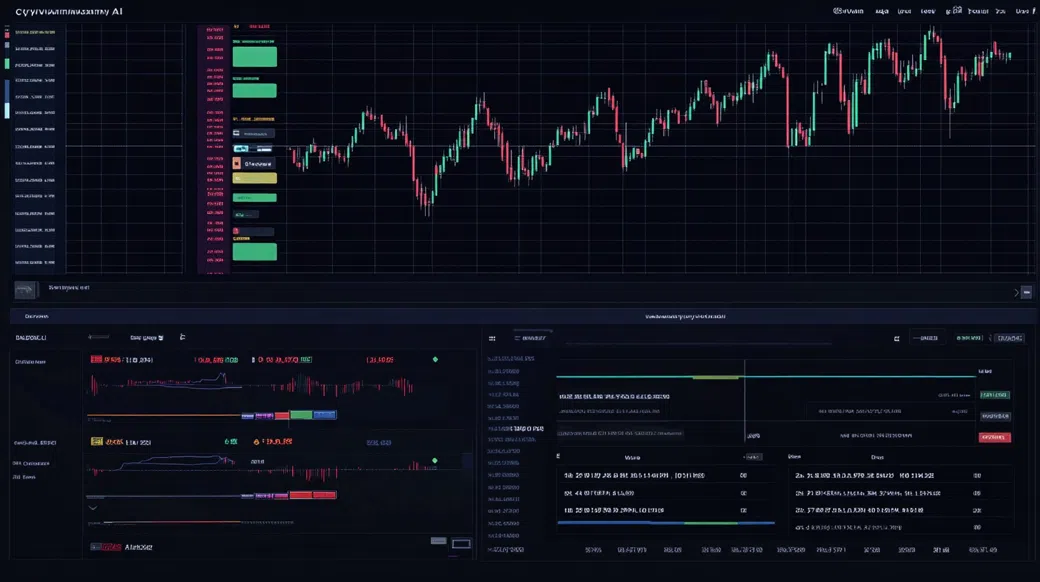
On desktop, the WebTrader behaved like a pragmatic execution terminal: stable sessions, clear margin readouts, and a chart area that doesn’t fight you when you switch timeframes. Order tickets supported market and pending orders with stop-loss/take-profit controls, and I didn’t run into platform freezes during a London-to-New York overlap. If you’re coming from MT4/MT5, the difference is ecosystem depth—fewer third‑party add-ons and less automation flexibility—yet for manual CFD trading the core workflow is there.
The GiustoWex app is designed for management as much as for entry: real-time quotes, quick position edits, and one-tap close were reliable on my Android device. GiustoWex login supported biometric access, which matters when you’re checking margin in a moving market. Deposits and withdrawal requests were accessible from the same navigation layer as trading, and push notifications covered price alerts and order status. My main gripe: chart annotation tools are thinner on mobile than on desktop, so I used the phone for monitoring and the WebTrader for planning.
Tools are practical rather than boutique: an economic calendar, a news feed, multi-timeframe charts, and the standard indicator kit (MA, RSI, MACD, Bollinger) with basic drawing. Watchlists and alerts did the job for a “top 10 instruments” routine. Still, if your edge depends on advanced strategy testing or a deep plugin marketplace, a dedicated MT5/cTrader-style environment remains a higher ceiling.
First impression: the signup form asked for the essentials (email, phone, country, base currency) and then moved straight into identity checks. For KYC, I uploaded a government-issued photo ID and a proof of address (bank statement) dated within three months; verification cleared the same business day on my account. The portal was explicit about AML steps, and it didn’t let me ignore documentation once I tried to raise limits.
Funding by card posted instantly and the receipt showed the gross amount plus the credited balance; I like seeing that reconciliation without hunting. If you want to cross-check the flow yourself, open a demo first and then compare live pricing on GiustoWex once your documents are approved.
I tested support with a very trader problem: “Where can I see the swap/overnight rate before holding XAU/USD over the rollover?” Live chat came back in roughly three minutes with the path inside the instrument specs and a note about triple-swap timing. I followed up by email asking whether the Raw account commission was charged per side or round-turn; the ticket reply landed in about eight hours and confirmed the $7 is round-turn per lot.
Coverage is typical for this segment—24/5 availability aligned to market hours, with the smoothest service in English and variable depth in other languages. Phone support wasn’t prominent in my region, which isn’t unusual offshore. On weekends, chat is focused on funding and access issues rather than detailed trading queries.
If you’re considering this broker, start by checking the instrument list and testing the WebTrader layout on a demo before risking capital. Then verify your region’s leverage cap and compare live spreads during the London/NY overlap—pricing looks different when liquidity is real.
Visit GiustoWexYes, GiustoWex can work for beginners if they stick to small position sizes and use the demo first. The interface is not overly complex, and the Standard account keeps pricing simple. The offshore leverage (up to 1:500) is the part that can hurt novices fastest—risk controls matter more than platform features.
Yes, you can trade crypto via CFDs such as BTC/USD and ETH. You’re trading price exposure with leverage, not buying coins to move on-chain. Expect wider weekend financing dynamics than in major FX pairs.
No, it didn’t present as a scam in my 2026 checks: KYC was required and withdrawals followed a trackable process. The key nuance is regulation—this is an offshore broker (Mauritius FSC), so protections differ from Tier‑1 jurisdictions. Treat it as a higher-responsibility environment for the trader.
No, GiustoWex is not available for USA residents. The platform blocks US onboarding, and “Not offered” is effectively the rule for trading access. If you’re in the US, you’ll need a broker compliant with local CFTC/NFA requirements.
A GiustoWex withdrawal typically takes 24–48 hours for internal processing after KYC is in good order. After approval, cards usually land in 2–5 business days, bank wires in 3–7 business days, and crypto can arrive the same day. Your payment method and bank rails do most of the timing work.
The GiustoWex minimum deposit is $200. That’s enough to open either the Standard or Raw/ECN-style pricing tier, though practical margin requirements depend on what you trade. With CFDs and leverage, “minimum” is not the same as “sufficient for risk-managed trading.”
Yes, GiustoWex has mobile apps for iOS and Android. You can monitor positions, place trades, set alerts, and manage deposits/withdrawals from the phone. Biometric sign-in support makes the mobile workflow noticeably smoother.
Overall Score: 4.0/5
Spreads and execution were consistent enough to treat this as a serious, trade-first platform, especially if you use the Raw tier and actually calculate all-in cost (spread + $7 round-turn). Where I draw the line is governance: Mauritius FSC is a real jurisdictional label, but it’s not the same comfort blanket as a Tier‑1 regulator when things get messy. If you’re disciplined on leverage (1:500 is a tool, not a gift) and you keep positions sized for volatility, GiustoWex can fit an active CFD routine.
Best for: active CFD traders in accepted regions who want higher leverage and a functional WebTrader/mobile stack. Avoid if: you require Tier‑1 regulation, deep research/education, or you’re prone to overtrading with leverage.