Helm Credborg Trading Platform Alternatives 2026
Helm Credborg alternatives for 2026: compare regulated US/EU brokers, trading costs, platforms, execution quality, and safety steps before switching.

Helm Credborg alternatives for 2026: compare regulated US/EU brokers, trading costs, platforms, execution quality, and safety steps before switching.
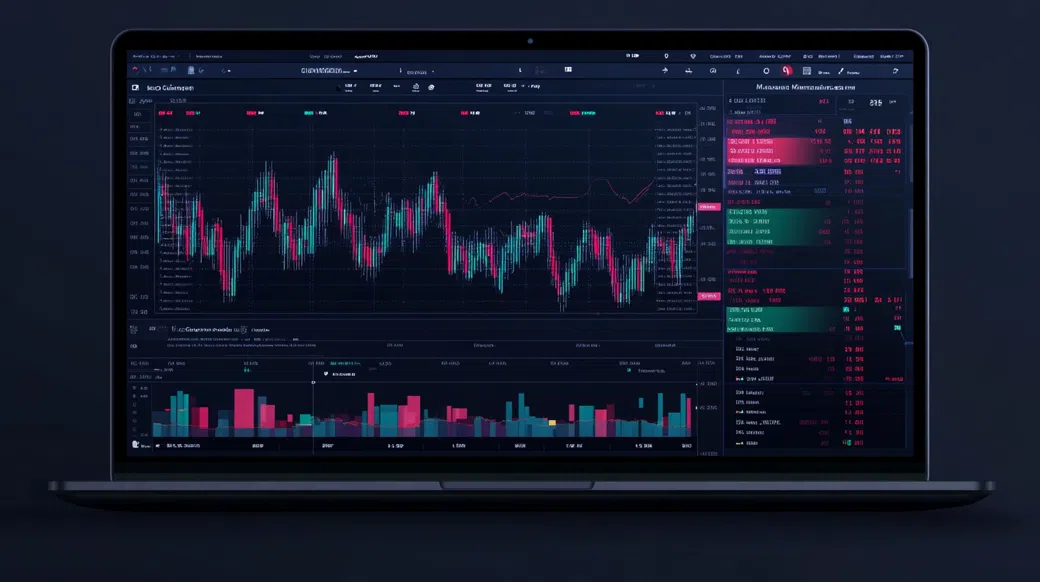
Spreads, execution, and cash-out reliability decide a broker’s real cost. That’s the lens I use when readers ask about Helm Credborg—an offshore-style, CFD-first setup typically seen offering a proprietary WebTrader plus a mobile app, with high leverage (often marketed around 1:500) and a mid-range EUR/USD spread that commonly prints near 2.0 pips on a “Standard” tier. It can feel convenient: you log in, you get FX and index CFDs, maybe a short menu of commodities and crypto CFDs, and you start trading with a minimum deposit around $250.
The friction starts when traders move from “trying it” to running a repeatable process. A simple example: if you trade 10 standard lots of EUR/USD per month, the difference between ~2.0 pips and ~0.6–1.0 pip isn’t academic—it’s hundreds of dollars of expectancy. Add the operational layer (KYC/AML checks, withdrawal timing, negative balance protection, and how disputes are handled), and offshore frameworks can become a measurable risk factor, not a philosophical one.
This guide is built for a US/EU audience searching for Helm Credborg alternatives in 2026—platforms with clearer rulebooks, stronger investor protections, and tools that match real workflows (MT4/MT5/cTrader, APIs, DMA access, or robust risk controls). CFDs are leveraged products; the goal here is to reduce avoidable broker risk before you even place the first trade.
Disclaimer: This article is for informational purposes only and does not constitute investment advice. Trading leveraged products such as CFDs involves a high risk of loss and may not be suitable for all investors.
On the numbers, Helm Credborg fits the pattern of an offshore CFD broker operating under a lighter-touch jurisdiction (commonly seen under the Seychelles FSA umbrella in this segment) and targeting retail traders who prioritize fast onboarding and high leverage. The product mix is usually concentrated in FX and CFDs—think 30–50 currency pairs, a handful of indices and commodities, and a menu of crypto CFDs—rather than true multi-asset investing with exchange-traded stocks, ETFs, or futures. Execution is typically packaged as “simple” rather than “institutional,” which often implies a market-maker style setup where the broker is the primary counterparty instead of routing every order via DMA/ECN.
The platform stack is generally a proprietary WebTrader with an iOS/Android companion app—functional enough for basic charting and order placement, but not always built for heavy customization. Expect standard indicators, drawing tools, and timeframes, plus a straightforward account dashboard for deposits, withdrawals, and margin metrics. Order tickets usually cover market and limit orders; advanced conditional logic (OCO chains, complex bracket orders) can be thinner than what you’ll find at brokers similar to Helm Credborg that support MT4/MT5 or cTrader. Mobile parity is commonly “good for monitoring, adequate for execution,” with the biggest gap showing up in analytics depth and workflow efficiency.
Pricing is typically organized around a Standard-style account where EUR/USD often lands around 2.0 pips, with a possible “Raw/ECN” tier advertised as 0.0–0.4 pips plus a commission in the neighborhood of $6–$8 per round turn. That headline doesn’t tell the full story: swaps/overnight financing can be a meaningful drag for swing positions, and withdrawal or payment-processing fees can show up depending on method and region. For active traders, the relevant metric is the all-in round-turn cost plus slippage—because a tight quoted spread paired with poor fills can still be expensive.
Cost is the first alarm bell I see in trading journals. A consistent EUR/USD spread around 2.0 pips can be survivable for low-frequency trading, but it bleeds strategies that rely on small edge and frequent turnover. Then comes the operational layer: when a broker sits in an offshore framework, the escalation path is usually narrower than with FCA/ASIC/CySEC/NFA firms. That combination—friction plus cost—is why the search for Helm Credborg alternatives accelerates right after a trader starts sizing up.
Think of the selection process as a fit-to-strategy exercise with a compliance overlay. Your broker is part of your execution stack: it affects fills, financing, and what happens when something breaks at 2:00 a.m. Build your short list by ranking what you actually trade (FX vs equities), how you trade (manual vs systematic), and which protections you want on the custody side—then pressure-test the numbers.
Start with the regulator and confirm it on the public register: FCA (UK), ASIC (Australia), CySEC (EU), or NFA/CFTC (US). Under these regimes you typically see segregated client funds and defined conduct rules; in the UK, FSCS coverage can reach up to £85,000 for eligible clients, while CySEC’s ICF coverage can be up to €20,000. Offshore setups can still operate, but your recourse and oversight are usually thinner, which changes the risk profile versus regulated options vs Helm Credborg.
Match the broker to the instrument you need. FX and index CFDs are widely available, but “stocks” can mean two very different things: real shares (with voting/dividends depending on structure) versus stock CFDs (no shareholder rights, financing costs, and broker-specific corporate action handling). For futures and options, you’re generally looking at a true multi-asset shop with exchange connectivity. If your plan includes long-term ETF exposure, prioritize platforms like Helm Credborg only if they offer real assets—otherwise you’re taking the CFD route by default.
Use an all-in lens: spread + commission + expected slippage, then add swap/overnight fees for holding periods beyond a day. A Raw account quoting 0.1–0.3 pips means little if the commission is $7 round turn and fills slip during volatility. Also check inactivity charges and funding/withdrawal fees—small line items that become large when you rebalance capital across accounts. This is where I’d rather see a boring, transparent schedule than “from 0.0 pips” marketing.
Platform choice determines your ceiling. MT4/MT5 supports indicators and automation; cTrader is strong for order management and depth-of-market; proprietary platforms vary widely. Execution model matters: market maker vs STP/ECN vs DMA changes how orders are filled, especially around news when slippage spikes. If you’re coming from Helm Credborg, insist on a broker that publishes clear execution policies and offers stable infrastructure for your trade frequency.
Support quality shows up when money is moving. Look for 24/5 coverage for FX, multilingual desks if you trade across time zones, and response times you can verify (not just promised). Education is secondary for pros, but good brokers explain margin, swaps, and corporate actions without hiding behind fine print. Finally, check mobile parity: alerts, risk controls, and order modification should be consistent across devices, not a “lite” version.
FX and CFDs are where Helm Credborg is likely most active: a mid-sized list of currency pairs, indices, commodities, and leverage marketed up to about 1:500. The trade-off is usually cost and execution transparency. A typical EUR/USD spread around 2.0 pips can be workable for longer holds, but for intraday turnover it’s a direct hit to expectancy; pair that with uncertain slippage controls and you’re paying twice. Among competitors to Helm Credborg, Pepperstone and IC Markets are frequently chosen by systematic or high-frequency retail traders because they offer MT4/MT5/cTrader stacks and pricing that often starts near 0.0–0.3 pips on Raw-style accounts plus commission (commonly ~$6–$7 round turn). If you’re sensitive to margin calls, also check negative balance protection and how the broker handles stop execution in gaps.
Stocks and ETFs are the dividing line between “trading exposure” and “owning the asset.” Offshore CFD-first brokers often provide equity exposure mainly as CFDs—no direct exchange access, no shareholder rights, and financing costs if you hold. If you want real US/EU equities, IBKR and Saxo Bank are closer to the institutional template: broad exchange coverage, multi-currency accounts, and toolsets geared to portfolio workflows (not only short-term CFD tickets). For a retail-friendly CFD/equity hybrid experience in the UK/EU, CMC Markets can work for active CFD traders, but confirm whether you’re trading underlying shares or CFDs depending on region and account type. This is where top substitutes for Helm Credborg tend to look less “slick” and more operationally robust—and for long-term capital, that’s usually the right compromise.
Crypto at offshore CFD brokers is typically crypto CFDs: price exposure without on-chain ownership, with overnight financing and weekend volatility risk. That structure can be fine for short-term hedges, but it’s not the same as holding BTC or ETH in a wallet, and it adds counterparty risk on top of market risk. If your mandate is regulated derivatives exposure, IG and Plus500 are widely used in the UK/EU for crypto CFDs where permitted, with clearer disclosures around margin, stop execution, and trading hours. For traders who want crypto adjacent exposure alongside traditional assets (equities, options, futures), IBKR is often the more flexible hub, though crypto access varies by jurisdiction and product wrapper. In 2026, the practical question isn’t “do you offer crypto,” but “what exactly am I holding—CFD, ETP, or on-chain—and what are the fees and protections?”
Regulation: SEC/FINRA (US), FCA (UK), IIROC (Canada) via group entities
Markets: Stocks, ETFs, options, futures, bonds, FX, some CFDs (region-dependent)
Fees: FX pricing typically tight with transparent commissions; equities pricing varies by market and tiered/fixed plans
Platform: Trader Workstation (TWS), IBKR Desktop/mobile, Client Portal, APIs
Best For: Multi-asset portfolios that need real market access
Regulation: FCA (UK), ASIC (Australia), CySEC (EU), DFSA (Dubai)
Markets: FX, indices, commodities, CFDs (product set varies by entity)
Fees: Standard spreads often around ~1.0 pip on EUR/USD; Raw accounts commonly ~0.0–0.3 pips + commission (~$6–$7 round turn)
Platform: MT4, MT5, cTrader, TradingView (where available)
Best For: MT4/MT5 traders running EAs and tight-risk systems
Regulation: FCA (UK), MAS (Singapore), DFSA (Dubai) via group entities
Markets: Stocks, ETFs, bonds, options, futures, FX, CFDs
Fees: Competitive but tiered; FX spreads commonly lower on higher tiers; commissions apply on exchange-traded products
Platform: SaxoTraderGO, SaxoTraderPRO
Best For: Investors who want a bank-style platform with research-grade tooling
Regulation: FCA (UK), ASIC (Australia), MAS (Singapore)
Markets: CFDs on FX, indices, commodities, shares; spread betting (UK/IE); some regions offer share dealing
Fees: CFD spreads vary by market; FX spreads can be competitive on majors, with financing costs for holds
Platform: IG web platform, mobile apps, MT4 (where available)
Best For: Active CFD hedgers focused on major markets
Regulation: CFTC/NFA (US), FCA (UK), ASIC (Australia), IIROC (Canada) via group entities
Markets: FX (core), CFDs in certain jurisdictions (availability varies)
Fees: Pricing typically spread-based; EUR/USD spreads commonly around ~0.6–1.2 pips depending on entity and conditions
Platform: OANDA web/mobile, MT4 (where supported), APIs
Best For: US-eligible FX traders who prioritize oversight and straightforward pricing
Regulation: FCA (UK), ASIC (Australia), BaFin (Germany)
Markets: CFDs on FX, indices, commodities, treasuries, shares (region-dependent)
Fees: FX spreads can be sharp on majors; total cost depends on product and any commission-based FX pricing where offered
Platform: Next Generation platform, mobile app, MT4 (where available)
Best For: Chart-first discretionary traders who want deep market coverage
| Platform | Regulation | Main Markets | Typical Costs | Best For |
|---|---|---|---|---|
| Interactive Brokers (IBKR) | SEC/FINRA, FCA, IIROC (group) | Real stocks/ETFs, options, futures, bonds, FX | Transparent commissions; FX typically tight vs spread-only CFD models | Multi-asset portfolios that need real market access |
| Pepperstone | FCA, ASIC, CySEC, DFSA | FX + CFD suite | EUR/USD ~1.0 pip (Standard) or ~0.0–0.3 + ~$6–$7 RT (Raw) | MT4/MT5 traders running EAs and tight-risk systems |
| Saxo Bank | FCA, MAS, DFSA (group) | Stocks/ETFs, options, futures, FX, CFDs | Tiered pricing; spreads/commissions improve with activity and account level | Investors who want a bank-style platform with research-grade tooling |
| IG | FCA, ASIC, MAS | CFDs across FX/indices/commodities/shares | Variable spreads; financing costs for holding leveraged positions | Active CFD hedgers focused on major markets |
| OANDA | CFTC/NFA, FCA, ASIC, IIROC (group) | FX (plus CFDs in some regions) | Spread-based; EUR/USD often ~0.6–1.2 pips depending on entity | US-eligible FX traders who prioritize oversight and straightforward pricing |
| CMC Markets | FCA, ASIC, BaFin | CFDs across FX/indices/commodities/shares | Competitive major-FX spreads; costs vary by product structure | Chart-first discretionary traders who want deep market coverage |
Switching brokers is less “close one, open another” and more like rolling risk from one counterparty to the next. Treat it as an operational project: verify regulation, control your exposure during the transition, and make sure your cash-out path works before you scale up again. If leverage is part of your strategy, remember that a migration week with sloppy position sizing can turn routine volatility into a margin event.
If you’re still evaluating whether the platform fits your workflow, review the current onboarding requirements, trading conditions, and regional restrictions first—then compare them line-by-line against the regulated options above. Execution policies and withdrawal rules are where the real differences show up.
Visit Helm CredborgThe best option depends on whether you need real multi-asset access or mainly FX/CFDs. For exchange-traded stocks/ETFs/options/futures, Interactive Brokers is hard to beat on breadth; for FX execution with MT4/MT5/cTrader, Pepperstone is a strong short-list candidate. If you want a bank-style multi-asset platform with robust tooling, Saxo Bank is a clean comparison point for best Helm Credborg alternatives 2026.
Helm Credborg appears to fit an offshore/unregulated profile (commonly associated with jurisdictions like the Seychelles FSA in this category), which generally offers fewer investor-protection backstops than FCA/ASIC/CySEC/NFA firms. That doesn’t automatically mean you can’t trade, but it does change the recourse path if something goes wrong, and it raises the importance of withdrawal testing and position sizing. If safety is the priority, regulated options vs Helm Credborg with segregated client funds and formal complaint channels are the more conservative route.
Most brokers in this segment focus on FX and CFDs, and “stocks” are often offered as stock CFDs rather than real shares; futures are commonly not offered to retail clients in offshore CFD setups. Crypto is typically provided as crypto CFDs—price exposure without on-chain ownership—rather than spot crypto holdings. If you need real stocks/ETFs and futures, platforms like Interactive Brokers or Saxo Bank are closer to that requirement than platforms like Helm Credborg.
Before moving, verify the new broker’s license on the regulator’s public register and read the execution policy (how slippage, stops, and gaps are handled). Next, confirm funding/withdrawal rules and whether you’ll get negative balance protection under your entity. Finally, compare all-in trading costs—spread plus commission plus swap—so your “upgrade” is not just a different UI but a better expected outcome versus competitors to Helm Credborg.
About the Author: Carlos Mendes is a former equity desk analyst from São Paulo who covers emerging-market brokerages and Latin American fintech with a trader’s focus on numbers. He writes about execution quality, cost-of-trade, and regulatory structure—the factors that tend to matter after the marketing fades.