Kapitsee Review 2026: Is It Safe & Worth Your Money?
In-depth Kapitsee review updated for 2026. We tested spreads, key features, supported countries, and safety. Read our full verdict.

In-depth Kapitsee review updated for 2026. We tested spreads, key features, supported countries, and safety. Read our full verdict.
| Min Deposit | $200 |
| Max Leverage | 1:500 |
| Assets | Forex, Indices, Commodities, Crypto CFDs, Share CFDs |
| Platforms | WebTrader (browser) + iOS/Android apps |
Built as an offshore CFD venue, Kapitsee fits traders who want multi-asset access and high leverage, but can live with lighter investor recourse. In my checks, the account menu splits into a spread-only Standard tier and a tighter-spread Raw/ECN-style option aimed at higher turnover. The product shelf leans practical—FX majors, headline indices, metals, and the usual crypto tickers—more “trade what moves” than “own the asset.” The WebTrader is the center of gravity, with mobile mirroring most functions. The edge is flexibility; the cost is jurisdiction and dispute escalation, typical of this segment. For the current onboarding flow, start at Kapitsee.
Kapitsee operated normally in my test: KYC was enforced, trading functions worked as expected, and my withdrawal request was processed. That said, it runs under an offshore framework, so “legit” here means operational—not equivalent to a broker supervised by a top-tier regulator.
I approached this the way I’d vet any smaller venue: can you open, fund, trade, and get money back without theatrics? The provider presented a Mauritius FSC registration model, which usually comes with looser leverage limits and fewer formal compensation routes if a dispute turns ugly. On the red-flag side, I watched for aggressive “account manager” pressure and gimmicky awards—nothing jumped out beyond standard marketing language. On the positive side, the sign-up prompted AML/KYC early (photo ID plus proof of address), and the legal pages referenced segregated client funds language. Still, segregation claims are only as strong as the oversight and banking setup behind them. Remember the product risk too: CFDs are leveraged instruments, margin calls happen fast, and most retail accounts lose money when position sizing gets sloppy.
The broker accepts clients across many non-US regions, with the clearest fit being LATAM, parts of MENA, and a slice of Asia where offshore CFDs are common. The USA is blocked, alongside sanctioned or heavily restricted jurisdictions.
| Region | Status | Leverage Cap |
|---|---|---|
| Latin America (selected countries) | Accepted | Up to 1:500 |
| MENA (selected countries) | Accepted | Up to 1:500 |
| Southeast Asia (selected countries) | Accepted | Up to 1:500 |
| Europe (non-EU/EEA where permitted) | Accepted | Up to 1:200 |
| USA | Restricted | Not offered |
| Sanctioned jurisdictions | Restricted | Not offered |
Eligibility is enforced through a mix of IP checks and document verification; I was asked to confirm residency during onboarding. Rules also move—payment providers and compliance policies can tighten with little notice, so re-check access before funding.
The lineup is macro-friendly: liquid benchmarks first, niche products later. I found it easiest to treat this service as a “top-of-screen” CFD book—good for majors, metals, and index risk, rather than deep single-name stock coverage.
All of this is CFD exposure: you’re trading price differences, not taking shareholder rights, not receiving “real” crypto on-chain, and dividends (where applicable) are handled as broker adjustments rather than ownership.
Kapitsee fees are built around two cost lanes: Standard accounts pay via wider spreads, while Raw/ECN-style accounts compress the spread and add a per-lot commission. On EUR/USD I saw pricing that sits in the middle of the offshore CFD pack—competitive enough for active traders, not the absolute cheapest.
| Asset | Spread/Fee | Market Average Comparison |
|---|---|---|
| EUR/USD (Standard) | From 1.6 pips | In line with typical offshore Standard pricing |
| EUR/USD (Raw/ECN) | From 0.2 pips + $7 round-turn/lot | Competitive vs ECN-style accounts in this segment |
| Bitcoin (BTC/USD) | From $28 spread (variable) | Around the mid-range for crypto CFDs |
| Gold (XAU/USD) | From $0.35 (≈35 cents) | Slightly better than average in quiet hours |
| US500 Index | From 0.8 points | Broadly comparable to peers |
Non-spread costs that change the math: Overnight swap/financing is the silent drag if you swing-trade; I pulled the swap panel before holding an index position past rollover. Dormancy isn’t free either—after 90 days inactive, the platform applies a $10 monthly inactivity fee, which is small but persistent. On withdrawals, method-level fees can show up from card processors or banks, and FX conversion costs bite if you fund in one currency and trade/withdraw in another; I confirmed these items in the Kapitsee cashier before sending my test withdrawal.
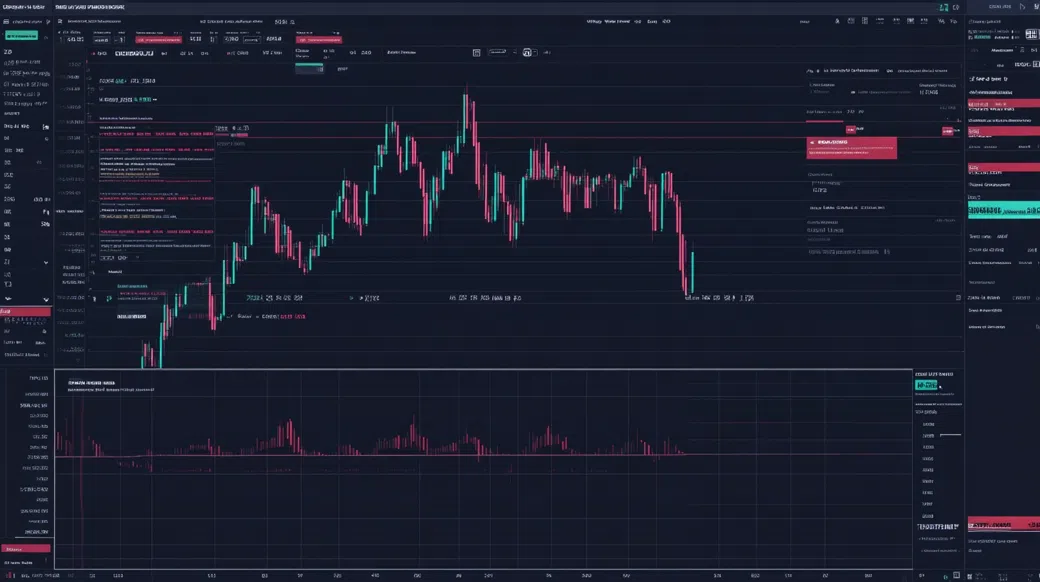
WebTrader is where the broker wants you: the login held steady across sessions, watchlists synced, and order tickets covered market, limit, and stop with basic risk controls. Execution felt consistent on liquid products; during a New York overlap test on US500, fills were clean unless I pushed size into thin moments, where a touch of slippage appeared—normal for CFD routing. If you live inside the MT4/MT5 plugin ecosystem, note that I didn’t see a confirmed MT4/MT5 download path in the client area, so plan around a proprietary stack.
The Kapitsee app tracked the web layout closely: real-time quotes, quick position management, and funding/withdrawal access from the same menu tree. Kapitsee login on my device supported biometric unlock, which matters when you’re managing margin on the move. One-tap close is handy for fast exits, but I’d still avoid trading news spikes from a phone—too easy to mis-tap size when volatility jumps.
Charts are serviceable: multiple timeframes, the usual indicator set (MA, RSI, MACD, Bollinger), and drawing tools for levels. The platform also embeds an economic calendar and a lightweight news feed; good for knowing when CPI hits, not a replacement for proper research. Advanced workflows—custom indicators, strategy testing, and deep market depth—are where dedicated MT5/cTrader setups still win.
After the email/password step, the onboarding screens pushed me toward completing profile and suitability fields before funding. KYC required a government-issued photo ID plus a proof of address dated within three months; my verification cleared the next business day. That pace is fine for offshore brokers, and it aligns with the AML checks you want to see before any meaningful withdrawal request.
Deposit confirmation on card was immediate on-screen, with the account currency choice locked at creation—worth thinking through if your base cashflow is BRL or MXN. I also noticed the system nudges you to finish KYC early; waiting until first withdrawal tends to create friction, so I’d get documents done upfront.
I tested support with a practical trader question: “Where do I see swap/overnight rates for indices, and can you confirm when the triple-swap applies?” Live chat connected in roughly three minutes, and the agent pointed me to the instrument specs and rollover time, including a clear note on weekend financing conventions. I then emailed the same question asking for the US500 schedule; a ticket reply landed in about eight hours with a concise breakdown.
Coverage looks built around the 24/5 trading week: chat and email were available from Monday through Friday, with thinner responsiveness outside market hours. Language support is region-dependent, and I didn’t see a consistently advertised phone desk—typical for this offshore bracket. If you need hand-holding on weekends (especially for crypto), set expectations accordingly.
If you’re considering an account, check the live spread screen and margin requirements first, then confirm your country eligibility before you fund. A demo run is useful here: you can validate the WebTrader layout, order types, and rollover behavior without putting cash at risk.
Visit KapitseeIt can be, as long as you treat leverage with respect and start on demo first. The WebTrader is clean and the $200 entry point is manageable, but the offshore setup means you should be extra disciplined with deposits and risk limits. Beginners who need heavy education content may outgrow the built-in materials quickly.
Yes, crypto is available as CFDs, including BTC/USD and ETH/USD. You’re trading price exposure with leverage, not buying coins for on-chain transfer. Keep an eye on weekend financing if you hold positions through Saturday/Sunday.
No—based on my 2026 test flow, it behaved like a functioning broker: KYC was required and the cashier tools worked end-to-end. The more useful question for most traders is jurisdictional: offshore registration offers fewer escalation paths than Tier-1 supervision. Manage position size accordingly and don’t confuse leverage access with safety.
No, the platform restricted US residents during my review. If you’re in the US, you’ll typically need a CFTC/NFA-regulated venue for derivatives. Always verify eligibility at signup because policies can change by region.
A Kapitsee withdrawal typically shows internal processing within 24–48 hours after KYC is approved. Receipt time depends on the rail: cards commonly take 2–5 business days, wires 3–7 business days, and crypto often arrives the same day. Weekends can stretch timelines, especially for banks.
The minimum deposit is $200. That’s enough to open positions, but not enough to survive sloppy leverage use—at 1:500, drawdowns can snowball fast. If you’re testing, fund small and focus on execution quality before scaling.
Yes, there are iOS and Android apps that mirror the WebTrader workflow. You can monitor margin, place orders, and access deposits/withdrawals from mobile. For high-volatility events, I still prefer desktop for fewer input mistakes.
Overall Score: 4.0/5
What matters most with Kapitsee is fit: if you want liquid CFD benchmarks, a choice between spread-only and Raw/ECN-style pricing, and leverage up to 1:500, the platform delivers the core mechanics without drama. My cycle—KYC, a card deposit, a handful of index/FX trades, and a follow-up withdrawal—was operationally coherent. The haircut is structural: offshore registration means fewer formal protections, so you manage risk like a pro and keep expectations realistic. If you’re evaluating the current conditions, start at Kapitsee and verify your region and costs before committing. CFDs are leveraged products; capital is at risk.
Best for: active CFD traders in accepted regions who prioritize leverage and a simple WebTrader stack. Avoid if: you require Tier-1 regulation, deep research tools, or ultra-low-cost conditions for high-frequency strategies.