Klar Aktivstad Trading Platform Alternatives 2026
Compare Klar Aktivstad alternatives for 2026 with a safety-first lens: regulation, costs, platforms, execution, and a step-by-step broker migration checklist.

Compare Klar Aktivstad alternatives for 2026 with a safety-first lens: regulation, costs, platforms, execution, and a step-by-step broker migration checklist.
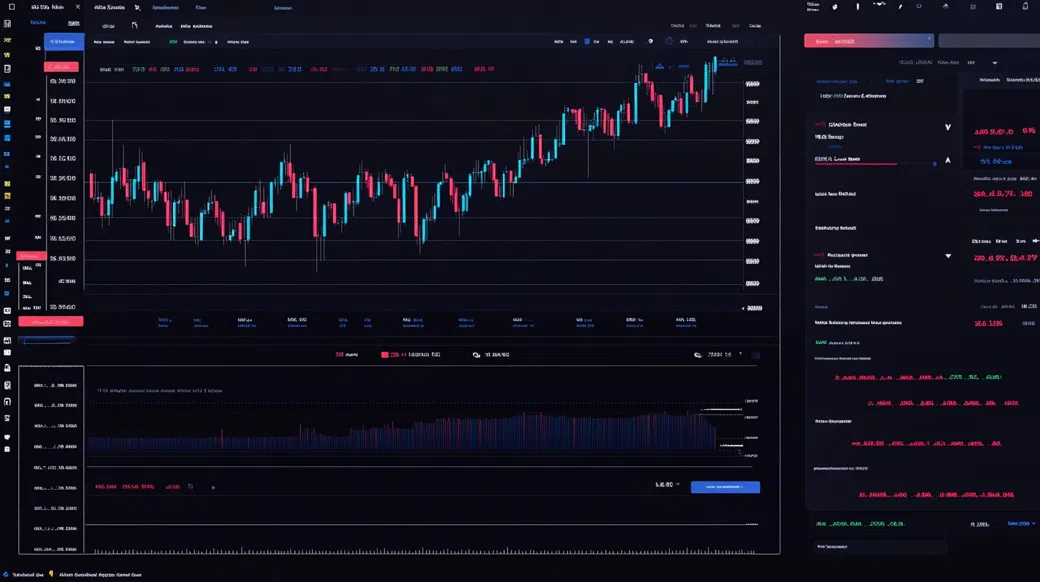
Leverage sells. Spreads and withdrawals decide who survives. That’s the lens I use when readers ask about the Klar Aktivstad trading setup and what sits on the other side of the fence. The public footprint looks like a CFD-first broker centered on forex, indices, commodities, and a menu of crypto CFDs, delivered through a proprietary WebTrader plus mobile apps. In this offshore segment, you typically see higher leverage (around 1:500), a mid-range EUR/USD spread (often around 2.0 pips on a Standard-style account), and a minimum deposit that starts feeling “retail serious” at roughly $250.
Those numbers aren’t automatically “good” or “bad”; they just tell you what to stress-test. The first stress test is protection: oversight, segregated client funds, and what happens in a dispute. The second is cost-of-trade: a 1 pip difference is not a rounding error if you trade size or you scalp. The third is tooling: if your strategy depends on MT4/MT5, cTrader, APIs, or more granular order control, a basic WebTrader can be a ceiling. This guide to Klar Aktivstad and Klar Aktivstad alternatives is built for US/EU-oriented due diligence, with regulated competitors that publish clearer frameworks on execution, margin, and client money handling.
Disclaimer: This article is for informational purposes only and does not constitute investment advice. CFDs and other leveraged products carry a high risk of loss and are not suitable for all investors.
From what’s typically observable in this category, Klar Aktivstad operates as an offshore-style CFD brokerage (commonly structured as a market maker for retail flow) focused on leveraged trading rather than long-term investing. The product mix usually emphasizes FX pairs (roughly 30–50), major indices, a small commodities list, and crypto CFDs (often 10–30 coins). US residents are generally excluded, and other restricted jurisdictions can include Canada and sanctioned regions. For traders comparing brokers similar to Klar Aktivstad, the real question is not the instrument list—it’s the rulebook behind the instrument list: regulator, client-money segregation, and enforceable complaint channels.
The platform stack in this segment tends to be a proprietary WebTrader with an iOS/Android companion app—functional, but rarely “institutional.” Expect solid basics: watchlists, one-click trading, a charting package with common indicators, and drawing tools that cover the usual technical workflow. Order control is commonly limited to market/limit/stop with simple take-profit and stop-loss; advanced conditional orders and deeper depth-of-market views are less consistent. Mobile parity is often decent for monitoring and single-ticket execution, while account dashboards typically focus on margin level, open P&L, and funding history. Execution speed can feel fine in calm markets, yet slippage risk becomes visible around news when liquidity thins.
Cost disclosure is where offshore CFD venues separate into “clear” and “murky.” A typical setup is a Standard account with EUR/USD around 2.0 pips, plus swaps/overnight financing for positions held past rollover. Some providers advertise a Raw/ECN-style tier in the range of 0.0–0.4 pips with an added commission (often $5–$8 round-turn per lot), though the execution model still matters more than the label. Keep an eye on non-trading fees: withdrawal charges, inactivity fees, and FX conversion costs can outweigh a tight headline spread if you trade infrequently or fund in a different currency.
Regulation is usually the first domino. Once a trader realizes the dispute path may be limited—or that negative balance protection and client-fund safeguards are not spelled out with the same rigor as FCA/ASIC/CySEC brokers—the search for Klar Aktivstad alternatives becomes less about “features” and more about survivability. The second domino is math: spreads, swaps, and execution quality compound quietly, especially if you trade more than a few lots per month. Add in region restrictions and funding friction, and moving becomes a risk-control decision, not a platform preference.
I treat broker selection like position sizing: match the venue to the risk you can tolerate. Start with the hard constraints—regulation, product access, and funding rails—then optimize for costs and tooling. For alternatives to the Klar Aktivstad trading platform, your edge is not finding the highest leverage; it’s finding a structure that reduces “platform risk” when markets gap and emotions spike.
Prioritize brokers supervised by strong regulators such as the FCA (UK), ASIC (Australia), CySEC (EU), or NFA/CFTC (US, for eligible products). In the UK, FCA oversight can connect to the FSCS investor compensation scheme (coverage up to £85,000 in qualifying cases). In Cyprus, CySEC investment firms can fall under the ICF (up to €20,000, eligibility-dependent). Look for segregated client funds, clear complaint handling, and written policies for negative balance protection where applicable.
Asset access determines whether you’re trading a derivative or owning the thing. FX and index CFDs cover tactical trading, but long-horizon portfolios often need real stocks, ETFs, options, futures, or bonds. Multi-asset platforms can also simplify currency conversion and custody. Traders hunting platforms like Klar Aktivstad often discover they actually need broader exposure—or the opposite: a cleaner FX-only broker with fewer distractions and better fills.
Use “all-in round-turn” as the comparison unit: spread cost + commission, then add swaps for your holding period. A 2.0 pip EUR/USD spread versus a 0.2 pip + $7 commission model can flip the economics depending on trade frequency and lot size. Also price in the silent line items: inactivity fees, deposit/withdrawal charges, and FX conversion margins. If you’re benchmarking against Klar Aktivstad, run a simple monthly scenario—say 50 standard lots—and translate pips into dollars.
MT4/MT5 and cTrader matter for automation, custom indicators, and a standardized workflow across brokers. Proprietary platforms can be slick, but they lock you into one ecosystem. Execution model is the part most retail traders skip: market maker versus STP/ECN/DMA affects how orders are routed and how slippage shows up. Latency, partial fills, and stop execution are stress-tested during volatility—exactly when a broker’s plumbing is revealed.
Support quality is measurable: response time, escalation path, and clarity when something breaks. EU/UK clients should also value clean documentation around margin calls, product governance, and risk warnings. Education is less about webinars and more about transparent contract specs (swap rates, margin requirements, trading hours). A good mobile app should mirror risk controls—position sizing, stops, and margin monitoring—not just provide a “buy/sell” button.
Forex and CFDs are likely the core of the Klar Aktivstad offering: major/minor pairs, a handful of indices, and a compact commodities slate. The trade-off is cost and execution visibility. A typical EUR/USD spread around 2.0 pips is workable for swing trading, but it bleeds scalpers and high-turnover strategies. Regulated FX specialists like Pepperstone and IC Markets are built for this lane: Raw-style pricing (often ~0.0–0.4 pips plus a commission) and platform choice (MT4/MT5/cTrader) give you more control over slippage and automation. Leverage is another fork in the road—offshore 1:500 can look attractive, yet margin calls arrive faster than most backtests assume.
Stock and ETF access is where many CFD-first brokers hit a ceiling. If equities exist, they’re frequently offered as stock CFDs—price exposure without ownership, voting rights, or the ability to transfer positions. That may suit short-term traders, but it’s not the same product as holding shares in custody. Interactive Brokers (IBKR) is the cleanest contrast: broad global equities/ETFs with a professional-grade routing stack and multi-currency accounts. Saxo Bank is another bridge for active investors who want listed instruments alongside CFDs. For anyone building a retirement-style allocation, these are not just Klar Aktivstad competitors—they’re a different market structure.
Crypto at offshore CFD brokers is typically “crypto CFDs,” meaning you’re trading a derivative contract rather than owning coins on-chain. That can be fine if your goal is short-term directional exposure, but it introduces counterparty risk and financing costs. On the regulated side, IG and Plus500 offer crypto CFDs in certain regions under established supervisory frameworks, which can reduce governance risk compared with offshore venues. The practical difference shows up in disclosures: margin rules, trading halts, weekend pricing, and how extreme volatility is handled. If you need spot ownership or withdrawals to a wallet, CFD platforms—whether Klar Aktivstad or many regulated CFD brokers—won’t solve that use case.
Regulation: SEC/FINRA (US), FCA (UK), IIROC (Canada)
Markets: Stocks, ETFs, options, futures, bonds, FX
Fees: FX spreads typically from ~0.1–0.6 pips equivalent depending on venue/size; commissions vary by product and region
Platform: Trader Workstation (TWS), IBKR Desktop/Mobile, Client Portal; APIs
Best For: Real stocks/ETFs and multi-market execution
Regulation: FCA (UK), ASIC (Australia), CySEC (EU), DFSA (Dubai)
Markets: FX, CFDs (indices, commodities, some shares depending on entity)
Fees: Raw accounts often ~0.0–0.3 pips on EUR/USD + commission (commonly ~ $6–$7 round-turn); Standard spreads commonly around ~1.0+ pip
Platform: MT4, MT5, cTrader, TradingView (where available)
Best For: Low-latency FX trading and automation
Regulation: FCA (UK), MAS (Singapore), DFSA (Dubai)
Markets: Stocks, ETFs, bonds, options, futures, FX, CFDs
Fees: FX spreads often from ~0.6 pips (tiered by account); commissions apply on listed products and vary by market
Platform: SaxoTraderGO, SaxoTraderPRO
Best For: Multi-asset portfolios with institutional-grade tooling
Regulation: FCA (UK), ASIC (Australia), MAS (Singapore)
Markets: CFDs (FX, indices, commodities, shares), spread betting (UK/IE), limited listed access depending on region
Fees: FX spreads commonly from ~0.6–1.0 pips on majors; financing applies for overnight CFD holds
Platform: IG Web Platform, mobile apps; MT4 in certain regions
Best For: CFD breadth and strong risk controls
Regulation: CFTC/NFA (US), FCA (UK), ASIC (Australia), IIROC (Canada)
Markets: FX (and CFDs in certain jurisdictions)
Fees: Spreads typically from ~0.8–1.2 pips on major pairs (account-type dependent); costs vary by region
Platform: OANDA Web/Mobile, MT4; APIs
Best For: FX-first traders who value transparency
Regulation: FCA (UK), ASIC (Australia), BaFin (Germany)
Markets: CFDs (FX, indices, commodities, shares), listed products vary by region
Fees: FX spreads often from ~0.7 pips on majors; commission pricing available on certain share CFD programs; overnight financing applies
Platform: Next Generation platform, mobile apps; MT4 in certain regions
Best For: Advanced charting and discretionary CFD trading
| Platform | Regulation | Main Markets | Typical Costs | Best For |
|---|---|---|---|---|
| Interactive Brokers (IBKR) | SEC/FINRA, FCA, IIROC | Stocks/ETFs, options, futures, bonds, FX | FX ~0.1–0.6 pips equiv; product commissions vary | Real stocks/ETFs and multi-market execution |
| Pepperstone | FCA, ASIC, CySEC, DFSA | FX, CFDs | Raw ~0.0–0.3 pips + ~$6–$7 RT; Standard ~1.0+ pip | Low-latency FX trading and automation |
| Saxo Bank | FCA, MAS, DFSA | Multi-asset (listed + FX/CFDs) | FX ~0.6+ pips (tiered); listed commissions by market | Multi-asset portfolios with institutional-grade tooling |
| IG | FCA, ASIC, MAS | CFDs (and spread betting in UK/IE) | FX ~0.6–1.0 pips; overnight financing on CFDs | CFD breadth and strong risk controls |
| OANDA | CFTC/NFA, FCA, ASIC, IIROC | FX (CFDs in some regions) | FX ~0.8–1.2 pips typical; varies by region | FX-first traders who value transparency |
| CMC Markets | FCA, ASIC, BaFin | CFDs (broad coverage) | FX ~0.7+ pips; financing for overnight positions | Advanced charting and discretionary CFD trading |
A broker switch is operational risk dressed up as “shopping.” Treat it like a controlled rollout: verify the new venue, open it, test it, then move money with documentation. Most problems happen in the middle—when traders close positions in a hurry or trigger AML checks with mismatched payment methods. And remember: leverage magnifies mistakes during the transition, so keep sizing small until everything settles. If you’re exiting Klar Aktivstad, sequence matters.
If you’re still evaluating the current setup, review onboarding steps, current fees, and regional eligibility before committing funds. Then benchmark the regulated options above on costs, execution tools, and investor protections so the comparison is apples-to-apples—not marketing-to-marketing.
Visit Klar AktivstadThe best choice depends on whether you want real listed assets or primarily FX/CFDs. For real stocks/ETFs and broad global access, Interactive Brokers (IBKR) is hard to beat; for FX-centric trading with MT4/MT5/cTrader, Pepperstone is often a cleaner fit. If you want a regulated CFD-heavy platform with robust tooling, IG or CMC Markets are typical shortlists for the best Klar Aktivstad alternatives 2026.
Klar Aktivstad appears to sit in an offshore/unregulated framework (commonly seen under jurisdictions like Seychelles in this segment), which generally offers less investor recourse than FCA/ASIC/CySEC/NFA supervision. That doesn’t automatically predict your trading outcome, but it changes the risk profile around disputes, client-money safeguards, and enforcement. For traders prioritizing formal protections, regulated options vs Klar Aktivstad tend to provide clearer standards on segregated client funds and retail safeguards.
With brokers in this category, forex and CFDs are usually the core, and crypto is often offered as crypto CFDs rather than coin ownership. Stocks and ETFs, if available, are commonly delivered as CFDs, which means you don’t own the underlying shares; futures access is often limited or absent compared with multi-asset firms. If you need listed futures or direct market access equities, top substitutes for Klar Aktivstad include IBKR and Saxo Bank.
Check the new broker’s regulator entry (legal entity, license status, and jurisdiction) and confirm which product set applies to your country. Next, compare all-in trading costs (spread + commission + swap), platform stack (MT4/MT5/cTrader vs proprietary), and key protections like negative balance protection and segregated funds. Finally, plan funding and withdrawals to satisfy AML rules, and export your history from Klar Aktivstad alternatives research into a documented migration checklist before moving size.
About the Author: Carlos Mendes is a former equity desk analyst from São Paulo who covers emerging market brokerages and Latin American fintech through a numbers-first lens. He focuses on trading microstructure—spreads, execution quality, and operational risk—because those details decide real-world outcomes more often than stories do.