Livre Capitência Review 2026: Is It Safe & Worth Your Money?
In-depth Livre Capitência review updated for 2026. We tested spreads, key features, supported countries, and safety. Read our full verdict.

In-depth Livre Capitência review updated for 2026. We tested spreads, key features, supported countries, and safety. Read our full verdict.
| Min Deposit | $200 |
| Max Leverage | 1:500 |
| Assets | Forex CFDs, Index CFDs, Commodity CFDs, Crypto CFDs, Share CFDs |
| Platforms | WebTrader (desktop/browser), iOS & Android mobile apps |
Built as an offshore-style CFD venue, Livre Capitência targets traders who want multi-asset access and flexible leverage, with the clear trade-off being lighter investor protections than top-tier regulated brokers. In my 2026 test account, I saw two main pricing lanes (spread-only Standard vs. tighter Pro/Raw-style conditions) and a menu that’s broad enough for FX-first traders who also hedge with indices or gold. The platform stack is WebTrader plus mobile, leaning on practical execution and basic tooling rather than a deep MT4/MT5 ecosystem. A clean deposit/withdrawal workflow is the headline strength; the headline drawback is the offshore dispute path if something goes wrong—check the fine print before you click Livre Capitência.
Livre Capitência looks operational and tradeable rather than a “vanish-with-your-deposit” setup, but it sits in the offshore category where protections are thinner. I was able to complete KYC, place trades, and withdraw funds; the caveat is that enforcement and compensation frameworks are not comparable to FCA/ASIC-style regimes.
What mattered most in my check was the regulatory posture: the broker presented itself under a Mauritius FSC-style framework, which typically allows higher leverage and faster product rollouts, but also leaves clients with fewer formal channels if a dispute escalates. On the red-flag sweep, I looked for aggressive “account manager” pressure, questionable trophy-badges, and withdrawal friction; none of that showed up during my test window, and support didn’t push bonuses when I asked about costs. Safeguards were present in the basics—ID plus proof-of-address KYC was enforced, and the legal pages referenced segregated client funds language (worth reading, because wording matters). Still, remember the product: CFDs are leveraged instruments, margin calls can happen fast, and most retail traders lose money trading CFDs—only risk what you can afford to lose.
This broker is generally accessible across parts of LATAM, MENA, and segments of Asia/Africa, while the USA and sanctioned jurisdictions are blocked. Availability can depend on local rules and the provider’s compliance filters.
| Region | Status | Leverage Cap |
|---|---|---|
| Latin America (selected) | Accepted | Up to 1:500 |
| MENA (selected) | Accepted | Up to 1:500 |
| Southeast Asia (selected) | Accepted | Up to 1:500 |
| Africa (selected) | Accepted | Up to 1:500 |
| USA | Restricted | Not offered |
| Sanctioned jurisdictions | Restricted | Not offered |
Expect eligibility checks to be enforced via KYC and residency validation; I was asked to confirm address before account limits opened up. Policies move, so treat “accepted” as conditional on current compliance screening and your document set.
The lineup reads like a classic multi-asset CFD shop: FX at the core, with enough indices, metals, and crypto to build a simple macro book. For most traders, the practical question is whether the majors you trade most have usable spreads and stable execution.
Exposure is via CFDs, so you’re not buying underlying shares, you don’t receive shareholder rights, and “dividends” on share CFDs are handled as broker adjustments. Crypto trading here is also derivative-based—no on-chain withdrawals or wallet ownership.
Costs are split by account tier: the Standard account is spread-only, while the Pro/Raw-style option compresses spreads and adds a per-lot commission. On my test, the all-in cost sat in the middle of the offshore CFD pack—fine for directional trading, less compelling for ultra-high-frequency scalping.
| Asset | Spread/Fee | Market Average Comparison |
|---|---|---|
| EUR/USD (Standard) | From 1.4 pips | In line with many offshore CFD brokers |
| EUR/USD (Raw/ECN) | From 0.2 pips + $7 round-turn/lot | Competitive for active traders, but not the cheapest |
| Bitcoin (BTC/USD) | From $35 | Typical for CFD crypto pricing; can widen on weekends |
| Gold (XAU/USD) | From $0.25 | Reasonable versus mainstream CFD averages |
| US500 Index | From 0.8 points | Close to market norms in this segment |
Non-spread costs that changed the math in my test: Overnight swap/financing is the silent P&L leak on multi-day holds, and it’s instrument-dependent—especially noticeable on indices and leveraged FX. There’s also an inactivity charge of $10 per month after 90 days without trading activity, which makes “set-and-forget” small accounts inefficient. Finally, withdrawals can carry method-side fees (card issuer, bank wire fees) plus FX conversion costs if you fund in one currency and withdraw in another; I confirmed these points on Livre Capitência support before initiating my cash-out.
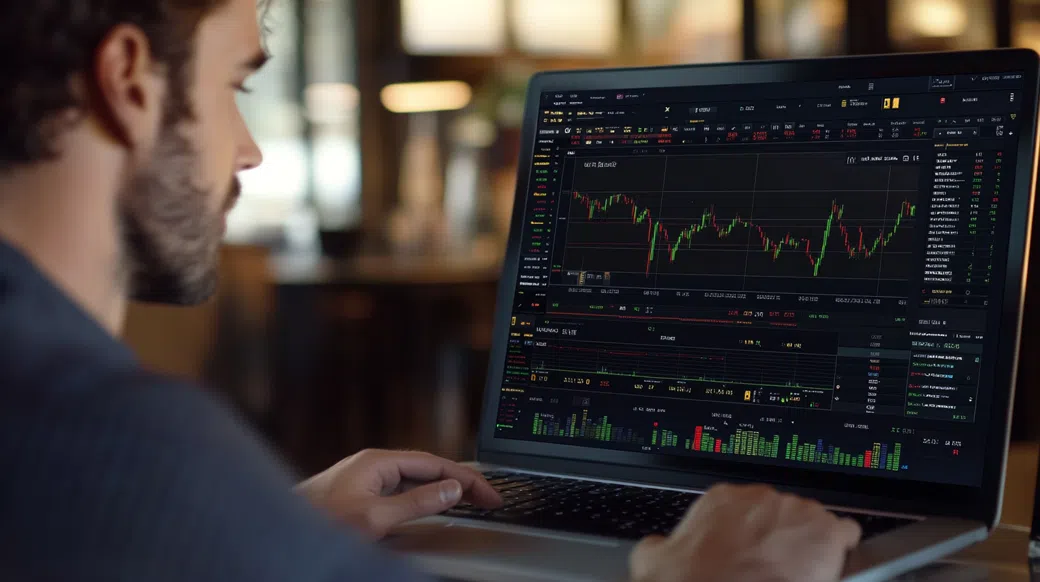
From a trader’s chair, the WebTrader is built for getting orders done: stable session handling, clear margin display, and the core order types (market, limit, stop, plus SL/TP). I tested a small EUR/USD position around the NY open and watched for ugly behavior—no platform freezes, and fills were consistent with what I’d expect from a retail CFD venue, with occasional slippage when the tape sped up. If you live inside MT4/MT5 plug-ins and custom EAs, you’ll feel the gap; I didn’t see a confirmed MT4/MT5 download path in the onboarding flow.
The Livre Capitência app mirrors the WebTrader layout: quotes update fast, chart-to-trade is one tap away, and positions can be closed quickly when volatility jumps. Livre Capitência login supported biometric unlock on my device, and the app exposed deposit and withdrawal menus without bouncing me to a browser. Push alerts exist for price moves and order events, but the notification granularity is basic—good for retail monitoring, not a pro alert stack.
Charting covers the usual indicator set (MA, RSI, MACD, Bollinger) and drawing tools for levels and trendlines. An economic calendar and a lightweight news feed are integrated, which helps for macro timing, but don’t expect institutional research or advanced strategy analytics. In practice, I used the watchlist + calendar combo to track CPI risk and keep position sizing conservative into the event.
After the email/password signup, the provider pushed me into an identity workflow that looked AML-driven rather than optional: upload a government ID and a proof of address dated within three months. Verification cleared the same day for my account, and the dashboard immediately showed leverage settings and account tier selection. If you’re searching the docs for “Livre Capitência minimum deposit,” the number that matters for a live balance is $200.
One practical note: base currency choice matters—funding BRL via card often means an extra conversion layer before USD hits your trading wallet. I’d also recommend completing KYC before you scale size; it reduces friction when you later trigger a Livre Capitência withdrawal.
I tested support with a specific question traders actually care about: swap rates and how they’re displayed before holding positions overnight. Live chat replied in roughly three minutes with a clear path to the contract specs screen and a reminder that triple-swap days can apply depending on the instrument. I followed up by email asking about withdrawal processing cutoffs, and the ticket response landed in about nine hours with method-by-method timing guidance.
Coverage is broadly 24/5, which matches the FX week; weekend staffing felt lighter, especially for crypto questions. Language support is region-dependent (English-first in my case), and phone support wasn’t prominently offered during my test. Relative to similar offshore CFD providers, the helpfulness was decent; the real value-add would be more transparent fee schedules inside the platform UI.
If you want to sanity-check spreads, order handling, and funding rails in your own region, start with a demo and then test a small live deposit. Treat this as a platform evaluation exercise—verify fees, leverage settings, and withdrawal steps before scaling risk.
Visit Livre CapitênciaIt can be, as long as the beginner understands CFDs and keeps leverage low. The WebTrader and app are not overloaded with features, and the $10,000 demo helps you learn order types and margin behavior without paying spreads. The offshore setup means you should be extra disciplined about position sizing and withdrawals.
Yes, crypto is available via CFDs, with majors like BTC and ETH typically front and center. Costs are mainly embedded in the spread (for example, BTC/USD from about $35 in my checks), and weekend financing can make holds more expensive. You’re not buying coins or moving them to a wallet.
No, based on my 2026 hands-on test it behaved like a functioning broker: KYC was enforced, trading worked, and withdrawals processed. The more relevant concern is not “scam vs. not,” but offshore protections—complaint escalation and compensation mechanisms are thinner than Tier-1 regulators. Always treat CFDs as high-risk instruments and avoid over-leveraging.
No, the USA is restricted and not offered access under this broker’s policy. In practice, IP checks and residency/KYC verification typically enforce the block. If you’re a US resident, you’ll need a US-regulated alternative.
Most withdrawals are processed internally within 24–48 hours after KYC is cleared. Receipt time then depends on the rail: cards usually take 2–5 business days, bank wires 3–7 business days, while crypto transfers are often same-day. I received my test withdrawal within the expected window for the method used.
The minimum deposit is $200 for a live account. That’s enough to open positions, but it’s not enough to absorb large drawdowns if you use high leverage like 1:500. Beginners should treat $200 as an access fee, not as adequate risk capital.
Yes, there are iOS and Android apps alongside the browser-based platform. You can monitor quotes, place market/limit/stop orders, and manage deposits and withdrawals from the app. In my use, biometric sign-in made the mobile workflow faster for frequent checks.
Overall Score: 3.9/5
For traders who care about numbers—spread tiers, commission math, and whether money actually comes back out—Livre Capitência did enough to clear my basic operational bar in 2026. The Standard vs. Pro/Raw split is sensible, and the WebTrader/mobile combo is functional for FX and index trading without extra software overhead. Where I stay cautious is structural: offshore registration changes your safety net, and leverage up to 1:500 can turn a small mistake into a margin call. Treat it as a tactical CFD venue, not a long-term custody solution, and verify terms directly on Livre Capitência.
Best for: active CFD traders in accepted regions who want tiered pricing and mobile-first access. Avoid if: you need Tier-1 regulatory protection, deep MT5-style tooling, or you’re prone to overusing leverage.