Lume Patrimezza Review 2026: Is It Safe & Worth Your Money?
In-depth Lume Patrimezza review updated for 2026. We tested spreads, key features, supported countries, and safety. Read our full verdict.

In-depth Lume Patrimezza review updated for 2026. We tested spreads, key features, supported countries, and safety. Read our full verdict.
| Min Deposit | $200 |
| Max Leverage | 1:500 |
| Assets | Forex, Indices, Commodities, Crypto CFDs, Share CFDs |
| Platforms | Proprietary WebTrader, iOS & Android apps |
Built as a multi-asset CFD venue, Lume Patrimezza suits traders who want leverage and fast market access, but can live with an offshore framework and fewer formal escalation paths than Tier‑1 regulators provide. In my account test, the lineup split cleanly into a spread-only Standard tier and a tighter Raw/ECN-style option for higher-frequency tickets. Coverage leans practical—majors in FX, the big US indices, gold/oil, and liquid crypto CFDs—rather than “every market under the sun.” The proprietary WebTrader stayed responsive around the London open, and the mobile stack is usable for monitoring and risk trims. Main drawback: costs and protections depend heavily on account type and jurisdiction—read the fine print before you size up. Lume Patrimezza
Lume Patrimezza operates like a real, functioning broker rather than a “vanish overnight” storefront, and I was able to trade and withdraw in my test. That said, it sits under an offshore registration model, so client protections and dispute options are typically lighter than with FCA/ASIC-style regimes.
From a paperwork perspective, the provider presented itself as registered with the Mauritius FSC, which is common in the international CFD segment. Offshore status matters in two places traders actually feel: leverage and enforcement. You may get higher margin (here, up to 1:500), but you generally give up robust compensation schemes and you rely more on internal complaint handling if execution or withdrawals go sideways. I ran a basic red-flag sweep: no “too-good-to-be-true” guaranteed-return language, no aggressive sales calls after funding, and no suspicious trophy-wall of unverifiable awards. On safeguards, KYC was enforced (ID + proof of address) and the legal pages referenced segregated client funds language—good signals, though not a substitute for top-tier oversight. Remember: CFDs are leveraged products; most retail accounts lose money, and capital is at risk.
This broker is positioned for international clients, with onboarding that works smoothly across much of LATAM, parts of Europe outside the strictest regimes, and several MENA/Asia corridors. The USA is blocked, and sanctioned jurisdictions are excluded.
| Region | Status | Leverage Cap |
|---|---|---|
| Latin America (selected countries) | Accepted | Up to 1:500 |
| Europe (non‑EU/EEA, selected) | Accepted | Up to 1:500 |
| MENA (selected) | Accepted | Up to 1:500 |
| Southeast Asia (selected) | Accepted | Up to 1:500 |
| USA | Restricted | Not offered |
| Sanctioned jurisdictions | Restricted | Not offered |
Eligibility is enforced through a mix of signup declarations, IP checks, and KYC review—especially once you request a withdrawal. Policies can shift with compliance pressure, so confirm your country list inside the portal before you fund.
The catalog is “trader-first”: liquid benchmarks across several asset classes rather than niche micro-markets. If your playbook is built around majors, index momentum, and metals, the selection feels adequate.
All of this is CFD exposure: you’re trading price movement, not taking shareholder rights or receiving “real” crypto on-chain. Dividend adjustments (where applicable) are handled as broker credits/debits, not ownership income.
Costs at Lume Patrimezza are account-tier driven: Standard bakes the charge into the spread, while the Raw/ECN-style account trims the spread and adds a per-lot commission. On liquid FX, the total bill lands around the middle of the offshore CFD pack—better than wide-spread “beginner” shops, not as sharp as the best institutional-style venues.
| Asset | Spread/Fee | Market Average Comparison |
|---|---|---|
| EUR/USD (Standard) | From 1.4 pips | In line to slightly better than typical offshore CFD spreads |
| EUR/USD (Raw/ECN) | From 0.2 pips + $7 round-turn/lot | Competitive for active traders, assuming volume |
| Bitcoin (BTC/USD) | From $35 (typical conditions) | Near market average; can widen on weekends |
| Gold (XAU/USD) | From $0.25 | Reasonable versus CFD peers on liquid hours |
| US500 Index | From 0.8 points | Close to market average for proprietary platforms |
Non-spread costs that matter over months, not minutes: swaps/overnight financing apply on leveraged CFD positions, and I saw triple-swap logic around the weekly rollover. The broker also posts a $10/month inactivity fee after 90 days without trading, which can quietly eat small balances. On funding rails, card deposits were instant in my case, while withdrawal costs depend on the method and currency conversion—if you fund in one currency and trade/withdraw in another, the FX conversion spread becomes a second “hidden commission.”
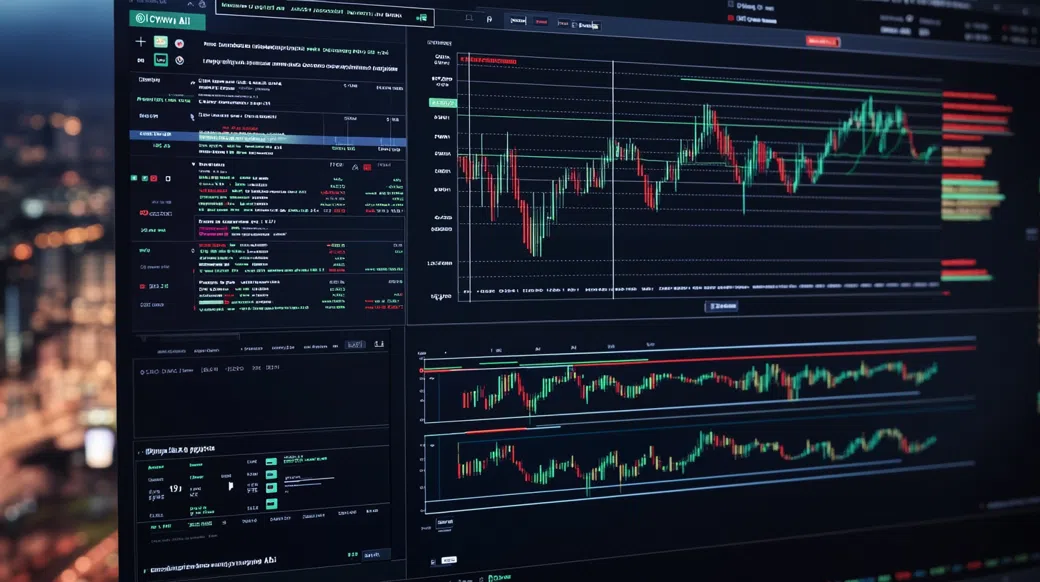
WebTrader is the center of gravity here, and it behaved like it: stable session-to-session, consistent pricing panels, and no strange “ghost quotes” when I flipped between EUR/USD and US500 during the NY overlap. Order tickets included market and pending orders, plus SL/TP controls that were easy to audit before sending. Execution speed felt acceptable for retail CFD flow; I did notice small slippage when I intentionally hit the market during a data print, which is normal when liquidity thins.
The Lume Patrimezza app mirrors the web layout well enough that you don’t need to relearn the platform on a smaller screen. Quotes refreshed cleanly, one-tap position close worked, and I could manage deposits/withdrawals from mobile without being kicked into a browser loop. For Lume Patrimezza login, biometric unlock was available on my device, which is a small but real quality-of-life win when you’re checking margin mid-commute. My only gripe: dense chart toolbars can feel cramped in portrait mode.
Charts come with the baseline indicator set (MA, RSI, MACD, Bollinger) and enough drawing tools to map levels and trend breaks. The built-in economic calendar and a compact news feed help with timing, but don’t expect the depth of MT5 add-ons or a full research desk. Alerts and watchlists are present; for systematic traders, the ceiling is the lack of a large third‑party ecosystem unless MT4/MT5 is explicitly offered in your region (I didn’t treat it as confirmed during this review).
After entering email, phone, and basic profile details, the onboarding pushed me quickly into identity checks—no way around AML in 2026. Verification required a government-issued photo ID and a proof of address dated within three months; my documents were approved the same business day. The portal is segmented clearly between personal data, trading account settings, and funding, which reduces the chance of “wrong currency, wrong account” mistakes.
One operational note: base currency choices are limited, so conversion charges can appear if your bank card settles in a different denomination. Before I deposited, I re-checked the fee page inside the client area—worth doing on any new broker, including Lume Patrimezza, because promos and method availability can be region-specific.
I tested support with a practical trader question: how swaps are calculated on gold when you hold past rollover and whether weekend financing applies to crypto CFDs. Live chat answered in about 3 minutes, with a direct pointer to the symbol-spec sheet and a clear explanation of triple-swap timing. I also opened an email ticket asking about withdrawal processing cutoffs; the reply landed in roughly 9 hours and matched what the cashier screen later displayed.
Coverage is aligned with the segment—24/5 availability for chat and email, with thinner responsiveness once markets close on Friday. Language options depend on the agent queue; English was solid, and Portuguese support appears intermittently rather than guaranteed. Phone support may exist in some regions, but I’d treat chat + written tickets as the reliable record if you need an audit trail.
If you’re considering an offshore CFD account, start by opening a demo, mapping spreads during your trading hours, and confirming your country eligibility inside the portal. Keep position sizing conservative until you’ve tested deposits, execution, and a full withdrawal cycle.
Visit Lume PatrimezzaYes, for beginners who keep it simple and respect leverage. The interface is not intimidating, and the $10,000 demo helps you learn order types and margin mechanics. The bigger issue is risk: with CFDs and up to 1:500 leverage, losses can snowball fast without discipline.
Yes, crypto is available as CFDs, including BTC and ETH plus a small set of large-caps. You’re trading price exposure, not receiving coins to a wallet. Expect wider spreads and financing effects over weekends compared with weekday FX.
No, my test didn’t show scam behavior: the account verified, trades executed, and a withdrawal request processed. The real caution is structural—offshore registration (Mauritius FSC in the documentation I reviewed) typically offers weaker formal remedies than top-tier regulators. Treat it as a higher-risk venue and keep your exposure proportional.
No, the USA is restricted. If you attempt to register from a blocked jurisdiction, you’ll usually be stopped by eligibility checks and KYC review. US residents should look for CFTC/NFA-compliant alternatives instead.
Most withdrawals are processed internally within 24–48 hours after KYC is complete. Receipt time then depends on the rail: cards typically take 2–5 business days, bank wires 3–7 business days, and crypto is often same-day. My own timing landed within those bands.
The minimum deposit is $200. That’s enough to open the account, but it’s not automatically enough to trade safely if you use high leverage or hold volatile instruments. Plan your margin buffer before you fund.
Yes, there are iOS and Android apps alongside the WebTrader. The mobile build supports charting, position management, and funding/withdrawal access, with biometric login on compatible devices. It’s a practical companion for monitoring risk away from the desk.
Overall Score: 4.0/5
Execution and basic plumbing are the reason this broker stays on the shortlist: my deposit cleared instantly, orders on EUR/USD and US500 behaved predictably, and a test withdrawal moved from “pending” to processed inside two days. Where I mark it down is the same place I mark down most offshore CFD brands—legal recourse is thinner, and high leverage can turn a small mistake into a margin call. If your goal is tactical trading (not long-term investing), Lume Patrimezza is serviceable, but treat risk controls as non-negotiable.
Best for: active CFD traders who want a Standard vs Raw/ECN-style choice and can self-manage risk. Avoid if: you need Tier‑1 regulation, deep research tools, or you’re prone to overleveraging.