Luprix App Review 2026: Is It Safe & Worth Your Money?
In-depth Luprix App review updated for 2026. We tested spreads, key features, supported countries, and safety. Read our full verdict.

In-depth Luprix App review updated for 2026. We tested spreads, key features, supported countries, and safety. Read our full verdict.
| Min Deposit | $200 |
| Max Leverage | 1:500 |
| Assets | Forex, Indices, Commodities, Crypto CFDs, Share CFDs |
| Platforms | Proprietary WebTrader + iOS/Android mobile apps |
Built as a mobile-first CFD broker, Luprix App fits traders who want broad markets and high leverage, but can live with an offshore framework and thinner investor backstops. In my test, the account menu is basically two lanes—Standard (spread-only) and a Raw/ECN-style tier aimed at higher turnover. The product list leans practical: majors on FX, the big equity indices, metals, and the “usual suspect” crypto CFDs. Execution is routed through a proprietary WebTrader plus the Luprix App mobile stack; no MT4/MT5 was presented as a confirmed option. The upside is speed and simplicity; the drawback is governance—dispute escalation and protections are not the same as Tier-1 venues.
Luprix App is operational and tradable based on my account test: I verified identity, placed orders, and received a withdrawal. That said, it sits in the offshore CFD bucket, so “legit” here means functioning access to markets—not the same legal protection you’d expect from FCA/ASIC-style supervision.
What anchored my comfort level was process, not marketing. The provider pushed KYC before I could move money out: photo ID plus proof of address (dated under three months) and a clear AML checklist inside the dashboard. The registration I reviewed referenced the Mauritius FSC jurisdiction, which typically allows higher leverage and faster product rollouts, but also comes with lighter compensation schemes and a tougher path if a dispute turns formal. I scanned for classic red flags—fake trophy badges, aggressive “account manager” pressure, or withdrawal stalling—and didn’t get the hard-sell script. Withdrawal status updates were visible inside the portal, and the broker’s language around segregated client funds exists, although enforcement standards vary by domicile. Remember: CFDs are leveraged products; most retail accounts lose money, and a margin call can arrive fast when volatility spikes.
Access is broad across LATAM, parts of Africa, and several non-EU European markets, with availability depending on local rules and onboarding checks. The USA is blocked, and sanctioned jurisdictions are typically excluded at signup.
| Region | Status | Leverage Cap |
|---|---|---|
| Latin America (selected) | Accepted | Up to 1:500 |
| Non-EU Europe (selected) | Accepted | Up to 1:500 |
| MENA (selected) | Accepted | Up to 1:500 |
| Sub-Saharan Africa (selected) | Accepted | Up to 1:500 |
| USA | Restricted | Not offered |
| Sanctioned jurisdictions | Restricted | Not offered |
Eligibility isn’t just a checkbox: IP location, document country, and payment rails are cross-validated during KYC. Policies move over time, so treat country access as something to confirm at the point of Luprix App login, not a permanent guarantee.
The catalog is built for margin traders who rotate between macro themes rather than long-only investing. I’d call it FX-and-indices first, with crypto CFDs as an add-on for volatility seekers.
All exposure here is via CFD contracts, meaning you’re trading price movement with leverage, not taking ownership of the underlying shares or holding coins on-chain. Dividends (where applicable) are handled as cash adjustments, not shareholder entitlements.
Pricing is split cleanly: Standard accounts pay via spread, while the Raw/ECN-style tier tightens the spread and adds a per-lot commission. On EUR/USD, my quotes were in the expected offshore-CFD range—fine for active trading, not “institutional.” Net-net, costs sit broadly in line with peers once you choose the right tier for your frequency.
| Asset | Spread/Fee | Market Average Comparison |
|---|---|---|
| EUR/USD (Standard) | from 1.6 pips | Around average for offshore CFD accounts |
| EUR/USD (Raw/ECN) | from 0.2 pips + $7 round-turn/lot | Competitive if you trade size |
| Bitcoin (BTC/USD) | from $28 | In line; can widen on weekends |
| Gold (XAU/USD) | from $0.30 | Reasonable versus similar WebTrader brokers |
| US500 Index | from 0.8 points | Near the segment midpoint |
Non-spread costs that matter: swaps are the real P&L leak for position traders—hold FX or indices for a week and you’ll feel it, especially in high-rate currencies. Dormancy is charged at $10 per month after 90 days, which is small until it isn’t. On withdrawals, I wasn’t hit with a platform fee on my test run, but banks/card issuers can still clip you via intermediary charges or FX conversion if you fund in one currency and settle in another.
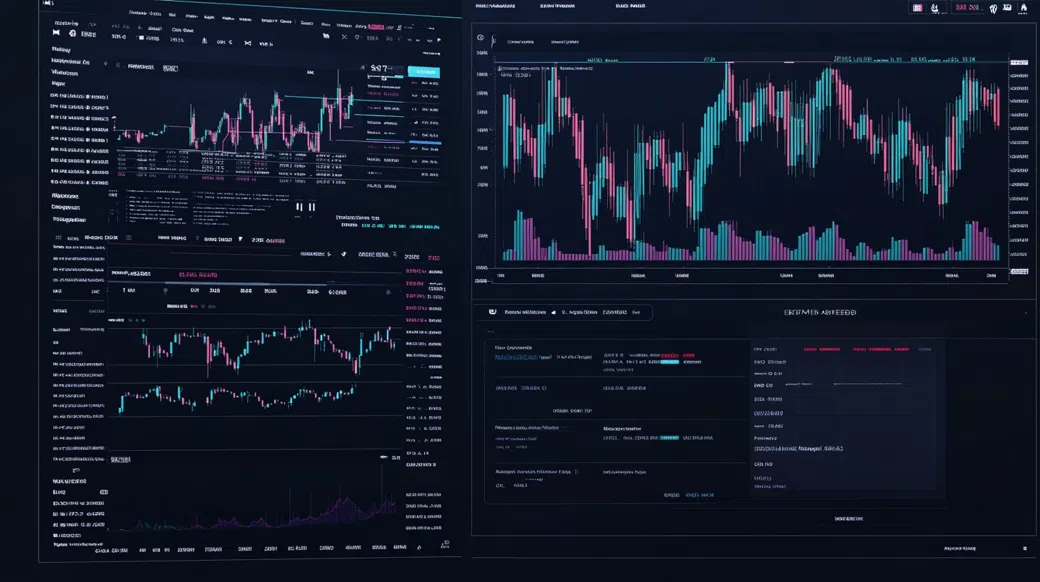
On desktop, the WebTrader behaved like a modern proprietary terminal: stable session, fast instrument search, and one-click trading available after toggling the risk confirmation. Order coverage included market, limit, and stop, plus SL/TP controls on ticket—enough for most CFD playbooks. The gap versus MT4/MT5 is ecosystem, not usability: you won’t get the same library of third-party indicators, EAs, or community scripts, so systematic traders may feel boxed in.
The Luprix App app is where the product feels most coherent. Biometric unlock worked consistently on my Android test device, and quotes updated smoothly while flipping between watchlist and chart. From the same screen I could add margin, adjust stops, and initiate a withdrawal without hunting through menus; push notifications covered fills and price alerts. One quirk: indicator settings don’t always mirror perfectly between mobile and WebTrader, so I treated layouts as device-specific rather than “synced.”
Charting is competent: multiple timeframes, the standard indicator stack (MA/RSI/MACD/Bollinger), and basic drawing tools for levels and channels. The integrated news feed and economic calendar are useful for macro timing, but they won’t replace a dedicated research terminal. If your edge depends on advanced analytics, custom indicators, or cTrader-style depth tools, you’ll notice the ceiling quickly.
Two things stood out during onboarding: the form is short, but the compliance gate is real. I entered email/phone details, set base currency, and then completed KYC with a passport photo and a recent bank statement; verification landed the same business day. The flow is designed to satisfy AML checks early, which reduces friction later when you request cashouts.
After funding, the account area surfaced leverage selection and risk warnings in plain language. My deposit confirmation showed instantly in the ledger, and the platform pushed me to confirm personal details before enabling full withdrawals—annoying if you procrastinate, but it’s better than “KYC surprise” at the finish line.
I tested support with a practical trader question: “Where do I see the swap/overnight rate before holding US500 and EUR/USD?” Live chat answered in about three minutes and pointed me to the instrument specs panel plus the daily financing cutoff. I also emailed a withdrawal-timing question for card vs. crypto; the ticket reply arrived in roughly nine hours with a method-by-method window and a reminder that KYC must be approved first.
Coverage is the familiar offshore rhythm—24/5 for chat and email, strongest during London and New York hours. Language support depends on staffing; English is solid, Portuguese/Spanish may vary by shift. Phone contact wasn’t prominently advertised in my region, so if you require voice escalation, factor that into your decision.
If you’re considering this broker, start by checking your country eligibility, then run a demo to map spreads and margin behavior around a news event. Once comfortable, a small live deposit can confirm how deposits and withdrawals behave on your preferred payment rail.
Visit Luprix AppYes, for beginners who keep position size small and use the demo first. The interface is not overloaded, and the two-tier account structure is easy to understand. The bigger issue is risk: CFDs plus 1:500 leverage can punish mistakes quickly.
You can trade crypto CFDs such as BTC/USD and ETH/USD. That gives you leveraged price exposure, not coin ownership or on-chain withdrawals. Expect wider pricing and financing effects over weekends compared with weekday FX.
No, it didn’t behave like a “take-the-money-and-run” operation in my test: KYC was enforced and a withdrawal was processed. The offshore setup does mean you should be stricter about position sizing and documentation. Treat it like a high-risk CFD venue, not a bank account.
No, the USA is restricted and the broker does not onboard US residents. If you attempt to register from the US, you’ll typically be stopped by eligibility checks. Use a US-regulated venue instead if you need compliant access.
Most withdrawals are reviewed internally within 24–48 hours after KYC is approved. After that, card withdrawals commonly land in 2–5 business days, bank wires in 3–7 business days, and crypto transfers are often same-day. Your bank or wallet rail ultimately sets the final delivery speed.
The minimum deposit is $200 for a live account. You can still explore pricing and workflows via the $10,000 demo balance before funding. If you’re testing, deposit the minimum and focus on execution and withdrawal behavior.
Yes, it offers iOS and Android mobile apps alongside its WebTrader. You can place orders, manage SL/TP, and handle deposits and withdrawals from the phone. Biometric access is supported on compatible devices for faster sign-in.
Overall Score: 4.0/5
From a trader’s angle, the value proposition is simple: decent multi-asset CFD coverage, a usable WebTrader, and pricing that improves meaningfully if you qualify yourself into the Raw/ECN-style lane. My withdrawal arrived inside the stated windows, which is the first filter I care about with offshore venues. Still, you’re accepting Mauritius FSC-style oversight—not Tier-1 guardrails—so keep expectations calibrated and risk controls tight. If you want to stress-test the UX and spreads before scaling, start small and treat Luprix App as a tactical trading account, not a long-term custody solution.
Best for: active CFD traders in accepted regions who want higher leverage and a clean mobile workflow. Avoid if: you require Tier-1 regulation, deep research tooling, or MT4/MT5 plug-and-play automation.