Marée Capitange Review 2026: Is It Safe & Worth Your Money?
In-depth Marée Capitange review updated for 2026. We tested spreads, key features, supported countries, and safety. Read our full verdict.

In-depth Marée Capitange review updated for 2026. We tested spreads, key features, supported countries, and safety. Read our full verdict.
| Min Deposit | $200 |
| Max Leverage | 1:500 |
| Assets | Forex CFDs, Indices CFDs, Commodities CFDs, Crypto CFDs, Share CFDs |
| Platforms | WebTrader (desktop/browser), iOS app, Android app |
Built as a multi-asset CFD venue with offshore-style flexibility, Marée Capitange suits active traders who value leverage and simple market access, but the trade-off is lighter investor protection than a top-tier regulated house. In my checks, the account menu splits cleanly between a spread-only Standard and a tighter Raw/ECN-style tier, which matters if you scalp majors. The product list leans practical—FX, index benchmarks, metals, and the usual crypto tickers—without pretending to be a full exchange. Execution tools live inside a proprietary WebTrader plus mobile. For the full walkthrough and current terms, I used Marée Capitange.
Marée Capitange looked operational and tradeable in my 2026 test, not a “vanish-after-deposit” setup. That said, it runs under an offshore framework, so “safe” here means basic safeguards plus your own risk controls—not the same safety net you’d expect from FCA/ASIC-style oversight.
The key datapoint for me was the KYC gate: withdrawals were not even available until identity checks were completed, which is consistent with AML practice rather than a pure marketing funnel. The provider presents itself under a Seychelles FSA-style offshore registration approach; in practice, that often brings higher leverage (good for margin efficiency, bad for loss speed) and weaker external escalation if a dispute turns ugly. I also scanned for the usual red flags—pushy “account manager” calls, fake awards plastered everywhere, and withdrawal friction. On my run, sales pressure stayed low and the withdrawal workflow was transparent, though you should still treat any “limited-time bonus” messaging as conditional and region-specific. The site language referenced segregated client funds, but offshore setups rarely offer the same compensation schemes as Tier-1 jurisdictions. Remember: CFDs are leveraged products, and most retail accounts lose money—risk capital only.
The broker generally accepts clients across parts of LATAM, non-EU Europe, MENA, and Southeast Asia, subject to local rules and internal policy. The USA and sanctioned jurisdictions are not onboarded.
| Region | Status | Leverage Cap |
|---|---|---|
| Latin America (selected countries) | Accepted | Up to 1:500 |
| Non-EU Europe (selected) | Accepted | Up to 1:200 |
| MENA (selected) | Accepted | Up to 1:500 |
| Southeast Asia (selected) | Accepted | Up to 1:500 |
| USA | Restricted | Not offered |
| Sanctioned jurisdictions | Restricted | Not offered |
Eligibility isn’t a checkbox you set once—IP/location flags and KYC documents can override what the landing page implies. I’d re-check availability at signup because policy shifts happen fast when compliance teams tighten filters.
Product depth is “trader-first”: liquid benchmarks and fast-moving CFDs, rather than thousands of small-cap shares. If you’re coming from a São Paulo equity desk mindset, think of it as beta and macro instruments, not a stock-picking terminal.
Everything here is CFD exposure: you’re trading price movement, not taking shareholder rights or receiving on-chain crypto. Dividends (where applicable) are typically handled as cash adjustments on the derivative, not ownership.
Pricing is tiered: Standard is spread-only, while the Raw/ECN-style option tightens spreads and adds a per-lot commission. On my screens, EUR/USD on Standard sat in the “serviceable but not razor-thin” zone, while the Raw/ECN math can win for high turnover. Relative to offshore CFD peers, the structure is familiar—what matters is matching the tier to your trade frequency.
| Asset | Spread/Fee | Market Average Comparison |
|---|---|---|
| EUR/USD (Standard) | From 1.4 pips | In line with typical offshore Standard accounts |
| EUR/USD (Raw/ECN) | From 0.2 pips + $7 round-turn/lot | Competitive for active FX, assuming consistent fill quality |
| Bitcoin (BTC/USD) | From $28 | About average; weekends can widen depending on liquidity |
| Gold (XAU/USD) | From $0.35 | Slightly better than many spread-only metals feeds |
| US500 Index | From 0.8 points | Within the normal CFD range for this product |
Non-spread costs to model: swap/overnight financing hits any position held past rollover, and it’s the quiet P&L killer for “I’ll hold it a few weeks” habits. Dormancy also has a price tag—$10 per month after 90 days without activity—so a parked account isn’t free. On withdrawals, I didn’t see an added platform fee in the cash-out screen, but your bank/card rail can still charge, and FX conversion spreads matter if you fund in BRL/EUR and settle in USD. Crypto positions can carry weekend financing effects, which is where a cheap entry spread can get offset by holding cost.
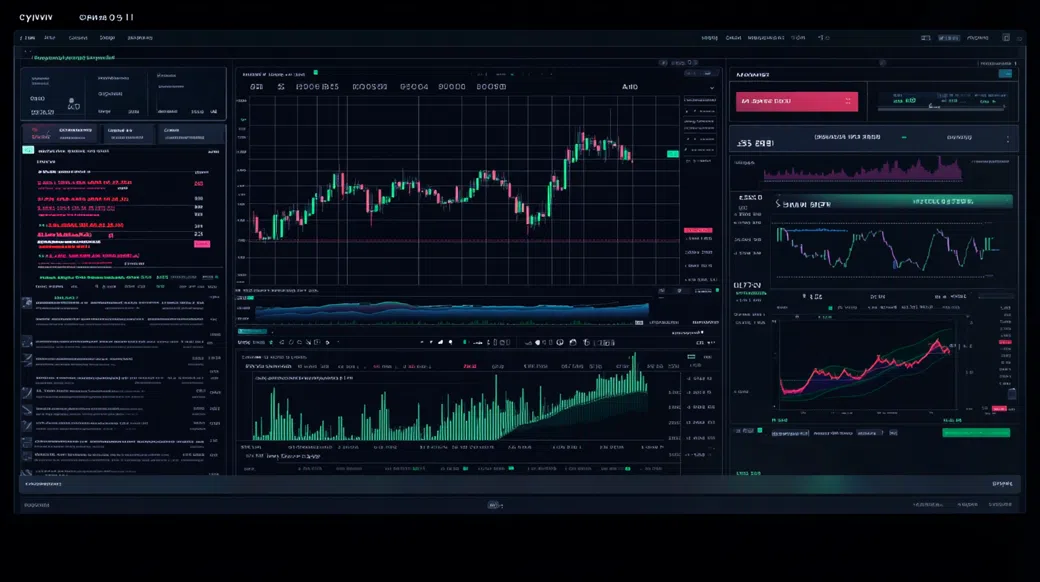
On desktop, the WebTrader felt stable across multiple logins and sessions, with snappy chart rendering and the order panel kept close to the price ladder—good ergonomics for index scalps. Order tickets supported market and pending orders (including stops/limits), and modifying stops on open positions was responsive. What you don’t get is the MT4/MT5 plugin universe; if your workflow depends on EAs, custom indicators, or third-party bridge tools, this proprietary stack is a different proposition.
The Marée Capitange app mirrored the WebTrader layout without trying to cram too much onto one screen, and the Marée Capitange login stayed persistent with biometric unlock on my device. Quotes updated smoothly, and I could open/close, set stops, and review margin usage with minimal taps. Deposits and withdrawals were reachable from the same menu (useful when you’re managing collateral). My main nit: chart drawing tools on mobile are basic, so detailed levels work is better on desktop.
Tooling is adequate for macro/event trading: an economic calendar, a news feed, watchlists, and the usual indicator set (MA, RSI, MACD, Bollinger). Alerts exist for price levels, which helps if you trade the NY overlap and can’t stare at the screen. The ceiling shows quickly if you’re used to cTrader depth-of-market or MT5 strategy testing, but for discretionary CFD execution it covers the essentials.
After submitting the signup form (email, phone, base currency choice), the platform pushed me into an identity checklist rather than letting me roam indefinitely. KYC required a government photo ID plus a proof of address dated within three months; my verification cleared the same business day. The flow is designed to satisfy AML, and it also reduces the odds of “surprise” documentation requests when you try to cash out.
One practical note: account currency matters if you’re outside USD—conversion costs show up indirectly in your funding rail, not as a clean line item. I also recommend completing verification before you trade size; it keeps withdrawals predictable later.
I tested support with a very trader-ish question: how swap is calculated on XAU/USD and where it shows inside the platform. Live chat came back in about 3 minutes with a clear pointer to the contract-spec page plus a short explanation of rollover timing; the agent didn’t try to upsell me into a bigger deposit. I followed up by email asking about withdrawal sequencing after KYC, and the ticket reply landed in roughly 9 hours with a step-by-step checklist and expected timelines.
Coverage is broadly 24/5, which matches the FX week, and the tone is closer to “ops desk” than “call center hype.” Language availability looked region-dependent; English was solid, and Portuguese support wasn’t guaranteed in my session. Phone support may exist in some regions, but chat/email are the reliable channels. Weekends are quieter—plan for slower turnaround if you file requests late Friday.
If you’re considering this broker, start by checking eligibility for your country, then compare Standard vs Raw/ECN pricing on the instruments you actually trade. I’d also run the demo to see how spreads behave around major data releases before committing real capital.
Visit Marée CapitangeIt can be, if you keep position sizing small and use the demo first. The interface is not overloaded, and the $200 entry point is manageable for many. The bigger issue for beginners is leverage—up to 1:500 can magnify mistakes fast.
Yes, crypto is offered via CFDs (for example BTC/USD and ETH/USD). You’re trading price exposure, not transferring coins to a wallet. Expect wider spreads and different financing behavior over weekends versus FX.
No—based on my test, the platform functioned normally (KYC, trading, and withdrawal flow behaved like a real broker). The offshore setup still means you should be stricter about risk, documentation, and expectations. If you’re searching “Marée Capitange scam,” focus on withdrawal terms, leverage risk, and whether the jurisdiction fits your comfort level.
No, USA clients are restricted and cannot open accounts. This is typical for offshore CFD providers due to US regulatory rules. If you’re traveling, KYC residency checks can still block access.
Most withdrawals are processed internally within 24–48 hours after KYC is completed. Receipt time depends on the rail: cards commonly take 2–5 business days, wires around 3–7 business days, and crypto can arrive the same day. In my Marée Capitange withdrawal test, the request moved to “processing” quickly once documents were approved.
The minimum deposit is $200 for the account I opened. Funding options included cards, bank transfer, and crypto rails such as BTC/USDT. If you plan to trade indices or gold with sensible margin buffers, consider depositing more than the minimum.
Yes, it offers mobile apps for iOS and Android alongside the browser-based WebTrader. The Marée Capitange app supports order placement, position management, and account funding actions. For deep chart work, desktop still feels more comfortable.
Overall Score: 4.0/5
Numbers-first takeaway: if you’ll actually use the Raw/ECN-style pricing and keep discipline around leverage, Marée Capitange can deliver a respectable cost/execution package for mainstream CFDs. I liked the clarity of the account tiers, the usable WebTrader, and a withdrawal process that didn’t feel like a maze. The unavoidable minus is jurisdiction—offshore registration brings fewer formal protections if things go wrong, so you must self-manage risk and keep records. If you want to compare current conditions, start with Marée Capitange and test via demo. CFDs are high-risk; capital is at risk.
Best for: active CFD traders in accepted regions who want leverage up to 1:500 and a simple proprietary platform. Avoid if: you require Tier-1 regulation, advanced MT4/MT5 automation, or you’re prone to overleveraging.