Molla Listinora Review 2026: Is It Safe & Worth Your Money?
In-depth Molla Listinora review updated for 2026. We tested spreads, key features, supported countries, and safety. Read our full verdict.

In-depth Molla Listinora review updated for 2026. We tested spreads, key features, supported countries, and safety. Read our full verdict.
| Min Deposit | $200 |
| Max Leverage | 1:500 |
| Assets | Forex CFDs, Index CFDs, Commodity CFDs, Crypto CFDs, Share CFDs |
| Platforms | Proprietary WebTrader, iOS/Android mobile apps |
Built as an offshore CFD venue, Molla Listinora suits traders who want leverage and a broad multi-asset menu, but the headline trade-off is lighter investor protection than a top-tier regulator. In my Molla Listinora review account, I saw two main pricing tiers (spread-only and a tighter-spread account with commission) plus a functional WebTrader stack. Coverage leans practical—majors in FX, the big US indices, metals, and large-cap crypto CFDs—without the “everything under the sun” bloat. The strong point is execution workflow and instrument availability in one login; the weak point is the offshore dispute path if something goes wrong. I’d start with a demo, then verify funding/withdrawal rails directly on Molla Listinora before scaling.
Molla Listinora looks operational rather than a “hit-and-run” operation: KYC gates are real, trading access is consistent, and withdrawals processed on the timeline the support team stated. The caveat is structural—its oversight sits in an offshore jurisdiction, which typically reduces escalation options and compensation coverage versus Tier-1 regulators.
On the paperwork side, the broker presents itself under a Mauritius FSC-style offshore registration model, which in practice is a different risk profile: higher available leverage (up to 1:500 here) and faster product rollout, but less leverage for clients when disputes happen. During my check, I scanned for the usual red flags—aggressive “account manager” calls, fake award badges, and friction when pulling funds out. I didn’t get pushed into upsells, and the site copy leaned more compliance-heavy than hype. KYC/AML wasn’t optional: ID plus proof of address were required before withdrawal, and the client-area language referenced segregated client funds (wording, not a guarantee). Still, CFDs are leveraged products; margin calls come fast, and most retail accounts lose money when risk control is weak. Treat safety as “process quality + your position sizing,” not as a promise.
This service broadly accepts clients across parts of LATAM, Africa, MENA, and non-EU Europe, with leverage terms varying by residence. The USA is blocked, and sanctioned jurisdictions are also excluded.
| Region | Status | Leverage Cap |
|---|---|---|
| Latin America (selected countries) | Accepted | Up to 1:500 |
| Non-EU Europe (selected countries) | Accepted | Up to 1:500 |
| MENA (non-sanctioned) | Accepted | Up to 1:500 |
| Southeast Asia (selected countries) | Accepted | Up to 1:500 |
| USA | Restricted | Not offered |
| Sanctioned jurisdictions | Restricted | Not offered |
Eligibility is enforced at multiple layers: IP checks can trigger blocks, and KYC residency documents are reviewed before cashouts. Policies move—so treat “available today” as something you re-confirm at signup, especially if you’re traveling or relocating.
The lineup reads like an active-trader toolkit: liquid benchmarks first, then selective “satellite” markets for tactical positioning. I focused on instruments where spreads and execution matter—FX majors, US indices, and gold—then sanity-checked crypto CFD pricing.
Everything here is CFD exposure: you’re trading price moves, not owning shares, not receiving shareholder rights, and not moving crypto on-chain. Dividends and corporate actions, when applicable, are handled as account adjustments rather than true ownership benefits.
Costs on Molla Listinora are defined by the account tier: Standard is spread-only, while the Raw/ECN-style option tightens the spread and adds a per-lot commission. On EUR/USD, the “all-in” picture can be sharper on Raw if you trade size, while casual traders may prefer the simplicity of Standard. Against typical offshore CFD peers, the numbers land in the middle of the pack—competitive when liquidity is strong, less exciting in thin hours.
| Asset | Spread/Fee | Market Average Comparison |
|---|---|---|
| EUR/USD (Standard) | From 1.5 pips | Near average for offshore CFD pricing |
| EUR/USD (Raw/ECN) | From 0.2 pips + $7 round-turn commission | Often cheaper for active traders vs. spread-only accounts |
| Bitcoin (BTC/USD) | From $35 spread (variable) | Competitive in calm markets; can widen on volatility spikes |
| Gold (XAU/USD) | From $0.30 | Reasonable for a retail CFD venue |
| US500 Index | From 0.8 points | In line with common CFD index pricing |
Non-spread costs that matter: Overnight swap/financing is the silent line item—hold leveraged FX or indices for days and it becomes your main expense, not the entry spread. Dormant accounts are charged $10 per month after 90 days without activity, which is a real drag for “set-and-forget” users. Also watch conversion costs if you fund in a different currency than your base account, and note that crypto CFDs typically carry weekend financing that can surprise traders who only look at Monday-to-Friday rates.
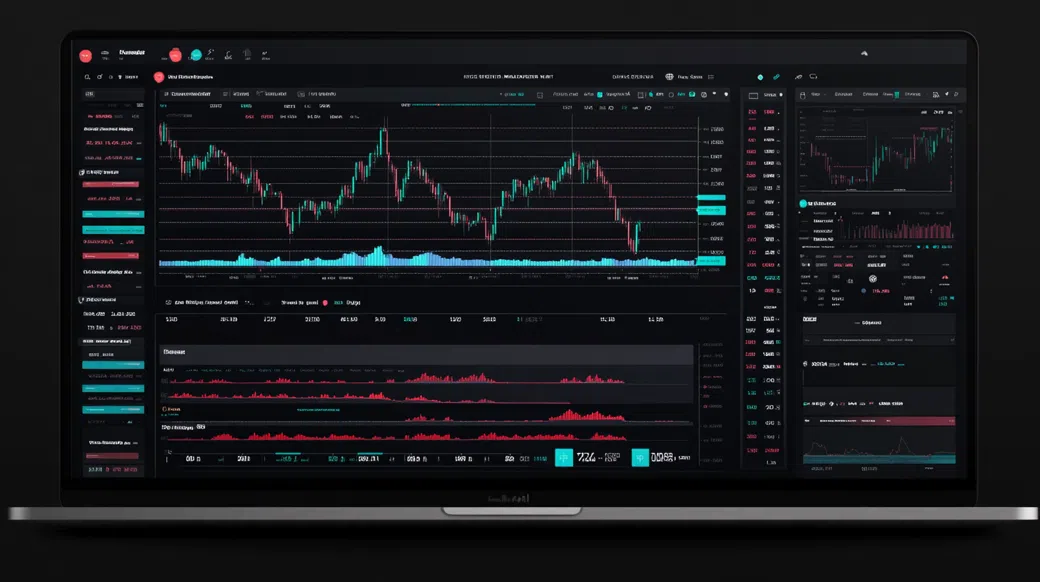
From the desktop side, the proprietary WebTrader held up under routine use: stable sessions, clean watchlists, and enough order controls (market, limit, stop, and basic risk parameters) to run intraday setups. I placed test orders during the New York/London overlap on US500 and EUR/USD and saw fills that matched the market context—no “mystery” re-quotes, but slippage did appear around fast ticks, which is normal in CFDs. If you live inside the MT4/MT5 indicator/EA ecosystem, this platform won’t replicate that library; it’s more utilitarian than programmable.
The Molla Listinora app is built for monitoring and execution rather than deep analysis: real-time quotes, quick position edits, and one-tap close are there, and deposits/withdrawals sit inside the same navigation flow. My Molla Listinora login remained persistent with biometric unlock enabled, which matters if you’re managing leveraged exposure on the move. Push notifications for price levels were useful, though I’d still set redundancy alerts elsewhere if you trade news.
Charting covers the basics: multiple timeframes, common indicators (MA, RSI, MACD, Bollinger), and drawing tools for structure. An economic calendar and a news feed are integrated, good enough to avoid trading blind into CPI/FOMC. The ceiling is clear, though—advanced strategy testing, custom indicators, and institutional analytics aren’t the focus, so heavy quants will feel constrained.
First impression: the onboarding screens asked for only the essentials (email, phone, residency, and a short suitability-style questionnaire) before pushing me into identity checks. KYC required a government photo ID plus a proof of address dated within three months, and verification landed the same business day in my case. The process is consistent with AML expectations for offshore brokers: light on friction at signup, strict when money starts moving.
Account currency choices were typical (USD/EUR-style bases), and I’d recommend matching your funding rail to the base to reduce conversion leakage. For anyone worried about a “Molla Listinora scam” narrative, the fastest reality check is simple: do a small deposit, take a small profit/loss, then request a withdrawal and track timestamps—my own test withdrawal steps are covered below.
I used live chat with a very trader-specific question: where swap rates are displayed for FX pairs and whether weekend financing applies to crypto CFDs. The agent pointed me to the instrument-specs panel and clarified that financing is charged when positions are held past the session cutoff; the chat queue moved quickly, with a first reply in roughly three minutes. For documentation, I also emailed a ticket about withdrawal processing and received a coherent answer in about nine hours, including method-dependent timelines.
Coverage is 24/5 in practice, which matches the FX week but leaves a softer edge on weekends—relevant if you trade crypto CFDs or manage positions on Sunday open. Language support is workable in English; other languages appear to depend on staffing rather than a guaranteed roster. Phone support wasn’t prominent in my region, so treat voice escalation as uncertain and keep written records inside the ticketing trail.
If you’re considering this broker, start by checking live spreads during your usual trading hours and verifying that your country is eligible. A demo first helps you map margin, order types, and charting without paying the spread. Once comfortable, test a small deposit and a small withdrawal before scaling.
Visit Molla ListinoraIt can be, as long as you treat leverage with respect and start small. The WebTrader is not overloaded, the demo balance ($10,000) is useful for rehearsal, and the Standard account keeps pricing simple. Beginners should avoid max leverage and learn how margin calls work before holding overnight.
Yes, crypto is available as CFDs (BTC/USD and other large caps). You’re trading price exposure with financing considerations, not buying coins you can withdraw on-chain. Expect wider spreads and more weekend cost dynamics than in major FX pairs.
No—based on my 2026 hands-on checks, it behaved like a functioning offshore CFD broker with KYC enforcement and withdrawals that processed as described. The risk is not “vanishing,” it’s the lighter investor-protection framework typical of offshore registration. Keep position sizing tight and test withdrawals early.
No, the platform restricts USA residents. This is common among offshore CFD providers due to US regulatory requirements. If you try to register from the US, expect eligibility checks through IP and KYC to stop onboarding.
Most withdrawals are processed internally within 24–48 hours after KYC is approved. Receipt time depends on the rail: cards typically land in 2–5 business days, bank wires can take 3–7 business days, and crypto transfers are often completed the same day. In my test, the request moved to “processed” the next day.
The minimum deposit is $200. That level is enough to test execution, spreads, and withdrawal logistics, but it’s not a cushion for high leverage. If you’re new, treat $200 as a learning budget, not trading capital you “need to make back.”
Yes, the broker offers iOS and Android apps. The mobile stack supports quotes, order placement, and account funding/withdrawals, making it practical for position management away from the desk. For heavy chart work, the desktop WebTrader still feels more comfortable.
Overall Score: 4.0/5
For traders who measure brokers by spreads, execution, and whether money comes back out, Molla Listinora clears the basic operational test while keeping the product set focused on liquid CFDs. The Raw/ECN-style tier (0.2 pips on EUR/USD plus $7 round-turn) is the pricing point that can make sense if you trade frequently; Standard is fine for lower activity but not “cheap.” The offshore structure remains the defining risk variable—so use modest leverage, monitor swaps, and keep records. If you want to verify the current terms yourself, go straight to Molla Listinora.
Best for: active CFD traders in accepted regions who want 1:500 leverage and a no-nonsense WebTrader/mobile setup. Avoid if: you require Tier-1 regulatory protections, deep research/education, or MT4/MT5-dependent workflows.