MonValute Trading Platform Alternatives 2026
MonValute trading platform alternatives 2026: compare regulated brokers for FX, CFDs, stocks, and crypto exposure, plus costs, platforms, and safety checks.

MonValute trading platform alternatives 2026: compare regulated brokers for FX, CFDs, stocks, and crypto exposure, plus costs, platforms, and safety checks.
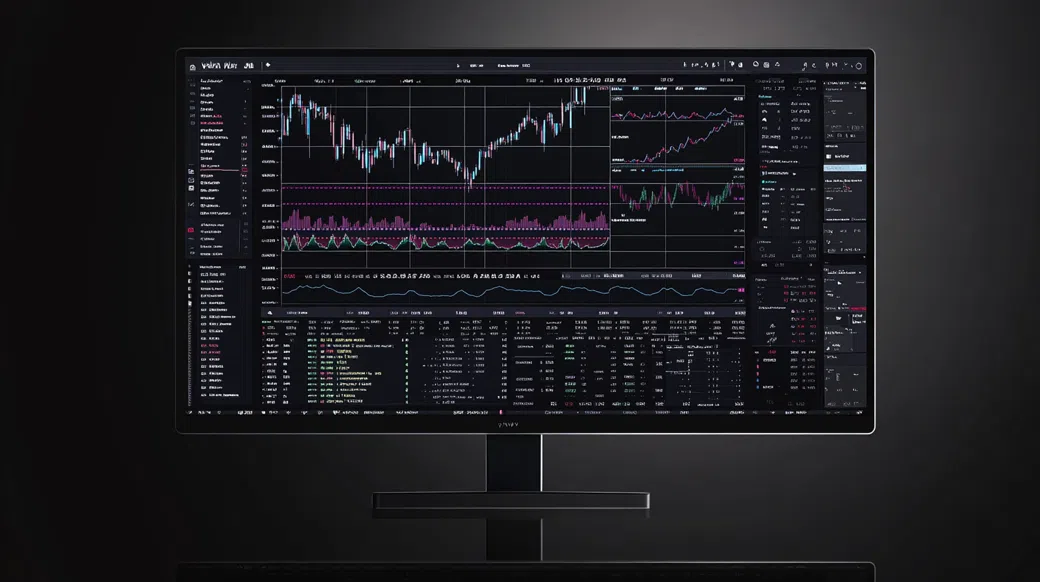
Spreads, leverage, and withdrawal friction—those three numbers usually tell you more than a glossy homepage ever will. Traders who land on MonValute often do so for the simple promise: quick access to forex and CFDs through a browser-based platform and mobile app, with high leverage that looks “efficient” on paper. The trade-off is the part most people discover late: offshore-style guardrails, fewer investor protections, and a product shelf that leans heavily toward CFDs rather than true multi-asset ownership.
Based on what’s commonly observed in this offshore segment, MonValute is typically framed as a CFD-first broker with a proprietary WebTrader, mobile access, and headline leverage around 1:500. Minimum deposits in this category often sit near $250, and EUR/USD pricing is frequently closer to ~2.0 pips on a standard-style account than the tight quotes advertised by institutional venues. That’s not automatically “bad,” but it changes the math for anyone trading size or holding positions through rollover (swap/overnight financing can bite quietly).
This guide to MonValute alternatives is written for a US/EU-leaning audience that wants clearer regulation, stronger fund-handling rules, and platforms that support serious workflows—MT4/MT5, cTrader, or true multi-asset access with DMA. If you’re migrating, think like a risk manager: verify the regulator, quantify your round-turn costs, and prioritize execution quality over leverage slogans.
Disclaimer: This article is for informational purposes only and does not constitute investment advice. CFDs and other leveraged products carry a high risk of loss and may not be suitable for all investors.
For traders coming from emerging-market broker ecosystems, MonValute reads like a familiar playbook: forex and CFDs as the core, a proprietary interface that runs in the browser, and aggressive leverage ceilings. In this category, the operating model is usually closer to a market-maker/CFD-dealer setup than an exchange-connected broker, which matters for execution (re-quotes, last-look behavior, and slippage distribution). The target user is typically short-horizon retail—someone trading majors, indices, and a handful of commodities, with crypto CFDs often in the mix. Brokers similar to MonValute tend to restrict U.S. residents and may also block sanctioned jurisdictions to manage compliance exposure.
The MonValute stack is generally a proprietary WebTrader with a companion iOS/Android app—functional, but not the same toolkit you get with MT5 or cTrader. Expect workable charting for routine decision-making (multiple timeframes, common indicators, basic drawing tools), plus one-click trading and an account dashboard that tracks margin, open P&L, and available equity. Order types in this segment usually cover market/limit/stop, but advanced workflow tools—depth-of-market views, configurable hotkeys, strategy testing, or robust API access—are less common. Mobile parity is often “good enough” for monitoring and basic execution, yet heavy analysis still leans desktop for most active traders.
Cost is where offshore CFD venues separate casual users from systematic traders. A typical standard-style quote for EUR/USD in this bracket is around ~2.0 pips, which can be expensive once you scale trade frequency. Some brokers in this lane advertise “raw” or “pro” pricing—think ~0.0–0.4 pips plus a commission in the $5–$8 round-turn range—but the all-in number (and slippage) is what counts. Overnight financing (swap) is the quiet fee line for swing positions, and withdrawal or inactivity charges can exist depending on funding method and account status. If you’re benchmarking competitors to MonValute, keep a simple worksheet: spreads, commissions, average slippage, and non-trading fees over a month of your real volume.
Two events usually trigger the search. First, a trader realizes that “high leverage” doesn’t reduce risk—it concentrates it, and the margin call arrives faster than expected. Second, the cost-of-trade becomes visible once you track it in pips and dollars across real volume. For many readers, MonValute alternatives become relevant when the platform is fine for clicking trades, but not for running a repeatable process: automated strategies, tighter execution control, or clean access to non-CFD markets.
Think of the switch as a fit-to-strategy exercise, not a brand preference contest. The right broker is the one whose regulation, product shelf, and execution model match how you trade—scalper, swing, long-only investor, or multi-asset allocator. I also like to quantify the damage from “small” differences: an extra 0.6–1.0 pip on EUR/USD can cost more over a month than any deposit bonus ever pays back.
Start with the badge that can be verified: FCA, ASIC, CySEC, or NFA/CFTC oversight changes the liability map. Under the FCA, eligible retail clients may have FSCS coverage up to £85,000; under CySEC, the ICF can cover up to €20,000 for eligible clients—these are not marketing perks, they’re structural backstops. Look for segregated client funds, clear negative balance protection language, and transparent complaint procedures. If a broker can’t be found on a regulator’s public register, treat that as a risk signal, not a “minor detail.”
Match instruments to your actual plan. If your world is FX majors and index CFDs, a strong FX/CFD specialist may be enough. If you need real stocks/ETFs, options, or futures, you’re talking about a different infrastructure—custody, exchanges, corporate actions, and often DMA routing. Alternatives to the MonValute trading platform split into two camps: CFD-first brokers (fast onboarding, simpler, but synthetic exposure) and true multi-asset brokers (broader access, heavier KYC, more complex tooling).
Ignore single-line “from” spreads and compute round-turn cost: spread + commission, then sanity-check with your trade size. A 2.0-pip EUR/USD spread versus a 0.2-pip raw spread plus commission is not a small difference for active traders; it’s the difference between breathing room and constant fee drag. Add swap/overnight rates for positions held past rollover, and review non-trading fees like inactivity or withdrawal charges. One useful discipline: estimate monthly costs at your typical number of round turns and compare across MonValute substitutes.
Platform stack determines what you can measure and control. MT4/MT5 enable EAs and a massive indicator ecosystem; cTrader is often favored for depth-of-market and execution workflow; proprietary WebTraders vary widely. Execution model matters just as much: market maker vs. STP/ECN/DMA affects how your order interacts with liquidity and where slippage shows up. If you’re still on MonValute, treat execution notes, order rejection rates, and fill quality as first-class metrics—especially around high-volatility windows.
Operational friction is a hidden cost. Check support hours relative to your trading sessions, whether you can reach a human quickly, and if the broker supports your preferred language for compliance tickets. Education can be fluff, but good brokers publish platform guides, margin-call mechanics, and product disclosures in plain language. Finally, test mobile parity: charts, order management, and account controls should work without surprises when you’re away from the desk.
FX and CFDs are the natural home turf here, but the comparison is not just instrument count (often 30–50 FX pairs, 8–15 indices, and a short commodities list). The more telling gap is all-in trading friction. With a typical EUR/USD spread around ~2.0 pips and leverage marketed up to 1:500, the economics skew toward low-notional, high-turnover trading—exactly where fees and slippage compound quickly. Regulated FX/CFD specialists like Pepperstone and OANDA tend to publish clearer pricing and execution information, and they operate under Tier-1 supervision (FCA/ASIC and NFA/CFTC, depending on entity). If you scalp, look for raw-plus-commission accounts and consistent fills; if you swing, examine swap tables and margin policies because financing is the real tax on holding CFDs.
Here’s where many platforms like MonValute disappoint equity-minded traders: “stocks” frequently mean stock CFDs, not real shares. CFDs don’t give shareholder rights, voting, dividends in the same way, or clean portability; they’re a leveraged derivative with overnight financing. For US/EU investors who want actual stock/ETF ownership, Interactive Brokers (IBKR) is the benchmark for breadth—stocks, ETFs, options, futures, bonds, and FX under major regulators (SEC/FINRA in the U.S., FCA in the UK, and others by region). Saxo Bank is another strong multi-asset choice for global markets with a professional-grade platform stack. If your strategy includes long-only ETFs, options overlays, or futures hedges, moving from a CFD-first venue to a true multi-asset broker changes the entire risk architecture.
Crypto exposure in offshore CFD venues is usually delivered as crypto CFDs—price tracking without on-chain ownership and without the ability to withdraw coins to a wallet. That can be acceptable for tactical trading, but it’s not the same as holding spot crypto, and it introduces counterparty risk plus financing/spread costs. Regulated options vs MonValute depend heavily on jurisdiction: brokers like IG and Plus500 offer crypto CFDs in certain regions (not everywhere, and not for U.S. retail in most cases), under stronger compliance frameworks and standardized risk disclosures. If crypto is a small satellite position, prioritize transparent spreads and guaranteed negative balance protection. If crypto is core, consider whether you actually need on-chain custody—because CFD exposure won’t solve that use case.
Regulation: SEC/FINRA (US), FCA (UK), IIROC (Canada)
Markets: Stocks, ETFs, options, futures, bonds, FX (multi-market access)
Fees: FX is typically commission-based with tight institutional-style pricing; equity/derivatives pricing varies by venue and plan
Platform: Trader Workstation (TWS), IBKR Desktop, web portal, mobile app, APIs
Best For: Multi-asset investors who want real market access (DMA-style)
Regulation: FCA, ASIC, CySEC, DFSA
Markets: FX and CFDs (indices, commodities, some crypto CFDs depending on region)
Fees: EUR/USD often ~0.0–0.3 pips + commission on Razor/Raw accounts; ~1.0+ pip on Standard-style pricing (entity dependent)
Platform: MT4, MT5, cTrader, TradingView integration (availability varies), mobile apps
Best For: Cost-focused FX traders running MT4/MT5 or cTrader
Regulation: FCA, MAS, DFSA
Markets: Stocks, ETFs, bonds, options, futures, FX, CFDs
Fees: Pricing is tiered by account level and activity; FX spreads commonly competitive with commissions embedded or explicit depending on product
Platform: SaxoTraderGO, SaxoTraderPRO
Best For: Portfolio-style traders combining equities with FX/hedging
Regulation: CFTC/NFA (US), FCA, ASIC, IIROC
Markets: FX (core) and CFDs where permitted (indices/commodities; region dependent)
Fees: Typically spread-based pricing; major pairs can be competitive, but varies by region and market conditions
Platform: OANDA web and mobile platforms, MT4 (availability varies)
Best For: Risk-conscious FX traders who value strong oversight
Regulation: FCA, ASIC, MAS
Markets: CFDs (indices, FX, commodities, shares CFDs), plus additional products by region (e.g., spread betting in the UK)
Fees: Spread-based on many CFDs; costs vary by instrument and volatility, with financing charges on overnight positions
Platform: IG web platform, mobile apps, MT4 (where offered)
Best For: Active index-CFD traders who want a mature platform stack
Regulation: FCA, CySEC, ASIC, MAS
Markets: CFDs across FX, indices, commodities, shares CFDs, crypto CFDs (availability depends on region)
Fees: Primarily spread-based; expect wider costs than raw-ECN accounts, plus overnight financing on held positions
Platform: Plus500 proprietary WebTrader and mobile app
Best For: Simplicity-first CFD traders who avoid complex tooling
| Platform | Regulation | Main Markets | Typical Costs | Best For |
|---|---|---|---|---|
| Interactive Brokers (IBKR) | SEC/FINRA, FCA, IIROC | Stocks/ETFs, options, futures, bonds, FX | Commission-led model; generally tight FX pricing vs. retail spread-only brokers | Multi-asset investors who want real market access (DMA-style) |
| Pepperstone | FCA, ASIC, CySEC, DFSA | FX + CFDs (indices/commodities; some crypto CFDs) | EUR/USD ~0.0–0.3 pips + commission (Raw); ~1.0+ pip (Standard) | Cost-focused FX traders running MT4/MT5 or cTrader |
| Saxo Bank | FCA, MAS, DFSA | Stocks/ETFs, options, futures, FX, CFDs | Tiered pricing; competitive FX for larger accounts; product fees vary by venue | Portfolio-style traders combining equities with FX/hedging |
| OANDA | CFTC/NFA, FCA, ASIC, IIROC | FX (core); CFDs where permitted | Mostly spread-based; majors often competitive, depends on region/liquidity | Risk-conscious FX traders who value strong oversight |
| IG | FCA, ASIC, MAS | FX/indices/commodities CFDs; shares CFDs | Spread-based + overnight financing; instrument-dependent | Active index-CFD traders who want a mature platform stack |
| Plus500 | FCA, CySEC, ASIC, MAS | CFDs across FX/indices/commodities/shares; crypto CFDs (region-dependent) | Spread-only model typically; plus overnight fees for held CFD exposure | Simplicity-first CFD traders who avoid complex tooling |
Switching brokers is operational risk disguised as a “new account” task. Treat it like a controlled migration: verify oversight, secure your records, then move capital in a way that doesn’t trigger avoidable AML delays. The goal is simple—reduce the chance of being forced to trade while under stress. If you’re using leverage, remember that a small execution mistake during migration can turn into a large P&L swing.
If you’re comparing brokers, check today’s onboarding flow, supported regions, and the platform stack you’ll actually use day-to-day. Run a small test first—one deposit, a few trades, one withdrawal—before committing meaningful capital.
Visit MonValuteThe best choice depends on whether you need real multi-asset access or just tighter FX/CFD execution. For true stocks/ETFs plus derivatives, Interactive Brokers (IBKR) is hard to beat; for FX specialists with MT4/MT5/cTrader workflows, Pepperstone is a common upgrade path. If your focus is index CFDs under a long-established FCA-regulated brand, IG is often shortlisted.
MonValute appears consistent with an offshore/unregulated framework (often associated with jurisdictions like the Seychelles), which usually means weaker investor-protection mechanisms than FCA/ASIC/CySEC/NFA-regulated brokers. That doesn’t automatically imply fraud, but it does change the safety net around segregated funds, dispute resolution, and compensation schemes. If safety is a priority, prioritize MonValute alternatives with verifiable Tier-1 regulation and clear client-money handling policies.
With MonValute-style offerings, forex and CFDs are typically the center of the product menu; stocks and ETFs are often offered as CFDs rather than real shares, and futures access is commonly not offered in the way multi-asset brokers provide it. Crypto exposure, when available, is usually via crypto CFDs—price exposure without on-chain ownership. Traders who need real stocks/ETFs or listed futures generally move to venues like IBKR or Saxo Bank for that infrastructure.
Before switching, verify the new broker’s legal entity on the regulator’s public register and confirm which country entity will hold your account. Compare round-turn costs (spread + commission), margin-call rules, swap/overnight fees, and platform compatibility (MT4/MT5/cTrader vs proprietary). Finally, plan the operational sequence: KYC first, close positions, then withdraw using the same funding method you used at MonValute.
About the Author: Carlos Mendes is a former equity desk analyst from São Paulo who covers emerging-market brokerages and Latin American fintech with a trader’s bias for measurable inputs—spreads, slippage, and regulation. He focuses on how market structure and platform design affect real-world execution and risk.