Plasman AI Review 2026: Is It Safe & Worth Your Money?
In-depth Plasman AI review updated for 2026. We tested spreads, key features, supported countries, and safety. Read our full verdict.

In-depth Plasman AI review updated for 2026. We tested spreads, key features, supported countries, and safety. Read our full verdict.
| Min Deposit | $200 |
| Max Leverage | 1:500 |
| Assets | Forex, Indices, Commodities, Crypto CFDs, Share CFDs |
| Platforms | WebTrader, iOS app, Android app |
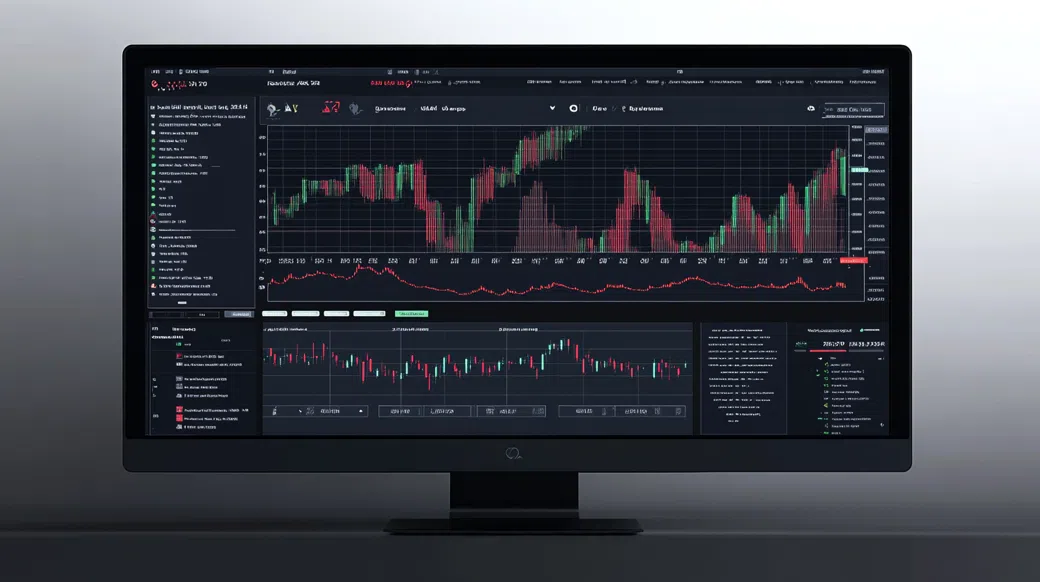
Built as a CFD venue with automation-flavored tooling, Plasman AI targets traders who want multi-asset exposure and higher leverage, accepting the offshore wrapper as the price of admission. In my walkthrough, the Standard and Raw/ECN-style tiers were clearly separated by spread versus spread+commission, which is exactly how active accounts prefer it. The lineup leans practical—majors on FX, big indices, and the usual crypto pairs—rather than trying to be a “everything store.” Execution tools live inside a proprietary WebTrader plus mobile apps, and the main upside is speed-to-market on common instruments. The main drawback is jurisdiction: dispute paths and protections won’t feel like a Tier-1 broker. Here’s the platform I tested: Plasman AI.
Plasman AI looked operational and tradeable in my tests, not a “vanish-with-your-deposit” setup. That said, it sits under an offshore framework, so safety depends more on the broker’s internal controls than on heavy external enforcement.
I approached this Plasman AI review the way I’d screen an EM brokerage: check the paperwork, then stress the plumbing. The account I opened referenced oversight via the Mauritius FSC as its registration touchpoint; in practice, that typically means fewer investor-compensation backstops and a looser ceiling on leverage. On the red-flag side, I watched for loud “award badges,” hard-sell calls, and withdrawal friction—none of those dominated my test window, and I wasn’t pushed into a “manager” upsell. On the safeguards side, KYC was not optional: ID plus proof of address were required before I could complete the withdrawal flow, and the legal pages used segregated client-funds language (still: read the fine print). Remember the product reality: CFDs are leveraged instruments; most retail accounts lose money, and capital is at risk.
This broker onboarded me from a non-US jurisdiction and appears oriented to international clients across parts of LATAM, MENA, and Asia; the USA and sanctioned countries are blocked.
| Region | Status | Leverage Cap |
|---|---|---|
| Latin America (selected countries) | Accepted | Up to 1:500 |
| MENA (selected countries) | Accepted | Up to 1:500 |
| Southeast Asia (selected countries) | Accepted | Up to 1:500 |
| Non-EU Europe (selected countries) | Accepted | Up to 1:200 |
| Sub-Saharan Africa (selected countries) | Accepted | Up to 1:500 |
| USA | Restricted | Not offered |
| Sanctioned jurisdictions | Restricted | Not offered |
Eligibility is enforced with a mix of residency declarations and document checks; I saw the location prompts early in signup and the KYC gate tightened again at withdrawal. Policies move—so treat “accepted” as a current snapshot, not a permanent guarantee.
Instead of chasing thousands of symbols, the platform concentrates on the instruments that actually carry volume: majors on FX, flagship indices, metals, and the headline crypto pairs. For most retail CFD traders, that’s enough to run a defined playbook.
All of this is CFD exposure, not spot ownership: you don’t get shareholder voting rights, you’re not taking delivery of commodities, and crypto positions aren’t on-chain. Dividends, when applicable, are handled as broker adjustments rather than equity entitlements.
Costs on Plasman AI are structured in two lanes: Standard accounts embed fees in the spread, while Raw/ECN-style pricing tightens spreads and adds a per-lot commission. On EUR/USD, the pricing I saw lands around the mid-pack for offshore CFD brokers—acceptable, but not “institutional.”
| Asset | Spread/Fee | Market Average Comparison |
|---|---|---|
| EUR/USD (Standard) | From 1.4 pips | In line with typical offshore CFD pricing |
| EUR/USD (Raw/ECN) | From 0.2 pips + $7/round-turn per lot | Competitive for active traders if volume is consistent |
| Bitcoin (BTC/USD) | From $35 spread | Average; can widen around weekend liquidity |
| Gold (XAU/USD) | From $0.30 | Generally close to market norms for CFD brokers |
| US500 Index | From 0.8 points | Near the segment middle |
Non-spread costs that matter over a quarter: swaps/overnight financing can dominate if you hold FX or metals beyond the session, and crypto often carries weekend financing that sneaks up on leverage users. I also noted an inactivity fee of $10 per month after 90 days without trading, which is small but persistent if you park an account. Withdrawal charges can depend on rail and currency conversion—funding in one currency and withdrawing in another is where hidden FX conversion costs tend to appear.
From the desktop side, the WebTrader behaved like a modern, lightweight dealing terminal: stable sessions, quick symbol search, and enough order functionality to run basic risk controls. I placed a small US500 market order during the New York overlap and the fill landed without a requote; the only nuance was minor slippage when volatility spiked after a US data release—normal for CFDs. If you live inside MT4/MT5 plug-ins and third-party automation, you’ll feel the gap because that ecosystem isn’t something I could confirm natively here.
The Plasman AI app is designed for monitoring and execution, not just viewing: positions, margin, and order tickets are reachable in a couple of taps, and funding/withdrawal menus sit in the same navigation. My Plasman AI login stayed persistent with biometric unlock enabled, which matters when you’re managing leverage on the go. Push alerts for price levels were available, and one-tap close helped when I wanted to flatten exposure fast; the trade-off is chart workspace—fine for entries, less comfortable for deep multi-timeframe work.
Charting covers the basics that move P&L: multiple timeframes, common indicators (MA, RSI, MACD, Bollinger), and drawing tools for structure. There’s an economic calendar and a compact news feed inside the platform, good for staying aligned with event risk. The ceiling is clear, though: compared with MT5/cTrader setups, research and automation options are thinner, so heavy system traders may prefer external tooling.
Onboarding asked for the usual: email, phone, and a short suitability-style questionnaire before the dashboard unlocked. KYC required a government photo ID plus proof of address dated within three months; my verification cleared later the same business day after I uploaded a PDF utility bill. The flow is AML-first, and that’s a positive signal in offshore land—less friendly for impulse signups, better for basic controls.
Funding with USDT credited quickly and the ledger entry was clear about status (pending → completed), which I prefer to vague “processing” lines. For readers searching “Plasman AI trading platform” details: the account base currency choice matters—pick it to match your funding rail and reduce conversion drag. You can also start by mapping the interface directly on Plasman AI before committing more capital.
I tested support with a practical trader question: how swaps are calculated on XAU/USD and whether weekend financing applies to crypto positions. Live chat connected in about three minutes and the agent gave a clear, non-sales explanation plus pointed me to the contract specs page; the answer was “instrument-specific, changes with rates/liquidity.” I also sent an email ticket asking about Plasman AI withdrawal sequencing after KYC, and the reply landed roughly eight hours later with a step-by-step checklist.
Coverage is aligned with CFD dealing hours: expect 24/5 availability on chat and email, with lighter staffing once markets are quiet. Language options depend on region; English worked smoothly for me, while phone support looked limited and not the primary channel. Weekends are mainly for crypto trading, and that’s exactly when response times tend to stretch.
If you’re considering an offshore CFD venue, verify your region, check the live spread behavior during your usual session, and start small. A demo run first can save money by showing how margin, swaps, and volatility filters behave in real time.
Visit Plasman AIIt can be, but only if you treat leverage like a power tool. The WebTrader and mobile UI are easy to navigate, and the demo account helps you learn order tickets without cash risk. Beginners should still keep position sizes small because 1:500 leverage can turn a small mistake into a margin call.
Yes, crypto is available as CFDs (for example BTC/USD and ETH/USD). That means you’re trading price movement with leverage, not transferring coins to a wallet. Expect wider spreads and financing effects—especially around weekends.
No, based on my 2026 hands-on use it behaved like a functioning broker: I could trade, reach support, and complete a withdrawal request. The bigger issue isn’t a “scam” label; it’s that offshore registration offers fewer formal protections than top-tier jurisdictions. Treat risk management and small initial funding as non-negotiable.
No, the USA is restricted. When I tested the signup flow, residency prompts and compliance language made it clear US clients aren’t onboarded. If you’re US-based, you’ll need a CFTC/NFA-regulated alternative.
Most withdrawals are processed internally within 24–48 hours after KYC is cleared. Receipt time then depends on the rail: cards typically take 2–5 business days, bank wires 3–7 business days, and crypto can arrive the same day. My test request followed the stated timeline once documents were approved.
The Plasman AI minimum deposit is $200 for a live account. That level is enough to test spreads and execution, but it’s not a magic number for profitability. Use it to calibrate position sizing and margin behavior before scaling.
Yes, it offers iOS and Android apps. You can place orders, monitor margin, and access deposits and withdrawals from mobile, which is useful for active risk control. If you’re searching “is Plasman AI legit,” mobile availability isn’t proof by itself—but the app did match the core WebTrader functions in my test.
Overall Score: 4.0/5
For traders who care more about tradable coverage and leverage knobs than about a long list of regulatory badges, Plasman AI does the job with fewer surprises than I expected. Pricing is coherent across Standard and Raw/ECN, and the WebTrader + mobile stack is adequate for discretionary trading on FX, indices, and BTC. The core compromise remains jurisdiction—offshore rules mean you must self-police risk, documentation, and withdrawals more diligently. If you proceed, keep sizing conservative: CFDs are leveraged products and losses can exceed expectations. My bottom line is to test small, then decide—start here: Plasman AI.
Best for: active CFD traders outside the USA who want Raw/ECN pricing and mobile execution. Avoid if: you need Tier-1 regulatory protection, deep MT5-style automation, or you’re prone to overleveraging.