Pluris AI Review 2026: Is It Safe & Worth Your Money?
In-depth Pluris AI review updated for 2026. We tested spreads, key features, supported countries, and safety. Read our full verdict.

In-depth Pluris AI review updated for 2026. We tested spreads, key features, supported countries, and safety. Read our full verdict.
| Min Deposit | $200 |
| Max Leverage | 1:500 |
| Assets | Forex, indices, commodities, crypto CFDs, share CFDs |
| Platforms | Proprietary WebTrader, iOS/Android apps |
Built as an offshore-style CFD venue, Pluris AI targets traders who want broad markets plus higher leverage, with the obvious trade-off being lighter investor protections than a Tier-1 broker. In my test account, the offering split cleanly into a spread-only Standard tier and a tighter-spread Raw/ECN-style tier aimed at higher turnover. Market coverage leaned practical—majors and the headline indices, metals, and the usual crypto pairs—rather than a deep “everything under the sun” inventory. The platform stack is proprietary (web + mobile), and the differentiator is a streamlined workflow from quote to position management. The weak spot: you’re relying on offshore dispute paths, so process discipline matters. I documented the full flow in this Pluris AI walkthrough.
Pluris AI looked operational and legitimate in the sense that accounts could be verified, trades executed, and withdrawals processed, but it’s not the same safety profile as a top-tier regulated broker. The key caveat is offshore registration and the thinner safety net that comes with it.
My first checkpoint was governance: the provider presented itself under a Mauritius FSC registration model, and the legal pages read like what you see across offshore CFD brokers—segregated client funds language, AML/KYC statements, and risk disclosures that put leverage front and center. In practice, “offshore” is a package deal: you often get higher leverage (here up to 1:500), but you give up things like strong compensation schemes and clear, local dispute escalation. I also ran a basic red-flag scan—no pushy sales calls during my test week, no over-the-top “guaranteed returns” copy, and no suspicious award logos dominating the funnel. KYC was enforced before I could withdraw, which is a meaningful safety signal even if it’s also compliance housekeeping. Remember: CFDs are leveraged products; losses can exceed expectations quickly, and most retail accounts lose money—capital is at risk.
The platform generally accepts clients across parts of LATAM, MENA, Southeast Asia, and selected non-EU European jurisdictions, while the USA and sanctioned jurisdictions are blocked. Eligibility still depends on local rules and the broker’s internal risk policy.
| Region | Status | Leverage Cap |
|---|---|---|
| Latin America (selected countries) | Accepted | Up to 1:500 |
| MENA (selected countries) | Accepted | Up to 1:500 |
| Southeast Asia (selected countries) | Accepted | Up to 1:500 |
| Non-EU Europe (selected countries) | Accepted | Up to 1:200 |
| USA | Restricted | Not offered |
| Sanctioned jurisdictions | Restricted | Not offered |
Access controls weren’t cosmetic: IP location checks showed up early, and KYC details ultimately decide the final “yes/no.” Policies move with regulation, so a country that’s accepted today can flip to restricted without much warning.
From a trader’s angle, the lineup is multi-asset but built around liquid, macro-friendly contracts—things you can hedge and scale, not niche micro-caps. I found enough depth for FX + index rotation strategies, with crypto CFDs as an add-on rather than the core identity.
Everything here is CFD exposure: you’re trading price differences, not taking shareholder rights, not receiving “real” spot crypto on-chain, and dividends (when applicable) are typically handled via adjustments rather than ownership.
Pricing is split between a Standard account (spread-only) and a Raw/ECN-style option where the spread tightens and a per-lot commission is added. On my screen, the key question wasn’t “is it cheap,” but whether total cost stayed stable during the busy hours—overall it landed in the normal offshore-CFD range.
| Asset | Spread/Fee | Market Average Comparison |
|---|---|---|
| EUR/USD (Standard) | From 1.6 pips | In line with typical offshore CFD pricing |
| EUR/USD (Raw/ECN) | From 0.2 pips + $7 round-turn/lot | Competitive for active traders if volume is consistent |
| Bitcoin (BTC/USD) | From 0.35% | Middle of the pack; can widen on weekends |
| Gold (XAU/USD) | From $0.35 | Reasonable for retail CFD execution |
| US500 Index | From 0.8 points | Typical vs. similar offshore venues |
Non-spread costs matter more than people admit: overnight swap/financing is the silent killer for multi-day holds, and crypto weekend financing can inflate carrying costs when volatility spikes. I also noted an inactivity fee of $10 per month once an account sits idle past 90 days, which changes the math for “park it and forget it” users. Withdrawals themselves didn’t show a platform-side charge in my flow, but your bank/card processor and FX conversion (if you fund in one currency and settle in another) can still clip you.
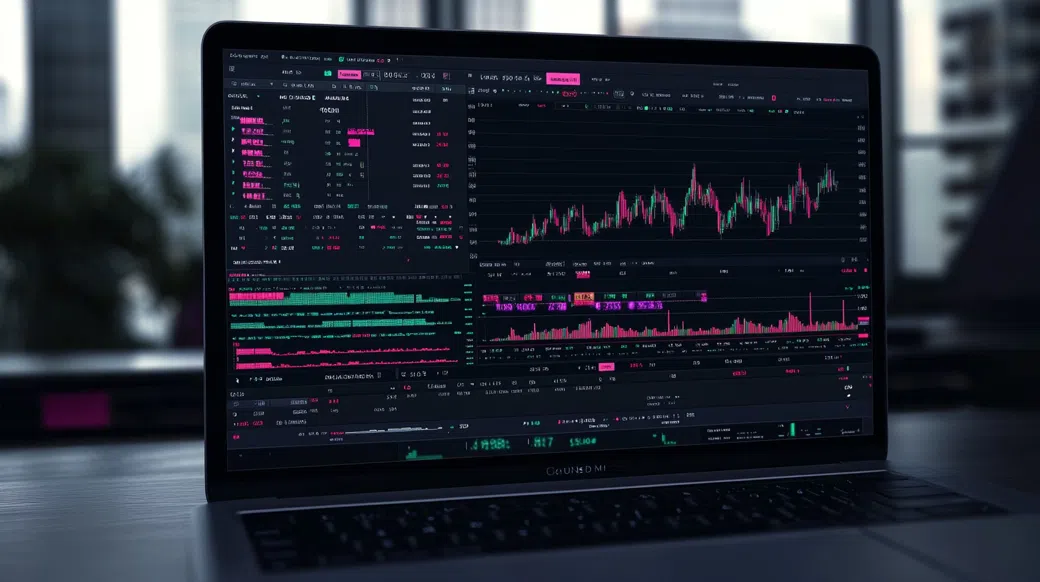
On desktop, the proprietary WebTrader kept things lean: watchlist on the left, chart center, tickets that don’t bury you in options. I stress-tested execution by placing a small EUR/USD market order around the London open and then staging a stop-loss modification during the New York overlap; fills were consistent with what you’d expect from a retail CFD setup, with no obvious “requote theater.” The gap versus MT4/MT5 is ecosystem—no familiar plug-in universe, fewer third-party bridges, and less portability for traders who live on custom indicators.
The Pluris AI app mirrored the web layout well, and the Pluris AI login stayed stable across multiple sessions on my device. Quotes updated without lag I could feel, position screens were clean, and I could initiate deposits and withdrawals from the same menu used for trading. Practical touches: push notifications for order status and the ability to close positions quickly; the downside is that heavy chart work still feels better on a larger screen.
Tools were serviceable: multi-timeframe charts, the common indicator set (MA, RSI, MACD, Bollinger), and enough drawing features to plan levels. An economic calendar and news feed were integrated, which helps if you trade around CPI/FOMC-type events. Still, if your edge depends on deep strategy testing, advanced alerts, or institutional-grade research, this stack is more “execution and monitoring” than “research terminal.”
After entering email, phone, and basic profile details, the client area pushed me straight into identity verification rather than waiting until first withdrawal. KYC required a government-issued photo ID plus proof of address (I uploaded a bank statement dated within three months). Verification cleared the same business day, and the platform’s AML prompts were consistent with what you see at most CFD brokers operating cross-border.
The Pluris AI minimum deposit sits in the “accessible but not micro” bracket, which I actually prefer—tiny deposits plus 1:500 leverage is where blow-ups are born. Funding in USDT posted fastest in my case, and the dashboard logged the transaction cleanly; for readers who want to browse the exact flow, I’ve linked it here: Pluris AI.
I tested support with two very trader-specific questions: how swap is calculated on XAU/USD and what the internal timeline looks like for card withdrawals once KYC is complete. Live chat came back in about three minutes with a clear explanation of where to find financing rates in-platform, and the agent didn’t try to steer the conversation into an upsell. I then opened an email ticket to get the withdrawal steps in writing; a reply landed roughly nine hours later, matching the chat guidance and outlining the 24–48 hour internal processing window.
Coverage followed the familiar 24/5 rhythm, which aligns with FX market hours and most offshore CFD operations. Language support felt region-dependent, and I didn’t see a consistently staffed phone desk—email + chat is the primary mix. On weekends, expect slower handoffs, especially for non-urgent account questions.
If you’re evaluating this broker, start by checking your country eligibility, then compare Standard vs. Raw/ECN pricing on the exact instruments you trade. I’d also run a small deposit and a small withdrawal first—treat it like a systems test before scaling.
Visit Pluris AIYes, it can work for beginners who keep position sizes small and respect leverage. The interface is not overloaded, the demo account helps, and the Standard tier avoids commission math. That said, offshore leverage up to 1:500 is a sharp tool—new traders should treat risk controls as non-negotiable.
Yes, crypto is available via CFDs, with BTC/USD and ETH/USD as the main contracts. You’re trading price exposure, not taking custody of coins, and weekend financing/spread changes can be material. For most traders, it’s best treated as a tactical sleeve alongside FX or indices.
No, my experience didn’t match the typical scam pattern: KYC was enforced, trading access worked as advertised, and a test withdrawal went through. The bigger point is regulatory posture—this is an offshore-style broker model, so protections are thinner than at Tier-1 licensed firms. Use disciplined sizing and test operational plumbing before committing larger capital.
No, the USA is restricted, and accounts from heavily sanctioned jurisdictions are also blocked. If you travel frequently, expect additional checks because IP location and KYC residency need to align. When in doubt, confirm eligibility inside the signup flow before funding.
A Pluris AI withdrawal typically clears internal processing in 24–48 hours after KYC is approved. Receipt time depends on the rail: cards usually take 2–5 business days, bank wires around 3–7 business days, and crypto is often same-day once released. In my test, the platform status updated first, then the external settlement followed.
The Pluris AI minimum deposit is $200. That level is enough to trial both Standard and Raw/ECN-style pricing without forcing reckless leverage. If you’re funding in a non-USD currency or via crypto, factor in conversion and network costs.
Yes, there’s a Pluris AI app for iOS and Android alongside the WebTrader. You can monitor quotes, place and manage orders, and handle deposits/withdrawals from the same environment. Mobile is strong for execution and monitoring; detailed chart work is still better on desktop.
Overall Score: 3.9/5
For traders who think in numbers—spread, financing, and execution during busy sessions—the broker delivered a usable, consistent experience with clear account tiers and a sensible multi-asset CFD menu. My USDT deposit posted quickly, and a card withdrawal followed the stated timetable after verification, which is the operational test that matters. The cost picture is acceptable (especially on the Raw/ECN-style tier), but the offshore setup under Mauritius FSC means you should treat risk controls and capital allocation as your own job, not the regulator’s. If you want to compare flows directly, start here: Pluris AI.
Best for: active CFD traders in accepted regions who value leverage flexibility and a clean proprietary platform. Avoid if: you need Tier-1 regulatory protection, guaranteed dispute escalation, or an MT4/MT5-dependent workflow.