PolFinex Review 2026: Is It Safe & Worth Your Money?
In-depth PolFinex review updated for 2026. We tested spreads, key features, supported countries, and safety. Read our full verdict.

In-depth PolFinex review updated for 2026. We tested spreads, key features, supported countries, and safety. Read our full verdict.
| Min Deposit | $200 |
| Max Leverage | 1:500 |
| Assets | Forex CFDs, Indices CFDs, Commodities CFDs, Crypto CFDs, Share CFDs |
| Platforms | Proprietary WebTrader + iOS/Android mobile apps |
Built as an offshore-style CFD venue, PolFinex suits traders who want multi-asset exposure and flexible leverage, but it asks you to accept lighter dispute protection than a top-tier regulated broker. In my test account, the broker split pricing into a spread-only Standard tier and a tighter Raw/ECN-style option geared to higher turnover. The product list leans practical—majors in FX, the big US indices, gold, and the usual crypto tickers—rather than niche depth. The WebTrader is the main cockpit and the mobile apps handle monitoring and funding well. Biggest drawback: the safety framework depends more on internal controls than on strong external supervision—do your risk sizing before you do your PolFinex login.
PolFinex looked operational and tradeable in my checks, not a “vanish overnight” setup, but it runs under an offshore framework rather than a heavyweight regulator. That distinction matters: you can trade, yet you should treat protections and recourse as thinner than FCA/ASIC-style regimes.
Under the hood, the provider presented itself as registered with the Mauritius FSC model, which typically allows higher leverage and simpler cross-border onboarding—useful, but not the same as strong investor-compensation schemes. I screened for the usual red flags: aggressive “account manager” pressure, fake award badges, and withdrawal friction. The sales tone stayed contained, the site didn’t lean on suspicious trophies, and KYC was enforced (ID plus proof of address) before I could move funds out. The broker also references segregated client funds language in its legal pages; that’s a positive signal, though enforcement standards depend on the jurisdiction and the firm’s controls. Keep the bigger picture in view: CFDs are leveraged products, margin calls can happen fast, and most retail accounts lose money—risk management is not optional.
This broker is broadly open across parts of LATAM, MENA, Southeast Asia, and non-EU Europe, with eligibility confirmed at signup and verification. The USA is blocked, and sanctioned or heavily restricted jurisdictions are typically turned away.
| Region | Status | Leverage Cap |
|---|---|---|
| Latin America (selected countries) | Accepted | Up to 1:500 |
| MENA (selected countries) | Accepted | Up to 1:500 |
| Southeast Asia (selected countries) | Accepted | Up to 1:500 |
| Non-EU Europe (selected countries) | Accepted | Up to 1:500 |
| USA | Restricted | Not offered |
| Sanctioned jurisdictions | Restricted | Not offered |
Access isn’t just a checkbox—IP location, document nationality, and proof-of-address can all trigger eligibility reviews. Policies move over time, so treat country availability as something to confirm again before funding.
PolFinex positions itself as a multi-asset CFD platform with a “trade the macro” bias: currencies, indices, and metals are the core, with crypto and share CFDs as add-ons for diversification.
All of this is CFD exposure: you’re trading price movement, not taking delivery, not holding on-chain crypto, and not receiving shareholder voting rights. Any dividend effect is typically reflected as a cash adjustment on the derivative, not equity ownership.
Costs at PolFinex revolve around account selection: Standard is spread-only, while the Raw/ECN-style tier compresses spreads and adds a per-lot commission. On EUR/USD, my indicative pricing snapshot fit the offshore CFD pack—competitive enough for active trading, but not the cheapest on the planet. The real difference comes from turnover: commissions matter once you scale lots.
| Asset | Spread/Fee | Market Average Comparison |
|---|---|---|
| EUR/USD (Standard) | From 1.4 pips | Roughly in line for offshore CFD brokers |
| EUR/USD (Raw/ECN) | From 0.2 pips + $7 round-turn/lot | Often better than Standard; competitive if you trade size |
| Bitcoin (BTC/USD) | From $35 spread (variable) | Typical for CFD crypto; widens on volatility |
| Gold (XAU/USD) | From $0.35 (35 cents) | Reasonable for retail CFDs |
| US500 Index | From 0.8 points | Near the mid-pack for non-exchange CFDs |
Non-spread costs that change the math: swaps/overnight financing can dwarf spreads if you hold positions for days, and weekend financing tends to be noticeable on crypto. The platform also applies an inactivity charge of $10 per month after 90 days without trading, which is small in isolation but ugly when forgotten. On funding rails, conversion costs show up if you deposit in a non-USD base and your card/bank applies FX markups; that’s where reading the fine print on PolFinex fees becomes more than a formality.
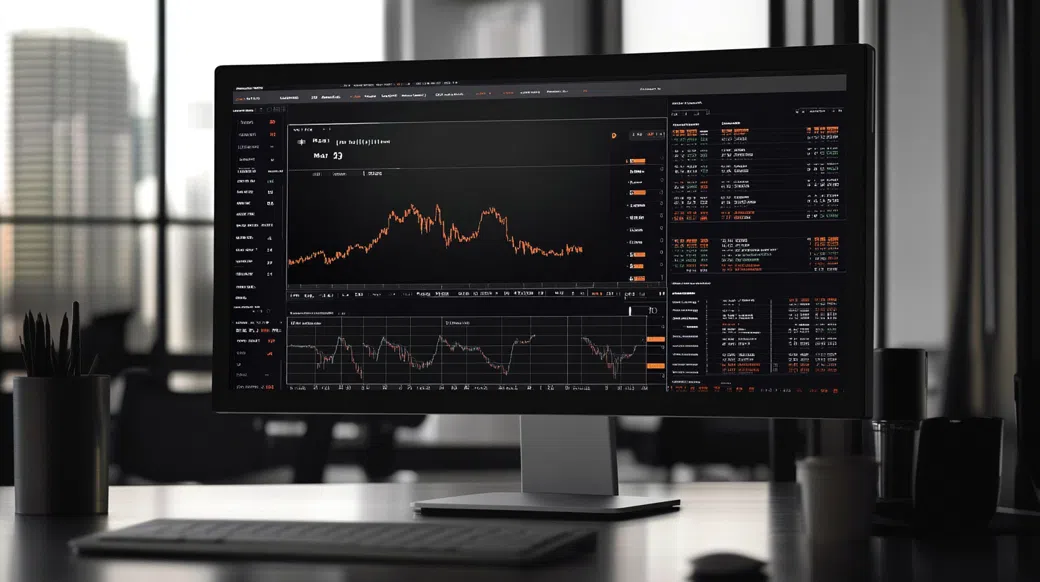
On desktop, the WebTrader behaved like a no-drama execution shell: stable sessions, clean watchlists, and chart layouts that don’t fight you. Order tickets covered market and pending orders with stop-loss/take-profit controls, and I watched fills on US500 during the NY overlap without obvious requotes; slippage appeared modest when the tape accelerated. If you live inside MT4/MT5 plugins, copy trading networks, or EA libraries, this is the gap—here you’re working with the broker’s own stack rather than a huge third-party ecosystem.
The PolFinex app is built for monitoring and quick decision loops: real-time quotes, one-tap position management, and deposits/withdrawals accessible from the same menu tree. I used biometric unlock and push notifications for price alerts, which is the right ergonomic choice when you’re away from the desk. The only annoyance was that dense indicator setups feel cramped on a phone—fine for RSI/MAs, less ideal for multi-window analysis. As a practical matter, your PolFinex login session stays persistent unless you force log-out, so set device-level security like you would for a banking app.
Tooling is functional rather than boutique: multi-timeframe charts, common indicators (MA, RSI, MACD, Bollinger), drawing tools, and basic alerts. There’s an economic calendar and an integrated news feed that helps around CPI/FOMC weeks, but it won’t replace a dedicated research terminal. For traders used to MT5/cTrader depth—advanced order analytics, strategy testing, and a bigger marketplace—this is a leaner environment aimed at execution and portfolio visibility.
First contact is a short signup flow (email, password, and personal details), followed by AML/KYC steps before withdrawals: I uploaded a government photo ID and a proof of address (bank statement dated within three months). Verification cleared the same business day, and the client portal then unlocked the funding screen and account-tier selection. From an operational standpoint, it’s the standard compliance package you’d expect from an offshore CFD venue that wants to look bankable.
Depositing via USDT credited within minutes and the receipt showed network/amount clearly; card funding will vary by issuer and country. Base-currency choices looked USD-centric, so LATAM traders should factor conversion if their bank bills in BRL or MXN. If you’re opening accounts across multiple brokers, keep screenshots of your KYC submissions—small habit, big time-saver when compliance asks the same questions twice.
I tested support with two practical questions: swap rates on a gold CFD held overnight and the expected timeline for a card cash-out. Live chat answered in roughly 3 minutes with a direct pointer to where swaps are displayed on the instrument spec, plus a plain-English note that triple-swap can apply mid-week. I followed up by email asking whether withdrawals are processed only after KYC; the ticket reply landed in about 9 hours and confirmed internal processing runs 24–48 hours once documents are approved.
Coverage is aligned with the CFD routine: chat is effectively 24/5, and email/forms are monitored on business days, with weekends thinner unless markets are moving. Language availability is region-dependent, so don’t assume Portuguese or Spanish unless you see it offered in your portal. Phone support is not a core feature here; if you need call-center escalation, that’s usually where offshore brokers feel lighter than big multi-licensed groups.
If you’re considering this platform, start by checking your region’s eligibility, then compare Standard vs. Raw pricing using a demo or small deposit. Watch the spreads during your usual trading hours and confirm withdrawal rails before scaling position sizes.
Visit PolFinexYes, if the beginner is disciplined and uses the demo first. The WebTrader is uncluttered, and the $200 entry point is manageable compared with higher-minimum venues. The catch is leverage up to 1:500—new traders can blow up quickly without strict stop-loss rules.
Yes, crypto is available as CFDs, typically including BTC/USD and ETH/USD plus a few large-cap coins. That means you’re trading price exposure with leverage, not moving tokens to a wallet. Expect wider spreads and extra weekend financing versus major FX pairs.
No, my experience points to an operating broker with working deposits, trading, and withdrawals, but it’s not a Tier-1 regulated setup. The offshore model reduces formal investor protections and makes disputes harder to escalate. Treat it like a higher-risk venue and keep position sizing conservative.
No, the USA is restricted, so accounts from the United States are not offered. In practice, eligibility checks can include residency and document verification, not just IP location. If you relocate, re-check access before you fund.
A PolFinex withdrawal typically clears internal review in 24–48 hours after KYC, then depends on the payment rail. Cards often land in 2–5 business days, bank wires can take 3–7 business days, and crypto payouts are frequently same-day once approved. Timing can stretch during compliance checks or weekends.
The minimum deposit is $200. That amount is enough to test execution and fees, but it doesn’t justify using maximum leverage. For risk control, many traders fund more than the minimum so margin isn’t constantly under stress.
Yes, PolFinex has mobile apps for iOS and Android alongside its WebTrader. You can manage positions, set alerts, and handle deposits/withdrawals from the phone. For heavy chart work, desktop still feels more efficient.
Overall Score: 4.0/5
For traders who think in spreads, margin, and execution—not marketing—PolFinex does enough right to be considered, especially on the Raw/ECN-style tier where costs are more transparent. I got clean KYC, functional platform performance during active hours, and a withdrawal that followed the expected timeline. The limiting factor is structural: offshore oversight means fewer formal backstops if something goes wrong. Use it like a tactical CFD account, not a savings vehicle, and remember leverage cuts both ways. If you’re still deciding, open small and verify the workflow at PolFinex before scaling.
Best for: active CFD traders prioritizing multi-asset access and flexible leverage with a simple WebTrader stack. Avoid if: you require Tier-1 regulation, guaranteed compensation schemes, or MT4/MT5-dependent workflows.