PolFinex Trading Platform Alternatives 2026
Compare PolFinex alternatives for 2026: regulated brokers, real costs (spreads/commissions), platform choices, and safety checks for US/EU-focused traders.

Compare PolFinex alternatives for 2026: regulated brokers, real costs (spreads/commissions), platform choices, and safety checks for US/EU-focused traders.
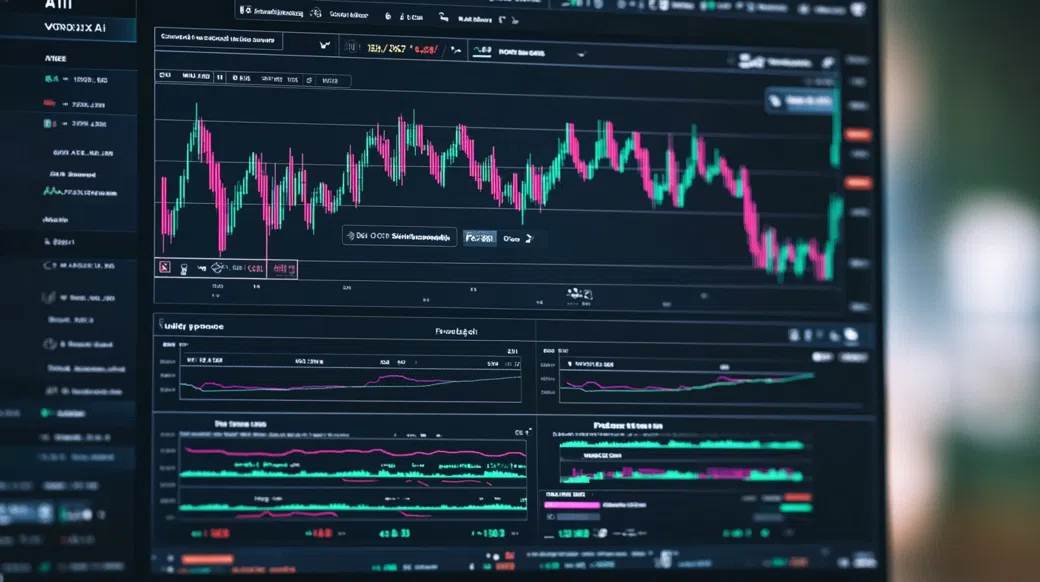
A clean spread sheet beats a good story. And when you line up trading conditions side by side, offshore CFD brokers tend to look similar: high leverage headlines, a proprietary WebTrader, and marketing that talks faster than the fine print. That’s broadly the bucket where PolFinex appears to sit for many global users—forex and CFDs as the center of gravity, crypto CFDs commonly in the mix, and account terms that can include leverage up to 1:500 and a minimum deposit around $250. Typical pricing in that segment is also familiar: think EUR/USD around 2.0 pips on a “Standard” style account, with a “Raw” tier often advertised as near-zero spreads plus a commission.
So why does the search for PolFinex alternatives spike going into 2026? Two reasons show up in the numbers: (1) the all-in trading cost (spread + commission + swap) compounds brutally over a month of active trading, and (2) counterparty risk matters more when the broker is offshore/unregulated—here, that means operating under a framework like the Seychelles FSA rather than a top-tier regime such as FCA, ASIC, CySEC, or NFA. For US/EU-focused traders, those differences aren’t academic. They shape what happens when markets gap, when slippage hits, or when you need a clean withdrawal trail for compliance and taxes.
Disclaimer: This article is for informational purposes only and does not constitute investment advice. CFDs and other leveraged products carry a high risk of loss and can move against you quickly.
In practice, PolFinex reads like a CFD-first broker aimed at retail traders who want quick access to forex pairs, index CFDs, commodities, and a short list of crypto CFDs. The operating setup is typical of offshore providers: accounts are usually opened with online KYC, trading is margin-based, and the product menu leans toward derivatives rather than “owning” assets. Public-facing details in this segment often point to an offshore registration—here, consistent with a Seychelles FSA framework—rather than the heavyweight investor-protection regimes common in the UK/EU/Australia or the US.
The platform stack is usually a proprietary WebTrader with a companion iOS/Android app. Expect functional charting (multiple timeframes, a standard indicator library, basic drawing tools) and the usual order tickets for market/limit/stop. What you may not get is institutional-grade workflow: advanced order routing, granular execution reports, and the kind of platform ecosystem where EAs, APIs, and third-party analytics are first-class citizens. Mobile parity tends to be “good enough” for monitoring and managing risk, but serious strategy testing and execution quality checks still happen on desktop.
Cost-wise, offshore CFD venues often package pricing into a wider spread on Standard accounts—EUR/USD commonly around 2.0 pips—while dangling a Raw/ECN-style tier with ~0.0–0.4 pips plus roughly $5–$8 round-turn commission. Add swap/overnight financing if you hold trades, and you’re back to the reality that fees are a multi-line item. This is where competitors to PolFinex can differentiate: transparent commission schedules, clearer swap tables, and fewer “administrative” surprises around inactivity or withdrawals.
Cost and control usually break the relationship first. If your monthly volume is meaningful, a 1.0–1.5 pip difference on EUR/USD is not a rounding error—it’s a recurring expense. Then comes the operational layer: execution model, slippage behavior in fast markets, and whether the broker’s risk controls align with yours. That’s the real trigger behind many searches for PolFinex alternatives, not boredom with the interface.
Think of broker selection like building a risk budget. Your strategy has an expected edge; every extra pip of spread, every slip on execution, and every operational delay eats it. “Regulated” isn’t a slogan either—it’s a set of rules that governs custody, disclosures, and complaint channels. The goal with alternatives to the PolFinex trading platform is matching your product needs and execution requirements to a jurisdiction you can actually enforce.
Start with the regulator’s public register, not screenshots. FCA (UK), ASIC (Australia), CySEC (Cyprus/EU), and NFA/CFTC (US) each impose different standards, but they converge on core items: segregated client funds, capital requirements, and conduct rules. Investor compensation can matter in edge cases—FSCS in the UK can cover up to £85,000 for eligible claims, and Cyprus’ ICF can cover up to €20,000—though it’s not a substitute for prudent sizing and risk limits.
Write down what you truly trade. If you’re FX-only, a tight-cost FX/CFD specialist may be optimal. If you need equities, ETFs, options, and futures in the same account, you’re in multi-asset territory and you’ll care about market access and product structure (real shares vs CFDs). Many platforms like PolFinex focus on leveraged CFDs; that’s workable for short-horizon trading, but it’s a different tool than holding an ETF in a custody account.
Ignore “from 0.0” marketing and calculate round-turn cost. For a typical FX trade, compare spread plus commission, then add swap/overnight fees if you hold. Inactive-account and withdrawal fees are also real—especially if you rotate capital across venues. If you’re moving from PolFinex to a regulated broker, the pricing may look similar at first glance, but the transparency and stability of the fee schedule often improve.
Platform choice is not cosmetic; it’s infrastructure. MT4/MT5 and cTrader support a mature ecosystem for algo trading, custom indicators, and execution tooling, while proprietary WebTraders vary widely in depth. Execution model matters too: market maker flow can be fine for many retail traders, but STP/ECN/DMA routing tends to provide clearer expectations for fills, especially when liquidity thins. Track slippage and rejected orders; that’s your audit trail.
Operational friction costs money. Look for support hours that match your market window, multilingual coverage if you trade cross-border, and response times you can test with a simple pre-sales question. Education is a secondary factor for pros, but platform documentation, margin policy clarity, and a stable mobile app can reduce mistakes. Also check negative balance protection terms if you’re in jurisdictions where it’s required or commonly offered.
Forex and index CFDs are where offshore brokers try to compete: high leverage (often up to 1:500) and a simple WebTrader. The trade-off is measurable. A typical EUR/USD spread around 2.0 pips on a Standard setup can be expensive for active traders, and execution transparency is often thinner than at top-tier venues. If you’re cost-sensitive, Pepperstone and IC Markets are common regulated routes: both are known for offering Raw-style pricing structures (tight spreads plus commission) and platform stacks built around MT4/MT5 and cTrader. For traders who care about auditability—fills, timestamps, and consistent margin policy—those details matter more than an extra 200 points of leverage. Remember: leverage magnifies errors and gaps as efficiently as it magnifies winners.
This is where many brokers similar to PolFinex show a structural gap. Stock exposure is frequently delivered as CFDs, which means financing costs, no shareholder rights, and different tax treatment than owning the underlying security. If your plan includes building a long-term ETF core (US or UCITS), you want a broker with real equity access and robust custody. Interactive Brokers (IBKR) is the obvious reference for breadth—stocks, ETFs, options, futures, bonds, and FX—while Saxo Bank is a strong alternative for multi-asset access with a polished platform suite. The difference isn’t a feature list; it’s product architecture. A CFD is a trading instrument. A real share is an asset holding.
Crypto on offshore CFD platforms is usually “price exposure,” not coin ownership. You’re trading a derivative tied to BTC/ETH and a handful of other coins—often 10–30 instruments—using margin. That can be useful for tactical hedges, but it’s not on-chain custody, and it won’t let you transfer coins to a wallet. For traders who want regulated options vs PolFinex in the crypto-CFD lane, IG and Plus500 are better-known names in several regions for crypto-related CFDs (availability depends on your country and regulatory limits). If you’re using crypto CFDs, treat overnight financing, weekend gaps, and liquidity events as first-order risks; spreads can widen fast when the tape gets thin.
Regulation: SEC/FINRA (US), FCA (UK), IIROC (Canada) via group entities
Markets: Stocks, ETFs, options, futures, bonds, FX, funds (region-dependent)
Fees: FX pricing is typically commission-based with tight spreads; equities pricing varies by venue and plan
Platform: Trader Workstation (TWS), IBKR Desktop, web portal, mobile app, APIs
Best For: Multi-asset investors who want real market access
Regulation: FCA (UK), ASIC (Australia), CySEC (Cyprus), DFSA (Dubai)
Markets: FX and CFDs (indices, commodities, some shares as CFDs; crypto CFDs depend on region)
Fees: Standard spreads often around ~1.0+ pip on EUR/USD; Raw accounts commonly ~0.0–0.3 pips + commission (about $7 round-turn range)
Platform: MT4, MT5, cTrader, TradingView integration (region/product dependent)
Best For: Algorithmic FX traders on MT4/MT5 or cTrader
Regulation: FCA (UK), MAS (Singapore), DFSA (Dubai) via group entities
Markets: Stocks, ETFs, options, futures, bonds, FX, CFDs (product access varies by region)
Fees: FX spreads typically competitive by tier; multi-asset commissions apply for exchange-traded products
Platform: SaxoTraderGO, SaxoTraderPRO
Best For: Portfolio-style traders mixing FX with listed markets
Regulation: FCA (UK), ASIC (Australia), MAS (Singapore)
Markets: CFDs across FX, indices, commodities, shares (often as CFDs); spread betting in the UK/IE
Fees: Typically spread-based pricing; EUR/USD spreads often around ~0.6–1.0 pip depending on account/region and market conditions
Platform: IG web platform, mobile app; MT4 offered in some regions
Best For: Active CFD traders who value strong oversight
Regulation: ASIC (Australia), CySEC (Cyprus), FSA Seychelles (group-level entity)
Markets: FX and CFDs (indices, commodities, some shares as CFDs; crypto CFDs depend on region)
Fees: Raw-style accounts often ~0.0–0.3 pips on EUR/USD + commission (roughly $6–$7 round-turn range); Standard accounts wider
Platform: MT4, MT5, cTrader
Best For: High-frequency scalpers focused on tight all-in costs
Regulation: FCA (UK), CySEC (Cyprus), ASIC (Australia), MAS (Singapore)
Markets: CFDs across FX, indices, commodities, shares (as CFDs), crypto CFDs (where permitted)
Fees: Spread-based; costs vary by instrument and volatility, with overnight funding for held positions
Platform: Plus500 proprietary web platform and mobile app
Best For: Beginners who want a simple CFD interface
| Platform | Regulation | Main Markets | Typical Costs | Best For |
|---|---|---|---|---|
| Interactive Brokers (IBKR) | SEC/FINRA, FCA, IIROC (group) | Real stocks/ETFs, options, futures, bonds, FX | Commission-led pricing; generally tight FX; exchange fees/commissions on listed products | Multi-asset investors who want real market access |
| Pepperstone | FCA, ASIC, CySEC, DFSA | FX + CFDs (indices/commodities; some share CFDs) | Std ~1.0+ pip; Raw ~0.0–0.3 pip + ~$7 RT commission | Algorithmic FX traders on MT4/MT5 or cTrader |
| Saxo Bank | FCA, MAS, DFSA (group) | Stocks/ETFs, options, futures, bonds, FX, CFDs | Tiered spreads/commissions; strong transparency for listed markets | Portfolio-style traders mixing FX with listed markets |
| IG | FCA, ASIC, MAS | CFDs (broad); spread betting (UK/IE) | Mainly spread-based; EUR/USD often ~0.6–1.0 pip (conditions vary) | Active CFD traders who value strong oversight |
| IC Markets | ASIC, CySEC, FSA Seychelles (group) | FX + CFDs (indices/commodities; some share CFDs) | Raw ~0.0–0.3 pip + ~$6–$7 RT commission; Std wider | High-frequency scalpers focused on tight all-in costs |
| Plus500 | FCA, CySEC, ASIC, MAS | CFDs (FX/indices/commodities/share CFDs/crypto CFDs where allowed) | Spread + overnight funding; instrument-dependent | Beginners who want a simple CFD interface |
Switching brokers is operational risk, not just “opening another app.” Sequence matters: first secure a regulated destination, then unwind exposure, then move cash with clean documentation. If you trade leveraged CFDs, keep margin buffers conservative during the transition—gaps and forced liquidations tend to happen precisely when accounts are in flux. If you’re coming from PolFinex, assume you’ll need to rebuild positions rather than transfer them.
If you’re still evaluating the current setup, check regional eligibility, funding methods, and the platform stack against your strategy requirements. Then compare those terms to the regulated substitutes above using the same metrics: round-turn costs, execution model, and withdrawal clarity.
Visit PolFinexThe best choice depends on whether you need real multi-asset access or mainly FX/CFDs. For real stocks/ETFs plus derivatives, Interactive Brokers (IBKR) is hard to beat on breadth; for FX-first trading with MT4/MT5/cTrader, Pepperstone or IC Markets are common picks. If you want a simpler CFD-only interface under strong regulation in multiple regions, IG or Plus500 can be a better fit. In other words: the “best PolFinex alternatives 2026” list is strategy-dependent, not brand-dependent.
PolFinex appears to operate under an offshore framework consistent with the Seychelles FSA segment rather than a top-tier regulator like FCA, ASIC, CySEC, or NFA. That doesn’t automatically mean fraud, but it typically means weaker investor-protection scaffolding and fewer formal avenues if something goes wrong. If safety is your priority, prefer brokers that disclose segregated client funds practices, publish clear execution/complaints processes, and are verifiable on regulator registers.
With PolFinex, the typical expectation is forex and CFDs first, with crypto commonly offered as crypto CFDs rather than coin ownership. Stocks and ETFs, when present in this broker category, are frequently structured as CFDs—not real share dealing—while exchange-traded futures access is less common than at multi-asset brokers. If you need listed futures or real stock/ETF custody, Interactive Brokers or Saxo are more direct solutions.
Before switching, verify the exact legal entity on a regulator’s register, then compare the new broker’s round-turn costs (spread + commission) and swap tables to your holding period. Next, confirm funding/withdrawal rails and name matching—AML policies often require you to withdraw back to the original deposit method. Finally, test execution with small size and watch slippage and margin-call behavior before redeploying full capital.
About the Author: Carlos Mendes is a former equity desk analyst from São Paulo who covers emerging market brokerages and Latin American fintech with a trader’s bias for measurable edges. He focuses on the mechanics—costs, execution, and regulatory structure—because those variables decide outcomes long before the narrative does.