Prodévalune Trading Platform Alternatives 2026
Compare Prodévalune alternatives for 2026 with a US/EU lens: regulation, costs, platforms, execution, and safer broker picks for FX, CFDs, stocks, and crypto.

Compare Prodévalune alternatives for 2026 with a US/EU lens: regulation, costs, platforms, execution, and safer broker picks for FX, CFDs, stocks, and crypto.
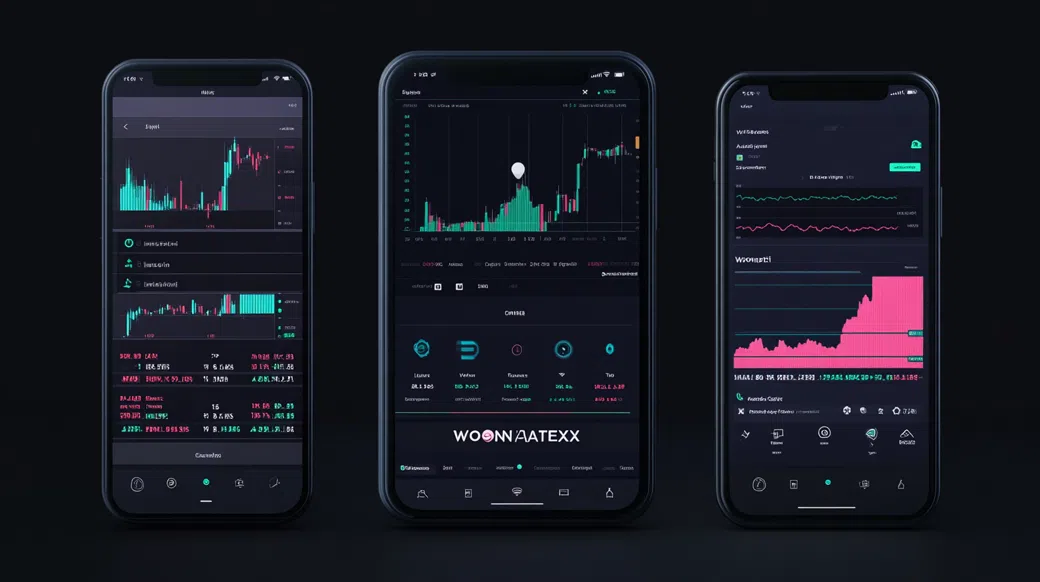
Leverage is a loud marketing tool: a 1:500 headline looks powerful, right up until a fast market turns a small mistake into a margin call. That’s usually the moment people start searching for Prodévalune alternatives. Prodévalune, as it’s typically presented in the offshore CFD space, looks built around a proprietary WebTrader plus mobile apps, with a menu focused on FX and CFDs (often including crypto CFDs). The trade-off tends to be predictable: simpler tooling than institutional-grade platforms, fewer transparency anchors, and weaker investor-protection backstops than what US/EU traders are used to.
Based on what is commonly observed for offshore brokers operating under a Seychelles FSA framework, you can expect an account entry point around a $250 minimum deposit, headline leverage up to roughly 1:500, and a “standard” EUR/USD spread that often prints near 2.0 pips in normal liquidity. None of that automatically means “bad,” but it does shift risk onto the client: execution quality, slippage behavior, and withdrawal friction matter more when the regulatory perimeter is thin. If you want tighter all-in costs, verified segregation rules, or access to real stocks/ETFs (not just stock CFDs), the shortlist narrows quickly.
This guide is written for traders with a US/EU compliance mindset who still want global access. It breaks down what to look for, where the numbers usually land, and which regulated brokers are credible substitutes for Prodévalune in 2026.
Disclaimer: This article is for informational purposes only and does not constitute investment advice. CFDs and other leveraged products carry a high risk of loss and may not be suitable for all investors.
From a product design perspective, Prodévalune reads like a CFD-first brokerage aimed at retail flow: a compact instrument list (FX pairs, major indices, a handful of commodities, and a slice of crypto CFDs) wrapped in a browser platform that tries to be “good enough” for discretionary trading. That positioning matters because platforms like Prodévalune tend to optimize for quick onboarding and simplified order entry rather than deep analytics, complex routing, or institutional reporting. For a global audience, the bigger question is not whether you can place trades—it’s what protections exist if there’s a dispute, a delayed withdrawal, or a platform outage during volatility.
Expect a proprietary WebTrader experience: charts, a basic indicator set, and standard order tickets designed for market/limit/stop workflows. Charting depth is usually mid-tier—enough for trendlines, basic oscillators, and multi-timeframe views, but not the kind of study library or scripting you’d see in MT5/cTrader ecosystems. Mobile parity is typically decent (watchlists, position management, alerts), while the “back office” dashboard focuses on deposits, withdrawals, and margin status. Execution feels acceptable in calm markets, but the real test is news-driven slippage and how transparently the broker explains fills, re-quotes, and liquidity conditions.
On the cost side, offshore CFD brokers commonly lead with low minimums and high leverage, then recover economics through spread and financing. A reasonable working assumption is a EUR/USD spread around 2.0 pips on a Standard-style account, with higher swap/overnight fees becoming visible once you hold positions across sessions. Some peers in this segment advertise “raw” pricing with commission (often $5–$8 round-turn per lot) and near-zero spreads, but what matters is the full transaction cost plus execution quality. Also watch for non-trading charges: inactivity fees after long dormant periods and withdrawal handling costs depending on the payment method.
Fees don’t hurt in a single trade—they hurt in repetition. Once you run the math on a month of frequent tickets, a 2.0-pip EUR/USD spread becomes a measurable drag versus regulated options that can price materially tighter. That’s why many traders end up hunting for Prodévalune alternatives after they move from “testing” to “scaling.” The other driver is risk control: offshore leverage up to 1:500 can magnify gains, but it also accelerates losses, and protections like negative balance policies and dispute channels vary by jurisdiction.
Think of broker selection like position sizing: you’re allocating trust, not only capital. A clean way to choose alternatives to the Prodévalune trading platform is to match your strategy to three hard constraints—regulation, total cost per trade, and platform/execution fit—then only after that worry about features and marketing. For US/EU traders, the regulator badge is not cosmetic; it changes how client funds are held, what disclosures exist, and what recourse looks like.
Start with the regulator’s public register: FCA (UK), ASIC (Australia), CySEC (EU), and NFA/CFTC (US) all provide searchable records. Under FCA oversight, eligible clients may fall under FSCS coverage up to £85,000; under CySEC, the ICF can cover up to €20,000 (eligibility and product scope matter). Look for segregated client funds policies, clear risk disclosures, and whether negative balance protection is provided for retail accounts where applicable.
Map the platform to your actual trading plan. FX and index CFDs might be enough for a macro-driven trader; an equity investor usually needs cash equities, ETFs, and maybe options. Multi-asset brokers can offer real ownership (with corporate actions and proper statements), while CFD-only brokers give synthetic exposure with overnight financing. If you’re building a long-term book, that difference is structural, not cosmetic.
Use round-turn cost as the comparison unit: spread + commission for opening and closing. A “tight” spread is meaningless if commissions, swaps, or price slippage erase it. For example, moving from a ~2.0-pip EUR/USD environment to a raw/commission model can change the break-even distance of every trade, especially for high-frequency systems. Also scan the fee schedule for inactivity charges and withdrawal handling, which can be a silent tax on small accounts.
Platform choice is strategy choice. MT4/MT5 and cTrader support automation, advanced order types, and an ecosystem of tools; proprietary WebTrader stacks can be simpler but narrower. Ask about execution model (market maker vs STP/ECN/DMA), and how slippage is handled around releases. If you’re benchmarking competitors to Prodévalune, run a small live test during liquid and illiquid hours and compare fill quality, not screenshots.
Support becomes relevant exactly when the market is not polite. Check service hours, response channels, and whether you can reach a human during your trading session (EU/US overlap is a real constraint). Education matters less than clear operational processes: KYC/AML timelines, withdrawal steps, and margin call procedures. Mobile parity is also practical—if you manage risk on the go, the app must allow partial closes, stop adjustments, and reliable alerts.
FX and CFDs are where Prodévalune-style offerings usually concentrate: roughly a few dozen FX pairs, core indices, and a short commodities list, paired with leverage that can reach about 1:500. The issue for active traders is not instrument count—it’s the trading microstructure. A typical EUR/USD spread near 2.0 pips is workable for swing trades, but it’s expensive for strategies that take many entries. Regulated FX specialists like Pepperstone and IC Markets are built to compete on pricing and platform choice (MT4/MT5/cTrader), and they tend to publish clearer execution detail for their “Raw” accounts. If your journal shows that costs and slippage are eating expectancy, that’s the cleanest numeric reason to rotate away from offshore-style setups like Prodévalune.
Equities separate “trading exposure” from “owning an asset.” With many offshore CFD brokers, stock and ETF access—if present—often comes via CFDs, meaning you’re not a shareholder, you pay financing when holding, and corporate actions are handled synthetically. For investors who want real listings, proper statements, and broad market access (US, Europe, and key Asian venues), Interactive Brokers is the obvious benchmark: cash equities, ETFs, options, futures, and FX on one account with professional-grade reporting. Saxo Bank sits in a similar category for global multi-asset access with strong platform tooling. For traders who specifically want equity CFDs within a regulated wrapper, IG and CMC Markets are also frequently used in the UK/EU, with product scope depending on jurisdiction.
Crypto on CFD-centric platforms is usually price exposure, not coin ownership: you’re trading a derivative, not moving tokens on-chain, and you’ll face spreads plus overnight fees when holding. That can be fine for short-term directional bets, but it’s a different instrument than spot crypto. If you want crypto CFDs inside a well-defined regulatory regime, IG and Plus500 offer crypto CFDs in many non-US regions (availability varies by country and client classification). For traders who want a broader, cross-asset view—crypto-related equities/ETFs, futures where permitted, and FX hedges—Interactive Brokers can be more coherent as a portfolio hub. In other words, the “best” pick depends on whether crypto is a side position or the core book.
Regulation: SEC/FINRA (US), FCA (UK), IIROC (Canada)
Markets: Stocks, ETFs, options, futures, bonds, FX, funds (product access varies by region)
Fees: FX spreads typically competitive; commissions depend on market/venue and pricing plan
Platform: Trader Workstation (TWS), IBKR Mobile, Client Portal API tooling
Best For: Multi-asset portfolio builders who want real markets
Regulation: FCA (UK), ASIC (Australia), CySEC (EU), DFSA (UAE)
Markets: FX and CFDs (indices, commodities, some crypto CFDs where permitted)
Fees: EUR/USD often ~0.0–0.3 pips + commission on Razor/Raw; ~1.0+ pip on Standard (varies)
Platform: MT4, MT5, cTrader, TradingView integration (where available)
Best For: Execution-sensitive FX traders and algo users
Regulation: FCA (UK), MAS (Singapore), DFSA (UAE)
Markets: Stocks, ETFs, options, futures, FX, bonds, CFDs (scope varies by entity)
Fees: FX spreads generally tight for majors; equities priced by commission/tiers depending on market
Platform: SaxoTraderGO, SaxoTraderPRO
Best For: Global investors needing strong research and reporting
Regulation: FCA (UK), ASIC (Australia), MAS (Singapore)
Markets: CFDs (FX, indices, commodities, shares), spread betting (UK/IE), crypto CFDs where permitted
Fees: Spread-led pricing; majors often from ~0.6+ pips (varies by instrument and region)
Platform: IG Web platform, mobile app, MT4 (where available)
Best For: Hedgers who value broad CFD coverage
Regulation: ASIC (Australia), CySEC (EU), FSA Seychelles (group-level)
Markets: FX and CFDs (indices, commodities, some crypto CFDs where permitted)
Fees: Raw spreads often ~0.0–0.3 pips on EUR/USD + commission (commissions vary by platform)
Platform: MT4, MT5, cTrader
Best For: High-volume scalpers focused on tight pricing
Regulation: FCA (UK), CySEC (EU), ASIC (Australia), MAS (Singapore)
Markets: CFDs (FX, indices, commodities, shares), crypto CFDs where permitted
Fees: Spread-led; overnight funding applies on held CFD positions
Platform: Plus500 WebTrader, Plus500 mobile app
Best For: Simplicity-first traders who avoid platform complexity
| Platform | Regulation | Main Markets | Typical Costs | Best For |
|---|---|---|---|---|
| Interactive Brokers (IBKR) | SEC/FINRA, FCA, IIROC | Stocks/ETFs, options, futures, FX, bonds | Market-based commissions; FX typically competitive | Multi-asset portfolio builders who want real markets |
| Pepperstone | FCA, ASIC, CySEC, DFSA | FX + CFDs | Raw: ~0.0–0.3 pips + commission; Standard: ~1.0+ pip | Execution-sensitive FX traders and algo users |
| Saxo Bank | FCA, MAS, DFSA | Multi-asset (cash + derivatives) | Tiered commissions; FX spreads generally tight on majors | Global investors needing strong research and reporting |
| IG | FCA, ASIC, MAS | CFDs (plus spread betting in UK/IE) | Spread-led; majors often from ~0.6+ pips | Hedgers who value broad CFD coverage |
| IC Markets | ASIC, CySEC, FSA Seychelles (group-level) | FX + CFDs | Raw: ~0.0–0.3 pips + commission (varies by platform) | High-volume scalpers focused on tight pricing |
| Plus500 | FCA, CySEC, ASIC, MAS | CFDs across major asset classes | Spread-led + overnight funding on held positions | Simplicity-first traders who avoid platform complexity |
Migration is operational risk management: you’re reducing counterparty uncertainty while keeping market exposure controlled. Don’t “rage transfer” after a bad fill—sequence it. Because leveraged CFDs can move fast, keep position sizes small during the transition and avoid overlapping large exposures across two brokers. If you’re exiting Prodévalune, treat every step like a checklist item you can evidence later.
If you’re still evaluating platforms like Prodévalune, compare the onboarding terms, product list, and regional eligibility side-by-side with the regulated substitutes above. Check the fee schedule for swaps and withdrawals, then test execution with small size before committing meaningful capital.
Visit ProdévaluneThe best alternative depends on what you’re missing: for real stocks/ETFs and a true multi-asset setup, Interactive Brokers or Saxo is usually the cleanest upgrade. If your priority is FX pricing and platform choice (MT4/MT5/cTrader), Pepperstone and IC Markets are strong candidates. For broad CFD coverage with a simpler interface, IG or Plus500 can fit—subject to your jurisdiction.
Prodévalune appears to operate in an offshore regulatory perimeter (commonly associated with Seychelles FSA frameworks), which typically offers fewer investor-protection mechanisms than FCA/ASIC/CySEC/NFA regimes. That doesn’t automatically imply misconduct, but it does mean less robust compensation structures and often weaker dispute resolution. For capital you can’t afford to lose, many traders prefer regulated options vs Prodévalune with clearer segregation and oversight.
With brokers similar to Prodévalune, stocks and ETFs—if available—are frequently offered as CFDs rather than real ownership, and futures access is often not offered. Crypto exposure is usually via crypto CFDs, meaning you’re trading a derivative, not holding coins on-chain. If you need listed equities and futures, Interactive Brokers or Saxo is typically a better match.
Before switching, verify the new broker’s legal entity on the regulator’s register and confirm which jurisdiction will hold your account. Next, compare total trading costs (spread + commission + swap) and test execution with small size to observe slippage behavior. Finally, confirm the withdrawal method rules on both sides so your transfer out of Prodévalune doesn’t get stuck in an AML loop.
About the Author: Carlos Mendes is a former equity desk analyst from São Paulo who covers emerging-market brokerages and Latin American fintech with a trader’s obsession for cost, execution, and operational risk. He focuses on what can be measured—spreads, slippage, and settlement rules—because that’s what survives a volatile tape.