Qvantaro Review 2026: Is It Safe & Worth Your Money?
In-depth Qvantaro review updated for 2026. We tested spreads, key features, supported countries, and safety. Read our full verdict.

In-depth Qvantaro review updated for 2026. We tested spreads, key features, supported countries, and safety. Read our full verdict.
| Min Deposit | $200 |
| Max Leverage | 1:500 |
| Assets | Forex, Indices, Commodities, Crypto CFDs, Share CFDs |
| Platforms | WebTrader + iOS/Android mobile apps |
Built as a multi-asset CFD venue with high leverage, Qvantaro fits active traders who want fast market access and can live with an offshore-style rulebook as the price of that flexibility; my headline trade-off was tighter feature set versus top-tier regulated giants. I ran a verified account, funded it, and pushed a few small positions across FX and indices to see how spreads and execution behave in real time on Qvantaro. The broker splits pricing into a spread-only Standard tier and a commission-based Raw/ECN option. Coverage is broad enough for a “single watchlist” workflow—majors, US indices, gold, and liquid crypto CFDs. The main drawback: protections and dispute escalation are thinner under offshore registration, so risk controls have to come from the trader.
Qvantaro looked operational and “real” in my checks—trade tickets executed, KYC was enforced, and a withdrawal request followed the expected pipeline. That said, it’s not the same safety profile as an FCA/ASIC-style broker because the framework is offshore, so investor protections and escalation routes are typically lighter.
I started the trust scan with paperwork, not marketing. The provider presents itself under a Seychelles FSA-style offshore registration posture, and the language around segregated client funds appears in the legal pages rather than in splashy banners—which I prefer. Offshore status usually buys you higher leverage and more flexible product coverage, but it also means weaker compensation schemes and fewer levers if you end up in a dispute. On the red-flag side, I watched for aggressive “account manager” pressure and fake-looking trophies; the contact cadence stayed calm, and the site didn’t lean on suspicious award badges. KYC was not optional: ID plus proof of address were required before withdrawal approval. Keep the risk math honest: CFDs are leveraged products, margin calls happen fast, and most retail accounts lose money—only trade what you can afford to lose.
This broker is generally accessible across many international regions—especially LATAM, parts of MENA, and sections of Asia—while the USA and sanctioned jurisdictions are blocked. Eligibility is confirmed during onboarding and again at KYC.
| Region | Status | Leverage Cap |
|---|---|---|
| Latin America (selected countries) | Accepted | Up to 1:500 |
| MENA (selected countries) | Accepted | Up to 1:500 |
| Southeast Asia (selected countries) | Accepted | Up to 1:500 |
| Non-EU Europe (selected countries) | Accepted | Up to 1:500 |
| USA | Restricted | Not offered |
| Sanctioned jurisdictions | Restricted | Not offered |
In practice, the gatekeeping is a mix of signup declarations, IP/location checks, and the hard stop that comes with address verification. Country coverage can shift, so it’s worth re-checking eligibility before funding if you travel or have dual residency.
Qvantaro feels FX-and-index centered, with commodities and crypto CFDs as the “second screen” for volatility traders. The list is not infinite, but it’s wide enough to build a cross-asset week plan without juggling multiple logins.
Everything here is CFD exposure: you’re speculating on price moves, not taking ownership of shares or holding on-chain coins. That also means dividends and corporate actions are handled as broker adjustments, not shareholder entitlements.
Qvantaro fees follow a two-lane model: Standard accounts pay via the spread, while Raw/ECN-style pricing compresses spreads and adds a commission. On my tests, the all-in cost looked broadly in line with offshore CFD peers, with the Raw/ECN tier making more sense once you trade size or frequency.
| Asset | Spread/Fee | Market Average Comparison |
|---|---|---|
| EUR/USD (Standard) | From 1.6 pips | Near the segment midpoint |
| EUR/USD (Raw/ECN) | From 0.2 pips + $7 round-turn/lot | Competitive if you turn over volume |
| Bitcoin (BTC/USD) | From $28 (variable) | Typical for crypto CFD venues |
| Gold (XAU/USD) | From $0.28 | Reasonable outside peak headlines |
| US500 Index | From 0.8 points | In line with similar CFD brokers |
Non-spread costs that matter: swaps/overnight financing are the quiet P&L leak for swing trades, and crypto positions often carry heavier weekend financing. I also noted an inactivity fee of $10 per month kicking in after 90 days without trading, which is small but persistent if you park an account. Withdrawals can be fee-free on the broker side depending on the rail, but your bank/card processor and FX conversion (if you fund in one currency and trade/settle in another) can add friction. For the fine print on pricing pages and contract specs, I cross-checked directly inside the client portal at Qvantaro.
From a São Paulo desk perspective, I care less about glossy UI and more about whether the platform holds up during liquidity transitions. The WebTrader stayed stable through multiple sessions, and order tickets offered the basics—market, limit, stop, plus take-profit and stop-loss attachments. Execution on a small EUR/USD scalp around the New York overlap came back without requote pop-ups, though slippage can still appear when the tape speeds up. MT4/MT5 wasn’t something I could confirm inside my account, so I treated it as a WebTrader-first setup rather than an ecosystem play.
The Qvantaro app is built for monitoring and quick action: live quotes, one-tap position management, and push notifications for price levels are there. I tested Qvantaro login with biometric unlock and it cut friction when jumping between charts and the account screen. Deposits and withdrawals are accessible inside the app, which matters if you manage margin on the move. My only gripe: on smaller screens, indicator panels can feel tight, so deep chart work still belongs on desktop.
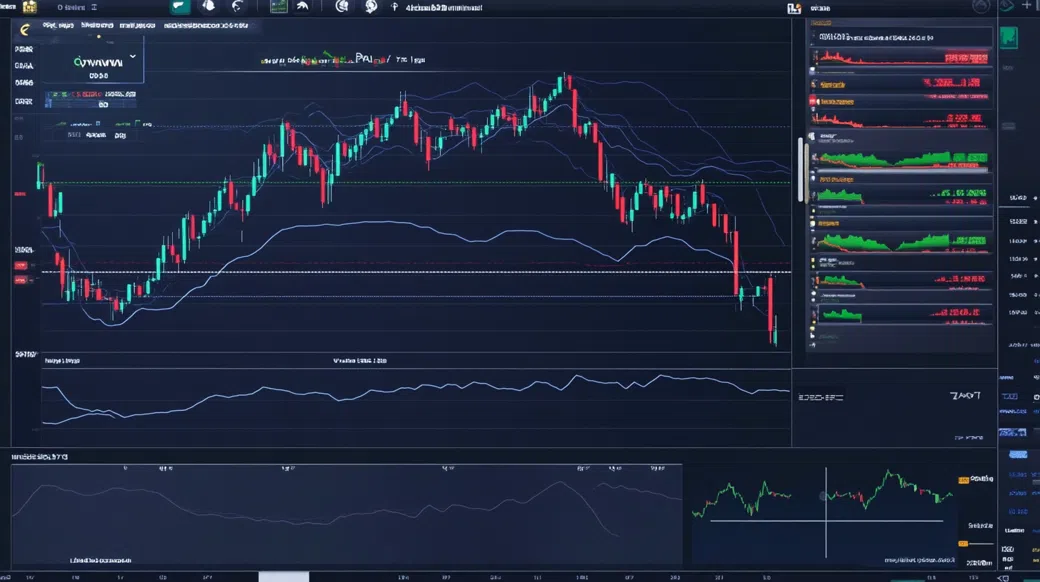
Charting covers the workhorse indicators—MA, RSI, MACD, Bollinger—plus drawing tools and multi-timeframe layouts. You also get an economic calendar and a light news feed, enough to avoid trading blind into CPI/FOMC risk. The ceiling is clear: if you rely on advanced strategy testing, custom indicators, or depth-of-market tooling, dedicated MT5/cTrader stacks generally go further.
My onboarding started with a short form (email, phone, residence, and a suitability-style questionnaire) before the dashboard opened. KYC followed the standard AML pattern: government-issued photo ID plus a proof of address dated within three months. Verification cleared the same day for me, and the portal visibly flagged what was still pending, which reduces guesswork when you’re trying to withdraw later.
For traders comparing onboarding across brokers, the Qvantaro minimum deposit sits in the typical offshore CFD bracket—high enough to filter out pure dabblers, low enough for a controlled test. Base-currency choice matters: if you fund in BRL or another non-USD currency, expect conversion at your payment provider or bank. I prefer completing KYC before serious funding, because first-withdrawal document requests can turn into avoidable delays.
I tested support with two concrete questions: how swap rates are displayed for gold, and what the internal timeline is for card withdrawals after KYC approval. Live chat answered in roughly three minutes and pointed me to the contract-spec screen where financing is itemized; the reply was specific, not copy-paste fluff. I also opened an email ticket about withdrawal processing steps and got a usable response in about nine hours, including a checklist of common rejection reasons (name mismatch, blurred proof of address, and 3-D Secure declines).
Coverage is aligned with what I’d expect in this segment: 24/5 chat plus email, with response quality varying by hour and language. Phone support wasn’t prominently pushed in my region, which is common for offshore brokers that centralize service. On weekends, you can still manage positions, but human replies may slow down—relevant if you trade crypto CFDs through Saturday volatility.
If you’re considering this broker, start by validating your country eligibility and running a demo to map spreads during your usual session. Once that looks acceptable, fund a small amount and test execution plus the withdrawal workflow before scaling up.
Visit QvantaroIt can be, if you keep position sizing small and respect leverage. The WebTrader and app are not hard to navigate, and the demo helps, but the offshore setup means you should be extra disciplined about risk and documentation.
Yes, crypto CFDs are available, including BTC and ETH pairs. Remember it’s CFD exposure, so you’re not withdrawing coins to a wallet, and financing costs can be higher over weekends.
No, based on my 2026 test it behaved like a functioning broker: KYC checks were enforced and platform activity matched the account statements. The real caution is structural—offshore registration typically offers fewer formal protections than top-tier regulators.
No, Qvantaro is not offered to US residents. The sign-up and compliance process generally blocks the USA and other heavily restricted jurisdictions.
A Qvantaro withdrawal typically clears internal processing in 24–48 hours once KYC is approved. After that, card withdrawals often land in 2–5 business days, bank wires in 3–7 business days, and crypto transfers can arrive the same day depending on network conditions.
The Qvantaro minimum deposit is $200. That level is enough to test spreads, swaps, and execution without committing a large balance upfront.
Yes, there are iOS and Android apps. The mobile platform supports watchlists, charting, order placement, and account functions like deposits and withdrawals, which makes it practical for monitoring margin while away from desktop.
Overall Score: 4.0/5
Spreads and execution were the deciding variables for me, and this broker delivered a credible trading loop for a mid-sized CFD venue: clean KYC, functional WebTrader, and a pricing ladder that lets you choose between simplicity and tighter raw pricing. The offshore setup (Seychelles-style registration) is the non-negotiable caveat—great for leverage, weaker for formal protections—so treat risk management as your first “platform feature.” If you want to validate conditions yourself, run a demo and a small-live withdrawal before scaling on Qvantaro. CFDs are leveraged; capital is at risk.
Best for: traders who want multi-asset CFDs with up to 1:500 leverage and can actively monitor margin. Avoid if: you require Tier-1 regulation, deep research tools, or long-term investing with true asset ownership.