Ribera Bitencia Trading Platform Alternatives 2026
Compare Ribera Bitencia alternatives for 2026 with a safety-first lens: regulation, spreads, platforms, asset access, and a practical migration checklist.

Compare Ribera Bitencia alternatives for 2026 with a safety-first lens: regulation, spreads, platforms, asset access, and a practical migration checklist.
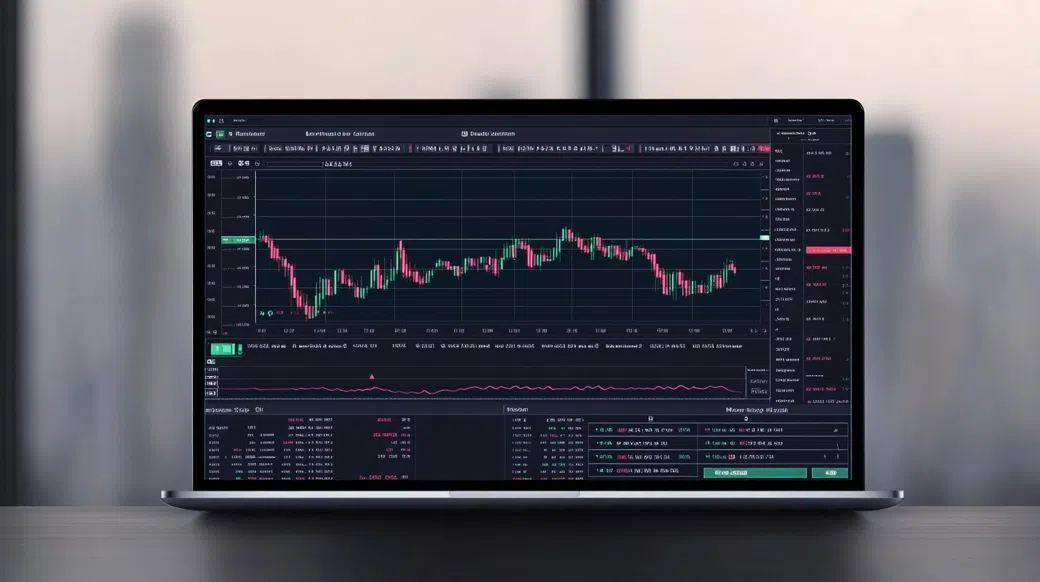
Leverage sells fast; withdrawals and execution quality don’t show up on the banner ad. That’s why many traders end up searching for Ribera Bitencia alternatives after the first few months of real-money trading, when spreads, swap charges, and platform limits start to hit the P&L. Ribera Bitencia, as typically seen in the offshore CFD segment, is positioned around forex and CFDs with a proprietary WebTrader and a mobile app, offering headline leverage that can reach 1:500 and a minimum deposit often around $250. The mix is familiar: 30–50 FX pairs, a short list of indices and commodities, and crypto exposure usually via CFDs rather than on-chain ownership.
For a US/EU trader, the main question is not “can I open a position?”—it’s “what happens if something goes wrong?” Offshore frameworks (commonly tied to jurisdictions such as the Seychelles FSA) can mean weaker investor protection, less transparent execution policies, and fewer formal dispute channels than FCA/ASIC/CySEC-regulated firms. Add the practical stuff—KYC/AML friction, fee schedules that change by account tier, and a WebTrader that may not support the automation stack you rely on—and the case for comparing Ribera Bitencia against regulated substitutes becomes straightforward.
Disclaimer: This article is for informational purposes only and does not constitute investment advice. CFDs and other leveraged products carry a high risk of loss and are not suitable for all investors.
From an execution and product standpoint, Ribera Bitencia fits the “CFD-first” mold: traders get access mainly to forex and CFDs (indices, commodities, and often crypto CFDs), with leverage marketed as a key feature. Public-facing details in this category frequently point to an offshore setup—commonly associated with a regulator like the Seychelles FSA—rather than a top-tier framework like the FCA, ASIC, CySEC, or the NFA. That difference matters because compensation schemes and formal supervision are not symmetric across jurisdictions. The platform is built for retail flow: quick onboarding, a streamlined WebTrader, and a mobile app aimed at frequent logins and short-horizon trading.
The proprietary WebTrader tends to be functional rather than institutional. Expect the basics to be covered: one-click dealing, market/limit/stop orders, watchlists, and a chart package with a standard set of indicators and drawing tools. Charting depth is usually adequate for single-timeframe decision-making, but power users may miss multi-chart layouts, advanced order tickets, and granular execution reports. Mobile parity is typically decent—price alerts, position monitoring, and order management—yet the desktop browser experience often feels like the “main terminal.” In platforms like Ribera Bitencia, the real limitation is not the chart; it’s how far you can push automation, custom indicators, and workflow.
Cost is where the spreadsheet cuts through the marketing. A common reference point for this broker segment is EUR/USD around 2.0 pips on a Standard-style account. Some firms also advertise a Raw/ECN-like tier (often 0.0–0.4 pips) but then charge a commission that can land roughly in the $5–$8 round-turn range per standard lot. On top of that, swap/overnight financing is the quiet tax on holding positions, especially in CFD indices and leveraged FX. Traders should also read the fine print for non-trading charges such as inactivity and withdrawal fees, because those line items often decide the all-in cost for smaller accounts.
The first trigger is usually not the interface—it’s risk control. When a broker sits outside tier-1 oversight, you carry more counterparty uncertainty, and that shows up in the way traders evaluate Ribera Bitencia alternatives. The second trigger is measurable: trading costs that look small per ticket become meaningful at volume. Run the math on 100 round turns per month: the difference between 2.0 pips and 0.6 pips on EUR/USD is not a rounding error, it’s a budget line. Finally, strategy fit matters; a WebTrader can be fine for discretionary trading but limiting for systematic execution or multi-asset portfolios.
Pick the replacement the way you’d size a trade: start with downside scenarios, then optimize cost and tools. “Better” depends on what you trade (FX scalping vs. ETF accumulation), how you execute (manual vs. automated), and what protections apply in your jurisdiction. The best substitutes for Ribera Bitencia are the ones that match your strategy while reducing operational risk—fund custody, dispute resolution, and transparent execution policies.
For US/EU readers, regulation is a filter, not a bonus feature. FCA-licensed firms can fall under the FSCS framework (up to £85,000 in certain cases), while CySEC firms may be connected to the ICF (up to €20,000, eligibility-dependent). ASIC and NFA/CFTC supervision also impose stricter conduct expectations than typical offshore regimes. Look for segregated client funds language, negative balance protection (common in UK/EU retail CFD rules), and a verifiable legal entity on the regulator’s public register.
“Multi-asset” can mean two different things: CFDs on everything, or actual access to listed markets. If you want shareholder rights, voting, and the ability to transfer positions, you’re looking for real stocks/ETFs at a broker with exchange connectivity. If you only need FX and index CFDs, a specialist can be enough. Brokers similar to Ribera Bitencia often cover FX, indices, commodities, and crypto CFDs, but listed options, futures, and cash equities usually require a different infrastructure.
Compare the round-turn cost of a trade: spread + commission + expected slippage, then add financing if you hold overnight. For active FX, a Raw account with 0.0–0.3 pips plus commission can beat an all-spread model, but only if your ticket size and frequency justify it. Don’t ignore swap/overnight fee schedules on CFDs—carry can erase a “good entry.” And for smaller accounts, inactivity and withdrawal fees can be more damaging than a tenth of a pip.
Platform choice is really an execution choice. MT4/MT5 and cTrader ecosystems matter for automation, VPS hosting, and a mature tooling library; proprietary terminals can be fine but tend to lock you into the broker’s workflow. Execution model also changes outcomes: market maker vs. STP/ECN/DMA affects how orders are routed and how slippage is handled in fast markets. If you’re evaluating Ribera Bitencia competitors, ask for clarity on order handling, re-quotes, and whether stop-loss orders are “guaranteed” (and at what cost), because that’s where tail risk lives.
Support is operational alpha when something breaks. Check hours that match your trading session, the ability to reach a human quickly, and whether service is consistent across chat/email/phone. Education matters less as you get experienced, but platform tutorials, margin-call explanations, and product-specific risk notes reduce avoidable mistakes. Finally, mobile parity isn’t cosmetic—if the app can’t manage orders cleanly during volatility, you don’t have real risk control.
Forex and CFDs are where Ribera Bitencia typically concentrates: roughly 30–50 FX pairs, a modest list of indices (often 8–15), and a handful of commodities. Leverage can be high (commonly marketed up to 1:500), but leverage is not edge—it’s exposure. If EUR/USD sits around 2.0 pips on a Standard-style setup, frequent traders will feel it quickly, especially when spreads widen around data releases and rollover. Regulated FX/CFD specialists like Pepperstone and OANDA usually provide clearer execution disclosures, established platform stacks (MT4/MT5/cTrader or robust proprietary), and tighter pricing structures depending on account type. The practical gain is consistency: fewer surprises in effective spread, more predictable margin policy, and better documentation for slippage and order handling.
This is where many offshore CFD brokers lose the institutional crowd. If a platform focuses on CFDs, “stocks” often means stock CFDs—no shareholder rights, no voting, and no real transfer to another custodian. For investors building a long book, that’s a structural mismatch. Multi-asset brokers such as Interactive Brokers and Saxo Bank are built for listed markets: real stocks and ETFs (plus options/futures depending on region and permissions), deeper routing, and reporting that plays nicer with taxes and audits. If your goal is to diversify beyond FX into global equities—US mega-caps, EU ETFs, even certain LatAm ADRs—those venues are in a different category than platforms like Ribera Bitencia.
Crypto access in this segment is usually via CFDs: you’re trading price exposure, not holding coins on-chain, and you won’t be sending BTC to a wallet. That can be fine for short-term directional views, but it changes the risk profile—financing costs, weekend spreads, and gap risk become central. Regulated CFD providers such as IG (where available) often offer crypto CFDs under clearer product governance, while some multi-asset firms offer crypto-related products (or restrict them by jurisdiction). The key comparison is transparency: contract specs, trading hours, margin changes during volatility, and how stops behave when liquidity thins. That’s the detail traders want when scanning for Ribera Bitencia alternatives in 2026.
Regulation: SEC/FINRA (US), FCA (UK), IIROC (Canada) (entity depends on your residence)
Markets: Stocks, ETFs, options, futures, bonds, FX
Fees: FX spreads are typically competitive (often well under 1 pip in liquid pairs, structure varies); commissions apply for many listed products
Platform: Trader Workstation (TWS), IBKR Desktop/mobile, APIs
Best For: Multi-asset, execution-driven traders who want listed markets access
Regulation: FCA (UK), ASIC (Australia), CySEC (EU), DFSA (Dubai)
Markets: FX, CFDs (indices, commodities, some crypto CFDs depending on region)
Fees: Standard spreads often around ~1.0 pip+; Raw accounts can run ~0.0–0.3 pips plus commission (varies by entity)
Platform: MT4, MT5, cTrader
Best For: FX scalpers and algo traders optimizing spread+commission
Regulation: FCA (UK), MAS (Singapore), DFSA (Dubai)
Markets: Stocks, ETFs, bonds, options, futures, FX, CFDs
Fees: Pricing varies by tier; FX spreads can be competitive in major pairs, with commissions/fees depending on product
Platform: SaxoTraderGO, SaxoTraderPRO
Best For: Portfolio-style traders combining FX with global equities/ETFs
Regulation: CFTC/NFA (US), FCA (UK), ASIC (Australia), IIROC (Canada)
Markets: FX (and CFDs in certain jurisdictions), metals; product set varies by region
Fees: Typically spread-only pricing; majors often around ~0.6–1.2 pips in normal conditions (can widen)
Platform: OANDA Trade (web/mobile), MT4 (availability varies)
Best For: Risk-first FX traders who value strong oversight and transparent pricing
Regulation: FCA (UK), ASIC (Australia), MAS (Singapore)
Markets: CFDs across FX, indices, commodities, shares (CFDs), crypto CFDs (where permitted)
Fees: Spread-based pricing; majors often competitive versus offshore peers, with product-specific charges for shares/CFDs
Platform: IG Web Platform, mobile apps (MT4 available in many regions)
Best For: Active CFD traders who want broad market coverage under tier-1 regulation
Regulation: FCA (UK), CySEC (EU), FSC (Bulgaria)
Markets: Stocks and ETFs (invest account), CFDs (where available)
Fees: Investing fees can be low/commission-free on many instruments; CFD costs are primarily spread/financing
Platform: Trading 212 web and mobile platform
Best For: UK/EU beginners building stock/ETF exposure alongside light CFD use
| Platform | Regulation | Main Markets | Typical Costs | Best For |
|---|---|---|---|---|
| Interactive Brokers (IBKR) | SEC/FINRA, FCA, IIROC (by entity) | Real stocks/ETFs, options, futures, bonds, FX | FX often very competitive; commissions on many listed products | Multi-asset, execution-driven traders who want listed markets access |
| Pepperstone | FCA, ASIC, CySEC, DFSA | FX + CFDs | Raw ~0.0–0.3 pips + commission; Standard ~1.0 pip+ (varies) | FX scalpers and algo traders optimizing spread+commission |
| Saxo Bank | FCA, MAS, DFSA | Stocks/ETFs, options/futures, FX, CFDs | Tiered pricing; competitive majors, product fees vary | Portfolio-style traders combining FX with global equities/ETFs |
| OANDA | CFTC/NFA, FCA, ASIC, IIROC | FX (plus CFDs in some regions) | Spread-only; majors often ~0.6–1.2 pips in normal conditions | Risk-first FX traders who value strong oversight and transparent pricing |
| IG | FCA, ASIC, MAS | CFDs across FX/indices/commodities (and more) | Spread-based; costs vary by product and volatility | Active CFD traders who want broad market coverage under tier-1 regulation |
| Trading 212 | FCA, CySEC, FSC (Bulgaria) | Stocks/ETFs (real), CFDs (where offered) | Investing often low-fee; CFDs are spread + financing | UK/EU beginners building stock/ETF exposure alongside light CFD use |
Switching brokers is an operational trade: you’re minimizing platform risk while avoiding avoidable downtime. Treat the process like a checklist with timestamps—especially if you have open CFD exposure, where margin calls can happen fast and gaps can skip stops. If you’re moving off platforms like Ribera Bitencia, keep the sequence tight: verify the destination first, then unwind and withdraw in a way that won’t trigger preventable AML delays.
If you’re still evaluating the current setup, review onboarding steps, current fees, and regional eligibility directly, then benchmark against regulated options from this list. Conditions can differ by legal entity, so compare the platform stack, execution disclosures, and total trading cost before committing fresh capital.
Visit Ribera BitenciaThe best option depends on whether you need listed markets or mainly FX/CFDs. For real stocks/ETFs and deep multi-asset access, Interactive Brokers and Saxo Bank are hard to ignore; for FX execution and tighter all-in costs, Pepperstone and OANDA are common shortlists. For broad CFD coverage under tier-1 oversight, IG is often a practical middle ground. If you’re searching “best Ribera Bitencia alternatives 2026,” start by matching your strategy to the broker category, then validate the entity and protections that apply to your country.
Ribera Bitencia appears consistent with an offshore/unregulated CFD framework rather than a tier-1 regime like the FCA, ASIC, CySEC, or NFA. That doesn’t automatically mean fraud, but it does mean fewer formal safety nets (for example, no clear FSCS-style protection) and typically weaker enforcement leverage for retail clients. If safety is your priority, focus your comparison on regulated options vs Ribera Bitencia, and verify the exact legal entity on the regulator’s public register.
Ribera Bitencia is typically positioned around forex and CFDs, so “stocks” are often offered as stock CFDs (not real shares), and listed futures access is commonly not part of the package. Crypto exposure, when available, is usually via crypto CFDs—price tracking without on-chain ownership. If you want real stocks/ETFs or exchange-traded futures, platforms like IBKR or Saxo are closer fits than many alternatives to the Ribera Bitencia trading platform.
Verify regulation first (FCA/ASIC/CySEC/NFA registers), then confirm which legal entity will hold your account based on your residence. Next, compare round-turn costs (spread + commission + swap) and review execution disclosures, especially slippage and stop handling during volatility. Finally, complete KYC at the new broker before you withdraw, and assume you’ll need to rebuild positions rather than transfer them. This approach keeps the move toward Ribera Bitencia alternatives focused on risk and total cost, not headlines.
About the Author: Carlos Mendes is a former equity desk analyst from São Paulo who covers emerging-market brokerages and Latin American fintech through a trading-first lens. He focuses on what can be measured—execution, costs, and investor protection—because those variables decide outcomes when leverage meets volatility.