Seguro Fundezano Alternatives 2026: Best Trading Platforms
Compare Seguro Fundezano alternatives for 2026 with a safety-first lens: regulation, spreads, platforms, execution quality, and migration steps for US/EU traders.

Compare Seguro Fundezano alternatives for 2026 with a safety-first lens: regulation, spreads, platforms, execution quality, and migration steps for US/EU traders.
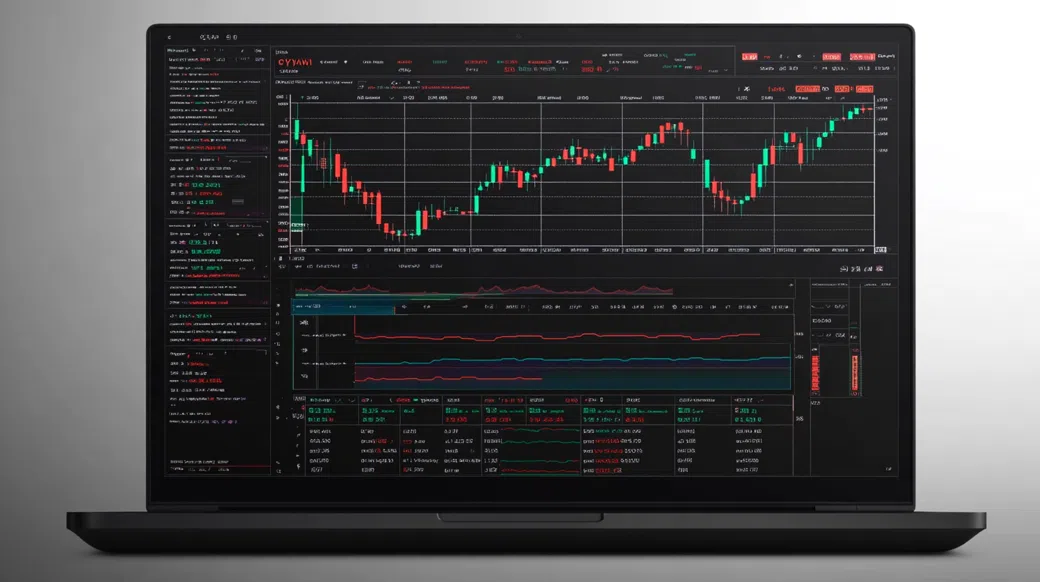
Leverage is a loud salesman. It looks especially attractive when a platform dangles 1:500 and a quick WebTrader sign-up, because the math of margin feels like “more opportunity.” The quieter math—slippage, spread, funding costs, and what happens when a withdrawal turns into an email thread—usually shows up later. That’s the backdrop for this 2026 review of Seguro Fundezano alternatives geared to a US/EU reader who wants cleaner rules, stronger disclosures, and fewer surprises.
Based on what’s commonly observable among offshore CFD-first venues, Seguro Fundezano fits the profile of a proprietary WebTrader + mobile app broker focused on forex and CFDs, with crypto CFDs often in the mix and real stocks/ETFs likely offered (if at all) as CFDs rather than direct ownership. Typical entry tickets in this segment are around a $250 minimum deposit, EUR/USD spreads around 2.0 pips on a standard-style account, and account marketing that emphasizes headline leverage more than execution reporting. Regulation is the hinge: here, the framework is best described as offshore, with Seychelles FSA commonly used in this category.
This article is for traders who want to replace “trust me” with verifiable safeguards—things like FCA/ASIC/CySEC/NFA oversight, segregated client funds, and transparent cost breakdowns. If you’re searching for Seguro Fundezano alternatives, you’ll see why multi-asset DMA brokers and tightly priced FX specialists can change your long-run expectancy more than any bonus or leverage cap.
Disclaimer: This article is for informational purposes only and does not constitute investment advice. CFDs and other leveraged products can move against you quickly and may result in losses that exceed your initial margin.
On the tape, Seguro Fundezano looks like an offshore, CFD-first brokerage built for short-cycle retail trading—forex pairs, indices, commodities, and a menu of crypto CFDs. The typical footprint here is 30–50 FX pairs, roughly 8–15 indices, about 5–10 commodity contracts, plus 10–30 crypto symbols as CFDs. The operating model is usually closer to a dealing-desk (market maker) or hybrid setup than true DMA, which matters because the broker can be your counterparty in some flows. For traders comparing brokers similar to Seguro Fundezano, the big question isn’t the instrument list—it’s whether trade reporting, execution policy, and client-fund safeguards stand up to a regulator’s scrutiny.
The core stack is typically a proprietary WebTrader with a matching iOS/Android app. Expect functional charting—basic indicators, common drawing tools, and standard timeframes—but not the depth you’d find in institutional terminals or the richer MT4/MT5 ecosystem. Order handling tends to cover market and limit orders, with stop-loss/take-profit attached at entry; more advanced order logic (partial fills routing, depth-of-market, or nuanced order types) is often thin. Mobile parity is usually decent for monitoring and closing risk, yet the “analysis-to-execution” workflow can feel compressed: fewer layout options, fewer indicators, and less transparency on execution quality during volatility spikes.
Costs in this bracket tend to be spread-led rather than commission-led. A realistic reference point is EUR/USD around 2.0 pips on a standard-style account; some brokers in the same offshore lane advertise raw/ECN-style tiers with tighter headline spreads and a commission (often in the $5–$8 round-turn range), but traders should confirm whether those quotes hold outside calm hours. Overnight financing (swap) is a material line item for swing positions, and it’s where many P&Ls quietly bleed. Also watch for payment friction: withdrawal fees, card-to-bank conversion costs, and “administration” charges are the kind of small numbers that compound—especially for smaller accounts.
For most people, the switch isn’t ideological—it’s triggered by a mismatch between risk controls and the money at stake. Offshore venues can be fast to open and fast to market leverage, but the moment you scale size, execution and governance become part of your edge. That’s why Seguro Fundezano alternatives show up on the radar when traders start measuring performance in net terms: fills, slippage, swaps, and time-to-withdraw. In 2026, “platforms like Seguro Fundezano” are often compared against brokers that publish clearer execution policies and sit under tougher regulators.
Think of broker selection as a risk-budget exercise, not a brand preference. Your edge can survive a slightly higher spread; it rarely survives weak client protections, poor execution, or a withdrawal process that becomes discretionary. The best Seguro Fundezano alternatives 2026 are the ones where you can verify oversight, map products to your strategy, and forecast costs with reasonable accuracy.
Start with the regulator’s public register: FCA (UK), ASIC (Australia), CySEC (EU), and NFA/CFTC (US) are the names that change the legal environment in a real way. Under the FCA, eligible clients may have FSCS coverage up to £85,000; under CySEC, the ICF framework is commonly cited up to €20,000 for eligible cases. Segregated client funds should be explicit in disclosures—segregation isn’t a guarantee, but it’s a baseline. If a broker can’t be found on a credible register, you’re trading inside a much thinner safety net.
Product breadth is only useful if it matches your plan. FX/CFD traders need deep majors/minors, reliable margin policies, and stable overnight financing. Investors who want actual stocks and ETFs (not CFDs) should prioritize DMA-style access and corporate-action handling. Futures and options are a different discipline entirely—margining, assignment risk, and exchange rules. “Regulated options vs Seguro Fundezano” often means accepting a tighter leverage ceiling in exchange for a clearer rulebook.
Compare all-in, round-turn cost: spread + commission + expected slippage, then add swap if you hold. A 1.0 pip difference on EUR/USD is $10 per standard lot per round trip; run that across 200 lots per month and you’re staring at $2,000 before swaps. This is why “from 0.0 pips” headlines are incomplete without commission and fill quality. Also scan for inactivity fees and withdrawal charges—the small print often hits low-frequency traders hardest.
Platform isn’t UI; it’s capability. MT4/MT5 are still common for EAs and indicator ecosystems, while cTrader is often favored for execution tools and order handling. Proprietary platforms can be fine for discretionary trading, but they may limit automation and detailed reporting. Execution model matters: market maker vs STP/ECN/DMA changes how orders are routed and how conflicts are managed. If you’re coming from Seguro Fundezano, insist on reading the execution policy and checking whether negative balance protection is offered in your region.
When money is stuck, “support quality” becomes measurable: response time, escalation paths, and whether the broker can explain a fill with timestamps and prices. EU/UK brokers often have more structured complaint handling; that’s not comfort, it’s process. Education matters too, but prioritize practical content—margin calls, swap mechanics, order types—over hype. Finally, test mobile parity: if your risk is managed on the phone, the app must show margin, stops, and account metrics clearly.
In offshore CFD setups, the headline is usually leverage (up to 1:500 here), while the real battleground is cost and execution. With EUR/USD around 2.0 pips on a standard-style structure, the platform can work for occasional trades, but frequent traders feel the drag quickly—especially if spreads widen during liquidity gaps. FX/CFD specialists like Pepperstone or IC Markets are often used as benchmarks because they pair mainstream platforms (MT4/MT5/cTrader) with tighter pricing models (including raw-spread + commission options) and clearer execution language. The practical difference shows up on fast markets: fewer “mystery” requotes, more consistent spreads, and reporting that helps you audit slippage. If you’re comparing competitors to Seguro Fundezano for short-term systems, the platform stack and execution policy are usually more decisive than the number of exotic crosses.
If your goal is long-horizon exposure, CFDs on equities are a different instrument than owning the underlying. CFDs don’t give shareholder rights, can have financing charges, and behave differently around dividends and corporate actions. That’s where multi-asset, regulated brokers earn their keep. Interactive Brokers is the obvious “toolbox” pick for real stocks/ETFs plus options and futures, with DMA-style access and robust reporting; Saxo Bank is another route for global markets with a more curated user experience. For a trader graduating from CFD-only equity exposure, this is a structural upgrade: the ability to hold assets without overnight CFD financing, trade on exchanges, and manage currency conversion transparently. In the context of Seguro Fundezano trading platform alternatives 2026, this is the cleanest way to close the “I want real ownership” gap.
Crypto on many offshore brokers is typically offered as CFDs—price exposure without on-chain ownership. That can be perfectly valid for short-term directional trades, but it’s not the same as holding coins, moving them to a wallet, or participating in the crypto ecosystem. For regulated traders who still want crypto-linked volatility, brokers such as IG or Plus500 commonly offer crypto CFDs where allowed, under tighter risk disclosures and clearer client categorization. The trade-off is leverage limits and product availability by jurisdiction, particularly in the US. If you’re scanning top substitutes for Seguro Fundezano for crypto, look beyond symbol count: check margin requirements, weekend spreads, and whether the platform shows transparent financing/rollover treatment for multi-day holds.
Regulation: SEC/FINRA (US), FCA (UK), IIROC (Canada) via group entities
Markets: Stocks, ETFs, options, futures, bonds, FX
Fees: FX is typically tight versus offshore spread-led models; commissions vary by product and venue (exchange/route dependent)
Platform: Trader Workstation (TWS), web platform, mobile app, API access
Best For: Real multi-asset investors who want exchange access and reporting
Regulation: FCA (UK), ASIC (Australia), CySEC (EU), DFSA (UAE)
Markets: FX, CFDs (indices, commodities, some crypto CFDs where permitted)
Fees: EUR/USD often ~0.0–0.3 pips on Razor/Raw-style pricing plus commission; ~1.0–1.3 pips on Standard-style spreads
Platform: MT4, MT5, cTrader, TradingView integrations (availability may vary by entity)
Best For: Cost-focused FX traders running MT4/MT5 or cTrader
Regulation: FCA (UK), MAS (Singapore), DFSA (UAE) via group entities
Markets: Stocks, ETFs, bonds, options, futures, FX, CFDs
Fees: Pricing varies by tier and product; FX spreads are typically competitive for majors, while equities/options follow venue/tier schedules
Platform: SaxoTraderGO, SaxoTraderPRO
Best For: Portfolio-style traders needing global markets in one account
Regulation: ASIC (Australia), CySEC (EU), FSA Seychelles (group-level)
Markets: FX, CFDs (indices, commodities, some crypto CFDs where permitted)
Fees: EUR/USD often ~0.0–0.2 pips on raw pricing plus commission; Standard-style spreads commonly ~0.8–1.2 pips
Platform: MT4, MT5, cTrader
Best For: High-frequency traders who care about execution and latency
Regulation: FCA (UK), ASIC (Australia), MAS (Singapore)
Markets: CFDs across FX, indices, commodities, shares (often CFDs), crypto CFDs where permitted
Fees: Spread-led pricing; majors often priced tighter than offshore 2.0-pip-style baselines, with costs varying by market and volatility
Platform: IG trading platform, web and mobile (MT4 available in many regions)
Best For: Hedgers who want broad CFD coverage under top-tier oversight
Regulation: CFTC/NFA (US), FCA (UK), ASIC (Australia), IIROC (Canada) via group entities
Markets: Primarily FX; CFDs available outside the US under relevant entities
Fees: Spread-led pricing (varies by account and region); generally positioned as transparent versus offshore markups
Platform: OANDA web/mobile, MT4 in supported regions
Best For: Risk-managed FX traders who value transparency and US eligibility
| Platform | Regulation | Main Markets | Typical Costs | Best For |
|---|---|---|---|---|
| Interactive Brokers (IBKR) | SEC/FINRA, FCA, IIROC (group entities) | Real stocks/ETFs, options, futures, bonds, FX | Product/venue-based commissions; FX typically tight vs 2.0-pip offshore baselines | Real multi-asset investors who want exchange access and reporting |
| Pepperstone | FCA, ASIC, CySEC, DFSA | FX + CFDs (indices/commodities; some crypto CFDs) | Raw: ~0.0–0.3 pips + commission; Standard: ~1.0–1.3 pips | Cost-focused FX traders running MT4/MT5 or cTrader |
| Saxo Bank | FCA, MAS, DFSA (group entities) | Stocks/ETFs, options, futures, FX, CFDs, bonds | Tiered pricing; FX majors competitive; exchange products per schedule | Portfolio-style traders needing global markets in one account |
| IC Markets | ASIC, CySEC, FSA Seychelles (group-level) | FX + CFDs (indices/commodities; some crypto CFDs) | Raw: ~0.0–0.2 pips + commission; Standard: ~0.8–1.2 pips | High-frequency traders who care about execution and latency |
| IG | FCA, ASIC, MAS | CFDs across FX/indices/commodities/shares; crypto CFDs where permitted | Spread-led; majors often tighter than 2.0 pips depending on conditions | Hedgers who want broad CFD coverage under top-tier oversight |
| OANDA | CFTC/NFA, FCA, ASIC, IIROC (group entities) | FX (core); CFDs outside US via relevant entities | Spread-led, region/account dependent; positioned for clarity vs offshore fees | Risk-managed FX traders who value transparency and US eligibility |
Migration is plumbing, not politics. Treat it like you’d treat reducing exposure into an event: sequence matters, records matter, and you don’t want capital stranded mid-process. Leverage cuts both ways, so keep position sizing small until you’ve tested fills, swaps, and withdrawals on the new venue. If you’re exiting Seguro Fundezano, assume positions won’t transfer and plan your risk accordingly.
If you’re still evaluating where Seguro Fundezano sits versus regulated competitors, review the current onboarding flow, product list, and fee schedule in your region before committing fresh capital. Small tests beat big assumptions—especially with CFDs, where spreads and execution do most of the damage.
Visit Seguro FundezanoThe best option depends on whether you need real multi-asset access or pure FX/CFD performance. For exchange-traded stocks/ETFs and deep reporting, Interactive Brokers and Saxo Bank are strong reference points; for FX execution and MT4/MT5/cTrader workflows, Pepperstone and IC Markets are common picks. In practice, the best Seguro Fundezano alternatives 2026 are the ones whose regulation you can verify and whose all-in trading costs match your volume.
Seguro Fundezano appears to operate under an offshore framework (commonly associated with Seychelles FSA in this segment), which typically offers fewer investor-protection mechanisms than FCA/ASIC/CySEC/NFA-supervised brokers. That doesn’t automatically mean you can’t trade, but it does mean you should assume weaker recourse if something goes wrong. If safety is your top constraint, prioritize regulated options vs Seguro Fundezano and verify segregation and complaint processes.
With platforms like Seguro Fundezano, the usual offering is forex and CFDs, with crypto often provided as crypto CFDs rather than coin ownership. Real stocks/ETFs and exchange-traded futures are commonly not the core product; if they exist, they’re frequently delivered as CFDs with financing costs and no shareholder rights. If you need actual stocks/ETFs or futures, Interactive Brokers is a closer fit than most offshore CFD venues.
Before moving, confirm the new broker’s legal entity on the regulator register, then validate the fee stack you’ll actually pay (spread + commission + swap + typical slippage). Next, complete KYC first and export your old statements so you can reconcile P&L and funding. Finally, test the new platform with small size to see how orders fill under volatility and how margin calls are handled.
About the Author: Carlos Mendes is a former equity desk analyst from São Paulo who covers emerging-market brokerages and Latin American fintech through a trader’s lens. He focuses on verifiable mechanics—regulation, execution, and cost-of-trade—because those numbers decide outcomes long after the marketing fades.