Slate Provenmere Trading Platform Alternatives 2026
Compare Slate Provenmere alternatives for 2026: regulated brokers, costs, platforms, and safety steps—built for US/EU traders who value execution and protection.

Compare Slate Provenmere alternatives for 2026: regulated brokers, costs, platforms, and safety steps—built for US/EU traders who value execution and protection.
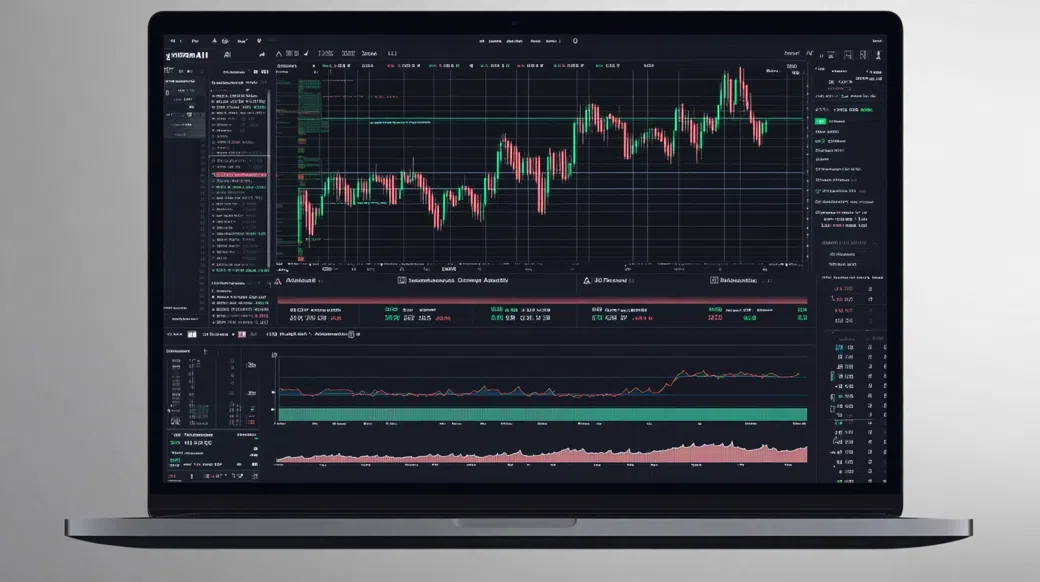
Spreads are a tax you pay on every click. So when a broker’s pricing, protections, or execution feel “soft,” the math pushes you to shop around—fast. Slate Provenmere sits in a familiar corner of the online trading world: an offshore CFD-first setup (commonly seen under a Seychelles FSA framework), a proprietary WebTrader, and mobile apps built to keep things simple. That can work for small, occasional FX/CFD trades. It becomes harder to justify when your strategy depends on tight fills, transparent costs, and robust investor safeguards.
Based on what’s typically observable in this offshore category, traders may encounter a minimum deposit around $250, headline leverage up to 1:500, and EUR/USD spreads that often start near 2.0 pips on a standard-style account. Those numbers are not automatically “bad,” but they carry implications: high leverage amplifies drawdowns, and a 2.0-pip spread can be expensive if you trade frequently. Add the practical friction points—KYC/withdrawal workflows, limited platform depth versus MT4/MT5/cTrader stacks, and a narrower set of instruments—and it’s clear why demand for Slate Provenmere alternatives keeps showing up in my inbox.
This guide focuses on regulated substitutes for the Slate Provenmere trading platform—especially options that US/EU traders can verify on public registers (FCA, ASIC, CySEC, NFA). The goal is not hype. It’s a cleaner risk/return setup: better protections, clearer execution models, and costs you can actually compare on a round-turn basis.
Disclaimer: This article is for informational purposes only and does not constitute investment advice. CFDs and other leveraged products carry a high risk of loss and may not be suitable for all investors.
Think of Slate Provenmere as a retail gateway focused on Forex and CFDs rather than a full multi-asset brokerage. In offshore setups under regulators such as the Seychelles FSA, the common operating reality is lighter investor-protection tooling than you’d see with FCA/ASIC/CySEC oversight. The product mix typically centers on ~30–50 FX pairs, index and commodity CFDs, and a smaller menu of crypto CFDs—enough for directional traders, less ideal for portfolio investors who want cash equities, listed options, or exchange-traded futures. For readers comparing platforms like Slate Provenmere, the key question is not the homepage promises; it’s what happens during fast markets, margin pressure, and withdrawals.
The proprietary WebTrader format is usually designed for accessibility: quick watchlists, one-click trading, and a clean account dashboard that keeps margin and P&L visible. Charting tends to be “basic-to-mid”—serviceable timeframes, standard indicators, and drawing tools, but not the deeper ecosystem you get with MT4/MT5 or cTrader (custom indicators, strategy testing, and the broader automation community). Execution feels acceptable in calm conditions, yet the real test is slippage around news, thin liquidity hours, and gapping indices. Mobile parity is often decent—open/close, modify orders, check history—while advanced analytics and workflow shortcuts remain desktop-first at top-tier venues.
Cost structure in this segment typically mixes spread-only pricing for standard accounts with a “raw” tier marketed to frequent traders. A reasonable working assumption is EUR/USD spreads from ~2.0 pips on a standard-style account; a raw/ECN-style tier may advertise 0.0–0.4 pips plus a round-turn commission roughly in the $5–$8 range. Beyond spreads, the quiet costs matter: swap/overnight financing on CFDs, potential inactivity charges, and payment-channel fees embedded in withdrawals. If your strategy holds positions for weeks, financing can dominate; if you scalp, the spread and round-turn commission decide whether your edge survives.
A trader doesn’t switch platforms because of a logo change. Switching usually starts when the numbers stop working: spreads are wide for your volume, execution degrades around volatility, or the product shelf doesn’t match the portfolio you’re trying to build. With offshore CFD brokers, the stress test is sharper because protections can be thinner and dispute resolution less predictable. That’s why Slate Provenmere alternatives often come up after a trader moves from “trying it out” to “sizing up” positions and caring about governance.
I treat broker selection like position sizing: you define the risk budget first, then pick the venue that keeps operational risk from eating trading risk. For alternatives to the Slate Provenmere trading platform, the clean approach is to score candidates across protection, product coverage, and all-in trading cost—then test execution with small size before migrating meaningful capital.
Start with the regulator’s public register—FCA in the UK, ASIC in Australia, CySEC in Cyprus, NFA/CFTC in the US. Under FCA, eligible clients may fall under the FSCS (up to £85,000) if the firm fails; under CySEC, the ICF can apply (up to €20,000) for eligible retail. Those caps won’t save a bad strategy, but they matter for operational tail risk. Look for segregated client funds policies and clear negative balance protection where required.
Match the broker to the job. FX/CFD traders care about majors/minors, indices, commodities, and margining; investors care about real stocks/ETFs, corporate actions, and custody. Some “brokers similar to Slate Provenmere” offer only synthetic exposure via CFDs, which is fine for short-term speculation but not the same as owning the underlying. If your plan includes options or futures, you’re effectively forced into a multi-asset venue with exchange connectivity.
Compare round-turn cost, not marketing spreads. On EUR/USD, a 2.0-pip spread is roughly $20 per standard lot per round trip; raw spread + commission can be materially lower, especially at scale. Add swap/overnight financing (often the biggest line item for holds), plus non-trading fees like inactivity or withdrawal charges. Cost discipline is boring, but it’s also the easiest “edge” to lock in.
Platform choice is a strategy choice. MT4/MT5 and cTrader ecosystems matter for automation, plugins, and trade journaling; proprietary terminals can be fine for discretionary trading, but you’re tied to one toolchain. Execution model also matters: market maker versus STP/ECN/DMA affects how orders are routed and how slippage appears during fast moves. If you’re benchmarking Slate Provenmere alternatives, insist on clarity around order handling, re-quotes (if any), and typical slippage behavior.
Support quality shows up on the worst day, not the best. Check hours that match your time zone, availability of live chat, and whether the broker can handle funding/withdrawal tickets without endless loops. Education is secondary for experienced traders, but the presence of clear margin-call rules, platform tutorials, and fee disclosures is a trust signal. Mobile experience should mirror desktop for risk controls—stops, limits, and margin visibility.
FX and CFDs are where Slate Provenmere is likely designed to compete: a compact list of roughly 30–50 pairs, plus index/commodity CFDs, with leverage that can run as high as 1:500. The issue is the trade economics. If EUR/USD is effectively around ~2.0 pips on the standard tier, that’s a heavy hurdle for scalpers and intraday traders—especially when slippage widens around data prints. Regulated options vs Slate Provenmere often win on transparency and tooling: Pepperstone and IC Markets are built for active FX with MT4/MT5/cTrader stacks and raw-spread pricing models (plus commissions) that are easier to model. Also, regulated brokers tend to publish clearer execution disclosures, which matters when you’re evaluating whether your fills reflect market conditions or internal dealing decisions.
Here’s the structural gap: many offshore CFD-first platforms give you “stocks” as CFDs—price exposure without ownership, voting rights, or the same corporate-action handling. If your goal is long-term allocation—buying ETFs, reinvesting dividends, or using options overlays—CFD wrappers are simply the wrong container. That’s where competitors to Slate Provenmere like Interactive Brokers and Saxo Bank change the equation. Both are multi-asset venues known for broad access to real equities and ETFs (plus options and futures, depending on region). For US/EU users who want portfolio reporting, tax documents, and exchange connectivity, this isn’t just a feature upgrade; it’s a different category of brokerage.
Crypto on CFD platforms usually means derivatives exposure, not on-chain ownership. You’re trading a contract whose value tracks the coin; you’re not withdrawing to a wallet or using the asset in DeFi. Slate Provenmere is commonly positioned to offer 10–30 crypto CFDs in this segment, which is adequate for directional bets but adds counterparty and financing considerations (including overnight fees and weekend gaps). If you want regulated crypto CFDs, IG is often used by experienced retail traders in permitted jurisdictions because it pairs crypto derivatives with broader risk controls and established oversight. For traders who mainly want FX but occasionally hedge with crypto beta, a CFD broker with strong risk disclosures and robust margin tools is usually a better fit than an offshore-only setup.
Regulation: SEC/FINRA (US), FCA (UK), IIROC (Canada)
Markets: Stocks, ETFs, options, futures, FX, bonds, funds (availability varies by region)
Fees: FX spreads typically competitive; commissions vary by product and venue (tiered/fixed schedules)
Platform: Trader Workstation (TWS), IBKR Desktop, web platform, mobile
Best For: Multi-asset investors who need real market access
Regulation: FCA (UK), ASIC (Australia), CySEC (Cyprus), DFSA (Dubai)
Markets: FX and CFDs (indices, commodities, some shares as CFDs depending on entity)
Fees: EUR/USD from ~0.0–0.3 pips on Razor/Raw + commission; ~1.0+ pip on Standard-style pricing
Platform: MT4, MT5, cTrader, TradingView (where available)
Best For: Active FX traders optimizing round-turn costs
Regulation: FCA (UK), MAS (Singapore), DFSA (Dubai)
Markets: Stocks, ETFs, bonds, FX, options, futures, CFDs
Fees: Pricing varies by tier and product; FX spreads generally competitive with transparent schedules
Platform: SaxoTraderGO, SaxoTraderPRO
Best For: Portfolio builders who want institutional-style tooling
Regulation: CFTC/NFA (US), FCA (UK), ASIC (Australia), IIROC (Canada)
Markets: FX (core), CFDs in some regions (indices/commodities)
Fees: Spread-based pricing; typical EUR/USD commonly around ~0.6–1.2 pips depending on account and region
Platform: OANDA web platform, mobile, MT4 (availability varies by region)
Best For: Risk-first traders who value strong oversight
Regulation: FCA (UK), ASIC (Australia), BaFin (Germany)
Markets: CFDs (FX, indices, commodities, shares as CFDs)
Fees: FX spreads often from ~0.7 pips on majors; costs vary by instrument and region
Platform: Next Generation platform, mobile
Best For: Technical analysts who rely on rich charting
Regulation: FCA (UK), CySEC (Cyprus), ASIC (Australia)
Markets: Stocks and ETFs (real and/or CFDs depending on region), CFDs, crypto (availability varies)
Fees: Spread-based CFD pricing; non-trading fees can apply (e.g., withdrawals/inactivity depending on policy)
Platform: eToro web platform, mobile
Best For: Social-focused beginners who want simplicity
| Platform | Regulation | Main Markets | Typical Costs | Best For |
|---|---|---|---|---|
| Interactive Brokers (IBKR) | SEC/FINRA, FCA, IIROC | Real stocks/ETFs, options, futures, FX, bonds | Product-based commissions; FX typically tight vs retail CFD pricing | Multi-asset investors who need real market access |
| Pepperstone | FCA, ASIC, CySEC, DFSA | FX + CFDs (indices/commodities; shares as CFDs in some entities) | Raw ~0.0–0.3 pips + commission; Standard ~1.0+ pip | Active FX traders optimizing round-turn costs |
| Saxo Bank | FCA, MAS, DFSA | Real stocks/ETFs, options/futures, FX, CFDs, bonds | Tiered schedules; transparent pricing by asset class | Portfolio builders who want institutional-style tooling |
| OANDA | CFTC/NFA, FCA, ASIC, IIROC | FX (plus CFDs in some regions) | Spread-based; EUR/USD often ~0.6–1.2 pips depending on setup | Risk-first traders who value strong oversight |
| CMC Markets | FCA, ASIC, BaFin | CFDs across FX, indices, commodities, shares (CFDs) | Majors often from ~0.7 pips; instrument-dependent pricing | Technical analysts who rely on rich charting |
| eToro | FCA, CySEC, ASIC | Stocks/ETFs (real and/or CFDs), CFDs, crypto (varies) | Spread-based CFDs; check withdrawal/inactivity schedule | Social-focused beginners who want simplicity |
Migration is not a “close account” button—it’s a controlled reduction of operational risk. Treat it like rebalancing: validate the new venue, prove funding/withdrawal rails, then scale. Keep in mind that leveraged CFDs can move faster than your admin process; don’t leave oversized exposure open while you’re waiting on documents or payment processing. If you’re exiting Slate Provenmere, do it with clean records and a documented sequence.
If you’re still evaluating the current onboarding flow, fees, and platform features, review them side-by-side with the regulated options above—especially execution tools and total trading costs. Regional eligibility changes, so confirm what’s available in your country before committing capital.
Visit Slate ProvenmereThe best choice depends on whether you need real multi-asset access or FX/CFD specialization. For real stocks/ETFs plus options and futures, Interactive Brokers and Saxo Bank are hard to ignore. For FX cost sensitivity and platform ecosystems, Pepperstone is often a cleaner fit than offshore CFD venues—particularly if you trade frequently and care about round-turn cost.
Slate Provenmere appears positioned like an offshore CFD broker (commonly under a Seychelles FSA framework), which generally offers less investor protection than FCA/ASIC/CySEC or NFA oversight. That doesn’t automatically mean fraud, but it does mean fewer formal backstops such as compensation schemes and, often, weaker dispute pathways. If safety is your priority, regulated options vs Slate Provenmere provide clearer rules on segregation, reporting, and supervision.
Most platforms in this offshore CFD segment focus on FX and CFDs, and “stocks” are frequently offered as CFDs rather than real share ownership. Listed futures are typically not the core offering in CFD-first setups, while crypto exposure—when present—is usually via crypto CFDs (derivative tracking, not on-chain coins). If you need exchange-traded futures or real equities, consider multi-asset brokers as top substitutes for Slate Provenmere.
Verify the new broker’s legal entity on the regulator register, then read the fee schedule for spreads, commissions, swaps, and withdrawals. Next, test execution with small size—watch how stops fill during volatility and whether slippage matches expectations. Finally, download your full trading and funding history from Slate Provenmere before you initiate withdrawals or close the account.
About the Author: Carlos Mendes is a former equity desk analyst from São Paulo who covers emerging-market brokerages and Latin American fintech through a numbers-first lens. He focuses on trade economics—spreads, financing, execution quality—and the operational plumbing (KYC, withdrawals, regulation) that decides whether a trading plan survives contact with reality.