Sólido Fundavox Review 2026: Is It Safe & Worth Your Money?
In-depth Sólido Fundavox review updated for 2026. We tested spreads, key features, supported countries, and safety. Read our full verdict.

In-depth Sólido Fundavox review updated for 2026. We tested spreads, key features, supported countries, and safety. Read our full verdict.
| Min Deposit | $200 |
| Max Leverage | 1:500 |
| Assets | Forex, Indices, Commodities, Crypto CFDs, Share CFDs |
| Platforms | Proprietary WebTrader + iOS/Android mobile apps |
A multi-asset CFD venue with an offshore footprint, Sólido Fundavox fits traders who want leverage and a compact WebTrader stack, with the headline trade-off being lighter investor protection than top-tier regulated brokers. I ran a small test account, moving from Standard to a tighter-spread tier to see where costs actually land, and the pricing is broadly in line with what active CFD desks expect at this end of the market. Coverage leans practical—majors, key indices, metals, and the usual crypto tickers—rather than “everything under the sun.” The USP is the clean, integrated workflow from chart to funding to positions, while the drawback is the jurisdictional ceiling: dispute escalation and compensation schemes aren’t in the same league as FCA/ASIC shops. For the current onboarding path, I used Sólido Fundavox directly.
Sólido Fundavox looks operational rather than a “disappearing broker” operation, but it sits under an offshore registration model, so “safe” depends on how you define protections. I didn’t see the classic scam tells (blocked withdrawals, fabricated account managers pushing deposits), yet the regulatory backstop is not Tier-1.
What drove my read: the provider presents an offshore registration through the Seychelles FSA framework, which typically allows higher leverage and faster product rollout, at the cost of thinner compensation schemes and fewer escalation paths if a dispute turns ugly. In my checks, KYC wasn’t optional—ID plus a recent proof of address were requested before I could move size or request certain payout rails, a basic but meaningful AML filter. I also scanned the site for “too-good-to-be-true” marketing (fake awards, guaranteed returns, pressure funnels) and didn’t get hit with aggressive sales follow-ups after funding. The broker’s language around segregated client funds is there, though offshore wording doesn’t equal the same enforcement intensity you’d expect in London or Sydney. Bottom line: treat it like a higher-risk venue operationally, and remember CFDs are leveraged products—most retail accounts lose money, and capital is at risk.
This broker generally accepts clients across parts of LATAM, MENA, and segments of Asia and non-EU Europe, while the USA and sanctioned jurisdictions are off-limits. Availability is still eligibility-based, so your KYC country drives the final answer.
| Region | Status | Leverage Cap |
|---|---|---|
| Latin America (selected countries) | Accepted | Up to 1:500 |
| MENA (selected countries) | Accepted | Up to 1:500 |
| Southeast Asia (selected countries) | Accepted | Up to 1:500 |
| Non-EU Europe (selected countries) | Accepted | Up to 1:200 |
| USA | Restricted | Not offered |
| Sanctioned jurisdictions | Restricted | Not offered |
In practice, the platform enforces this with a mix of signup declarations, document checks at verification, and occasional IP flags. Policies can tighten quickly if local rules shift, so don’t assume last month’s eligibility equals this week’s.
Product coverage is built for the “macro + tactical” CFD trader: enough depth to express a USD view, hedge with metals, and swing major indices without juggling multiple brokers. The lineup felt curated rather than maximalist.
All exposure here is via CFD contracts: you’re trading price movement, not taking shareholder voting rights or owning on-chain crypto. Dividends, where applicable, come through as adjustments, not as actual equity entitlements.
Costs are structured around two lanes: a Standard account where the spread carries the bill, and a Raw/ECN-style tier that compresses spreads and adds a per-lot commission. On my test, the all-in feel was consistent with offshore CFD peers—competitive for active FX, less special once you move into crypto weekends and index volatility.
| Asset | Spread/Fee | Market Average Comparison |
|---|---|---|
| EUR/USD (Standard) | From 1.6 pips | In line with offshore CFD averages |
| EUR/USD (Raw/ECN) | From 0.2 pips + $7 round-turn/lot | Competitive for higher-frequency FX |
| Bitcoin (BTC/USD) | From $35 | Typical; can widen on weekends |
| Gold (XAU/USD) | From $0.30 | Reasonable versus retail CFD norms |
| US500 Index | From 0.8 points | Near the middle of the pack |
Beyond spreads and commissions: swaps (overnight financing) are the real P&L tax if you hold leveraged positions for days, and they change with rates—worth checking before you park a trade. After 90 days without activity, I saw a $10/month inactivity fee kick in, which matters for “set-and-forget” accounts. Withdrawals themselves are usually clean, but payment rails can add their own charges, and FX conversion costs show up if you fund in one currency and settle in another.
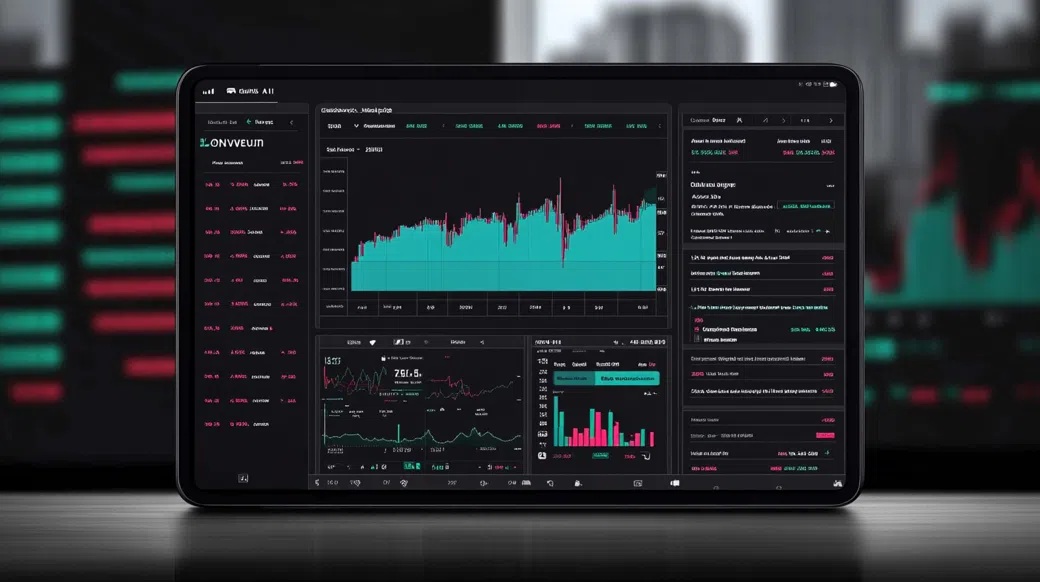
WebTrader is where this service wants you to live: I logged in across two sessions (London open and the NY overlap) and the interface stayed stable—watchlists, ticket, and chart all in one canvas. Order handling includes market, limit, stop, and basic risk controls like SL/TP; execution on liquid FX felt responsive, though you don’t get the plug-in ecosystem you’d associate with MT4/MT5. During a high-volatility minute around a US data release, I saw modest slippage on a small US500 ticket—nothing dramatic, but enough to remind you that CFDs are a fast market when headlines hit.
The Sólido Fundavox app mirrors the web layout closely, which helps when you’re managing exposure away from the desk. Quotes updated smoothly on my end, and you can open/close, modify stops, and check margin without digging through menus; biometric unlock was available on my device. The “Sólido Fundavox login” flow stayed consistent across restarts, and deposits/withdrawals were accessible from the same navigation layer as positions—useful, but also a place where impulsive traders can get themselves into trouble.
Tooling is practical: multi-timeframe charts, the common indicator stack (MA, RSI, MACD, Bollinger), drawing tools, and price alerts that actually fire. There’s an economic calendar and a light news feed for context, but don’t expect the depth of cTrader/MT5 plus third-party research. For most discretionary traders, it’s enough; for systematic strategies, the ecosystem is the constraint.
From the first screen, the broker steers you through a basic profile, trading experience prompts, and then identity verification. I uploaded a passport photo plus a bank statement dated within three months; verification landed the same day, and the account status flipped to “approved” without extra back-and-forth. Funding was friction-light: I used a Visa top-up and saw the balance update immediately, then placed a small EUR/USD position to confirm margin and ticket behavior.
For anyone price-sensitive, the Sólido Fundavox minimum deposit is low enough to run a measured trial, but don’t confuse “small deposit” with “small risk” when 1:500 leverage is on the table. If you want to validate the funding rails before committing more, I’d start by running one deposit and one withdrawal cycle through Sólido Fundavox while keeping position sizes conservative.
I tested support with a specific question that matters to traders: how swap rates are displayed and when they roll for FX versus indices. Live chat came back in about three minutes with a clear pointer to where the swap/financing values sit on the instrument specs, plus a reminder that Wednesday triple-swap applies on many FX pairs. I also opened an email ticket about withdrawal processing windows; the reply arrived roughly eight hours later, confirming internal handling is typically 24–48 hours after KYC is complete.
Coverage is what you’d expect in this segment: 24/5 chat and email, with responsiveness strongest during the European and early US sessions. Language options depend on who’s staffing, and I wouldn’t count on full phone support in every region. Weekends are quieter—fine for crypto monitoring, but not where you want to solve an urgent account edge case.
If you’re considering an account, treat the first week as a validation exercise: check spreads on your main instruments, test the app workflow, and run a small withdrawal to confirm your payment rail. A demo can map the platform feel, but real funding is where the operational details show up.
Visit Sólido FundavoxIt can be, but only for beginners who respect leverage and keep position sizes small. The interface is simple enough and the $200 entry point lowers the barrier, yet the offshore setup and 1:500 leverage mean mistakes get expensive fast. A demo first, then micro-sized live trades, is the sensible progression.
Yes, crypto CFDs are available, with BTC and ETH as the core markets. Keep an eye on weekend financing and wider spreads when liquidity thins. You’re trading a CFD price feed, not withdrawing coins to a wallet.
No—based on my testing, it behaved like a functioning CFD broker (KYC enforced, trades executed, and processes documented). The real caveat is regulatory strength: it operates under an offshore model (Seychelles FSA), which offers fewer formal protections than Tier-1 jurisdictions. That’s a risk framework issue, not automatically a scam label.
No, the USA is restricted and the platform does not offer accounts there. If you try to register with US residency documents, verification should fail at KYC. US traders typically need a CFTC/NFA-regulated venue for derivatives.
Most withdrawals are processed internally within 24–48 hours once your KYC is complete. After that, delivery depends on the rail: cards commonly take 2–5 business days, bank wires 3–7 business days, and crypto can arrive the same day. Your first payout may be slower if compliance asks for extra documents.
The Sólido Fundavox minimum deposit is $200 for a live account. That’s enough to test pricing and execution, but it’s not enough to make high leverage “safe.” If you plan to hold positions overnight, budget for swap/financing as part of the cost.
Yes, it offers iOS and Android apps alongside the WebTrader. The mobile build supports position management, deposits/withdrawals, alerts, and biometric access on compatible devices. For active traders, the app is more than a companion—it’s usable as the primary screen.
Overall Score: 4.0/5
My take is simple: costs and workflow are credible, while the jurisdiction defines the ceiling. With a $200 entry point, a commission-based tier for tighter FX pricing, and a WebTrader/mobile setup that doesn’t get in your way, Sólido Fundavox can function as a tactical CFD venue for short-horizon traders. The price you pay is structural—offshore oversight means fewer formal protections and a thinner dispute ladder than top-tier regulated brokers. If you proceed, run a withdrawal test early and keep leverage proportional to your risk budget; CFDs can move faster than your stop when volatility spikes. For the current offer page, I used Sólido Fundavox.
Best for: active FX/index traders who want Raw-style pricing and can manage leverage discipline. Avoid if: you need Tier-1 regulation, long-term investing features, or a deep MT4/MT5 ecosystem.