Stake Lispro 0.4 Alternatives 2026: Best Trading Platforms
Explore Stake Lispro 0.4 alternatives for 2026. Compare regulated brokers, markets, costs, platforms, and safety checks to choose a reliable option.

Explore Stake Lispro 0.4 alternatives for 2026. Compare regulated brokers, markets, costs, platforms, and safety checks to choose a reliable option.
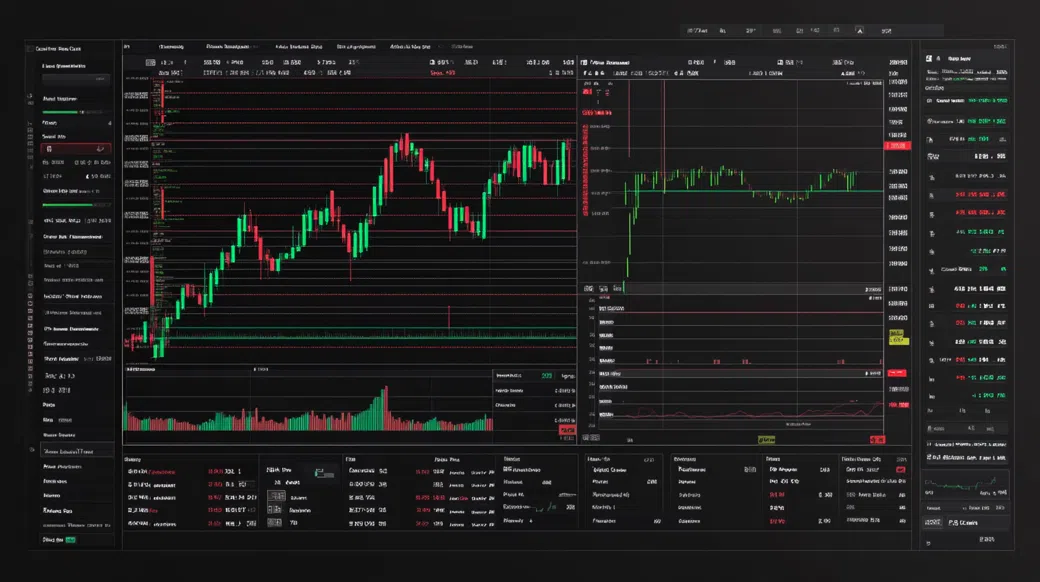
Stake Lispro 0.4 is typically presented online as a retail trading venue focused on leveraged products. In practice, many traders researching it are trying to answer two questions fast: “Is this broker properly regulated for my jurisdiction?” and “Do I get institutional-grade tools, pricing, and protections?” When those boxes don’t tick, the search for Stake Lispro 0.4 becomes less about features and more about risk containment—especially for US/EU-based clients dealing with strict rules on CFDs, marketing disclosures, and client money segregation. That’s why this guide prioritizes regulated custody, transparent costs, and platform reliability. You’ll see Stake Lispro 0.4 alternatives compared using baseline assumptions where public documentation is thin, and then matched against top-tier, regulated venues that publish terms clearly.
In this article, I’ll break down what to look for in Stake Lispro 0.4 alternatives in 2026: regulation first, then product breadth (FX/CFDs vs real stocks/ETFs), and finally the plumbing—execution, fees, and withdrawals. Numbers speak louder than narratives, and the goal is simple: reduce avoidable counterparty risk while keeping your strategy’s edge intact.
Disclaimer: This article is for informational purposes only and does not constitute investment advice. Trading leveraged products carries a high level of risk.
Based on the limited, inconsistent public detail commonly available for niche “versioned” platforms, a practical way to evaluate Stake Lispro 0.4 is to use baseline industry assumptions for comparison. Under that framework, it resembles an unregulated or offshore (high risk) broker-style offering focused on Forex and CFDs, delivered via a proprietary web trader (basic). That doesn’t automatically mean it’s illegitimate, but it does raise the bar for what you must verify: the legal entity, the regulator (if any), the client agreement, and how deposits/withdrawals are handled.
In real trading terms, the platform “works” the same way most CFD venues do: you deposit funds, select an instrument (e.g., EUR/USD or an index CFD), choose leverage, and trade a synthetic contract where the broker is your counterparty or routes risk to liquidity providers. The problem is not the mechanics—it’s the legal and operational wrapper. If that wrapper is offshore, you can face weaker dispute resolution, limited investor compensation, and thinner transparency around execution quality.
That’s the core driver behind alternatives to the Stake Lispro 0.4 trading platform: traders want a venue where the rules are enforceable and the pricing is auditable.
Using the baseline profile, the web platform is likely optimized for simplicity: watchlists, basic order tickets (market/limit/stop), standard timeframes, and indicator sets that cover the retail essentials. For discretionary FX/CFD traders, that can be enough to place trades. Where these “basic web traders” typically fall short is workflow and controls: limited depth-of-market, weaker order management, fewer analytics exports, and less support for advanced automation compared with MT4/MT5, TradingView integrations, or professional APIs.
Execution transparency is another differentiator. Many web-first venues don’t publish meaningful metrics (slippage distribution, rejection rates, or liquidity sourcing). For an active trader, that’s not a cosmetic issue—it affects your realized P&L.
When fee schedules aren’t clearly documented, the safest baseline assumption is: floating spreads from 2.0 pips on major FX pairs, plus potential financing/swaps on overnight positions. Account tiering (e.g., “standard” vs “VIP”) is also common in offshore-style models, sometimes tied to higher deposits rather than better execution. In that setup, the total cost is not just spreads; it can include withdrawal friction, conversion markups, and wider spreads during volatility.
If your strategy is sensitive to costs (scalping, intraday mean reversion, news trading), you typically need brokers similar to Stake Lispro 0.4 in product set but stronger on transparency: published commissions (if any), historical spread expectations, and clear non-trading fees.
Most traders don’t switch because of one annoyance—they switch when small frictions add up to measurable performance drag or when risk flags become impossible to ignore. For Stake Lispro 0.4 alternatives, the “why” is usually a mix of cost certainty, platform capability, and jurisdiction-level safety.
Choosing among Stake Lispro 0.4 alternatives isn’t about hunting the lowest advertised spread. It’s a risk-management decision with a trading overlay. My São Paulo equity-desk habit still applies: start with the balance sheet and governance (here: regulation and custody), then validate the product and costs, then stress-test the operational plumbing.
For regulated options vs Stake Lispro 0.4, verify (1) the exact legal entity you sign with, (2) its regulator and license status, and (3) investor protection mechanisms (segregation of client money, negative balance protection where applicable, and dispute resolution). EU/UK clients should confirm whether they are onboarded under an EU/UK entity (not an offshore affiliate). US clients should be especially strict: CFDs are generally not available to US retail traders, and “FX” access is usually via CFTC/NFA-regulated venues.
Many alternatives to the Stake Lispro 0.4 trading platform differ on a key axis: CFDs vs real ownership. If you want long-term investing, you may need real stocks/ETFs, not just derivatives. If you need multi-asset hedging, prioritize venues with deep FX, index CFDs, commodities, and (where legal) crypto exposure—clearly labeled by product type.
Model your “all-in” cost: spread + commission + swaps/financing + FX conversion + withdrawal fees. If Stake Lispro 0.4 is assumed (baseline) to run floating spreads from ~2.0 pips, many best Stake Lispro 0.4 alternatives 2026 will typically compete with tighter pricing (either raw spreads + commission or tighter all-in spreads). Don’t optimize for the best-case spread; optimize for the median during your trading hours.
Platforms like Stake Lispro 0.4 can be fine for manual trading, but serious traders should check for MT4/MT5, TradingView charting, robust mobile apps, and clear execution policies (market maker vs agency, order handling, slippage). If you can’t find documentation, assume you’re the one taking the uncertainty.
Support isn’t a “nice to have” when you’re moving capital. Test response times, withdrawal support, and how the broker handles verification issues. Quality competitors to Stake Lispro 0.4 tend to publish detailed help centers, product disclosures, and transparent complaint channels.
Under the baseline assumption (Forex and CFDs, basic web trader), Stake Lispro 0.4 is positioned where most retail volume lives: major/minor FX pairs, index CFDs, and potentially commodities. The upside is accessibility—low friction to place trades and a simple interface. The downside is that the edge in FX/CFDs often comes from execution quality and cost control, not from clicking faster.
In practical terms, if spreads are roughly “floating from 2.0 pips” as a baseline, that can be expensive for intraday traders. Add rollover/financing and the carry cost becomes material for swing positions. This is where Stake Lispro 0.4 alternatives with transparent pricing models (raw spreads + commission) and published execution policies often win. Also, regulated brokers typically offer clearer protections around client money handling—an underpriced feature until it matters.
If you trade around macro events (CPI, central bank decisions), look for brokers similar to Stake Lispro 0.4 in product set but stronger on order controls: guaranteed stops (where available), better stop/limit behavior during gaps, and fewer platform freezes under load.
Stock and ETF access is often a dividing line. Many CFD-first venues offer stock CFDs (derivatives) rather than real shares. If Stake Lispro 0.4 follows the baseline profile, real share dealing may be limited or unavailable, and “stock exposure” may be synthetic via CFDs with financing costs and no shareholder rights.
For US/EU investors seeking long-term holdings, dividends, voting rights, or transferability, alternatives to the Stake Lispro 0.4 trading platform that offer real stocks/ETFs can be structurally better. It’s not just ideology—real ownership typically changes your cost model (no overnight financing like CFDs) and improves clarity on how you’re treated in corporate actions.
Crypto is where marketing often outruns regulation. Depending on jurisdiction, some brokers offer crypto CFDs, others offer spot crypto via an exchange or custody partner, and some offer nothing at all. If Stake Lispro 0.4 is primarily FX/CFDs, crypto may be limited to CFDs (if offered), which introduces financing costs and counterparty considerations.
For traders who need crypto exposure, platforms like Stake Lispro 0.4 may not provide the custody clarity or market structure you want. Consider regulated venues where crypto is either clearly segmented (spot exchange) or offered with explicit risk disclosures. And remember: US access differs sharply from EU/UK—so the “best” Stake Lispro 0.4 alternatives depend on where you are regulated, not just what you want to trade.
Regulation: Regulated in multiple top-tier jurisdictions (commonly including the UK FCA; also regulated in other regions via local entities). Always confirm the specific entity you onboard under.
Markets: Broad multi-asset access, typically including FX, indices, commodities, and share/ETF dealing in some regions; CFDs where permitted.
Fees: Pricing varies by instrument and entity; typically competitive spreads for major FX and index CFDs, with additional costs like financing on leveraged products.
Platform: Robust proprietary platforms, often with advanced charting and risk tools; integrations may vary by region.
Best For: Traders who want a long-standing, heavily regulated venue and broad product coverage.
Regulation: Regulated in major financial centers (commonly including Denmark’s FSA and other regional regulators via subsidiaries). Verify the onboarding entity for your country.
Markets: Strong multi-asset offering (often including real stocks/ETFs, bonds, options, futures, FX, and CFDs depending on jurisdiction).
Fees: Transparent tiered pricing is common; costs depend on market and account tier. FX can be competitive; investing products have commissions and custody-related terms depending on region.
Platform: Professional-grade SaxoTraderGO/PRO style platforms with deep analytics and order functionality.
Best For: Multi-asset investors and serious traders who value tooling and breadth over “quick signup” simplicity.
Regulation: Regulated across the US and other major jurisdictions through local entities (for example, SEC/FINRA in the US; other regulators in Europe/Asia via subsidiaries). Confirm your specific entity.
Markets: Very broad access to global stocks/ETFs, options, futures, FX, bonds, and more; product availability depends on region and permissions.
Fees: Generally known for low, transparent commissions on many asset classes; market data fees and routing choices can apply.
Platform: Trader Workstation (advanced), plus web and mobile; API access for systematic workflows.
Best For: Active multi-asset traders and investors who want global market access and institutional-style tooling.
Regulation: Regulated in key jurisdictions (commonly including the UK FCA; also other regulators through local entities). Always check the entity you’re contracting with.
Markets: Strong CFD lineup (FX, indices, commodities, treasuries in some regions) and share-related products depending on location.
Fees: Competitive spreads are often a key selling point; financing applies to leveraged positions; non-trading fees depend on entity and activity.
Platform: Well-regarded proprietary platform with strong charting and pattern tools; MT4 offered in some regions.
Best For: CFD traders who want platform depth and strong regulatory standing.
Regulation: Regulated in several jurisdictions (for example, in the US via CFTC/NFA for FX; other regulators elsewhere via local entities). Confirm your regional onboarding.
Markets: Primarily FX (and CFDs in certain non-US jurisdictions), with product scope varying by entity.
Fees: Costs are typically spread-based, with optional commission models in some regions/account types; financing applies for overnight positions.
Platform: OANDA web/mobile plus integrations (availability varies), with a focus on FX execution and usability.
Best For: FX-focused traders who prioritize a regulated framework and straightforward product set.
Regulation: Regulated in Europe and other markets via local entities (commonly including oversight in the EU/UK through relevant regulators). Verify which entity serves your country.
Markets: Typically offers CFDs across FX, indices, commodities, and shares; some regions also offer real stock/ETF investing.
Fees: Often positioned with competitive spreads on major markets; investing accounts may have different commission structures depending on region and monthly volume.
Platform: xStation-style proprietary platform with strong charting and educational integration.
Best For: Traders who want a balanced platform—CFDs plus (in some regions) straightforward investing access.
| Platform | Regulation | Main Markets | Typical Costs | Best For |
|---|---|---|---|---|
| IG | Multi-jurisdiction (commonly FCA + local entities) | FX, CFDs, shares/ETFs (region-dependent) | Competitive spreads; financing on leverage; varies by product | Broad, regulated multi-asset trading |
| Saxo | Multi-jurisdiction (commonly Danish FSA + local entities) | Stocks/ETFs, FX, options, futures, CFDs (region-dependent) | Tiered pricing; commissions on cash products; financing on CFDs | Professional tools + multi-asset breadth |
| Interactive Brokers | US + global entities (commonly SEC/FINRA, plus others) | Global stocks/ETFs, options, futures, FX, bonds | Low commissions; market data fees may apply; varies by market | Active/global traders and systematic workflows |
| CMC Markets | Multi-jurisdiction (commonly FCA + local entities) | CFDs: FX, indices, commodities (region-dependent) | Competitive spreads; financing on overnight positions | CFD traders needing strong proprietary platform |
| OANDA | Multi-jurisdiction (US CFTC/NFA for FX; other entities elsewhere) | FX; CFDs in some non-US regions | Spread-based; optional commission models in some regions | FX-first traders wanting regulated access |
| XTB | EU/UK + other entities (varies by country) | CFDs; some regions offer real stocks/ETFs | Spreads on CFDs; investing fees depend on region/volume | All-in-one retail platform with solid tooling |
Switching from a higher-risk venue to Stake Lispro 0.4 alternatives should be treated like a controlled operational project: reduce exposure first, then migrate workflows, then scale. If you’re currently using Stake Lispro 0.4, don’t rush capital; rush verification.
The best choice depends on what you trade and where you are regulated. For multi-asset breadth and professional tooling, Interactive Brokers and Saxo are often strong benchmarks. For CFD-focused traders in the UK/EU, IG or CMC Markets are common picks. The practical approach is to shortlist Stake Lispro 0.4 alternatives that (1) are regulated for your jurisdiction, (2) publish clear fees, and (3) support your platform needs (mobile, MT4/MT5, or API).
If you cannot independently verify strong regulation and the exact legal entity behind the service, you should treat it as unregulated or offshore (high risk)—that’s the baseline assumption used in this article. From a risk perspective, that’s precisely why many traders move to Stake Lispro 0.4 alternatives with enforceable oversight, client fund segregation, and clear dispute channels.
Using the industry-standard baseline, Stake Lispro 0.4 is assumed to focus on Forex and CFDs via a basic proprietary web platform. Real stocks/ETFs and listed futures may be limited or unavailable; crypto (if offered) may be via CFDs depending on jurisdiction. If you need real stock/ETF ownership or futures, prioritize brokers similar to Stake Lispro 0.4 in usability but with clearly disclosed market access and permissions.
Before moving, check (1) the regulator and exact contracting entity, (2) whether products are CFDs or real assets, (3) the all-in fee model (spreads/commissions/financing/withdrawals), (4) platform fit (MT4/MT5, TradingView, mobile stability, order types), and (5) withdrawal testing with a small amount. This selection discipline is what separates “new broker roulette” from a controlled switch to best Stake Lispro 0.4 alternatives 2026.