Swiss Gas Review 2026: Is It Safe & Worth Your Money?
In-depth Swiss Gas review updated for 2026. We tested spreads, key features, supported countries, and safety. Read our full verdict.

In-depth Swiss Gas review updated for 2026. We tested spreads, key features, supported countries, and safety. Read our full verdict.
| Min Deposit | $200 |
| Max Leverage | 1:500 |
| Assets | Forex, Indices, Commodities, Crypto CFDs, Share CFDs |
| Platforms | WebTrader + iOS/Android mobile apps |
Built as a multi-asset CFD venue with a Forex core, Swiss Gas fits active traders who want high leverage and simple tooling, with the obvious trade-off being an offshore framework and fewer formal dispute paths. In my test, the account ladder was basically two speeds—spread-only Standard versus a tighter Raw/ECN-style option for people who count pips. Market coverage leans practical (majors, US indices, metals, and the big crypto tickers) rather than “everything under the sun.” The WebTrader is clean and functional, and the mobile stack mirrors it well; the weak spot is the thinner research layer and the usual offshore fine print. For the full Swiss Gas walkthrough, I focused on execution, fees, and withdrawals.
Swiss Gas looks operational and trade-capable rather than a “disappears after deposit” setup, but it still sits in an offshore rulebook. That mix can be legitimate for execution and access, yet it’s not the same safety net you’d expect under FCA/ASIC-style regimes.
What anchored my view was process: the broker enforced KYC (photo ID plus proof of address) before withdrawal and flagged AML checks early in the dashboard flow—annoying, but it’s the right friction. The entity I interacted with referenced Mauritius FSC registration language and standard disclosures around segregated client funds; that’s a positive signal, though it’s not an investor-compensation scheme. Offshore status matters in practice: leverage can run hot, and if you end up in a dispute, escalation channels are narrower than in tightly regulated markets. I also ran a quick red-flag scan—no fake “guaranteed profit” banners, no trophy-wall awards that looked suspicious, and the sales outreach stayed limited to one onboarding email. Still, CFDs are leveraged products; margin calls happen fast, and most retail accounts lose money. Trade size like you mean it.
The platform is broadly accessible across parts of LATAM, MENA, Southeast Asia, and select non-EU Europe, while the USA and sanctioned jurisdictions are not accepted.
| Region | Status | Leverage Cap |
|---|---|---|
| Latin America (selected countries) | Accepted | Up to 1:500 |
| MENA (non-sanctioned) | Accepted | Up to 1:500 |
| Southeast Asia (selected countries) | Accepted | Up to 1:500 |
| Europe (non-EU / non-UK) | Accepted | Up to 1:200 |
| USA | Restricted | Not offered |
| Sanctioned jurisdictions | Restricted | Not offered |
Eligibility isn’t just a checkbox: IP location, address documents, and payment-country often need to align. Policies can tighten quickly as compliance partners change, so confirm access before funding.
The lineup reads like a macro trader’s menu—enough instruments to express views across rates, risk-on/risk-off, and commodity cycles, without turning the platform into a cluttered supermarket.
All exposure here is via CFD contracts: you’re trading price movements, not owning shares, not receiving shareholder rights, and not holding on-chain crypto. Dividends (when applicable) are typically reflected as an adjustment, not a cash distribution like a stockbroker account.
Swiss Gas fees follow a two-tier setup: Standard accounts bake costs into the spread, while the Raw/ECN-style tier targets lower spreads and charges a per-lot commission. Net-net, the pricing lands in the middle of the offshore CFD pack—competitive enough for active FX, not the absolute cheapest after all-in costs.
| Asset | Spread/Fee | Market Average Comparison |
|---|---|---|
| EUR/USD (Standard) | From 1.4 pips | In line with typical spread-only accounts |
| EUR/USD (Raw/ECN) | From 0.2 pips + $7 round-turn/lot | Competitive for commission-based pricing |
| Bitcoin (BTC/USD) | From $28 | Broadly average; can widen on weekends |
| Gold (XAU/USD) | From $0.35 | Slightly better than many offshore peers |
| US500 Index | From 0.8 points | Near market norms for CFD indices |
Non-spread costs that matter over time: Overnight swap/financing is the real “silent fee” if you hold positions beyond the session, and I saw it clearly itemized in the trade details window. Dormant accounts get charged $10 per month after 90 days, which is small individually but brutal if you forget the login for a quarter. Withdrawals are usually clean on the broker side, but payment rails can add their own charges (bank wires especially), and FX conversion fees show up if you fund in one currency and trade in another.
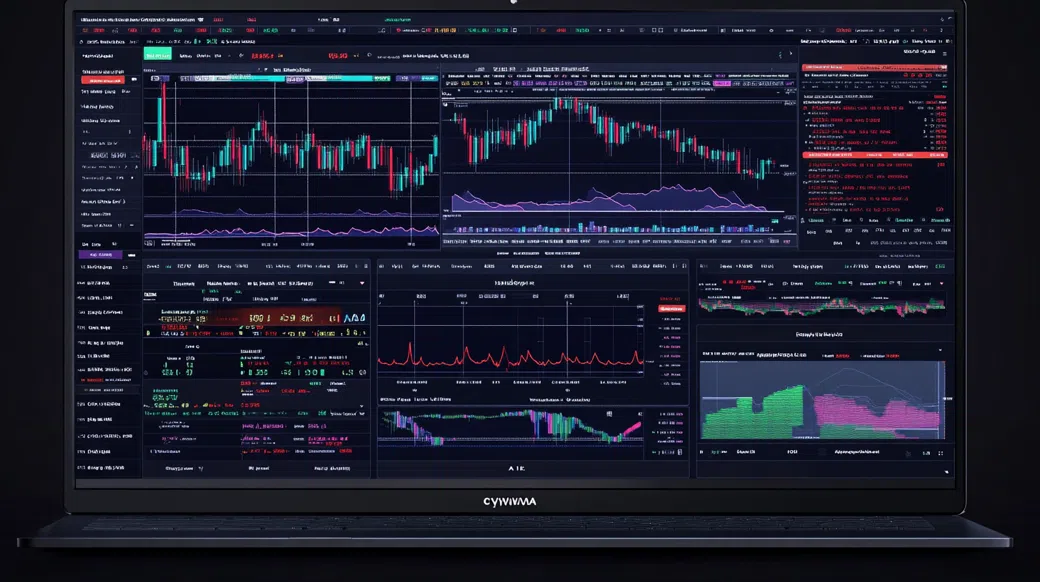
On desktop, the WebTrader behaved like a no-drama execution terminal: stable sessions, fast symbol search, and a layout that keeps margin and floating P&L visible without digging. I placed a small EUR/USD market order during the London open and then a US500 stop order into the NY overlap; fills were consistent, and slippage stayed modest even when spreads breathed wider around data. If you live inside MT4/MT5 plugins and custom EAs, this ecosystem will feel lighter—nothing in my test confirmed native MT4/MT5, so treat this as a proprietary stack first.
The Swiss Gas app is essentially the WebTrader in your pocket: live quotes, quick position edits, and the ability to deposit or request withdrawals without switching devices. The Swiss Gas login supported biometric unlock on my phone, and push notifications for price alerts worked once I enabled them in-app. Order handling covers market/limit/stop with one-tap close on open positions; the main mobile quirk is chart real estate—fine for checking levels, less ideal for multi-indicator setups.
Charts include the usual indicator shelf (MA, RSI, MACD, Bollinger) plus basic drawing tools and multi-timeframe views. An economic calendar and a news feed are integrated, which helps for event risk and avoiding accidental exposure into CPI/FOMC. The ceiling is clear: compared with MT5 or cTrader workspaces, the research depth and automation options are limited, so systematic traders will likely rely on external analytics.
First impression: the signup form asked for the essentials (email, phone, country, and a short suitability-style set of questions), then pushed me straight into identity verification. KYC required a government-issued photo ID and a proof of address dated within three months; my documents were approved the same business day. The flow is coherent, and the dashboard keeps AML status visible, which reduces surprises when you later request a payout.
Deposit confirmation was instant on card, with the balance updating after the final 3DS step; bank wires will naturally move at bank speed. For anyone who likes to audit costs, the platform makes it easy to check contract specs (swap, minimum lot, margin rate) before you trade.
I used live chat with a practical question: how the provider calculates swap on XAU/USD and whether triple-swap applies midweek. A human agent picked up in about three minutes and pointed me to the symbol-specs panel plus a short written explanation of the daily financing logic. I also sent an email ticket about withdrawal sequencing (KYC first vs. at request time) and got a complete reply in roughly eight hours, including method-by-method timing guidance.
Coverage is the familiar 24/5 rhythm, which matches FX and index hours; weekend support is lighter and felt more “triage” than deep troubleshooting. Language availability depends on your region, and phone support wasn’t prominently advertised in my account area. Relative to other offshore CFD desks, the support quality was adequate—more operational than educational, which is fine if you already know what you’re asking.
If you’re considering this broker, start by checking your country eligibility and running a demo to map spreads, swap, and margin requirements. Once that’s clear, a small funded test can confirm execution and withdrawal behavior in your own payment rail.
Visit Swiss GasIt can be, as long as you treat leverage with respect and start small. The WebTrader and app are not overly technical, and the $10,000 demo helps you learn order types without real risk. Beginners should still expect a learning curve around CFDs, swaps, and margin calls.
Yes, crypto is available via CFDs, including majors like BTC and ETH. That means you’re trading price exposure, not withdrawing coins to a wallet. Expect wider pricing on weekends versus weekday sessions.
No, it didn’t behave like a “scam” in my test: KYC was enforced, trades executed, and the support desk provided actionable answers. The more relevant question is “is Swiss Gas legit under strict regulation?”—it operates with offshore oversight (Mauritius FSC), so protections differ from Tier-1 jurisdictions. Manage risk accordingly, because CFD losses can exceed expectations quickly when leverage is involved.
No, Swiss Gas is not offered to USA residents. The broker blocks access through eligibility checks tied to onboarding details and compliance screening. If you’re US-based, you’ll need a CFTC/NFA-compliant alternative.
Most withdrawals are processed by the broker within 24–48 hours after KYC is cleared. After that, the delivery time depends on the rail: cards typically take 2–5 business days, bank wires 3–7 business days, and crypto is often same-day. Delays usually come from intermediary banks or mismatched account details.
The Swiss Gas minimum deposit is $200. That level is enough to test execution and platform workflow, but it’s not a lot of buffer if you use 1:500 leverage. For risk control, size positions as if you had less, not more.
Yes, there are iOS and Android apps, and the functionality is close to the WebTrader. You can monitor margin, place market/limit/stop orders, and manage funding from the phone. If mobile is your main screen, keep indicators light and rely on watchlists and alerts.
Overall Score: 4.0/5
For traders who measure brokers by spreads, funding friction, and whether withdrawals actually land, Swiss Gas delivered a credible baseline in my 2026 check. The $200 entry point, 1:500 leverage, and a usable Raw/ECN-style tier give the platform enough range for both cautious testers and higher-frequency FX traders. Where I stay conservative is governance: offshore oversight (Mauritius FSC) is not the same as a Tier-1 regulatory safety net, so keep position sizing tight and don’t confuse leverage with edge. If you want to validate it yourself, start small via Swiss Gas and treat CFDs as capital-at-risk instruments.
Best for: Active CFD traders who prioritize execution and can track swaps, margin, and costs. Avoid if: You need Tier-1 regulation, deep research, or MT4/MT5 automation as a hard requirement.