TEB Trade Review 2026: Is It Safe & Worth Your Money?
In-depth TEB Trade review updated for 2026. We tested spreads, key features, supported countries, and safety. Read our full verdict.

In-depth TEB Trade review updated for 2026. We tested spreads, key features, supported countries, and safety. Read our full verdict.
| Min Deposit | $200 |
| Max Leverage | 1:500 |
| Assets | Forex, Indices, Commodities, Crypto CFDs, Share CFDs |
| Platforms | Proprietary WebTrader, iOS app, Android app |
Built as a CFD venue with a retail-friendly ticket size, TEB Trade fits traders who want multi-asset exposure and higher leverage, but are comfortable with an offshore oversight model as the price of that flexibility. In my 2026 TEB Trade test account, I saw the usual two-tier setup (spread-only Standard versus a tighter Raw/ECN-style option) and a product list that leans heavily on FX and index CFDs, with crypto and blue-chip share CFDs as satellites. The WebTrader is clean and quick on quotes, and the mobile apps cover the essentials. The headline drawback isn’t the UI—it’s the jurisdictional reality: dispute escalation and investor-protection frameworks are thinner than at Tier‑1 brokers.
TEB Trade operated like a real, functioning brokerage in my test—pricing updated normally, KYC was enforced, and the withdrawal I requested was processed. That said, it runs under offshore registration, so “legit” here doesn’t mean the same protection level you’d expect from FCA/ASIC-style supervision.
On the paperwork side, the provider presents itself as registered with the Mauritius FSC, which signals a recognized offshore framework rather than a top-tier regulator. In practice, that setup often translates into higher leverage (here, up to 1:500) and looser product constraints, but also weaker recourse if a dispute turns ugly—chargeback and complaint channels exist, yet escalation paths are narrower. I scanned for the usual red flags: aggressive “account manager” pushing bigger deposits, suspicious trophy-badge marketing, or withdrawal friction. The sales tone stayed restrained, and the system didn’t block a small test cash-out after verification. Safeguards were present in a practical way: AML/KYC checks (ID + proof of address) and standard language around segregated client funds. Still, remember the instrument risk: CFDs are leveraged products; margin calls happen fast, and most retail traders lose money.
The broker is broadly reachable across parts of LATAM, MENA, and segments of Asia and Africa, with account eligibility confirmed at signup via KYC. The USA is not supported, and sanctioned jurisdictions are blocked.
| Region | Status | Leverage Cap |
|---|---|---|
| Latin America (selected countries) | Accepted | Up to 1:500 |
| MENA (selected countries) | Accepted | Up to 1:500 |
| Southeast Asia (selected countries) | Accepted | Up to 1:500 |
| Africa (selected countries) | Accepted | Up to 1:500 |
| Europe (non‑EU, selected) | Accepted | Up to 1:200 |
| USA | Restricted | Not offered |
| Sanctioned jurisdictions | Restricted | Not offered |
Expect enforcement via IP checks and document verification—my onboarding flow asked residency and then matched it against the proof-of-address. Policies move with compliance pressure, so availability can change without much fanfare.
On product coverage, this service behaves like an FX-and-indices shop first, with commodities and crypto CFDs rounding out the volatility palette. For most retail accounts, that’s enough breadth to run macro, carry, and momentum playbooks without opening multiple venues.
All of this is CFD exposure—so you’re trading price movement, not taking delivery, not getting shareholder votes, and not holding coins on-chain. Dividends, when reflected, typically show up as an adjustment rather than ownership.
TEB Trade fees follow a two-lane structure: a Standard account that bakes costs into the spread, and a Raw/ECN-style account that narrows spreads and adds a per-lot commission. For EUR/USD, the Standard spread sat at the “normal offshore” level, while the Raw option brought the all-in cost closer to what active traders look for.
| Asset | Spread/Fee | Market Average Comparison |
|---|---|---|
| EUR/USD (Standard) | From 1.6 pips | In line |
| EUR/USD (Raw/ECN) | From 0.2 pips + $7 round-turn/lot | Better than average for active traders |
| Bitcoin (BTC/USD) | From $25 spread | In line to slightly higher on quiet hours |
| Gold (XAU/USD) | From $0.35 | In line |
| US500 Index | From 0.8 points | In line |
Non-spread costs to watch: Overnight swap is the quiet P&L killer on multi-day FX and index positions, and it changes with rate differentials—so I asked support to point me to where swaps are displayed inside TEB Trade. Dormant accounts face a $10/month inactivity charge after 90 days, which matters if you’re a “trade occasionally” investor. Withdrawals may carry method-level fees and currency-conversion friction if your funding currency doesn’t match the account base, and crypto CFDs tend to embed chunky weekend financing.
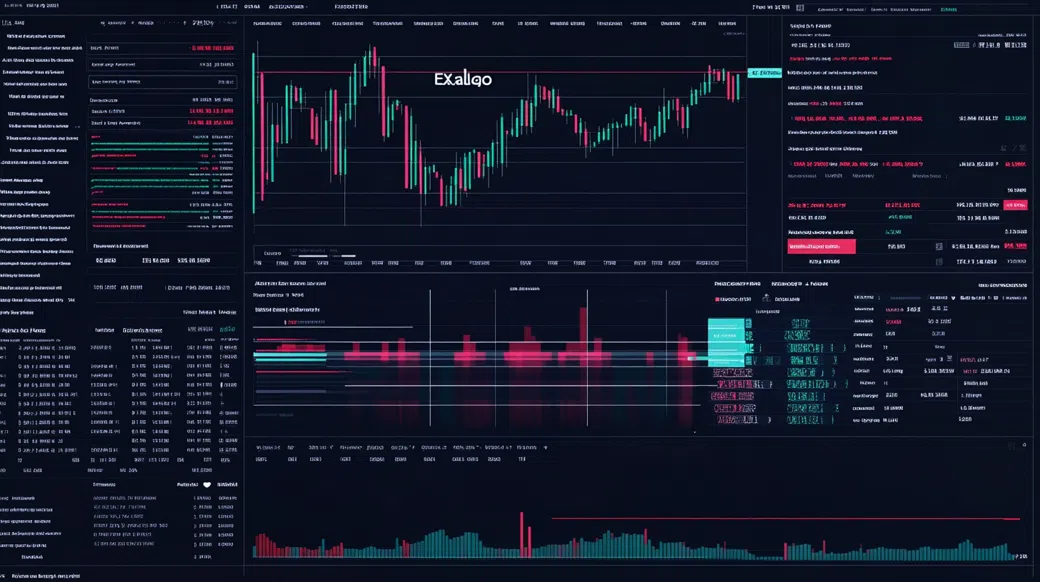
From the desktop side, the WebTrader held up: stable sessions, quick instrument search, and a chart-first layout that doesn’t waste screen real estate. Order tickets supported market and pending orders with basic risk controls (SL/TP), and I didn’t see platform-level “requote theater” when I hit buy/sell around the London open—fills were consistent, with the occasional small slippage you’d expect in fast ticks. If you live inside MT4/MT5 automation, note the gap: I didn’t treat MetaTrader support as confirmed, so assume this is a proprietary stack unless you verify otherwise.
On mobile, the TEB Trade app is built for monitoring and execution rather than deep analysis: real-time quotes, one-tap position close, and deposits/withdrawals accessible from the same menu tree. The TEB Trade login accepted biometric unlock on my device, and push notifications worked for price alerts once enabled. A quirk I noticed: dense watchlists can feel tight on smaller screens, so trimming instruments helps keep execution taps clean.
Tooling is practical, not luxurious—think economic calendar, an integrated news stream, and a standard indicator shelf (MA, RSI, MACD, Bollinger) with drawing tools for levels and trendlines. Watchlists and alerts are enough for a trader who already knows what to trade. The ceiling shows if you rely on advanced backtesting, custom indicators, or cTrader-style depth features; this is a retail WebTrader, not an institutional workstation.
Before I even looked at spreads, I went through the compliance gates: email/phone registration, then a KYC upload request that asked for a government-issued photo ID plus a proof of address dated within three months. Verification landed the same business day on my account, and the client area clearly flagged what was “pending” versus “approved.” The flow felt designed to satisfy AML checks rather than to gamify deposits.
One practical note: account currency choices can shape your “real” cost via conversion, especially if you fund in BRL or another non-USD currency through an intermediary. I’d also treat verification as mandatory before meaningful withdrawals, even if you can browse the platform earlier.
I tested support with a boring, money-relevant question: where exactly to find swap/overnight rates per symbol and whether the Raw account changes financing. Live chat answered in roughly three minutes, pointed me to the instrument-spec panel, and clarified that swaps are symbol-dependent rather than account-dependent (the spread/commission differs). I followed up via email to confirm withdrawal processing windows; the ticket reply came back in about eight hours with a method-by-method breakdown.
Coverage is what you’d expect from this segment: 24/5 availability around market hours, with language depth varying by agent queue. Phone support wasn’t emphasized in my region, so treat it as “may exist” rather than a core channel. Weekends are thinner—if you trade crypto CFDs, plan for slower human response outside the Monday-to-Friday rhythm.
If you’re considering an account, start by checking spreads on the instruments you actually trade and stress-testing margin levels on a demo. Also confirm your country eligibility and preferred funding rail before sending more than the minimum. Small operational details decide whether a broker fits your routine.
Visit TEB TradeIt can be, as long as the beginner understands CFD leverage and keeps position sizes small. The WebTrader is not intimidating, and the $10,000 demo helps you learn order mechanics without real losses. The offshore setup and 1:500 leverage are not “beginner-safe” by default—discipline has to do the heavy lifting.
Yes, you can trade crypto via CFDs, with BTC and ETH as the main liquidity anchors. That means you’re trading price exposure with leverage, not depositing coins into a wallet. Pay attention to spreads and weekend financing, which can outweigh “direction” if you hold for days.
No—based on my 2026 test, it behaved like an operating broker: KYC checks were required and a withdrawal request was processed. The more useful question is “what protections apply,” because offshore registration (Mauritius FSC) doesn’t offer the same safety net as Tier‑1 regulators. Treat it as higher-risk infrastructure and size your deposits accordingly.
No, TEB Trade is not available to US residents. During signup, residency and document checks are used to enforce restrictions. If you’re in the US, you’ll need a locally authorized broker for CFDs/derivatives access.
Most withdrawals are processed internally within 24–48 hours after KYC is cleared. Receipt time depends on the rail: cards typically take 2–5 business days, bank wires 3–7 business days, and crypto transfers often land the same day. In my case, the platform issued the approval quickly, with the banking leg doing the rest.
The minimum deposit is $200. That’s enough to open a live Standard account and test execution with small sizing. If you plan to use 1:500 leverage, keep margin buffers wide—minimum deposit should not mean maximum risk.
Yes, there are iOS and Android apps alongside the WebTrader. You can place orders, manage positions, and handle deposits/withdrawals from the phone. For heavy chart work, I still prefer desktop, but the mobile build is perfectly tradable.
Overall Score: 4.0/5
What stood out to me wasn’t marketing—it was the day-to-day mechanics: acceptable Standard spreads, a genuinely sharper Raw/ECN-style lane, and a platform stack that doesn’t get in your way when markets move. If you’re trading FX and major indices with strict risk rules, TEB Trade can do the job, and the $200 entry point keeps the “tuition” manageable. The non-negotiable caveat is structure: offshore oversight (Mauritius FSC) means fewer formal guardrails, so keep deposits proportional and respect leverage. CFDs are high-risk instruments; capital is at risk.
Best for: active CFD traders who want Raw-style pricing and can manage margin carefully. Avoid if: you require Tier‑1 regulation, deep research/education, or you tend to overuse leverage.