Thornbury Kapsted Alternatives 2026: Best Trading Platforms
Compare Thornbury Kapsted alternatives for 2026: regulated brokers, trading costs, platforms, market access, and safety checks for US/EU-focused traders.

Compare Thornbury Kapsted alternatives for 2026: regulated brokers, trading costs, platforms, market access, and safety checks for US/EU-focused traders.
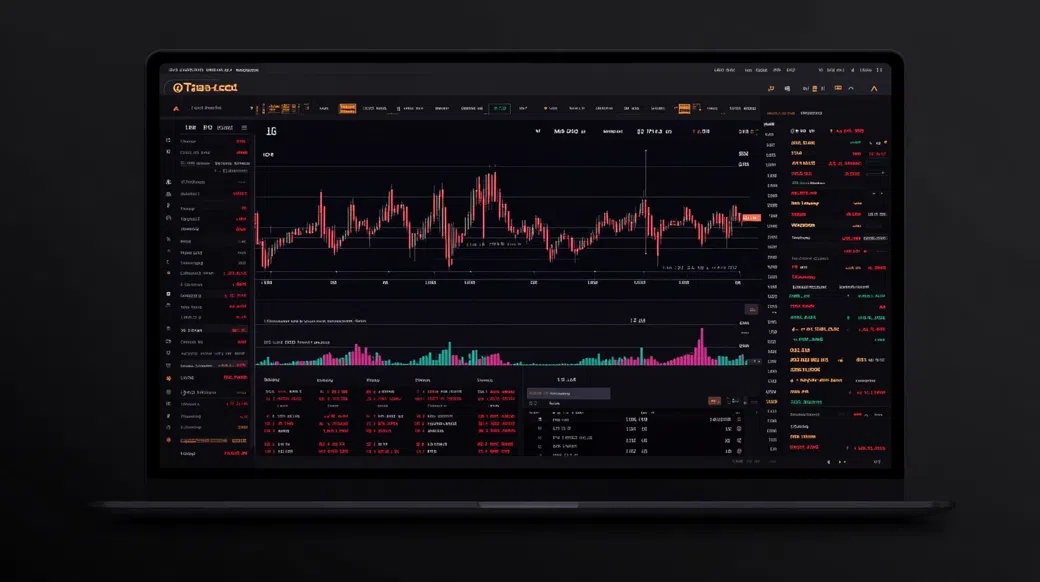
Retail traders usually search for a new broker after the numbers stop adding up: wide spreads, thin tools, unclear regulation, or withdrawal friction. That’s the practical lens for reviewing Thornbury Kapsted and mapping credible Thornbury Kapsted alternatives in 2026. For US/EU-based readers in particular, the key issue isn’t “features”; it’s whether the broker sits under a respected regulator, segregates client money, and offers transparent costs you can model before you place risk. Where public, verifiable information is limited, I use baseline assumptions that match common industry patterns (high-risk offshore setup, basic web trader, forex/CFDs, floating spreads from ~2.0 pips) to structure the comparison—then I show what to look for in regulated options vs Thornbury Kapsted so you can validate it yourself.
In practice, alternatives to the Thornbury Kapsted trading platform tend to fall into two buckets: (1) multi-asset, top-tier regulated brokers built for execution and risk controls, and (2) fintech-style apps that simplify investing but may limit leverage or professional tooling. Your choice should be driven by your strategy’s requirements—frequency, holding period, asset class, and whether you need APIs/MT4/MT5 or just clean order routing and fair pricing.
Disclaimer: This article is for informational purposes only and does not constitute investment advice. Trading leveraged products carries a high level of risk.
Based on typical market patterns when a broker’s public disclosures are limited, I treat Thornbury Kapsted as a baseline “high-risk” reference point for comparison: unregulated or offshore (high risk) offering primarily forex and CFDs through a proprietary web trader (basic), with floating spreads from ~2.0 pips as a reasonable starting assumption for cost modeling. This doesn’t prove anything good or bad by itself—it simply frames why many traders screen for competitors to Thornbury Kapsted that are verifiably regulated in the US/UK/EU.
How such platforms generally work: you open an account, deposit funds, and trade leveraged derivatives (CFDs) where your P&L is driven by price changes, spreads/commissions, and overnight financing (swap). The main operational risks tend to be: counterparty risk (broker quality), execution quality (slippage/requotes), and the reliability of deposits/withdrawals. If your strategy relies on tight spreads and consistent fills, a basic web-only environment can be a bottleneck.
With a proprietary web trader, the usual feature set includes: basic watchlists, market/limit orders, simple charting, and a small selection of indicators. Compared with platforms like Thornbury Kapsted, best-in-class brokers increasingly offer deeper charting packages, multiple order types (including advanced stops), execution statistics, and integrations such as MT4/MT5, TradingView, or APIs. The difference matters: execution and risk controls are measurable edges—especially for intraday FX/CFD traders.
Using industry-standard baselines when verified schedules aren’t available, assume floating spreads starting around 2.0 pips on major FX pairs and CFD financing costs applied overnight. Account tiers in this segment often bundle “benefits” (higher leverage, account managers) that don’t compensate for weaker protections. If you are benchmarking top substitutes for Thornbury Kapsted, focus less on headline spreads and more on all-in costs: spreads/commissions, swaps, conversion fees, and any inactivity/withdrawal charges.
The most common trigger is simple: the trading log shows friction—costs, fills, and operational reliability. Traders usually start screening Thornbury Kapsted alternatives when the platform no longer supports the strategy’s requirements or when the risk profile of the broker itself becomes hard to justify.
When comparing Thornbury Kapsted alternatives, I start with a checklist you can verify in writing. Marketing claims are cheap; audited disclosures and regulator registers are not. The goal is to move from “trust me” to “show me,” then quantify the trade-offs in cost and functionality.
First, confirm the legal entity you’re onboarding with, then verify it on the regulator’s official register (not a screenshot). Prioritize jurisdictions with enforceable conduct rules and client-money segregation. In the EU/UK, look for negative balance protections (where applicable), clear risk warnings, and transparent product governance. In the US, note that retail FX/CFD access is restricted; US residents typically use CFTC/NFA-regulated venues for forex and SEC/FINRA brokers for securities—so many brokers similar to Thornbury Kapsted may not be suitable for US clients.
Match instruments to your strategy: spot FX, index CFDs, commodities, single-stock CFDs (restricted in some regions), options, futures, ETFs, or real shares. If you need true exchange-traded access (stocks/ETFs/futures), prioritize multi-asset brokers with clear routing and custody rules rather than CFD-only models. If a platform is mainly forex/CFDs, compare leverage rules, margin policies, and instrument breadth.
Model total cost per trade and per month. For FX: spread + commission (if any) + swap + slippage. For shares/ETFs: commission, FX conversion, custody/ADR fees, and data fees. Also check non-trading fees: deposit/withdrawal charges, inactivity fees, and platform fees. This is where “best Thornbury Kapsted alternatives 2026” often separate: tight spreads are meaningless if swaps are punitive or withdrawals are expensive.
Execution is where retail brokers quietly differ. Look for stable uptime, transparent order types, and realistic disclosures about slippage. MT4/MT5 support can matter for EAs; TradingView matters for discretionary traders; APIs matter for systematic traders. If your current setup is a basic web trader, competitors to Thornbury Kapsted with professional tooling can materially improve risk management and monitoring.
Support quality is measurable: response times, clarity, and whether issues are handled with documented tickets. Education is secondary, but good brokers publish product specs, margin tables, and clear fee schedules. For global users, multilingual support and robust KYC workflows reduce operational headaches when moving between brokers.
Using the baseline assumption that Thornbury Kapsted is primarily a forex/CFD venue, the key comparison points are spreads, swaps, margin policy, and execution behavior. A floating spread “from ~2.0 pips” is workable for low-frequency trading but becomes expensive for active strategies—especially on majors where top-tier brokers often compete aggressively on all-in pricing (spread + commission). The other variable is execution quality: with CFD market makers, you’re trading against the broker’s pricing stream, so you want robust disclosures, reliable fills, and well-defined negative balance protections where required.
If you’re evaluating platforms like Thornbury Kapsted, pay attention to: instrument specification sheets (contract sizes, tick values), stop-out levels, and whether the broker supports advanced order types and risk controls. For traders who hedge, scalp, or run algorithmic systems, MT4/MT5 or API access can be non-negotiable—this is a common reason to look for Thornbury Kapsted alternatives that offer professional-grade infrastructure.
Stock and ETF access is where many CFD-first platforms show limitations. If Thornbury Kapsted offers stocks, it may be via CFDs rather than custody of real shares—meaning you may not receive the same shareholder rights, and costs can be embedded in spreads or financing. If stock/ETF trading is limited or unavailable, switching to alternatives to the Thornbury Kapsted trading platform that provide exchange-traded investing (real shares/ETFs) can reduce complexity: you get clearer reporting, corporate action handling, and (often) lower long-term holding costs.
For EU/UK traders, also watch the distinction between real shares/ETFs vs leveraged share CFDs. For US traders, prioritize SEC/FINRA-regulated brokers for equities, since CFD access is not broadly available for retail in the US.
Crypto is a regulatory patchwork in 2026, and the product wrapper matters: spot crypto custody, crypto CFDs, or crypto futures (exchange-traded). If Thornbury Kapsted offers crypto exposure, it may be through CFDs—convenient, but with financing costs and counterparty risk. For many traders, the safer path is either: (a) a well-regulated broker offering crypto ETPs/ETNs where permitted, or (b) a reputable crypto exchange (with region-appropriate licensing) for spot custody—depending on your risk tolerance and jurisdiction.
In short, if crypto is core to your strategy, competitors to Thornbury Kapsted should be judged on custody model, disclosures, and compliance footprint—not on marketing spreads.
Regulation: Multi-jurisdictional oversight; key entities include SEC/FINRA (US) and FCA (UK), among others depending on region. Always verify your onboarding entity.
Markets: Broad multi-asset access including stocks, ETFs, options, futures, bonds, and FX (availability varies by jurisdiction).
Fees: Generally commission-based for many products with transparent schedules; additional costs can include market data subscriptions and FX conversion depending on usage.
Platform: Trader Workstation (TWS), web and mobile apps, APIs; designed for active and professional workflows.
Best For: Serious multi-asset traders who want institutional-style tooling and global market access as a step up from Thornbury Kapsted alternatives that are CFD-only.
Regulation: Well-known regulated broker with entities commonly overseen by FCA (UK) and other top-tier regulators depending on region.
Markets: Strong CFD and FX offering; also provides share dealing/investing services in certain jurisdictions.
Fees: Typical model is spread-based for many CFDs; share dealing fees may apply where available; financing applies to leveraged positions.
Platform: Proprietary platforms, MT4 support in many regions, robust mobile experience; tools geared to active derivatives traders.
Best For: Traders seeking regulated options vs Thornbury Kapsted with mature CFD infrastructure and strong risk disclosures.
Regulation: Operates under respected regulatory frameworks (jurisdiction-dependent), with a strong compliance reputation in Europe.
Markets: Multi-asset: stocks, ETFs, options, futures, bonds, FX, and CFDs (product availability varies).
Fees: Tiered pricing is common; expect commissions on exchange-traded products and spreads/financing on FX/CFDs.
Platform: SaxoTraderGO/SaxoTraderPRO; strong analytics, reporting, and portfolio tools.
Best For: Investors and active traders who want a single account for multi-asset exposure—often a cleaner fit than platforms like Thornbury Kapsted for longer holding periods.
Regulation: Frequently regulated under FCA (UK) and other authorities depending on region; confirm the entity before funding.
Markets: FX and CFDs across indices, commodities, rates, and sometimes shares (jurisdiction-dependent).
Fees: Typically spread-based; some regions offer commission-based FX pricing tiers; financing on leveraged CFDs.
Platform: Next Generation platform plus MT4 in many regions; strong charting and product breadth for CFDs.
Best For: Active FX/CFD traders comparing brokers similar to Thornbury Kapsted but demanding deeper tools and clearer pricing.
Regulation: European brokerage group with regulated entities (EU/UK presence depending on region). Verify your local entity and protections.
Markets: FX and CFDs; also offers access to stocks/ETFs in certain jurisdictions (terms vary).
Fees: Often spread-based for CFDs/FX; investing products may have commission structures or thresholds; financing for leveraged positions.
Platform: xStation platform (web/mobile/desktop-style experience), designed for usability and analytics.
Best For: Traders who want a modern interface and a bridge between CFD trading and investing—practical Thornbury Kapsted alternatives for mixed users.
Regulation: Regulated in key jurisdictions (entity-dependent), with a long operating history in FX; US customers typically use the NFA/CFTC-regulated entity for retail forex.
Markets: Primarily FX; CFDs are available in certain non-US jurisdictions depending on the entity.
Fees: Commonly spread-based pricing; some regions offer commission + raw spread structures; financing applies to leveraged positions.
Platform: Proprietary platforms plus integrations (availability varies), API options for some users.
Best For: FX-focused traders looking for competitors to Thornbury Kapsted with a stronger compliance footprint and straightforward FX offering.
| Platform | Regulation | Main Markets | Typical Costs | Best For |
|---|---|---|---|---|
| Interactive Brokers (IBKR) | SEC/FINRA (US), FCA (UK), others (entity-dependent) | Stocks/ETFs, options, futures, bonds, FX | Commissions + potential market data fees; FX conversion costs depending on activity | Professional-grade multi-asset trading and tooling |
| IG | FCA (UK) and others (entity-dependent) | FX/CFDs; share dealing in some regions | Primarily spreads; financing on leveraged CFDs; commissions for investing where applicable | Regulated CFD trading with mature infrastructure |
| Saxo | Top-tier European regulation (entity-dependent) | Multi-asset: stocks/ETFs, options, futures, FX, CFDs | Commissions (exchange-traded) + spreads/financing (FX/CFDs); tiered pricing | One-account multi-asset investing + active trading |
| CMC Markets | FCA (UK) and others (entity-dependent) | FX and CFDs (indices, commodities, etc.) | Spreads; possible commission-based FX tiers; financing on leveraged CFDs | Active FX/CFD traders needing strong charting |
| XTB | EU/UK regulated entities (entity-dependent) | FX/CFDs; stocks/ETFs in some regions | Spreads for CFDs; investing fees/thresholds vary; financing on leverage | Modern platform for mixed trading/investing |
| OANDA | NFA/CFTC (US entity) and other regulators (entity-dependent) | FX (core); CFDs in some non-US regions | Spreads or spread+commission options (region-dependent); financing on leverage | FX-focused traders prioritizing regulatory clarity |
Switching is an operational process, not a click. Treat it like a controlled migration: preserve records, reduce market exposure during transfers, and verify the new broker’s legal entity and fees before you fund.
There isn’t one best choice for everyone, but for most serious traders the “best Thornbury Kapsted alternatives 2026” are regulated, transparent brokers with strong execution and reporting. If you need broad global market access and professional tooling, Interactive Brokers is a frequent top pick. If your focus is FX/CFDs under well-known regulation, IG or CMC Markets are common shortlists. The right answer depends on your jurisdiction, asset needs, and whether you prioritize multi-asset investing or leveraged derivatives.
From a risk-management standpoint, treat Thornbury Kapsted as higher risk unless you can independently verify strong regulation, clear client-money segregation, and enforceable investor protections. Where public data is limited, a conservative baseline is “unregulated or offshore (high risk).” If you can’t confirm the legal entity on an official regulator register, consider regulated options vs Thornbury Kapsted instead.
Using baseline assumptions, Thornbury Kapsted is primarily a forex/CFD setup, meaning stock/ETF investing and exchange-traded futures may be limited or unavailable, and crypto exposure (if offered) may be via CFDs rather than spot custody. If your strategy requires real shares/ETFs or listed futures, you’ll generally do better with Thornbury Kapsted alternatives that provide exchange-traded access (for example, Interactive Brokers or Saxo, subject to jurisdiction).
Before switching, confirm (1) the new broker’s exact legal entity and regulator registration, (2) client-money segregation and protections, (3) the full fee stack (spreads/commissions, swaps, withdrawal/inactivity, FX conversion), (4) platform fit (MT4/MT5, TradingView, API, order types), and (5) operational reliability via a small deposit-and-withdrawal test. That checklist is the fastest way to filter brokers similar to Thornbury Kapsted and land on safer Thornbury Kapsted alternatives you can actually verify.
If you can’t verify robust oversight and transparent cost disclosures, the rational move is to prioritize regulated, well-documented venues over marketing promises. Using conservative baseline assumptions, Thornbury Kapsted looks like it may offer limited functionality compared to top-tier brokers, particularly for traders who need tighter pricing, deeper platforms, and enforceable protections. The best Thornbury Kapsted alternatives are the ones you can audit: regulator register entry, fee schedules, product specs, and a clean withdrawal track record.