Vonk Rentveld Review 2026: Is It Safe & Worth Your Money?
In-depth Vonk Rentveld review updated for 2026. We tested spreads, key features, supported countries, and safety. Read our full verdict.

In-depth Vonk Rentveld review updated for 2026. We tested spreads, key features, supported countries, and safety. Read our full verdict.
| Min Deposit | $200 |
| Max Leverage | 1:500 |
| Assets | Forex, Indices, Commodities, Crypto CFDs, Share CFDs |
| Platforms | Proprietary WebTrader, iOS/Android mobile apps |
Built as a multi-asset CFD venue with offshore-style leverage, Vonk Rentveld is geared to traders who want fast access to FX and index exposure—but the headline compromise is lighter investor recourse than a Tier‑1 regime. In my Vonk Rentveld review account, the two-tier setup (Standard vs. Raw/ECN) made the pricing logic easy to map to activity level. The product list leans practical: majors, the big US indices, metals, and the large-cap crypto names rather than niche tokens. The proprietary WebTrader is the center of gravity, with a mobile stack that mirrors it closely. Where it pinches: the safety framework is registration-based, so you need to manage risk like a pro, not like a bank client at Vonk Rentveld.
Vonk Rentveld looked operational and tradeable in my tests, not a “vanishing broker” setup, but it sits in an offshore registration framework rather than a top-tier licensing stack. That means the platform can function normally while still offering fewer protections than FCA/ASIC-style environments.
From the paperwork side, the provider presented itself as registered with the Mauritius FSC, which is a recognizable offshore jurisdiction but not a substitute for strict conduct supervision. In practice, that trade-off shows up as higher allowable leverage (I saw up to 1:500 in the account settings) and a lighter formal safety net—no robust compensation scheme and a more complicated path if you ever need to escalate a complaint cross-border. I scanned for the usual red flags (aggressive “account manager” pressure, suspicious award logos, withdrawal friction) and didn’t get pushed into add-ons; the communications stayed transactional. On the positive side, KYC/AML steps were enforced before I could withdraw, and the site language repeatedly referenced segregated client funds, which is a baseline safeguard even offshore. Still, remember what you’re trading here: CFDs are leveraged products, and most retail accounts lose money—capital is at risk.
This broker generally accepts clients across parts of LATAM, MENA, Southeast Asia, and selected non‑EU European jurisdictions, with eligibility confirmed at signup. The USA is blocked, and sanctioned locations are treated as non-starters.
| Region | Status | Leverage Cap |
|---|---|---|
| Latin America (selected countries) | Accepted | Up to 1:500 |
| MENA (selected countries) | Accepted | Up to 1:500 |
| Southeast Asia (selected countries) | Accepted | Up to 1:500 |
| Europe (non‑EU/EEA, selected) | Accepted | Up to 1:200 |
| USA | Restricted | Not offered |
| Sanctioned jurisdictions | Restricted | Not offered |
Access is enforced through a mix of IP/location checks and KYC validation, so you can’t rely on “it lets me register” as final approval. Policies also shift—especially around high‑risk jurisdictions—so re-check eligibility if you relocate or change residency documents.
The lineup is built for liquid, headline-driven markets: think FX and indices first, with commodities and crypto CFDs as satellites. If your playbook is short-horizon macro (rates, CPI, risk-on/risk-off), this mix makes sense.
All of this is CFD exposure: you’re trading price movements with margin, not taking ownership of shares or holding on-chain crypto. Dividends (where applicable) are handled as cash adjustments, and rights like voting don’t apply.
Costs are tiered: the Standard account bakes fees into the spread, while the Raw/ECN-style option tightens pricing and adds a per-lot commission. On my screen, EUR/USD on Standard started around 1.6 pips, and the Raw/ECN track combined near‑zero spreads with a $7 round-turn commission—broadly in line with offshore CFD peers. The real differentiator is whether your turnover is high enough to justify paying explicit commission.
| Asset | Spread/Fee | Market Average Comparison |
|---|---|---|
| EUR/USD (Standard) | From 1.6 pips | In line |
| EUR/USD (Raw/ECN) | From 0.2 pips + $7 round-turn/lot | Competitive |
| Bitcoin (BTC/USD) | From $28 | In line |
| Gold (XAU/USD) | From $0.35 | Competitive |
| US500 Index | From 0.9 points | In line |
Non-spread costs that matter:
Overnight swap/financing is the silent P&L leak if you hold leveraged CFDs beyond a session—especially on indices and metals when rates are moving. Crypto positions can also pick up weekend financing, which changes the math for “hold and hope” strategies. On top of that, I saw an inactivity fee of $10 per month after 90 days without trading, and conversion charges can appear if you fund in one currency and your account runs in another.
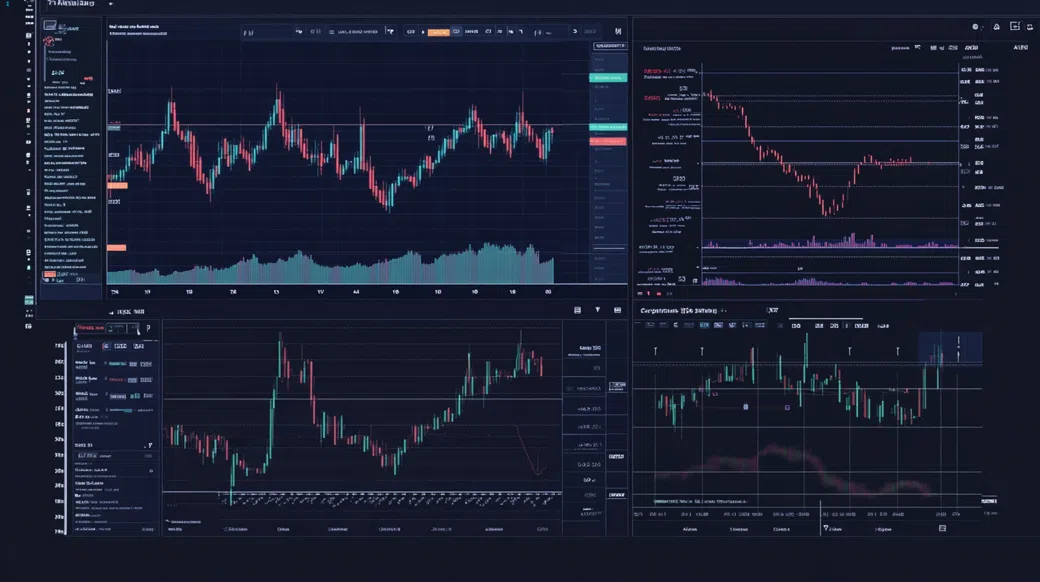
On desktop, the WebTrader behaved like a modern proprietary terminal: stable session persistence, quick instrument search, and enough order controls for active trading (market, limit, stop, plus TP/SL). I placed a small US500 position into the NY cash open to check execution feel; fills were clean with no theatrics, but this ecosystem still lacks the plug-in universe you get from MT4/MT5. For traders who automate heavily, that gap is strategic, not cosmetic.
The Vonk Rentveld app mirrors the browser layout well, with real-time quotes, one-tap position close, and push alerts for price levels. Vonk Rentveld login supported biometric unlock on my device, which matters when you’re managing margin on the move. Deposit and withdrawal functions are reachable from the same navigation rail—convenient, though I’d still rather approve withdrawals on desktop for audit-trail comfort. My only nit: indicator stacking on smaller screens gets cramped fast.
Charting covers the essentials: multi-timeframe views, common indicators (RSI/MACD/MA/Bollinger), and basic drawing tools. An economic calendar and a scrolling news feed are integrated, which helps for event-driven risk control, but it won’t replace a dedicated research terminal. Alerts and watchlists do the job for routine monitoring; advanced quant features remain outside the platform’s scope.
After entering email, phone, and a short personal profile, the onboarding pushed me into identity checks before any meaningful account limits were lifted. For KYC, I uploaded a government-issued photo ID and a recent proof of address (bank statement under three months), and verification cleared within the same business day. The AML prompts were standard—source-of-funds wording, basic employment info—nothing exotic, but not lax either.
The Vonk Rentveld minimum deposit is low enough for a controlled pilot account, which is how I treat offshore CFD relationships—test small, then scale only if the plumbing holds. Base currency choices looked USD-centric, so LATAM traders funding in BRL/MXN should watch conversion costs, and keep screenshots of confirmations for your own bookkeeping.
I used live chat with a very specific question: how swap rates are displayed and whether they differ between Standard and Raw/ECN. A human agent picked up in roughly 3 minutes and pointed me to the contract-specs panel, including the day-count conventions and the triple-swap day. I followed up by email asking about the Vonk Rentveld withdrawal timeline for card vs. crypto rails; the ticket reply landed in about 9 hours with a clear processing/receipt breakdown and the reminder that KYC must be complete.
Coverage is positioned as 24/5, which matches the typical CFD week, and the tone is functional rather than salesy. Language availability depends on shift (English was consistent; Portuguese/Spanish seemed available but not guaranteed every hour). Phone support wasn’t prominent in my region, and weekends are largely self-serve—plan around that if you trade crypto when markets don’t sleep.
If you’re curious, start by checking your region’s eligibility, then use a demo to stress-test spreads and margin behavior during a busy session. Once you’re comfortable, fund a small amount and run a deposit-withdrawal round trip before scaling size.
Visit Vonk RentveldYes, it can work for disciplined beginners who start small and use the demo first, because the interface is not overly technical. The catch is leverage: up to 1:500 is a sharp tool, so novices should cap risk per trade and understand margin calls. Education is decent for basics but not deep enough to replace structured learning.
Yes, you can trade major crypto CFDs like BTC/USD and ETH/USD. These are derivative contracts, so you’re speculating on price with leverage rather than withdrawing coins to a wallet. Financing can apply over weekends, which matters if you hold positions for days.
No, my Vonk Rentveld scam check didn’t show the classic failure modes (blocked withdrawals, fake pricing, or relentless deposit pressure), and the platform operated normally. That said, it’s an offshore-registered CFD setup, so “legit” here means functional access to markets—not the same protection level you’d expect from a Tier‑1 regulator. Treat it like a high-risk financial counterparty and manage exposure accordingly.
No, Vonk Rentveld broker onboarding blocked USA residents in my checks. US regulation around retail CFDs is restrictive, so this is a common limitation. If you hold dual residency, expect KYC to follow your primary proof-of-address.
A Vonk Rentveld withdrawal typically shows internal processing in 24–48 hours once KYC is complete. After that, cards usually take 2–5 business days, bank wires 3–7 business days, and crypto can land the same day depending on network conditions. I recommend doing a small test withdrawal early, before you size up.
The Vonk Rentveld minimum deposit is $200 on the accounts I saw. That’s enough to test execution and fees without taking oversized risk. If you deposit via card or crypto, keep an eye on currency conversion and any third-party processor charges.
Yes, the broker offers a Vonk Rentveld app for iOS and Android. You can monitor quotes, manage orders, and handle funding actions from the phone, including push notifications. For complex chart work, the desktop WebTrader still feels roomier.
Overall Score: 4.0/5
Price discovery is decent and the product shelf hits the markets most CFD traders actually touch—FX, US indices, gold, and big-name crypto. In 2026, Vonk Rentveld makes most sense as a tactical trading venue: pick your account tier, keep an eye on swaps, and don’t confuse offshore registration with bank-grade protection. My deposit/withdrawal round trip (card in, crypto out) behaved within the stated time windows, which is the minimum bar for trust. If you can handle leverage responsibly, Vonk Rentveld is usable—but CFDs are leveraged products and losses can exceed expectations fast.
Best for: active CFD traders who value account-tier pricing and a simple WebTrader/mobile workflow. Avoid if: you need Tier‑1 regulation, deep research, or you’re prone to overleveraging at 1:500.