Warven Wealthvale Review 2026: Is It Safe & Worth Your Money?
In-depth Warven Wealthvale review updated for 2026. We tested spreads, key features, supported countries, and safety. Read our full verdict.

In-depth Warven Wealthvale review updated for 2026. We tested spreads, key features, supported countries, and safety. Read our full verdict.
| Min Deposit | $200 |
| Max Leverage | 1:500 |
| Assets | Forex, Indices, Commodities, Crypto CFDs, Share CFDs |
| Platforms | Proprietary WebTrader, iOS app, Android app |
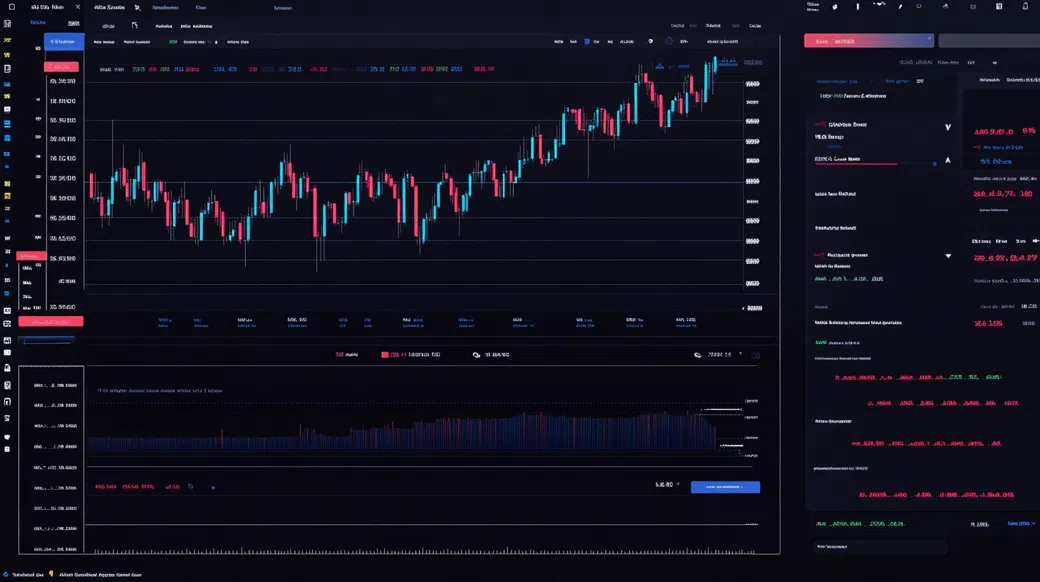
Built as a high-leverage, multi-asset CFD venue, Warven Wealthvale suits traders who want a fast-moving WebTrader plus mobile execution, with the obvious trade-off being an offshore supervision model rather than a Tier‑1 rulebook. In my test account, the menu splits cleanly into spread-only Standard and a tighter Raw/ECN-style tier aimed at frequent traders. The broker leans heavily on FX and index CFDs, while keeping crypto and share CFDs as “satellite” products. The platform stack is proprietary (web + apps), which keeps the workflow tight but limits the familiar MT4/MT5 ecosystem. For the 2026 snapshot, the value proposition is simple: pricing is competitive enough, but the safety cushion depends more on internal controls than on regulator-driven dispute channels—start small and size risk properly via Warven Wealthvale.
Warven Wealthvale looked operational and tradeable in my 2026 checks, not a “vanish-after-deposit” setup. That said, it runs under an offshore framework, so “legit” here means the service functions, not that you get the same investor protections you’d expect under FCA/ASIC-style regimes.
On paper, the provider presented itself as registered in Mauritius under the FSC, which is a familiar pattern for international CFD brands that want broader leverage and lighter product constraints. In practice, that offshore status cuts both ways: you often get higher leverage and broader onboarding access, but you give up strong compensation schemes and straightforward regulator-led dispute handling. My red-flag scan was mostly about behavior, not marketing—no aggressive “account manager” calls, no suspicious trophy-badge overload, and (importantly) withdrawals weren’t blocked by surprise conditions. KYC was enforced: ID plus proof of address were required before I could push a payout request, and the legal pages referenced segregated client funds language (a good sign, though not the same as a top-tier audit trail). Remember what you’re actually trading: CFDs with leverage; margin calls and rapid losses are real, and most retail accounts lose money when risk is unmanaged.
The platform accepted a broad mix of international clients—especially LATAM and parts of Africa and Asia—while the USA and sanctioned jurisdictions were blocked during my signup checks.
| Region | Status | Leverage Cap |
|---|---|---|
| Latin America (selected countries) | Accepted | Up to 1:500 |
| Southeast Asia (selected countries) | Accepted | Up to 1:500 |
| MENA (non-sanctioned) | Accepted | Up to 1:500 |
| Africa (selected countries) | Accepted | Up to 1:500 |
| USA | Restricted | Not offered |
| Sanctioned jurisdictions | Restricted | Not offered |
Eligibility wasn’t just a checkbox: IP location and KYC country documents both mattered, and the system surfaced restrictions before finalizing profile details. Policies can shift with compliance updates, so confirm your country status at the point of registration—not after funding.
Product breadth is “macro first”: currencies and indices sit at the center, with commodities and crypto CFDs there for volatility and hedging, not for long-term investing.
All exposure here is via CFD contracts: you’re not taking shareholder ownership, you don’t receive stockholder voting rights, and “crypto” positions aren’t on-chain withdrawals. Treat it as trading risk, not custody.
Warven Wealthvale fees are structured around two lanes: Standard is spread-only, while the Raw/ECN-style option compresses the spread and adds a per-lot commission. On EUR/USD, the Standard tier is usable for discretionary trading, but the Raw tier is the one that starts to make math sense if you trade size or scalp.
| Asset | Spread/Fee | Market Average Comparison |
|---|---|---|
| EUR/USD (Standard) | From 1.4 pips | In line with offshore CFD peers |
| EUR/USD (Raw/ECN) | From 0.2 pips + $7 round-turn/lot | Competitive for active traders |
| Bitcoin (BTC/USD) | From $35 | Typical for CFD crypto, variable with volatility |
| Gold (XAU/USD) | From $0.25 | Slightly better than many spread-only books |
| US500 Index | From 0.8 points | Roughly market-consistent |
Non-spread costs that move the P&L over weeks: swap/overnight financing applies on most leveraged CFD positions, and it’s the silent killer for “I’ll just hold it” trades—especially around Wednesday triple-swap conventions. I also logged a $10/month inactivity fee after 90 days of no trading activity, which is avoidable but real. On withdrawals, method rails can add their own costs (bank wires and card processors), and currency conversion is where international clients often bleed a few extra bps. If you want the current cost sheet in one place, check it inside the client portal on Warven Wealthvale before you scale position size.
From the desktop side, the WebTrader held up under a “real trader” routine: multiple charts, quick symbol search, and position management without freezing when I stacked indicators. Order tickets covered market and pending orders with configurable SL/TP; execution felt consistent during the London-New York overlap, with mild slippage when volatility picked up. The gap versus MT4/MT5 is mostly ecosystem—fewer third-party scripts and less plug-and-play automation—so discretionary traders will feel at home sooner than bot-heavy users.
The Warven Wealthvale app mirrors the web layout closely, which matters when you’re managing risk away from the desk. Quotes updated in real time, one-tap close worked reliably, and I could initiate deposits and a withdrawal request from the same interface. Biometric unlock was available on my device, making the Warven Wealthvale login flow more practical for frequent checks. My one complaint: on smaller screens, the chart-to-ticket transition can feel tight, so you’ll want to pre-set lot sizes and default stops if you trade fast.
Tools were adequate rather than premium: a built-in economic calendar, a basic news feed, and a familiar indicator set (MA, RSI, MACD, Bollinger) plus drawing tools for levels and trendlines. Watchlists and price alerts did the job for session planning. Still, if you’re used to MT5 or cTrader depth—advanced order analytics, richer strategy testing—you’ll notice the ceiling quickly.
My onboarding started with a short form (email, phone, residency) and then pushed directly into identity verification. For KYC/AML, the broker requested a government photo ID and a proof of address dated within three months; upload was done through a guided document screen. Verification cleared the same business day on my profile, and withdrawal functions were locked until that step was complete—an inconvenience, yes, but also a basic safeguard.
On the funding side, my card deposit posted immediately and the balance updated without a second confirmation loop. The Warven Wealthvale minimum deposit is positioned for small-to-mid accounts, but remember leverage cuts both ways; sizing is your real “entry ticket.” Base currency choices can affect conversion costs, so pick a denomination that matches how you fund and withdraw.
I tested support with a practical question: how swaps are displayed and whether the Raw account changes overnight rates versus Standard. Live chat answered in about three minutes, pointed me to the contract-spec page, and clarified that swap depends on instrument and position direction—not the spread model alone. I also opened an email ticket about payout timelines for card withdrawals; the reply landed in roughly nine hours with a clear breakdown of internal processing (24–48 hours after KYC) versus bank-side settlement.
Coverage matched what I expect from offshore CFD desks: 24/5 availability, with weekend support thinner and mostly limited to form/email. Language options depend on region; English was consistent, while local-language coverage looked more patchy. Phone support wasn’t prominently offered in my dashboard, so if you need voice escalation, factor that into your broker selection.
If you’re considering this broker, start by checking the live spreads during your trading hours and confirming your country eligibility before funding. A demo account is a smart first step to map order types, margin behavior, and the mobile workflow—especially if you’re coming from MT4/MT5.
Visit Warven WealthvaleIt can be, provided you treat it as a leveraged CFD platform and keep sizing small. The interface is clean and the demo helps, but leverage up to 1:500 is not “beginner-friendly” if you don’t understand margin calls. I’d suggest starting with majors and using hard stops from day one.
Yes, crypto is available as CFDs, including BTC/USD and ETH-based pairs. You’re trading price exposure with leverage, not buying coins for on-chain transfers. Weekend financing and spread widening can materially change your cost if you hold positions.
No—based on my 2026 test, it behaved like a functioning broker (quotes, execution, KYC, and withdrawals). The more relevant question is “what protections do I have?” and the answer is: fewer formal backstops than a Tier‑1 regulated firm because it operates offshore. So, manage risk and avoid overfunding until trust is earned over time.
No, USA residents were restricted in my checks. The signup flow flags this early, and KYC residency documents are used to enforce it. If you relocate, confirm eligibility again before attempting deposits or withdrawals.
Internal processing ran 24–48 hours once KYC was approved. After that, receipt time depends on the rail: cards typically showed 2–5 business days, bank wires 3–7 business days, and crypto transfers can land within hours. Delays usually come from banking intermediaries, not the trading platform itself.
The Warven Wealthvale minimum deposit is $200 on the entry account in my 2026 test. That’s enough to trade small size, but not enough to absorb sloppy leverage usage. If you’re learning, use the demo first and keep real-money exposure modest.
Yes, there are iOS and Android apps alongside the WebTrader. You can manage orders, adjust stops, and access funding/withdrawal functions from mobile. For active traders, biometric unlock makes frequent login checks less painful.
Overall Score: 3.9/5
For traders who think in spreads, pips, and execution rather than marketing slogans, Warven Wealthvale lands in the “usable, but verify” bucket. The Raw/ECN-style pricing is the highlight, and the proprietary platforms are coherent across web and mobile. Where I stay conservative is the jurisdiction: offshore registration changes the safety math, and leverage up to 1:500 can turn small mistakes into forced liquidations. If you keep position sizing disciplined and treat the first months as a probation period—deposit small, withdraw once, test support—then Warven Wealthvale can earn a spot on a trader’s shortlist. CFDs are leveraged products; your capital is at risk.
Best for: active CFD traders who want a WebTrader + mobile stack and can benefit from Raw-style pricing. Avoid if: you need Tier‑1 regulatory protections, deep research, or you’re prone to overusing leverage.