Wolf Kapitthal Review 2026: Is It Safe & Worth Your Money?
In-depth Wolf Kapitthal review updated for 2026. We tested spreads, key features, supported countries, and safety. Read our full verdict.

In-depth Wolf Kapitthal review updated for 2026. We tested spreads, key features, supported countries, and safety. Read our full verdict.
| Min Deposit | $200 |
| Max Leverage | 1:500 |
| Assets | Forex, indices, commodities, crypto CFDs, share CFDs |
| Platforms | WebTrader + iOS/Android apps |
Built as a multi-asset CFD venue with an offshore framework, Wolf Kapitthal suits traders who prioritize flexible leverage and a clean WebTrader over heavyweight regulation—at the cost of weaker formal recourse if something goes wrong. Across my test, the account tiers were split into a spread-only Standard and a tighter Raw/ECN-style option, which matters if you scalp majors. The product list leans practical: FX and indices first, then gold/oil and a handful of liquid crypto CFDs. Execution and charting felt “broker-grade,” not institutional, but the UI stayed stable through the London open. For a first look and a demo spin, Wolf Kapitthal is easy to evaluate; the main drawback is that the safety story depends more on internal controls than on a top-tier regulator.
Wolf Kapitthal looks operational rather than a “vanishing broker” scam: it opened, verified, priced markets, and processed my withdrawal request without theatrics. The caveat is structural—its oversight sits in an offshore jurisdiction, so investor protections are thinner than what you’d expect under FCA/ASIC-style rules.
The entity I encountered in the onboarding footer and terms referenced the Mauritius FSC, which places this broker in the “international CFD” bucket: higher leverage is accessible, but compensation schemes and enforcement muscle are typically lighter. In practice, that means you should treat every promise as contractual text—what’s written about segregated client funds, margin calls, and negative balance protection matters more than marketing badges. I looked for the usual red flags (aggressive “account manager” pressure, fake award tiles, deposit-only funnels) and didn’t see hard sells; the platform did push an upgrade prompt, but it was contained to the account page. KYC was enforced before withdrawal in my flow (ID + proof of address), and the portal displayed AML checkpoints clearly. Still, CFDs are leveraged products; most retail traders lose money, and capital is at risk—especially at 1:500.
This provider is broadly open to many international clients, with the smoothest onboarding experience for LATAM, parts of Africa, and segments of Asia; the USA and sanctioned jurisdictions are blocked.
| Region | Status | Leverage Cap |
|---|---|---|
| Latin America (selected) | Accepted | Up to 1:500 |
| Southeast Asia (selected) | Accepted | Up to 1:500 |
| MENA (selected) | Accepted | Up to 1:500 |
| Sub-Saharan Africa (selected) | Accepted | Up to 1:500 |
| Europe (non-EU, selected) | Accepted | Up to 1:200 |
| USA | Restricted | Not offered |
| Sanctioned jurisdictions | Restricted | Not offered |
Access is policed through a mix of IP checks and KYC residency validation, so “accepted” can flip if compliance updates its country list. If you travel, expect the portal to request additional proof before enabling deposits or a Wolf Kapitthal withdrawal.
On product design, this platform is FX-and-index centric, then branches into the liquid stuff most CFD traders actually click: gold, crude, and top crypto tickers. You won’t get every exotic under the sun, but the core benchmarks are covered.
Everything here is CFD exposure—no shareholder voting, no direct coin custody, and “dividends” on share CFDs are typically adjustments rather than true distributions. Treat it as trading price movement, not owning the asset.
Costs are driven by account choice: Standard is spread-only, while the Raw/ECN-style tier tightens EUR/USD into near-zero territory and adds a per-lot commission. On my screen, the all-in pricing landed broadly in line with offshore CFD peers—good enough for short-term trading, less compelling for buy-and-hold.
| Asset | Spread/Fee | Market Average Comparison |
|---|---|---|
| EUR/USD (Standard) | From 1.6 pips | In line |
| EUR/USD (Raw/ECN) | From 0.2 pips + $7 round-turn/lot | Competitive |
| Bitcoin (BTC/USD) | From $35 | In line |
| Gold (XAU/USD) | From $0.28 | Slightly better |
| US500 Index | From 0.9 points | In line |
Non-spread costs matter more than traders admit: overnight swap/financing can turn a “cheap spread” into an expensive position if you hold for days, and crypto weekend financing adds another layer. I also noted an inactivity fee of $10 per month after 90 days without trading, which is a quiet drag on parked accounts. Funding in a non-USD base can trigger conversion costs at the payment rail or issuer level, so it’s worth aligning your deposit currency with your account if possible. For the official fee schedule and contract specs, I cross-checked inside Wolf Kapitthal before placing size.
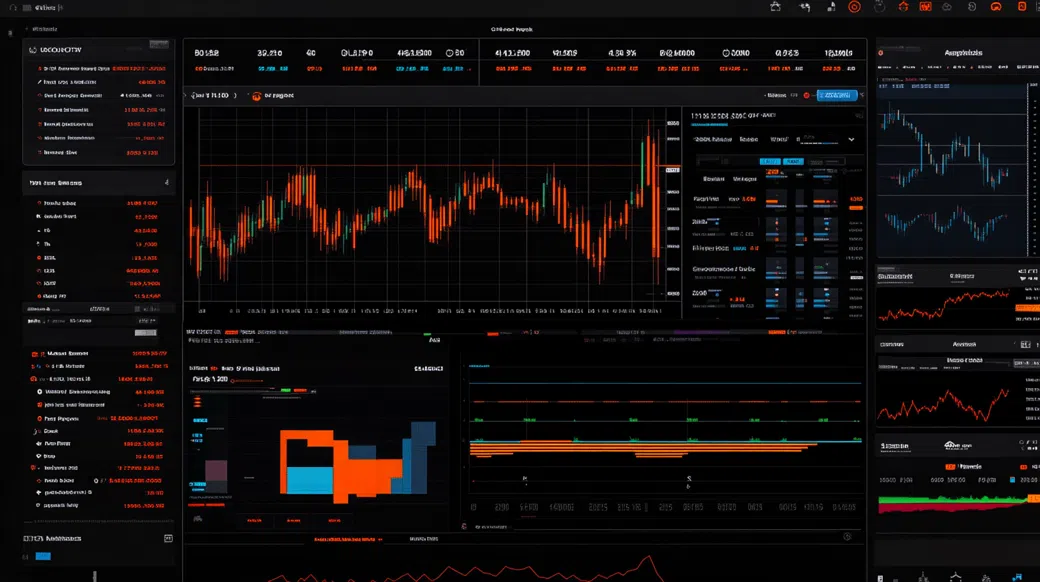
WebTrader is the centerpiece: my sessions stayed logged in without random disconnects, and the order ticket kept essentials tight—market/limit/stop, SL/TP, and position sizing with margin impact visible. Execution felt decent during the NY overlap when I hit a small EUR/USD market order; I saw minor slippage consistent with fast tape, not a pattern of re-quotes. That said, if you live inside MT4/MT5 ecosystems for custom indicators and EAs, you’ll feel the gap—this setup is more “built-in tools” than plug-in marketplace.
The Wolf Kapitthal app mirrors the web layout closely, which reduces context switching when you’re managing risk away from a desk. Wolf Kapitthal login on my Android test supported biometric unlock, and I could modify stops, set price alerts, and close positions with one tap. Deposits and withdrawal requests are accessible from the same menu, not hidden behind a desktop-only portal. The only friction point: charts are smooth but cramped on smaller screens, so fine-tuning entries is better done with presets and alerts.
Tooling is functional: an economic calendar, a basic news feed, and the standard indicator kit (MA, RSI, MACD, Bollinger) with drawing tools for levels and trendlines. Watchlists are easy to build, and alerts are adequate for event-driven trading. The ceiling is clear, though—no deep strategy tester and no cTrader-style depth analytics, so systematic traders will likely run research elsewhere and execute here.
After entering email, phone, and a short profile, the portal pushed me into identity checks sooner than many offshore CFD shops—good for hygiene, slightly more friction. Verification required a government-issued photo ID plus a proof of address dated within three months; my approval landed within the same business day. The flow also flagged AML expectations around name matching, which reduces the odds of “third-party funding” headaches later.
One detail traders in Brazil and Mexico should care about: your funding rail can dictate effective costs via FX conversion, so I’d rather keep the account base currency aligned to how you deposit. Also, the first meaningful withdrawal tends to trigger the strictest review; keeping documents clean upfront reduces back-and-forth in the cashier.
I used live chat to clarify how swaps were applied on XAU/USD and whether the Raw/ECN commission was charged per side or round-turn; an agent replied in roughly three minutes and pointed me to the contract-specs page inside the platform. Later, I opened an email ticket asking what would delay a card payout after KYC, and the written response arrived in about eight hours with a checklist (name match, bank rejection codes, and cutoff times). The tone was procedural—less “sales,” more “compliance,” which I prefer.
Coverage runs on a 24/5 rhythm, aligning with FX market hours, and language support is serviceable but can vary by shift. Phone support wasn’t emphasized in my region, so expect chat/email to do the heavy lifting. Weekends are thinner; if you trade crypto CFDs on Saturday, assume slower human responses even if the platform remains tradable.
If you’re considering this broker, start by validating spreads and financing in a demo, then confirm your country eligibility before funding. I’d also test a small deposit/withdrawal loop early—operational friction shows up fastest in the cashier, not in the marketing pages.
Visit Wolf KapitthalYes, it can work for beginners who stick to small size and learn risk controls first. The WebTrader and mobile app are readable, and the $10,000 demo helps you practice order placement and margin behavior. The catch is leverage: with up to 1:500 available, new traders can blow up fast if they treat margin like free money.
Yes, crypto CFDs are on the menu, led by BTC/USD and ETH-based pairs. You’re trading price movement via CFDs, not buying coins on-chain, so you won’t get blockchain withdrawals to a wallet. Keep an eye on weekend financing, which can materially change the economics of holding.
No, it didn’t behave like a scam in my 2026 test cycle: onboarding, KYC, trading, and a withdrawal request all functioned normally. The real risk is jurisdictional—this is an offshore-style setup (Mauritius FSC reference), so protections and dispute routes aren’t the same as Tier-1 regulators. Always trade with money you can afford to lose; CFDs are high-risk leveraged products.
No, the USA is restricted. The signup flow and compliance checks are designed to block US residency, and accounts from sanctioned jurisdictions are also not offered. If you’re traveling, KYC and IP patterns can still trigger eligibility reviews.
A Wolf Kapitthal withdrawal typically clears internal processing in 24–48 hours once KYC is complete. After that, timing depends on the rail: cards often land in 2–5 business days, bank wires in 3–7, and crypto can arrive the same day. In my case, the status flipped to “processed” the next day, then the receipt time depended on the method.
The Wolf Kapitthal minimum deposit is $200 for the live account path I used. That level is enough to test real spreads and execution, but it’s not enough to justify high leverage with oversized positions. Start small, then scale only after you understand margin and drawdowns.
Yes, it offers iOS and Android apps alongside the browser-based WebTrader. The mobile build supports monitoring, order placement, position edits, and basic funding actions, with biometric login on supported devices. For detailed chart work, desktop still feels more precise.
Overall Score: 4.0/5
Numbers first: spreads on the Standard tier are acceptable (EUR/USD from 1.6 pips), while the Raw/ECN-style account is the better math for active traders once you price in the $7 round-turn commission. Operationally, the deposit-to-trade-to-withdraw loop behaved as expected, and the platform stayed stable around liquid sessions—two things I care about more than glossy promos. The offshore angle (Mauritius FSC reference) is the limiter, not the interface; treat it as a trading venue, not a “savings account.” If you decide to proceed, keep leverage modest—CFDs can wipe capital quickly. For my 2026 take, Wolf Kapitthal is credible, with risks that need adult supervision.
Best for: active CFD traders who want WebTrader simplicity, multi-asset coverage, and flexible leverage. Avoid if: you require Tier-1 regulation, deep MT4/MT5 automation, or you tend to leave accounts dormant (inactivity fee risk).